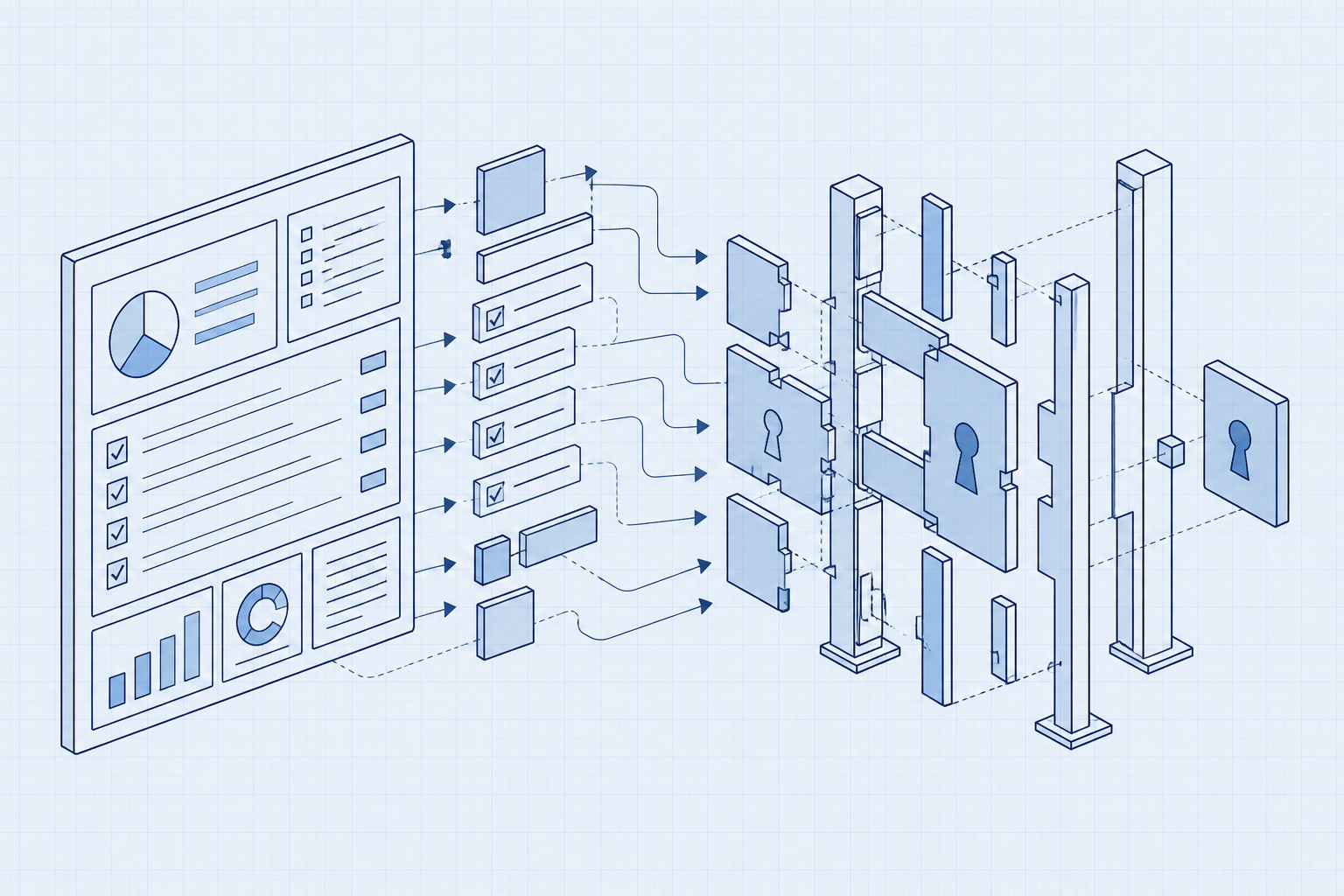
WorkBuddy makes the AI-office question harder because its Douyin demo looked like a workspace, yet Gao Hui at woshipm says the shell collapsed into a static HTML page that could record todos but could not store data or run complex logic.
That distinction matters. A polished dashboard can make model output look organized, and Gao Hui argues that WorkBuddy's current positioning is mainly about improving how large-model information is presented. But an office agent is judged by a different standard: whether it can turn messy work into decisions.
For Gao Hui, the center of a personal workspace is not recording or displaying information. It is producing conclusions: what must be finished today, what can wait, and what should be deleted because the cost-performance ratio is too low. The larger debate around AI office tools starts there. If the system cannot understand task state, act on context, and know when human permission is required, it becomes another surface to manage rather than a worker inside the loop.
The new test is task ownership, not output polish
WorkBuddy matters because it puts a familiar office-AI promise under pressure. According to woshipm, Tencent launched WorkBuddy as an AI office agent product, positioned for office scenarios rather than as a general-purpose chat product. Its described loop is simple: a user states a work goal, the AI understands the task, helps through the process, and returns a final result.
- AprilOpenAI updates Agents SDK with standardized Harness capabilities
- JuneBCG survey finds frequent AI users save at least 8 hours per week
- August 25Doubao Work is officially released with Feishu integration
- 2026Deloitte survey tracks AI-tool coverage and shallow process change
That is a different claim from making a prettier chat answer.
The useful question is where the work actually happens. Woshipm describes WorkBuddy as able to support a request such as analyzing the AI office market and producing a report, with assistance in material organization, content summarization, structure design, and result output. It is not framed as a replacement for Word and Excel, but as an intelligent execution layer above office tools.
Gao Hui's critique draws the line sharply. He says the WorkBuddy-built workspace shown in the Douyin video became, once its visual shell was stripped away, essentially a static HTML page. In his account, it could not store data or run complex logic. It could only record todos.
That distinction is the heart of the debate. Gao argues that the core of a personal workspace is not recording or displaying information, but producing conclusions. A workspace should first tell a worker which tasks must be completed today, which can be postponed, and which should be deleted because the cost-performance ratio is too low.
So WorkBuddy's strength and its limit are visible at the same time. Gao sees its positioning as improving the presentation quality of information output by large models: turning conclusion analysis into a polished report, and planning content into a todolist. He also calls that capability useful, low-threshold, and smooth for daily work adaptation.
But office agents will be judged by ownership. Woshipm's broader argument is that the core pain is not that employees cannot use office software; it is that they spend too much time on low-value knowledge work. The next test is whether the agent can reduce that burden inside the work loop, not merely hand back a better-looking artifact.
A personal workstation needs judgment before delegation
A personal AI workstation starts to matter when it stops behaving like a prettier inbox. Gao Hui, writing at woshipm, says he has been building his own personal workspace for a long time and has changed it through several versions. He now calls it a butler system, which is a useful distinction: the target is not a place to store tasks, but a mechanism that forms judgments before the user delegates work.
His early version had todos, schedules, memos, notes, and memory. He stopped using it after two days.
That failure points to the design problem. Capturing more work artifacts does not reduce cognitive load if the human still has to inspect every item and decide what deserves attention. Gao's stronger claim is that the core of a personal workspace is conclusions, not records or displays. In practice, the morning view should answer harder questions: what must be finished today, what can wait, and what should be deleted because the payoff is too low.
The checkpoint matters more than the dashboard. Gao says his current butler system produces a morning paragraph covering yesterday's progress, today's priority tasks, tasks postponed three times that must now be done, and tasks that look unreasonable and need adjustment. That format gives the agent a narrow job: review history, propose priorities, and surface exceptions. It does not pretend the machine owns the whole day.
This is also where WorkBuddy's promise becomes demanding. Woshipm describes its workflow as user proposes a work goal, AI understands the task, AI assists with the process, and a final result is output. The weak version of that loop is task packaging. The useful version adds execution checkpoints and validation.
Gao's warning is practical: AI lowers the threshold for building things, but does not remove it. For a satisfying and slightly complex function, the user still needs to communicate with AI, break down tasks, and validate outputs. That is why woshipm's author frames WorkBuddy's harder challenge as habit change: users may accept AI for organizing materials, summarizing meetings, generating first drafts, and format conversion before they trust it with important tasks.
Organizational agents are only as good as their shared context
Doubao Work's Feishu tie-in shows why office agents become harder the moment they leave the personal workspace. According to 36Kr, Doubao Work was officially released on August 25 as a new Agent product and brand, with deep integration into Feishu as the central feature. After a user logs in with a Feishu account, the agent can inherit that user's work context inside Feishu, but only within the user's permission scope.
That constraint is the product argument.
Feishu is not just a document editor with an AI button attached. 36Kr describes it as a system where chat, documents, meetings, knowledge bases, multidimensional tables, projects, and approvals sit under the same organizational identity, permission, and collaboration system. Feishu meetings are stored as searchable and citable Minutes. Documents, knowledge bases, group messages, and multidimensional tables have also been adapted for AI calls, according to 36Kr.
This matters because an organizational agent has to know where work already lives. Doubao Work can call chat records, documents, meeting minutes, and schedules in Feishu within the employee's permission scope. It can also process documents, spreadsheets, and PPTs, build web pages and applications, generate images and videos, and operate browsers and local computers. Those abilities only become useful at team level if the agent can read the surrounding context before acting.
The loop also has to close. Content generated by Doubao Work can return to Feishu, where colleagues can share it, comment on it, and modify it. Mature work methods in Doubao Work can be stored as organization-shared skills and called directly later. That turns a completed task into reusable organizational memory, rather than another file buried in a private chat.
Permissions are the guardrail. 36Kr says Doubao Work uses Feishu's existing identity and permission system, and has an end-to-end Agent security protection system covering device access, permission settings, quota control, data encryption, and operation audits. The broader race is visible elsewhere too: woshipm points to Tencent's WeCom, Tencent Meeting, Tencent Docs, and Tencent Cloud as separate enterprise foundations for communication, remote collaboration, content collaboration, and infrastructure. 36Kr's author argues the competition is shifting from individual productivity toward organizational productivity.
The failure mode is partial context with real authority
The risky version of an office agent is not a weak chatbot. It is a capable operator with partial sight. 36Kr frames the technical direction through OpenAI's April Agents SDK update, which put memory, sandbox, file system tools, MCP, and Skills into a standardized Harness. LangChain's shorthand is even cleaner: Agent=Model+Harness.
That formula explains why WorkBuddy's challenge is harder than making another polished work assistant. Woshipm's author argues that its opportunity is becoming an AI work entry point for enterprises and individuals, and that Tencent is competing for a new entry point in future office scenarios. But the same author identifies the hard part: users must change existing work habits and entrust important tasks to AI.
Trust breaks when authority outruns context.
Doubao Work shows the other side of the design problem because it starts inside Feishu. After login with a Feishu account, it can inherit the user's work context within that user's permission scope. It can call chat records, documents, meeting minutes, and schedules under the same boundary. Generated content can return to Feishu, where colleagues share, comment on, and modify it, and mature work methods can become organization-shared skills for later use.
That does not make the system risk-free. It makes the risk legible. 36Kr says Doubao Work uses Feishu's existing identity and permission system, so the agent can only obtain data and operate tools within the current employee's permission scope. It also describes an end-to-end security system covering device access, permission settings, quota control, data encryption, and operation audits.
The contrast matters because enterprise AI adoption can look broad while remaining shallow. Deloitte's 2026 survey of 3,235 corporate executives in 24 countries found employee AI-tool coverage rising from less than 40% to 60%. Yet only 34% of companies had begun using AI to deeply transform products, core processes, or business models, while 37% were still using it in relatively superficial applications with almost no process change.
How to choose between presentation agents, workflow agents, and ambient companions
- You need a polished report, proposal, market analysis, todolist, or other formatted output from model-generated material. Use WorkBuddy-style presentation and execution tools. The sources describe WorkBuddy as taking a work goal, helping with material organization, content summarization, structure design, and final output; Gao Hui also says it can turn large-model conclusion analysis into a polished report and planning content into a todolist. This is useful when the pain point is information processing and content production, not when you need a system of record.
- You want an agent to operate inside a company's real collaboration graph, with access to chat records, documents, meeting minutes, schedules, approvals, projects, and knowledge bases under existing permissions. Use an organization-integrated agent such as Doubao Work inside Feishu. After a user logs in with a Feishu account, Doubao Work can inherit the user's Feishu work context within the user's permission scope, call chat records, documents, meeting minutes, and schedules, and return generated content to Feishu for colleagues to share, comment on, and modify.
- You need reusable organizational routines rather than one-off AI answers. Favor a platform that can turn mature methods into shared skills. Doubao Work is described as allowing mature work methods to be stored as organization-shared skills and called directly later. This matters when the goal is organizational productivity rather than individual productivity.
- You are building a personal dashboard that only records todos, schedules, memos, notes, or memory. Do not confuse a dashboard with a true workspace agent. Gao Hui says an early version of his own butler system had modules for todos, schedules, memos, notes, and memory, but he stopped using it after two days. His stated lesson is that a personal workspace should produce conclusions: what must be done today, what can be postponed, and what should be deleted because the cost-performance ratio is too low.
- You want an engaging AI companion, desktop pet, or ambient presence rather than a work-execution system. Treat products such as the revived QQ Pet, ChatGPT/Codex Pets, Claude Code Buddy, or maker-style physical pets as a separate category. The sources describe them as pets that respond, record behaviors, write diaries, hatch in a terminal, or use uploaded images to generate new actions. They may make AI feel more present, but the source material does not describe them as enterprise workflow agents.
Ambient agents should reduce interruptions, not perform productivity
Desktop pets expose a useful boundary for office agents because they are ambient by design. QQ Pet returned to mobile QQ after being offline for 8 years, according to ifanr, with a 3D plush-style character, classic feeding and bathing, and a connection to Tencent's Hunyuan Hy3 model. It can respond actively, record daytime behavior, and write a first-person diary.
That is presence, not task ownership.
The risk is confusing peripheral status with performance. Claude Code briefly added Buddy as an April Fools' Day Easter egg: a command hatched a random ASCII animal in the terminal, with random rarity, before the team removed it. OpenAI went further by adding a Pets entry to the ChatGPT/Codex desktop client, plus a Hatch Pet skill that can create a new desktop pet from a user-uploaded reference image. Codex desktop users can then pick a pet through Settings -> Appearance -> Pets after restarting Codex CLI and refreshing the Pets list.
These examples are playful, but the office-agent test is unforgiving. ifanr cites a University of California study by Gloria Mark finding that people need an average of 23 minutes to rebuild complete thoughts after an interruption during deep work. A useful ambient agent should therefore make fewer demands on attention than the system it replaces. It should surface task state quietly, ask only when permission is actually needed, and leave work inside the collaboration system.
That is why the English-language agent stack matters. In April, OpenAI updated the Agents SDK with memory, sandbox, file system tools, MCP, and Skills in a standardized Harness; LangChain summarized the pattern as Agent=Model+Harness. The pet metaphor can make status legible. The Harness decides whether that status becomes real work, or just another creature to feed.
From polished AI work output to workflow-resident agents
| Dimension | WorkBuddy | Doubao Work | Gao Hui's butler system | AI desktop pets |
|---|---|---|---|---|
| Primary positioning | An AI office agent product; positioned as an AI intelligent work platform for office scenarios rather than a general-purpose AI chat product. | A new Agent product and brand with deep integration with Feishu. | A personal butler system rather than a workspace. | Companion-style agents or pets, including QQ Pet on mobile QQ, Claude Code Buddy, and ChatGPT/Codex Pets. |
| Main workflow described | The user proposes a work goal, AI understands the task, AI assists with the process, and a final result is output. | Can inherit the user's work context in Feishu within the user's permission scope, call work information, process files, generate media, operate browsers and local computers, and return content to Feishu. | Shows a morning paragraph covering yesterday's progress, today's priority tasks, tasks postponed three times that must be done today, and tasks that appear unreasonable and should be adjusted. | Can respond, record behaviors during the day, write a first-person diary, or let users hatch or create pets. |
| Context available to the AI | Designed for office scenarios; specific enterprise context integrations are not disclosed in sources. | Can call chat records, documents, meeting minutes, schedules, documents, knowledge bases, group messages, and multidimensional tables within the user's permission scope. | Uses historical data through an Agent-like mechanism, a chain of thought, or an agent plus knowledge base, according to Gao Hui's view of what the system needs. | The new QQ Pet connects to Hunyuan Hy3; OpenAI's Hatch Pet skill can use a user-uploaded reference image. |
| Decision support | Assists in material organization, content summarization, structure design, and result output. | Not just content generation: the sources emphasize organizational context, tool operation, permissions, and reusable skills. | Prioritizes which tasks must be completed today, which can be postponed, and which should be deleted because their cost-performance ratio is too low. | Mostly interaction and companionship in the cited sources; work prioritization is not covered. |
| Outputs that remain in the workflow | Can turn large-model conclusion analysis into a polished report and large-model planning content into a todolist. | Generated content can return to Feishu, where colleagues can share, comment on, and modify it. | Leaves daily conclusions and task judgments inside the user's own system. | QQ Pet writes a first-person diary; other durable work artifacts are not covered. |
| Reuse of methods or memory | Not covered. | Mature work methods can be stored as organization-shared skills and called directly later. | Early versions included memory; the current system uses historical data for suggestions. | QQ Pet can record behaviors during the day; Codex and ChatGPT/Codex pet reuse for work methods is not covered. |
| Permissions and safety model | Not covered. | Uses Feishu's existing identity and permission system; includes device access, permission settings, quota control, data encryption, and operation audits. | Not covered. | Anthropic opened a Bluetooth interface for makers; security and enterprise permissions are not covered. |
| Limits or critique in sources | Gao Hui claims a popular workbuddy-built personal workspace was essentially a static HTML page that could not store data or run complex logic and could only record todos. | The 36Kr author frames the competition as moving from individual productivity toward organizational productivity; limitations are not otherwise detailed in sources. | Gao Hui stopped using an early version after two days, arguing the core is not recording or displaying information but producing conclusions. | Claude Code Buddy was a limited-time Easter egg and was later removed; interruptions during deep work can require an average of 23 minutes to rebuild complete thoughts and return to focus. |
Start with the work nobody defends: organizing materials, summarizing meetings, summarizing information, generating first drafts, and format conversion. If an agent cannot make those steps disappear without extra babysitting, it is not ready for industry research, proposal output, or enterprise knowledge organization.
For a personal trial, pick one repeating process and measure the handoff. A product manager, operations staffer, marketing staffer, consultant, researcher, or manager should ask whether WorkBuddy can see the source context, produce a usable artifact, and leave the next checkpoint clear. Woshipm's author sets a practical bar for enterprise employees: save 30 minutes every day or reduce repetitive work every week.
For teams, watch the trust boundary. The hard question is whether people will change work habits and entrust important tasks to AI.
For readers outside China
- Availability: Doubao Work was officially released on August 25 as a new Agent product and brand, with deep integration with Feishu. Tencent launched WorkBuddy as an AI office agent product. QQ Pet officially announced its return on mobile QQ after being offline for 8 years. OpenAI added a Pets entry to the new ChatGPT/Codex desktop client, and Claude Code Buddy was a limited-time April Fools' Day Easter egg that was later removed. Availability outside China is not disclosed in sources.
- Pricing: Pricing is not disclosed in sources for Doubao Work, WorkBuddy, the revived QQ Pet, ChatGPT/Codex Pets, or Claude Code Buddy.
- Closest Western equivalents: Doubao Work is closest to an enterprise AI agent embedded in a collaboration suite, because it inherits Feishu identity, permissions, documents, meetings, schedules, chat records, knowledge bases, projects, and approvals.; WorkBuddy is closest to an AI office agent layered above familiar office software, focused on research, summarization, first drafts, proposals, reports, and task outputs rather than replacing Word or Excel.; QQ Pet, ChatGPT/Codex Pets, and Claude Code Buddy are closest to desktop pets or ambient AI companions rather than workflow automation tools.
- Data residency: The sources do not disclose data residency. They do say Doubao Work uses Feishu's existing identity and permission system, so the Agent can only obtain data and operate tools within the current employee's permission scope. Doubao Work is also described as having an end-to-end Agent security protection system covering device access, permission settings, quota control, data encryption, and operation audits. For WorkBuddy, data residency and security architecture are not disclosed in sources.
Sources
- woshipm todo记下来了,就一定会do吗? https://woshipm.com/share/6453428.html
- woshipm WorkBuddy产品分析:腾讯押注AI办公Agent背后的产品逻辑 https://woshipm.com/ai/6443570.html
- ifanr QQ 宠物靠 AI 在手机复活,可我更想要一只桌宠企鹅 https://ifanr.com/1676656
- 36kr 下一代生产力,就在豆包工作+飞书里 https://36kr.com/p/3955079667137664
The evidence: 49 facts from 4 Chinese articles
Each line below was extracted from the article it sits under, in Chinese, before any of this was written. The writing is done from these and never from the source prose - that separation is structural, not a promise. How we work.
36kr下一代生产力,就在豆包工作+飞书里
- Doubao Work was officially released on August 25 as a new Agent product and brand.
- Doubao Work emphasized deep integration with Feishu at its release.
- In April, OpenAI updated the Agents SDK to include capabilities such as memory, sandbox, file system tools, MCP, and Skills in a standardized Harness.
- LangChain summarized Agent as the formula Agent=Model+Harness.
- Deloitte's 2026 survey of 3,235 corporate executives in 24 countries found that the coverage rate of AI tools provided to employees rose from less than 40% to 60%.
- Deloitte's 2026 survey found that only 34% of companies had begun using AI to deeply transform products, core processes, or business models.
- Deloitte's 2026 survey found that 37% of companies were still using AI in relatively superficial applications with almost no change to existing business processes.
- After a user logs in with a Feishu account, Doubao Work can inherit the user's work context in Feishu within the user's permission scope.
- Doubao Work can call information such as chat records, documents, meeting minutes, and schedules in Feishu within the user's permission scope.
- Feishu includes chat, documents, meetings, knowledge bases, multidimensional tables, projects, and approvals within the same organizational identity, permission, and collaboration system.
- Feishu meetings are stored as searchable and citable Minutes.
- Doubao Work can process documents, spreadsheets, and PPTs, build web pages and applications, generate images and videos, and operate browsers and local computers.
- Content generated by Doubao Work can return to Feishu, where colleagues can share, comment on, and modify it.
- Mature work methods in Doubao Work can be stored as organization-shared skills and called directly later.
- BCG's AI at Work global survey in June found that 42% of frontline employees who frequently use AI save at least 8 hours per week.
- Doubao Work uses Feishu's existing identity and permission system, so the Agent can only obtain data and operate tools within the current employee's permission scope.
- Doubao Work has built an end-to-end Agent security protection system covering device access, permission settings, quota control, data encryption, and operation audits.
- Doubao Work has become one of the first office agents in China to pass both the China Academy of Information and Communications Technology's "office agent capability" certification and "cloud benchmark test" certification.
ifanrQQ 宠物靠 AI 在手机复活,可我更想要一只桌宠企鹅
- QQ Pet officially announced its return on mobile QQ after being offline for 8 years.
- The new QQ Pet changed from the previous two-dimensional penguin into a 3D plush-style character.
- The new QQ Pet retains classic gameplay features such as feeding, bathing, and working.
- Tencent connected the new QQ Pet to its latest Hunyuan Hy3 model.
- The new QQ Pet lets players freely choose a pet personality, and different users can receive different feedback from the same interaction.
- The new QQ Pet can actively respond, record behaviors during the day, and write a first-person diary.
- Claude Code briefly added an Easter egg called buddy on April Fools' Day this year.
- Claude Code Buddy let users hatch an ASCII-rendered small animal by entering a command in the terminal.
- Claude Code Buddy's animal type and rarity were random.
- Claude Code Buddy was a limited-time Easter egg and was later removed by the official team.
- OpenAI added a Pets entry to the new ChatGPT/Codex desktop client.
- OpenAI included a dedicated Hatch Pet skill that can generate new actions from a user-uploaded reference image and create a new desktop pet.
- Anthropic later opened a Bluetooth interface for makers, allowing users to recreate a physical desktop pet with M5Stack development boards, ESP32 microcontrollers, and an official open-source GitHub project.
- NEKO.COM was written by a Japanese programmer for the NEC PC-9801 in the late 1980s.
- Microsoft launched the Office Assistant Clippy in 1997.
- Tencent brought electronic pet-raising gameplay to computers in 2005 with QQ Pet, connecting it to friends, community, and growth systems.
- QQ Pet shut down in September 2018.
- Codex desktop users can select a new pet in Settings -> Appearance -> Pets after restarting Codex CLI and refreshing the Pets list.
woshipmtodo记下来了,就一定会do吗?
- Gao Hui is the author of the piece published on woshipm.
- Gao Hui's WeChat public account is Product Lao Gao (产品老高).
- A Douyin video about a blogger using workbuddy to build a personal workspace became popular recently.
- The Douyin video's comment section included many requests for tutorials, open source release, and ways to build a similar workspace.
- Gao Hui says he has built his own personal workspace for a long time and has changed it through several versions.
- Gao Hui calls his own workspace system a butler system rather than a workspace.
- Gao Hui says an early version of his butler system included modules for todos, schedules, memos, notes, and memory.
- Gao Hui says he stopped using an early version of his butler system after two days.
- Gao Hui says his current butler system shows a paragraph in the morning covering yesterday's progress, today's priority tasks, tasks postponed three times that must be done today, and tasks that appear unreasonable and should be adjusted.
woshipmWorkBuddy产品分析:腾讯押注AI办公Agent背后的产品逻辑
- Tencent launched WorkBuddy as an AI office agent product.
- WorkBuddy's workflow is described as: the user proposes a work goal, AI understands the task, AI assists with the process, and a final result is output.
- WorkBuddy is designed to let a user ask for an analysis of the AI office market and a report, with AI assisting in material organization, content summarization, structure design, and result output.
- Tencent's existing enterprise office products include WeCom, Tencent Meeting, Tencent Docs, and Tencent Cloud.