WeCom's AI recording card puts the new AI-hardware pattern in a small, concrete package: a dedicated sensor for work context that phones and laptops often miss. According to woshipm, WeCom launched its first claimed AI hardware as an AI recording card, with 3 models made with iFlytek, Deli Office, and Mobvoi. The point is not that a card replaces a phone. It captures meetings.
The same pattern shows up in geekpark's account of OpenAI's hardware plans. Its first product is expected to be a portable screenless speaker developed with Jony Ive, with a camera for understanding surroundings and a mechanical structure that can move on its own. Geekpark also reports a planned phone with an enhanced HDR pipeline and two AI processors handling vision and language at the same time. These details point to the same question: which parts of work need their own capture device, and which still belong on the phone or laptop?
Dedicated sensors are for missing context, not phone replacement
The useful way to read the new AI-device wave is not as a race to replace the phone. It is a search for missing context. A phone already has a screen, radios, apps, accounts, and a camera. A separate device has to earn its place by sensing something the phone or laptop usually misses: the room, the meeting table, the speaker across from you, or the activity happening while your hands and eyes are elsewhere.
- WWDC 2024Apple announced ChatGPT integration into Siri
- 2025OpenAI spent $6.5 billion to acquire io Products
- April 27Ming-Chi Kuo described OpenAI's planned AI Agent phone
- July 10Apple sued OpenAI for stealing trade secrets
- second half of 2026Chris Lehane said OpenAI's first hardware release would arrive
- early 2027OpenAI hardware market availability was expected
That is why the early hardware clues matter. According to geekpark, OpenAI's first hardware product is expected to be a portable screenless speaker developed with former Apple chief designer Jony Ive. The same reporting describes it as rechargeable, movable between rooms, equipped with a camera for understanding surroundings, and fitted with a mechanical structure that can move on its own. That is not a smaller phone. It is a room sensor with an AI interface.
The phone version follows the same logic.
Geekpark says the main known specification of OpenAI's planned phone is an ISP with an enhanced HDR pipeline for better camera-based perception of the real world. It is also reported to include two AI processors that separately and simultaneously handle vision and language. Even there, the differentiation is less about another app surface and more about capturing the world for an agent to interpret.
WeCom's AI recording card is a clearer, narrower version of the same pattern. Woshipm says WeCom launched its first claimed "AI hardware," with card models made in cooperation with iFlytek, Deli Office, and Mobvoi. The card can start recording with one press, then use an AI large model to analyze and organize the recorded content.
Migo's argument, as summarized by woshipm, is practical: the real competitor is the mobile phone everyone already carries. Dedicated recording hardware only has a case when it hears better. Migo points to microphone arrays, bone conduction, and other pickup modules for multi-person meetings, plus speaker separation and office ecosystem integration. Without those advantages, the phone wins by default.
OpenAI's roadmap is still a moving target
OpenAI's hardware plan is useful as a signal, but weak as a workflow anchor. The reported device keeps changing shape. According to ifanr, Bloomberg's Mark Gurman reported that the first OpenAI and Jony Ive product is a smart speaker, not a ring or pendant. ifanr also says the broader roadmap once included a speaker, glasses, a ring, earphones, and a pendant, but no phone.
That is already enough uncertainty for a buyer.
The timing and price do not line up cleanly across reports. ifanr says the small speaker is believed to launch within 2027 and may cost $300 to $400, or about 2200 to 2700 yuan. geekpark says the screenless speaker is expected in early 2027 at $200 to $300. OpenAI global affairs chief Chris Lehane gave another marker: first hardware release in the second half of 2026, with market availability in early 2027.
The sensor story is also unsettled. ifanr says the speaker may add an ultra-wide-angle camera and other sensors to recognize its surroundings. That would move it away from a simple voice box and toward ambient capture: room context, nearby people, and activity around the device. woshipm's author frames OpenAI's goal as an AI-native wearable device rather than a better iPhone.
Then there is the phone thread. geekpark says Ming-Chi Kuo described an OpenAI planned phone on April 27 as an "AI Agent phone" built around a continuous, context-aware interface rather than separate apps. The same reporting points to a customized MediaTek Dimensity 9600, TSMC's N2P process, and Luxshare Precision as the likely exclusive contract manufacturer.
Legal risk makes the roadmap harder to operationalize. geekpark says Apple sued OpenAI on July 10 over trade secrets, including a proprietary metal surface treatment process. Gurman believes the lawsuit has slowed progress by making Apple engineers less willing to interview and suppliers more cautious. Apple has also sought an injunction that could block OpenAI hardware outright.
Recording cards work when meetings are frequent and painful
Voice is the easiest office context to productize because meetings already have a clear pain: people need a record.
Then they need the record compressed into something usable. Woshipm's author argues that AI recording cards mainly answer recording and summarization. Older meeting audio often became dead data because users did not want to replay long recordings.
That explains why the category is crowded. WeCom launched 3 AI recording card models with iFlytek. Deli Office was also involved. So was Mobvoi. They were priced from 599-799 yuan, according to woshipm. DingTalk and Feishu have also released AI recording products for office collaboration scenarios. Mobvoi had already launched TicNote last year, while iFlytek made a WeCom customized edition of its Pokee recorder.
DingTalk A1 took a different route: woshipm describes it as an independently launched DingTalk device, without a third-party co-branded hardware partner.
The buyer profile is narrower than "anyone who takes notes."
These devices make more sense when meetings are frequent. They also need to be formal enough to require a record, and painful enough that a transcript alone is insufficient. A team that repeatedly turns interviews or meetings into minutes has a reason to pay for a dedicated recorder. The same applies when the work becomes conclusions or follow-up to-dos. A person who occasionally wants a memory aid may be better served by a phone or laptop app.
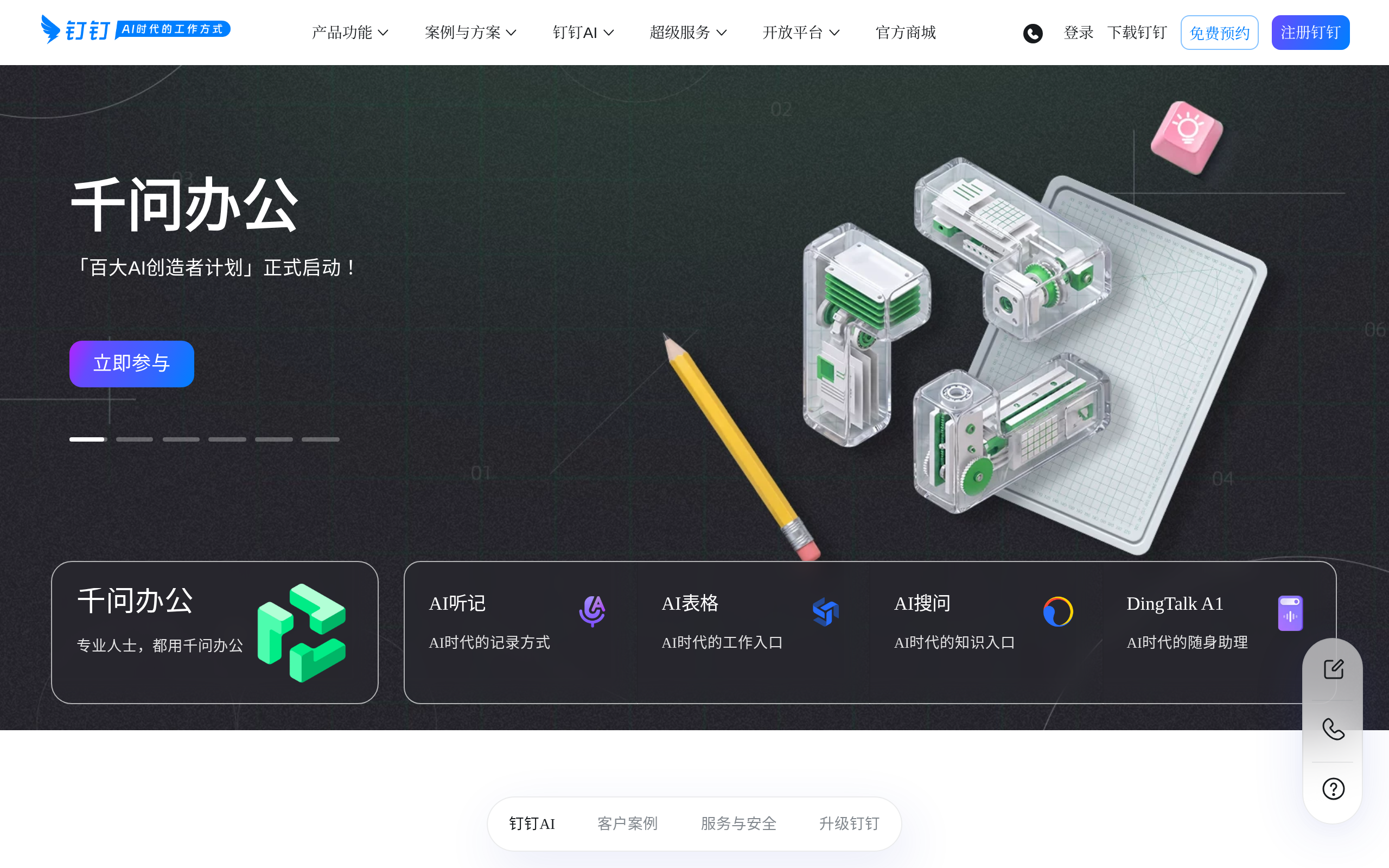
Alibaba's CosyVoice Studio shows why office voice capture is becoming a platform entry point rather than a gadget feature. Geekpark reported that Alibaba launched it on August 7 with open speech recognition. It also launched with speech synthesis. Real-time voice interaction was part of the launch too. Its CosyFlow feature can generate structured content after an interview or meeting, including key information. It can also generate discussion conclusions and follow-up to-dos.
DingTalk A1 ranked first in AI recording device sales on Tmall during this year's 618 shopping festival. It also ranked first on Douyin. JD.com showed the same result. That suggests demand is real, but woshipm's author still frames WeCom's card as an entrance war rather than a breakthrough.
AI capture hardware and voice-agent approaches compared across Chinese sources
| OpenAI/Jony Ive screenless speaker | WeCom and office AI recording cards | Alibaba CosyVoice Studio | Phone or laptop workflow | |
|---|---|---|---|---|
| Primary context captured | Voice, room surroundings, and possibly ambient visual context via an ultra-wide-angle camera and other sensors | Meetings and multi-person office audio | Speech recognition, speech synthesis, real-time voice interaction, content creation, and enterprise service-agent scenarios | Not covered as a dedicated capture layer; Migo argues phones are the real competitor for AI recording hardware |
| Form factor | Smart speaker without a display; described as donut-like, about the size of a hockey puck, with a handheld speaker body and charging base | AI recording card; WeCom launched 3 models with iFlytek, Deli Office, and Mobvoi | AI voice productivity platform, not disclosed in sources as dedicated hardware | Phone or laptop already owned by users; specific capture hardware not covered |
| Sensors and input hardware | Microphone and speaker, status indicator light, mechanical component that can move autonomously, and possible ultra-wide-angle camera and other sensors | Professional AI recording hardware uses microphone arrays, bone conduction, and other pickup modules | Open speech recognition, speech synthesis, and real-time voice interaction backed by Qwen-Audio voice large model family | Migo says dedicated recording hardware has a sound pickup advantage over mobile phones in multi-person conversations and slightly noisy environments |
| Agent or model layer | Powered by ChatGPT and using GPT-Live for conversation; ifanr says its advantage is ChatGPT Live mode rather than Siri AI or Gemini | Uses an AI large model to analyze and organize recorded content; large models turn meeting audio from dead data into summaries | Backed by Alibaba's self-developed Qwen-Audio voice large model family; CosyAgent can connect to knowledge bases, business systems, and workflows | Not covered |
| Workflow output | Help users complete various tasks; may connect to third-party smart home ecosystems to control smart home devices | Complete written meeting record after the meeting, one-click team synchronization, meeting notes and summaries | CosyFlow can generate formal emails and structured notes with key information, discussion conclusions, and follow-up to-dos; CosyCreative generates dubbing and audio content | Phones can substitute for recording devices unless dedicated hardware improves pickup, speaker separation, and office ecosystem integration |
| Current readiness gaps | Not yet released; legal dispute may slow progress and suppliers may become more cautious | Speaker identification accuracy can be extremely poor; formal reports require manual checking; manual start and stop can mix meetings; transcription errors are common for industry terms, project-specific names, personal names, and place names | GeekPark argues future competition depends on combining models, products, and scenarios rather than only recognition accuracy or human-like voices | Current office ecosystem integration remains shallow, limited to simple mounting of recording files and meeting notes and page jumps |
| Privacy, security, and legal concerns | Apple sued OpenAI for stealing trade secrets; OpenAI said its first device did not use or infringe Apple trade secrets | Enterprise data security concerns are a major barrier because meeting content often involves project secrets and business information, while cloud transcription and storage create leakage risks | Not covered | Not covered |
| Pricing disclosed in sources | May be priced between $300 and $400, or about 2200 to 2700 yuan; another source says $200 to $300 | WeCom's AI recording cards are priced from 599-799 yuan | Not disclosed in sources | Not disclosed in sources |
| Market or adoption signals | Expected to launch in early 2027 or within 2027; Chris Lehane said first hardware release would be in the second half of 2026 and market availability in early 2027 | DingTalk A1 ranked first in AI recording device sales on Tmall, Douyin, and JD.com during this year's 618 shopping festival; Migo says bulk enterprise purchases often see only some people use devices frequently | Open to both individual users and enterprise users; global financing in the voice AI sector exceeded $7 billion in the first quarter of 2026 | Migo argues the real competitor for AI recording hardware is mobile phones used by everyone |
The hard part starts after the transcript
The promise of an AI recording card looks simple because Migo's everyday flow, as described by woshipm, is simple: start a recording for each meeting, let the device capture audio, receive a complete written record after the meeting, and synchronize it to the team with one click. For people stuck writing minutes after corporate meetings, that is exactly the pain point a dedicated sensor should solve.
The contradiction starts when the transcript becomes work.
Migo had worked in smart hardware and used AI recording devices frequently in corporate meetings for three consecutive months starting in early April, according to woshipm. His reported problem was not that the device failed to record. It was that speaker identification was extremely poor, names were often assigned to the wrong people, and participant matching became confused. That breaks trust in the document before anyone reaches the summary.
Correction then becomes its own job. Migo says the generated notes could not be used directly for formal work reports or project reviews, because they needed sentence-by-sentence checking and revision. Errors were common in industry terms, project-specific names, personal names, and place names. The device also lacked idle automatic recording stop and intelligent meeting splitting, so manual start and stop controlled the boundary of each session. If someone forgot to turn it off, several separate meetings could be mixed into one disordered note.
That is why higher-level features can feel premature. Migo calls mind maps and deep reviews nice-to-have gimmicks rather than real needs, while he says current office integration remains shallow: recording files, meeting notes, and page jumps, not true workflow integration.
GeekPark's CosyFlow framing points to the bar these products are trying to clear. It is meant to move from speech into usable work results, such as turning a spoken work arrangement into a formal email, and a voice agent could connect knowledge bases with business systems. But Migo's account shows the dependency chain. Before agents can act, the record must know who said what, where one meeting ended, and which words matter.
Where dedicated AI capture hardware makes sense now
- Recurring multi-person meetings, especially in rooms with several speakers or some noise. Consider a dedicated AI recording card rather than relying only on a phone. Sources report that professional AI recording hardware uses microphone arrays, bone conduction, and other pickup modules for multi-person meeting scenarios, and one reviewer found dedicated hardware had a sound-pickup advantage over mobile phones in multi-person conversations and slightly noisy environments.
- You need quick meeting records, summaries, and team sharing, but not final formal documents. Use AI recording hardware as a first-draft capture tool. WeCom's AI recording card can start recording with one press and use an AI large model to analyze and organize recorded content; one reviewer's workflow was to start a recording for each meeting, generate a complete written meeting record after the meeting, and synchronize it to the team with one click. But the same reviewer said AI-generated meeting notes could not be used directly for formal work reports or project reviews and required manual sentence-by-sentence checking and revision.
- Your workflow depends on accurate speaker attribution, proper names, industry terms, or clean separation between back-to-back meetings. Do not treat current recording-card output as reliable automation. One reviewer said speaker identification accuracy was extremely poor, with names frequently assigned to the wrong speakers; transcription errors were common for industry terms, project-specific names, personal names, and place names; and a device without idle automatic recording stop or intelligent meeting splitting could mix several meetings into one disordered note if not manually turned off.
- A company is considering bulk purchases for every employee. Pilot with heavy meeting users first. One reviewer argued that many companies buy AI recording devices in bulk, but usually only some people use them frequently while most people barely use them, making overall device activity far lower than procurement expectations.
- Meetings contain project secrets, business information, or other sensitive content. Delay deployment or require a clear security review. One reviewer identified enterprise data security concerns as a major barrier to large-scale adoption because meeting content often involves project secrets and business information, while cloud transcription and data storage create leakage risks.
- You are waiting for OpenAI's future hardware instead of choosing present-day tools. Treat OpenAI's device as speculative for now. Current reporting describes a portable screenless speaker or smart speaker, possibly with a microphone, speaker, status light, camera or other sensors, and a mechanical component, with market availability reported for early 2027 or launch claims within 2027. The source material does not show it as an available product for today's meeting-capture workflow.
A buying rule for phones, laptops, recorders, speakers, and glasses
The practical buying rule is conservative: keep capture on the phone or laptop unless a dedicated device wins on the thing the phone is bad at. For AI recording cards, woshipm's Migo points to professional audio pickup, accurate multi-speaker separation, and deep office ecosystem integration as the line between a useful sensor and another gadget. Without those, the real competitor is the phone already in everyone's pocket.
Start with sensing. WeCom's AI recording card can begin recording with one press, then use a large model to analyze and organize the content, according to woshipm. That matters only if the room is hard for a phone: multi-person talk, overlapping voices, or slightly noisy environments, where Migo argues dedicated recording hardware has an advantage.
Then check consent and boundaries.
A visible status indicator is not cosmetic when the device listens in shared space. ifanr reports that OpenAI plans to add a status light to its speaker alongside a microphone and speaker, while people familiar with the matter say it may also add an ultra-wide-angle camera and other sensors to recognize surroundings. The more ambient the capture becomes, the more the buyer should ask who can see that it is active, what it stores, and where the data goes.
Workflow is the next filter. geekpark says CosyFlow can turn an interview or meeting into structured content such as key information, discussion conclusions, and follow-up to-dos. geekpark also says a voice agent can connect to knowledge bases, business systems, and workflows, then complete a next action after understanding the user's needs. That is the bar: not a transcript, but follow-through.
Speakers and glasses should face the same test. ifanr's author argues that OpenAI's speaker, based on current leaks, is not fundamentally different in form or function from HomePod mini, Google Home Speaker, and Alexa; its edge would be ChatGPT Live mode. That makes software intelligence important, but it does not erase the hardware question. Buy the dedicated sensor only when sensing, privacy, integration, and task completion are all stronger than the phone or laptop.
Start with the work that already produces unusable residue: recurring meetings, interviews, sales calls, field notes, or voice-heavy drafting. GeekPark gives the useful test case: its author put that day's Geek Morning Know text into CosyCreative, and the tool produced a narrated summary in about one minute. Speed matters only if the next handoff also works.
That is the thread to watch. CosyAgent's promise, according to geekpark, is voice AI moving from content production toward business execution: connecting to knowledge bases, business systems, and workflows, then completing a next action after understanding need.
So treat devices such as DingTalk A1 as workflow probes, not gadgets. It ranked first in AI recording device sales on Tmall, Douyin, and JD.com during this year's 618 shopping festival, but buying should wait on proof: speaker attribution, permission controls, local and cloud boundaries, and integration with the task system you actually use.
For readers outside China
- Availability: The Chinese sources cover several product categories rather than one single pipeline. WeCom launched 3 AI recording card models in cooperation with iFlytek, Deli Office, and Mobvoi. DingTalk, Feishu, GetSeed, Mobvoi's TicNote, iFlytek's Pokee, and DingTalk A1 are also discussed as AI recording products or recording cards. CosyVoice Studio is described as open to both individual users and enterprise users. Availability outside China is not disclosed in sources. OpenAI's first hardware product is not described as currently available; sources variously say first hardware release would be in the second half of 2026, market availability would be in early 2027, and that a small speaker may officially launch within 2027.
- Pricing: WeCom's AI recording cards are priced from 599-799 yuan. OpenAI's reported speaker pricing is inconsistent across sources: one says it may be priced between $300 and $400, or about 2200 to 2700 yuan; another says it is expected to be priced at $200 to $300. Pricing for DingTalk A1, Feishu's product, GetSeed, TicNote, Pokee, and CosyVoice Studio is not disclosed in sources.
- Closest Western equivalents: For the rumored OpenAI speaker: HomePod mini, Google Home Speaker, and Alexa are named by one source as comparable smart-speaker competitors.; For AI recording cards: the practical Western equivalent is a dedicated meeting recorder plus AI transcription and summarization, but specific Western product names are not disclosed in sources.; For CosyVoice Studio: the closest category is a voice AI productivity platform that combines speech recognition, speech synthesis, and real-time voice interaction; specific Western product names are not disclosed in sources.
- Data residency: The source material does not disclose where user recordings, transcripts, or summaries are stored for WeCom's AI recording cards, DingTalk A1, Feishu's products, GetSeed, TicNote, Pokee, or CosyVoice Studio. The sources do warn that enterprise data security is a major adoption barrier because meeting content can include project secrets and business information, while cloud transcription and data storage create leakage risks.
Sources
- geekpark OpenAI 硬件路线图曝光:第一台硬件没有屏幕,手机 2027 上半年量产 https://geekpark.net/news/368198
- ifanr 解读|OpenAI 音箱:果味设计,但比苹果多走一步 https://ifanr.com/1674363
- woshipm AI 录音产品复盘:AI 协同落地的真实办公场景 https://woshipm.com/ai/6427785.html
- woshipm 微信发布第一款 AI 硬件,由此引发 3 点思考,关于 AI、入口、布局 https://woshipm.com/ai/6427787.html
- woshipm OpenAI 挖了苹果 400 人,到底在下一盘什么棋? https://woshipm.com/ai/6424989.html
- geekpark 语音成为 AI 关键入口,阿里一口气把全栈模型能力都拿出来了 https://geekpark.net/news/368638
The evidence: 56 facts from 6 Chinese articles
Each line below was extracted from the article it sits under, in Chinese, before any of this was written. The writing is done from these and never from the source prose - that separation is structural, not a promise. How we work.
geekparkOpenAI 硬件路线图曝光:第一台硬件没有屏幕,手机 2027 上半年量产
- Supply-chain analyst Ming-Chi Kuo described OpenAI's planned phone on April 27 as an "AI Agent phone" built around a continuous, context-aware interface rather than separate apps.
- Sam Altman posted on the same day as Ming-Chi Kuo's April 27 phone disclosure that it was time to rethink how operating systems and user interfaces should be designed.
- OpenAI's hardware product line originated from OpenAI's $6.5 billion acquisition of Jony Ive's company io Products.
- OpenAI global affairs chief Chris Lehane said OpenAI's first hardware release would be in the second half of 2026 and market availability would be in early 2027.
- Apple sued OpenAI on July 10 for stealing trade secrets, and the lawsuit mentioned a proprietary metal surface treatment process.
geekpark语音成为 AI 关键入口,阿里一口气把全栈模型能力都拿出来了
- Alibaba launched CosyVoice Studio, an AI voice productivity platform, on August 7.
- CosyVoice Studio integrates three core capabilities: open speech recognition, speech synthesis, and real-time voice interaction.
- CosyVoice Studio is backed by Alibaba's self-developed Qwen-Audio voice large model family.
- Qwen-Audio-3.0-Realtime scored 84.1% on the Speech to Speech Index in Artificial Analysis's ranking on July 28.
- Qwen-Audio-3.0-Realtime ranked first globally in Artificial Analysis's Speech to Speech Index on July 28.
- Qwen-Audio-3.0-Realtime ranked first globally in the three subcategories of speech reasoning, agent performance, and conversational dynamics in Artificial Analysis's July 28 ranking.
- CosyVoice Studio includes CosyFlow for personal productivity scenarios, CosyCreative for content production and voice creation, and CosyAgent for enterprise service agents.
- CosyCreative allows users to import manuscripts or webpage links, choose a voice style and timbre, and let AI generate dubbing and audio content.
- GeekPark's author input the text of that day's Geek Morning Know into CosyCreative, and CosyCreative generated a summarized narrated version in about one minute.
- CosyVoice Studio is open to both individual users and enterprise users.
- DingTalk A1 ranked first in AI recording device sales on Tmall, Douyin, and JD.com during this year's 618 shopping festival.
- Global financing in the voice AI sector exceeded $7 billion in the first quarter of 2026.
ifanr解读|OpenAI 音箱:果味设计,但比苹果多走一步
- Bloomberg's Mark Gurman reported that OpenAI and Jony Ive's company are preparing their first collaborative hardware product after OpenAI acquired Jony Ive's company more than one year earlier.
- Bloomberg's Mark Gurman reported that OpenAI and Jony Ive's first collaborative hardware product is a smart speaker, not a ring or a pendant.
- People familiar with the matter told Mark Gurman that the OpenAI hardware product is basically a smart speaker without a display.
- People familiar with the matter told Mark Gurman that the OpenAI smart speaker looks like a donut and is about the size of a hockey puck.
- People familiar with the matter described the OpenAI speaker as having a mechanical component that can move autonomously to show responses to users and interact with them.
- People familiar with the matter described the OpenAI speaker as using a split design with a handheld speaker body and a base for charging.
- OpenAI plans to add a status indicator light to the speaker in addition to a microphone and speaker, according to people familiar with the matter.
- People familiar with the matter said OpenAI conducted an internal investigation after Apple filed a lawsuit and concluded that its first device did not use or infringe any Apple trade secrets.
- OpenAI stated in its motion to dismiss Apple's lawsuit that OpenAI is building a completely new product that is entirely different from any Apple product.
woshipmOpenAI 挖了苹果 400 人,到底在下一盘什么棋?
- On July 10, Apple sued OpenAI in the U.S. District Court for the Northern District of California and accused OpenAI of systematically stealing trade secrets.
- Apple's complaint against OpenAI was 87 pages long.
- Apple said more than 400 former Apple employees currently work at OpenAI.
- Apple described OpenAI's hiring of former Apple employees as a "coordinated and systematic campaign."
- Tang Yew Tan worked at Apple for nearly 25 years and was vice president of product design for iPhone and Apple Watch before leaving Apple.
- Chang Liu was a senior electrical engineer at Apple for 8 years and left Apple for OpenAI in January.
- At WWDC 2024, Apple announced that ChatGPT would be integrated into Siri.
- In 2025, OpenAI spent $6.5 billion to acquire io Products, a company founded by Jony Ive.
- Jony Ive was the industrial designer behind Apple's iPhone, iPad, MacBook, and Apple Watch product lines over the past 20 years.
- California Business and Professions Code §16600 makes non-compete agreements that restrict employee mobility invalid.
woshipm微信发布第一款 AI 硬件,由此引发 3 点思考,关于 AI、入口、布局
- WeCom launched its first claimed "AI hardware," an AI recording card.
- WeCom launched 3 AI recording card models in cooperation with iFlytek, Deli Office, and Mobvoi.
- WeCom's AI recording cards are priced from 599-799 yuan.
- WeCom's AI recording card can start recording with one press and use an AI large model to analyze and organize recorded content.
- Luo Zhenyu released the GetSeed AI recording card during a New Year's Eve speech last year.
- DingTalk and Feishu have both released AI recording products for office collaboration scenarios.
- OpenAI released GPT-Realtime-2 in May 2026.
- Doubao released the native full-duplex voice large model Seeduplex in April 2026.
- WeCom had launched more than 10 types of attendance clock-in machines several years earlier.
- WeCom's earlier attendance hardware was sold through JD.com's official store via the WeCom management backend.
- WeCom's earlier attendance hardware was not self-developed by WeCom and was made in cooperation with hardware companies including Hikvision and Deli Office.
- Mobvoi launched a recording card called TicNote last year.
- Mobvoi's cooperation with WeCom produced a TicNote WeCom customized edition whose functional parameters are the same as the standard edition.
- iFlytek made a WeCom customized edition of its previously released AI recorder Pokee.
- DingTalk released DingTalk A1 last year as an AI recording card independently launched by DingTalk without a third-party co-branded hardware partner.
woshipmAI 录音产品复盘:AI 协同落地的真实办公场景
- Migo has worked in smart hardware and used AI recording devices frequently in corporate meetings for three consecutive months starting in early April.
- Migo says the review is based on both a user perspective and a product manager perspective and is intended for industry discussion and personal reflection rather than purchase advice.
- Migo says his AI recording workflow involves starting a recording for each meeting, having the device capture audio, having the system automatically generate a complete written meeting record after the meeting, and synchronizing it to the team with one click.
- Migo says professional AI recording hardware uses microphone arrays, bone conduction, and other pickup modules to adapt to multi-person meeting scenarios.
- Migo says the device he used lacks idle automatic recording stop and intelligent meeting splitting, relying entirely on manual start and stop.