
iPhone Duo makes the foldable design problem visible: apps must adapt as the available space changes before the hinge can become a useful control. woshipm notes that Apple's motion guidance ties animation to user gestures and expected outcomes, a standard that makes physical movement meaningful only when it serves a task. The open-close effect is secondary.
The penalty for treating adaptation as optional is already clear on other large screens. According to geekpark, Android 12L in 2022 placed unadapted apps in a narrow vertical region with black bars at both sides.
Apple's iOS 27 instead tells apps where hinge and camera areas sit through a reserved-area concept, geekpark reports. Apps that have not been recompiled with iOS 27 tools remain in a central safe area with black borders on iPhone Duo; apps recompiled for 27.1 can fill both screens. The useful synthesis is to separate dependable responsive layout from hinge-driven interactions, then demand a concrete reason for the latter.
Treat layout as the first foldable feature
On a foldable, layout is the first feature because the available canvas can change without the user changing tasks. On iPhone Duo, iOS 27 gives apps a reserved area concept for hinge and camera locations. Apps that have not been recompiled with iOS 27 tools remain in a central safe area with black borders. Only apps recompiled for 27.1 can fill both screens.
- September 30, 2011Apple filed its "Flexible electronic devices" patent application.
- January 2015Apple's "Flexible electronic devices" patent was granted.
- February 2019Samsung and Huawei unveiled the Galaxy Fold and Mate X.
- September 9, 2026John P. Ternus introduced iPhone Duo as Apple CEO.
- September 14iOS 27 public release is scheduled.
- OctoberiPhone Duo will ship with iOS 27.1 preinstalled.
That makes adaptation a release requirement, not a decorative mode.
The baseline is a screen that can reflow around reserved regions while retaining the user's current place and active interface state. Apple's Human Interface Guidelines also frame motion as something that should follow a user's gestures and expectations. Animation therefore cannot compensate for a layout that loses its structure when the device changes shape.
Android shows how quickly this becomes enforced behavior. According to geekpark, Google settled its foldable approach in Android 12L in 2022 by placing unadapted apps in a narrow vertical region with black bars on both sides. Beginning with Android 16, large-screen devices ignore an app's declared orientation and size restrictions by default; Android 17 removes exemptions except for games. Teams should first make every supported screen state usable, including the regions interrupted by hardware. Fold-specific motion belongs later, when it improves a task rather than merely displaying the hinge.
Use the hinge as input only for a real task
iPhone Duo's folding treatment makes wallpaper appear anchored in real space while the display opens beneath it. Icons and interface elements appear anchored there as well. According to woshipm, that effect combines perspective compression with blur gradients. It also uses darkening to preserve continuity through the fold. Its proposed recreation ties image position to the folding angle. Blur intensity and brightness also respond to that angle. The hinge can therefore supply a continuous visual signal rather than merely trigger an open or closed state.
That signal becomes input only when changing the angle helps complete a task.
Camera work offers a clear boundary. Duo Preview gives photographed subjects the composition on the outer screen, so they can alter their pose while the photographer frames the shot. It can also use AI to detect when people are ready and take the photo automatically. The hinge matters here if its position supports viewing or composing from the two sides; animated blur alone does not. Duo FaceTime follows the same logic: a person beside the caller can join the video call through the outer screen, creating a shared preview rather than a private transition effect.
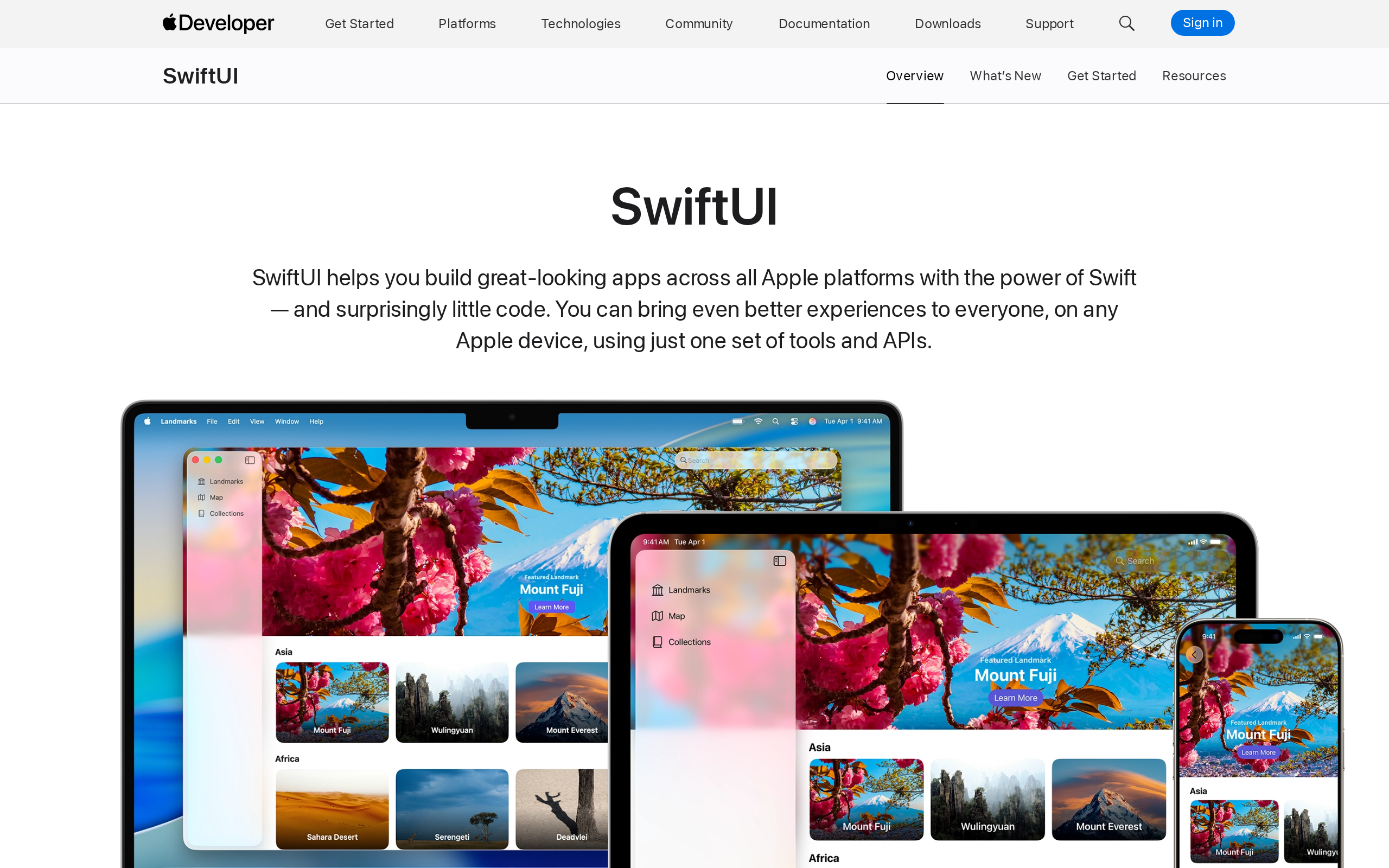
On iOS 27, geekpark reports that SwiftUI's onHingeChange and UIKit's UIHingeInteraction provide hinge APIs for iPhone Duo. Those hooks should be reserved for controls with a visible consequence. Otherwise, angle-linked motion remains decoration.
Test interruption before the spectacular transition
Opening the iPhone Duo should not be treated as a single transition to admire. It is an interruption test. A person may begin reading, pause halfway through opening, reverse direction, then close the device before finishing the gesture. Each state should preserve the active focus and visible reading position. It should also retain any onscreen keyboard, media playback, or unsaved edits rather than resetting the task.
Apple's motion guidance, cited by woshipm, says animation should track gestures and match user expectations. That makes reversal especially revealing: if the interface changes state only after a completed unfold, it can feel detached from the hand that is moving the device. The woshipm author's view is that the Duo's proportions and Dock were designed around unfolding. Its app interactions and visual treatment raise the standard as well. The movement cannot be merely decorative.
Test the interruption at the moments people actually change their minds.
iOS 27 gives developers a more explicit basis for those checks. Its reserved-area concept tells apps where the hinge and cameras sit, while onHingeChange in SwiftUI and UIHingeInteraction in UIKit expose hinge motion. Those interfaces can support continuous responses, but the practical requirement is continuity of the task as the available surface changes. A reader should not lose their place because a reserved area becomes relevant. A draft should not disappear when a hinge event arrives.
Core controls on the right side, as ifanr reports, also make folded and unfolded use a test of reach and focus retention. A control that remains reachable but abandons the current edit has failed the more consequential interaction.
The available evidence does not quantify sensor latency or power draw. It also does not quantify heat or accessibility behavior. They therefore belong in validation rather than assumption: check whether rapid hinge changes lag behind motion. Check whether repeated transitions affect battery or temperature. Also check whether assistive access retains a stable focus target. As woshipm's author argues, unfolding needs a reason; reliable recovery from interruption is part of creating one.
Design for the shape that apps can actually trust
The display description is already a warning against designing to a single canvas. geekpark describes iPhone Duo with a 5.4-inch, 84-mm-wide outer display and a 7.6-inch inner display near 1:1.42. ifanr instead describes a passport-like device whose inner and outer displays share the same aspect ratio. Those accounts point to different fixed geometries, so neither should become an app team's assumed layout template.
Containers, rather than device-specific coordinates, give teams a safer contract.
Android's foldable history makes that contract urgent. In Android 12L in 2022, Google handled unadapted apps by placing them in a narrow vertical region with black bars at either side. Beginning with Android 16, large-screen devices ignore an app's declared orientation and size restrictions by default. Android 17 removes exemptions except for games. A layout that depends on a locked orientation or a prescribed window size therefore risks losing its intended structure when the system takes control.
For cross-platform work, the practical question is what space the app receives at a given posture, not what one handset's marketing dimensions suggest. Each screen should let its content reflow within the current container and account for unavailable regions. iOS 27's reserved-area concept supplies information about hinge and camera locations, allowing an app to avoid treating the entire reported rectangle as usable surface.
ifanr also says Apple puts iPhone Duo's core controls on the right side to support one-handed use folded or unfolded. That is a product-specific placement choice, not a substitute for responsive rules. Teams can preserve the intended reachability while allowing controls to change with the space actually available. Panes can adjust separately. Reading widths can adapt as well.
Build for the changing canvas first; use the hinge only for deliberate interaction
- An app must remain usable on the iPhone Duo whether it is folded, partly opened, or fully opened. Treat responsive layout as the baseline requirement. iOS 27 exposes a reserved-area concept for hinge and camera locations, and apps recompiled for 27.1 can fill both screens; apps that are not recompiled with iOS 27 tools are instead shown in a central safe area with black borders.
- A team is considering a fold animation primarily because it looks impressive in a demo. Do not make the animation the product strategy. Use hinge-linked visual effects only when they preserve the user's sense of direct manipulation: the proposed recreation approach ties image position, blur intensity, and brightness to folding angle, while Apple's motion guidance says animation should follow gestures and meet expectations.
- Physical opening or closing can provide a meaningful continuous control, rather than merely switch between two fixed layouts. Use the iOS 27 hinge interfaces-onHingeChange in SwiftUI and UIHingeInteraction in UIKit-for features that benefit from angle-aware behavior. Device-provided folding-angle data is required if visuals are meant to respond to physical hand movement.
- The folded outer display can give another person useful information during a social or camera task. Design a distinct shared-screen workflow rather than mirroring the main interface. Duo FaceTime lets someone beside the caller join through the outer screen, while Duo Preview lets photographed subjects see composition and adjust their poses.
- A productivity or creative feature needs more room after unfolding. Make the expanded state earn the opening action with a task that benefits from it, such as note-taking, sketching, or annotation. Apple says Apple Pencil support is coming later this year on both the inner and outer screens; the sources do not disclose further workflow details.
Count the portability and QA trade-offs
Portability is part of the interaction budget. The iPhone Duo is 11.3 mm thick when folded. It weighs 254 g and starts at 15,999 yuan in mainland China, according to geekpark. ifanr also describes a passport-like aspect ratio, with matching inner and outer display proportions. That pairing may make the device easier to carry and easier to move between screen states, but it does not erase the cost of carrying a 254 g device or paying 15,999 yuan.
A hinge gesture must earn those compromises.
For product teams, the practical question is where a foldable-only control saves enough effort to justify device-specific design. It must also justify implementation and QA. A feature tied to physical motion also needs testing on the hardware that users actually hold when folded at 11.3 mm. Testing is also needed when the device is open and during changes between those states. The shared aspect ratio can reduce one source of interface variation, yet it does not make every use case equally portable or equally comfortable.
The event chronology should be treated cautiously rather than used as a foundation for workflow advice. woshipm says Apple unveiled the iPhone Duo at a product launch event last week, while geekpark says John P. Ternus introduced it as Apple CEO on September 9, 2026. ifanr describes Ternus holding his first fall event after becoming CEO, but another ifanr item says he will formally succeed Tim Cook on September 1 and projects a September 9 event. geekpark separately schedules the iOS 27 public release for September 14 and says the phone ships in October with iOS 27.1 preinstalled. The design lesson survives the uncertain narrative: validate the interaction against shipping software and physical constraints, not launch-story timing.
Foldable-interface approaches: adaptive layout, fallback behavior, and hinge interaction
| iOS 27 / iPhone Duo | Android 12L | Android 16 and Android 17 | |
|---|---|---|---|
| Screen-geometry information | A "reserved area" concept informs apps about hinge and camera locations. | not covered | not covered |
| Physical hinge as an app input | Provides onHingeChange in SwiftUI and UIHingeInteraction in UIKit. | not covered | not covered |
| Treatment of unadapted apps | Apps not recompiled with iOS 27 tools appear in a central safe area with black borders on iPhone Duo. | Places unadapted apps in a narrow vertical area with black bars on both sides. | not covered |
| Path to using the full display | Only apps recompiled for 27.1 can fill both screens. | not covered | Beginning with Android 16, Android ignores declared orientation and size restrictions by default on large-screen devices; Android 17 removes exemptions except for games. |
| Shared outer-screen workflows | Duo FaceTime lets a person beside the caller join through the outer screen; Duo Preview lets photographed subjects view composition and adjust poses. | not covered | not covered |
| Fold-motion visual behavior | Opening-and-closing animation keeps wallpaper, icons, and UI elements seemingly fixed in real space as the screen unfolds beneath them. | not covered | not covered |
Watch the engineering signals around Apple's leadership transition rather than treating a future device as a finished design answer. According to ifanr, John Ternus brought Laura Legros back into his management team after September 1; she previously led the 2018 MacBook Air and 2020 iPad Air launches.
That makes interface adaptation a live question, not a cosmetic one. Build prototypes that preserve state through resizing and reversal. They should also preserve state during interruption or at partially open positions. Make container-driven layouts and hinge-safe regions the baseline, then retain a motion-linked control only when it improves a task.
ifanr also says applications for Apple's Event Support Experience Program close on August 8, with results on August 17. Those dates offer a practical point to watch for which product-facing experiences Apple chooses to put in front of retail staff and event participants.
For readers outside China
- Availability: The source material describes mainland-China availability: iPhone Duo starts at 15,999 yuan there, supports only eSIM in mainland China, and requires carrier-store activation. It is scheduled to ship in October with iOS 27.1 preinstalled. Availability in the United States, Europe, and other markets is not disclosed in sources.
- Pricing: The stated mainland-China starting price is 15,999 yuan. No pricing for other regions, storage configurations, carrier plans, Apple Pencil, or accessories is disclosed in sources.
- Closest Western equivalents: Samsung Galaxy Fold; Android large-screen and foldable-device behavior introduced through Android 12L and changed further in Android 16
- Data residency: The source material does not cover where iPhone Duo app data, hinge telemetry, camera data, or call data is stored or processed. Apple says that the timing of Apple Intelligence in mainland China depends on regulatory approval. Separately, Apple claims Siri Recap does not record audio, save text transcripts, identify speakers, or let the owner retrieve original recordings; this is a feature-specific claim, not a general data-residency policy.
Sources
- ifanr 下个月的 iPhone 发布会,可能是五年来最有「活人感」的一次 https://ifanr.com/1674187
- woshipm 苹果折叠屏,一个动画就让人想换手机? https://woshipm.com/ucd/6464115.html
- geekpark 苹果的折叠屏等了十五年,体验还差临门一脚 https://geekpark.net/news/370231
- ifanr 特努斯回答一切,那个懂技术的苹果 CEO 回来了 https://ifanr.com/1679848
The evidence: 55 facts from 4 Chinese articles
Each line below was extracted from the article it sits under, in Chinese, before any of this was written. The writing is done from these and never from the source prose - that separation is structural, not a promise. How we work.
geekpark苹果的折叠屏等了十五年,体验还差临门一脚
- Apple filed a patent application titled "Flexible electronic devices" on September 30, 2011.
- Apple's "Flexible electronic devices" patent was granted in January 2015 and listed six inventors, including John P. Ternus.
- John P. Ternus introduced the iPhone Duo as Apple CEO on September 9, 2026.
- Samsung and Huawei unveiled their first foldable phones, the Galaxy Fold and Mate X, four days apart in February 2019.
- The Galaxy Fold was more than 15 mm thick when folded.
- The iPhone Duo uses custom cover glass developed with Corning and a hinge made of titanium and aluminum.
- The Huawei Mate X7 is 9.5 mm thick and weighs 235 g.
- The Xiaomi 18 Fold is priced at 10,999 yuan.
- The iPhone Duo is 11.3 mm thick when folded, weighs 254 g, and starts at 15,999 yuan in mainland China.
- Google finalized its foldable-device approach in Android 12L in 2022 by placing unadapted apps in a narrow vertical area with black bars on both sides.
- Beginning with Android 16, Android ignores apps' declared orientation and size restrictions by default on large-screen devices, while Android 17 will remove exemptions except for games.
- Apple's iPhone Duo has a 5.4-inch, 84-mm-wide outer display and a 7.6-inch inner display with an aspect ratio close to 1:1.42.
- iOS 27 introduces a "reserved area" concept that informs apps about hinge and camera locations.
- iOS 27 provides hinge APIs called onHingeChange in SwiftUI and UIHingeInteraction in UIKit for the iPhone Duo.
- The iOS 27 public release is scheduled for September 14, while the iPhone Duo will ship in October with iOS 27.1 preinstalled.
- Apps not recompiled with iOS 27 tools are displayed in a central safe area with black borders on the iPhone Duo, while only apps recompiled for 27.1 can fill both screens.
- The iPhone Duo supports only eSIM in mainland China, and activation requires a visit to a carrier store.
- Apple's website states that the launch timing for Apple Intelligence in mainland China depends on regulatory approval.
ifanr特努斯回答一切,那个懂技术的苹果 CEO 回来了
- John Ternus held his first fall product launch event after becoming Apple CEO.
- Apple unveiled the foldable iPhone Duo, the iPhone 18 Pro and Pro Max with variable-aperture technology, and a new Apple Watch series at the launch event.
- John Ternus and Apple Senior Vice President of Worldwide Marketing Greg Joswiak gave a joint interview to Tom's Guide and TechRadar after the launch event.
- iPhone Duo has ultra-thin glass on both sides of its flexible OLED display to improve rigidity and flatness.
- iPhone Duo uses a reworked nano-texture process on the outer polymer surface of its foldable display.
- iPhone Duo has a passport-like aspect ratio, and its inner and outer displays use the same aspect ratio.
- Apple placed iPhone Duo's core controls on the right side of the screen to support one-handed use when the phone is folded or unfolded.
- iPhone Duo supports Apple Pencil.
- iPhone Duo starts at 15,999 yuan.
- The iPhone 18 Pro and Pro Max include a mechanical variable-aperture lens with six miniature mechanical blades.
- The iPhone 18 Pro and Pro Max support manual depth adjustment of aperture, shutter, and focus.
- The iPhone 18 Pro series includes a vapor chamber inside the device.
- Apple Watch's new Siri Recap audio intelligence feature uses a new chip with a hardware-isolated exclave.
ifanr下个月的 iPhone 发布会,可能是五年来最有「活人感」的一次
- John Ternus will formally succeed Tim Cook as Apple CEO on September 1.
- Bloomberg reported that Apple is opening a lottery for U.S. retail-store employees to attend a new-product launch event at its headquarters in the first half of September.
- Bloomberg described Apple's planned new-product event as an "in-person unveiling."
- John Ternus joined Apple in 2001 and rose from a product design engineer to senior vice president of hardware engineering.
- John Ternus led the Mac ecosystem's transition from Intel processors to Apple Silicon.
- Since the COVID-19 pandemic began in 2020, Apple has made its product launch events into pre-recorded videos.
- Apple's last iPhone launch event in which executives delivered the entire presentation standing onstage was the 2019 iPhone 11 event.
- Apple's internal memo calls its retail-employee event initiative the "Event Support Experience Program."
- Employees selected through Apple's Event Support Experience Program may organize queues, check in guests, provide welcome guidance, and support security teams at the event.
- Applications for Apple's Event Support Experience Program close on August 8, and results will be announced on August 17.
- Apple retail employees who attended this year's WWDC or last year's iPhone launch event are ineligible for the Event Support Experience Program.
- At the Los Angeles premiere of Apple TV's fourth season of Ted Lasso in late July, John Ternus told Reuters that Apple would continue building on its momentum in shows, characters, and stories.
- Bloomberg previously reported that John Ternus brought back Laura Legros, Apple's former vice president of hardware engineering who retired in 2022, to join his new management team and report directly to him after September 1.
- Laura Legros led the launches of the 2018 MacBook Air and the 2020 iPad Air.
- Tim Cook has said that he wants his transition with John Ternus to be a "textbook-level transition," with Cook becoming executive chairman rather than retiring.
woshipm苹果折叠屏,一个动画就让人想换手机?
- Apple unveiled the foldable iPhone Duo at its product launch event last week.
- The iPhone Duo's opening-and-closing animation presents wallpaper, icons, and UI elements as if they are fixed in real space while the screen unfolds beneath them.
- The animation uses perspective compression, blur gradients, darkening, and visual continuity during the device's folding motion.
- Samsung users recreated a similar folding-screen effect in less than one day after the iPhone Duo presentation.
- Apple's Human Interface Guidelines motion guide emphasizes that animation should follow users' gestures and meet their expectations.
- Apple announced that iPhone Duo will support Apple Pencil later this year for note-taking, sketching, and annotation on both the inner and outer screens.
- Duo FaceTime allows a person beside the caller to join the same video call through the outer screen.
- Duo Preview lets photographed subjects view the composition on the outer screen and adjust their poses.
- Duo Preview uses AI to identify when people are ready and automatically take a photo.