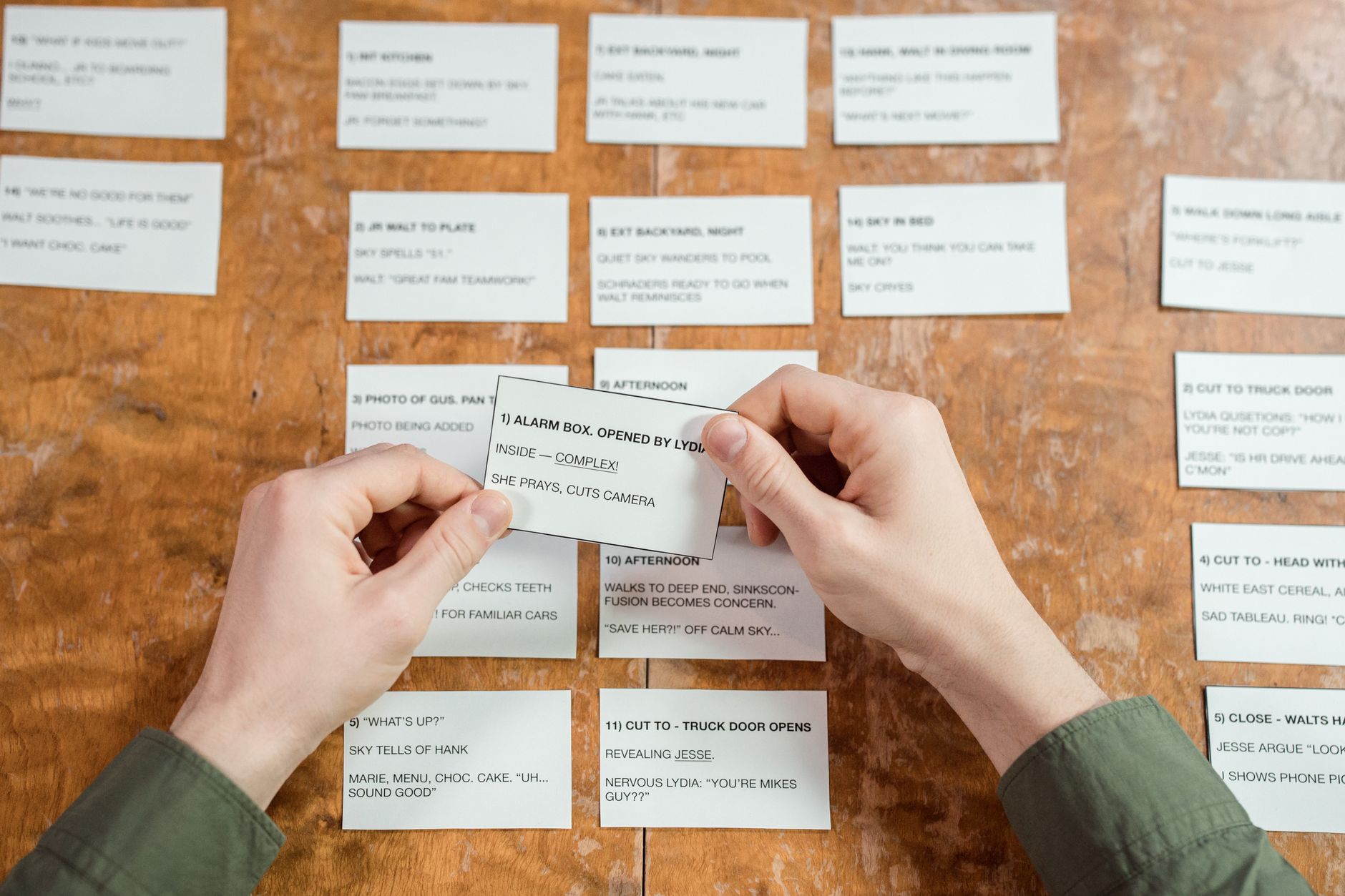
WorkBuddy's "One-Click Same Style" turns a completed skill prompt into something visible in the chat box, ready to inspect before it is reused. According to woshipm, that exported prompt exposes the goal, the input, and the processing logic rather than hiding them behind a single button. It also specifies an output format and style constraints. The useful unit is therefore a task specification, not a clever line of chat text.
Read Frog takes the same idea into specialist reading. iplaysoft says its custom AI prompt templates can be set up for medical papers, legal documents, financial reports, and programming materials. That range shows why templates travel best when readers can see their rules, adapt them to the material, and test where they stop fitting. A reusable prompt can save setup work, but it cannot make every model or every task behave the same way.
Inspect prompts before adapting them
A successful prompt is easier to reuse when its parts are visible. WorkBuddy's One-Click Same Style feature can place a skill's complete prompt in the chat box, according to woshipm. That exposes the task's goal, the input it expects, its processing logic, the required output format, and style constraints. Instead of beginning with an empty request, a practitioner can inspect the specification that shaped the result.
The useful unit is the template, not the chat-box phrasing.
That distinction matters when adapting a skill or translation request. The goal states what the work is for; inputs define what must be supplied. Processing logic indicates how the material should be handled, while output rules and style constraints make the response usable in a particular setting. Seeing those components lets someone preserve the parts that carry the task while changing the material the prompt receives.
Read Frog applies the same template idea to specialized reading. iplaysoft reports that it supports custom AI prompt templates for medical papers, legal documents, financial reports, and programming materials. Those categories imply different source material and different expectations for the resulting text. A reusable starting point therefore needs more than an instruction to summarize or translate. It needs visible fields that can be checked before adaptation: what goes in, what the tool should do, and what form the answer must take. The prompt becomes an inspectable workflow asset rather than an opaque request.
Use formulas to read examples, not replace them
Prompt formulas are useful because they expose the parts a task specification must carry. The woshipm author sets out a reusable structure: role, background, task, requirements, constraints, examples, output format, and iteration instructions. That structure makes a request easier to inspect and adapt. It does not supply the professional judgment embedded in a strong example.
A formula can tell a writer to include examples, but it cannot determine which example demonstrates competent work. According to woshipm, role plus background, task, and output format remains insufficient without genuinely high-quality examples. Examples show the target standard in action: what information belongs, what must be omitted, and how the finished response should be arranged.
The formula is the frame. The example supplies the working reference.
That distinction matters when the task changes modality. A news outlet describes Doubao AIXue as combining text, images, voice, and AI video lessons for primarily primary and secondary school students. A reusable specification can retain its task, constraints, output rules, and iteration instructions across those forms. Yet instructions for interpreting an image, producing voice, or structuring a video lesson need examples suited to that medium. A text example cannot fully specify what a useful image-based explanation or voice response should do. Treat the formula as a way to read an example's components, then preserve the parts that travel while replacing the instructions tied to the new form.
Version templates against difficult cases
Treat each prompt as a versioned task specification before it reaches routine use. The woshipm author recommends a cycle of testing, evaluation, and revision, while keeping v1, v2, and v3 rather than replacing an earlier draft without a record. That history makes a change inspectable: the practitioner can see which instruction was altered and what problem it was meant to address.
Bad cases belong beside the version, not in someone's memory.
For every difficult request, retain the input, the output that failed, and the revised prompt used in the next test. The goal is not to find a wording that looks polished in an easy demonstration. It is to establish which cases a template handles, which ones require revision, and which need a human check. A prompt that succeeds on ordinary material may still fail when the request contains disputed or consequential content.
Verification should be specified as part of deployment. Reports say that Doubao Aixue tells students to check disputed important questions against textbooks or teacher feedback. That is a useful boundary for a reusable template: define when generated work can proceed, and when an external authority must decide whether it is reliable enough.
Record cost alongside quality. According to iplaysoft, Read Frog can combine multiple translation requests into one AI request and says this can cut API-call costs by up to 70%. Its translation functions, including video translation, are free and unrestricted when users configure their own API key. Those conditions make batching worth testing, but each version should still be assessed against the bad cases and the required verification step.
Prompt assets across acquisition, adaptation, and testing workflows
| WorkBuddy reusable skills | Read Frog custom prompt templates | Video aspect-ratio conversion prompt | Personal prompt-library workflow | |
|---|---|---|---|---|
| Primary use | Acquire and study user-made skills | Adapt translation behavior for specialized content | Recompose video for a new aspect ratio | Save successful prompt recipes as templates with {{placeholders}} |
| How the specification is obtained | Inspiration Channel; "One-Click Same Style" outputs the complete prompt | User-configured custom AI prompt templates | Provided prompt; original author identified as @Framer_X | Built from successful prompt recipes |
| Prompt components covered | Goal, input, processing logic, output format, and style constraints | Not covered | Instructions cover scene elements, reframing, and generation outside the original frame | Role, background, task, requirements, constraints, examples, output format, and iteration instructions |
| Adaptation method | Keep the structure and replace the task; add style, length, prohibitions, and output format | Specialize templates for medical papers, legal documents, financial reports, and programming materials | Swap every occurrence of "16:9 horizontal" and "9:16 vertical" for the reverse conversion | Use {{placeholders}} in reusable templates |
| Model or tool context | WorkBuddy | Read Frog can use third-party large-model APIs, including DeepSeek and OpenAI APIs | Seedance model or MiniMax H3 | Not covered |
| Examples or reported use | qianjin-book-deconstruct adapted a "book distillation" skill and reportedly deconstructed Tao Te Ching and Principles | Not covered | Reported success converting a three-segment ice-cream advertisement from 9:16 to 16:9 | Retain v1, v2, and v3 versions and collect bad cases |
| Testing and limits | Study high-quality skills before writing prompts | Not covered | Reported to work for storyboard segments lasting a few seconds; a 30-second seedance2.5 video did not convert successfully | Use a test, evaluation, and revision cycle |
| Output controls | Output format and style constraints are included | Not covered | Preserves characters, animation, actions, timing, camera movement, environment, lighting, colors, saturation, and visual style | Specify formats such as a table, numbered list, JSON, Markdown, or code block |
| Availability or pricing | Not disclosed in sources | Core features are free; paid membership offerings exist for AI credits, unlimited vocabulary notes, and unlimited review flashcards | Not disclosed in sources | Not disclosed in sources |
Switching models does not remove capability limits
Read Frog can make a prompt template easier to carry between services, rather than tying it to a single chat interface. According to iplaysoft, it supports APIs from more than 20 AI service providers, including OpenAI, DeepSeek, Gemini, Claude, and Ollama. That breadth changes the practical question: a reusable specification can travel to another provider, but its task still has to fit the destination model.
Portability does not make model limits disappear.
The video-conversion example makes the distinction clear. The woshipm author says a provided prompt can be used with the Seedance model or MiniMax H3 by tagging the video for conversion. Yet the same author reports that a 30-second video generated directly by seedance2.5 could not be converted successfully. The issue is not merely which provider receives the template; it is the size and continuity of the requested output.
For storyboard work, woshipm's author argues that segments lasting a few seconds suit the method. A continuous 30-second video should instead be split into shorter segments before conversion. That is task-level adaptation: retain the prompt's conversion intent, then change the unit of work to match what the model can handle. A template is portable when its instructions can move. It is useful when its scope is adjusted for the model and the length of the job.
Treat prompts as reusable, testable workflow assets
- You need a prompt for a recurring task such as book analysis, writing, translation, or content production. Start with a complete, proven prompt or skill rather than a short formula. Study it as goal, input, constraints, and output format; retain the structure, replace the task, then add your own style, length, prohibitions, and output requirements. Save successful recipes as templates with {{placeholders}}.
- The output must be reliable enough to evaluate rather than merely sound plausible. Turn subjective requests into testable constraints: define the role, context, task, requirements, examples, and output format; specify formats such as a table, numbered list, JSON, Markdown, or code block; and add a fallback instruction to state when information is insufficient rather than fabricate it.
- A prompt has to produce a consistent style, structure, or specialized interpretation. Use examples to calibrate the result and use custom prompt templates for the domain. The source material describes 0 examples as zero-shot, 1 example as one-shot, and 2-3 examples as few-shot; Read Frog supports specialized templates for medical papers, legal documents, financial reports, and programming materials.
- You are adapting video between 16:9 horizontal and 9:16 vertical formats. Use a reconstruction-oriented prompt that asks the model to identify people, actions, backgrounds, lighting, and shadows, then rearrange elements and generate connected areas beyond the original frame. For the reverse direction, swap every occurrence of "16:9 horizontal" and "9:16 vertical" in the prompt. This approach is reported to work on storyboard segments lasting a few seconds; do not assume it will preserve a continuous 30-second video, which should first be split into shorter segments.
- A prompt works once but fails on edge cases or after a model change. Treat it as a versioned workflow: break large work into smaller deliverables, then run a test, evaluation, and revision cycle. Retain v1, v2, and v3, and collect bad cases rather than treating a single successful output as proof of general reliability.
Choose a workflow, not a universal prompt
Read Frog's split between bilingual mode and translation-only mode shows why a prompt should begin with the chosen workflow. A bilingual task can preserve a relationship between languages in the same reading flow. Translation-only mode narrows the job. The useful template is therefore tied to the intended result, rather than treated as wording that should govern every language task.
A mode choice is part of the specification.
Photo-based learning needs a different structure. According to a reported description, Doubao Aixue begins with photo recognition, then provides step-by-step explanation and allows free follow-up questions. Its dynamic blackboard writing makes the explanation visible as a process, while wrong-question retention carries errors into later study. A reusable prompt can describe an explanation style, but it cannot substitute for recognition or an interface that records missed questions.
The same boundary applies to checking written work. Doubao Aixue's writing assistant advises students to keep independent thinking and verify facts, citations, and word choice, according to a reported description. That advice puts a human checking role beside the tool instead of hiding it inside a template. A prompt may request sources or careful phrasing, yet the student still has to assess the result. Choose a workflow that supplies the needed capability, then adapt the prompt to that workflow.
Keep separate prompt versions for written questions, photo-based questions, and lesson-video requests. According to the outlet, Doubao Aixue combines photo-based question answering with writing assistance and homework marking, while Doubao Classroom uses Seedance for AI video lessons drawn from ancient poetry and historical material. A template that specifies a useful answer format for one of those jobs may need different inputs and constraints for another. Save the successful version with a representative example, then rerun it on difficult material before reusing it.
Treat marking output as a learning aid, not a final school judgment. The outlet says Doubao Aixue makes that distinction itself.
For readers outside China
- Availability: Read Frog is an open-source browser extension for Chrome, Edge, and other Chromium-based browsers on Windows, macOS, and Linux. Doubao AIXue is listed for iPhone and iPad running iOS/iPadOS 13.0 or later, and for Mac devices with Apple M1 or later chips running macOS 11.0 or later. It supports Simplified Chinese and English. The sources do not say whether WorkBuddy, Xiaoyunque, Seedance, MiniMax H3, or Doubao AIXue are available outside China.
- Pricing: Read Frog's core features are free. Its translation features, including video translation, are free and unrestricted when users configure their own API key; it also has paid memberships for AI credits, unlimited vocabulary notes, and unlimited review flashcards. Doubao AIXue is currently listed as free. Pricing for WorkBuddy, Xiaoyunque, Seedance, and MiniMax H3 is not disclosed in sources.
- Closest Western equivalents: Read Frog is closest to a browser-based AI translation and reading assistant that combines bilingual webpage translation, selected-text explanation, TTS, and bring-your-own-model API support.; WorkBuddy's Inspiration Channel and One-Click Same Style feature are closest to a prompt-template or workflow-skill gallery where users can inspect and adapt complete task specifications.; Doubao AIXue is closest to an AI study companion combining photo-based homework help, step-by-step tutoring, writing guidance, and incorrect-answer review.
- Data residency: The source material does not cover data residency, server locations, cross-border processing, retention, or training use for any of these products. Read Frog can connect to third-party APIs including OpenAI, DeepSeek, Gemini, Claude, Ollama, and providers supporting the standard OpenAI API format, so data handling may depend on the provider a user configures; the sources do not provide further detail.
Sources
- woshipm AI 带货视频竖转横,不用重拍不用裁:一段提示词重构画面 https://woshipm.com/ai/6459774.html
- woshipm 在workbuddy免费抄专业级提示词写法,比背公式强太多 https://woshipm.com/ai/6445190.html
- 36kr AI英语发音准不准?豆包爱学全方位解析 https://36kr.com/p/3973196819214855
- iplaysoft 陪读蛙 Read Frog - 开源免费双语翻译插件!可接入 AI 模型 API (沉浸式/划词/视频字幕) https://iplaysoft.com/readfrog.html
- woshipm 我做了快10年产品,给大家提个醒:不会写提示词,真的会掉队 https://woshipm.com/ai/6449305.html
- 36kr 2026AI解题答案错了怎么办:全产业链盘点核验 https://36kr.com/p/3973199045636354
The evidence: 46 facts from 5 Chinese articles
Each line below was extracted from the article it sits under, in Chinese, before any of this was written. The writing is done from these and never from the source prose - that separation is structural, not a promise. How we work.
36krAI英语发音准不准?豆包爱学全方位解析
- The evaluation framework assigns a 30% weight to voice interaction and pronunciation expression.
- The evaluation framework assigns a 20% weight to knowledge explanation and tiered guidance.
- The evaluation framework assigns a 20% weight to homework grading and incorrect-answer management.
- The evaluation framework assigns a 15% weight to writing guidance and multimodal presentation.
- The evaluation framework assigns a 15% weight to knowledge Q&A and learning companionship.
- The AI Teacher feature supports real-time voice interaction.
- Learners using AI Teacher can ask follow-up questions, pause to think, and answer through keyboard input.
- Doubao Classroom uses the Seedance video creation model to create immersive AI video lessons.
- The official App Store listing shows that Doubao AIXue has seven core functions: Doubao Classroom, AI Teacher, photo-question Q&A, homework grading, writing assistant, knowledge Q&A, and Growth Friend.
- Doubao AIXue supports iPhone and iPad devices running iOS/iPadOS 13.0 or later, and Mac devices with Apple M1 or later chips running macOS 11.0 or later.
- Doubao AIXue supports Simplified Chinese and English, has a 4+ age rating, and is currently free.
36kr2026AI解题答案错了怎么办:全产业链盘点核验
- Doubao Aixue's core functions include an AI teacher, photo-based question answering, homework marking, wrong-question management, writing assistance, knowledge Q&A, and learning companionship.
- Doubao Aixue uses text, images, voice, and AI video lessons for knowledge explanations and practice feedback.
- Doubao Aixue uses a workflow of photo recognition, step-by-step explanation, free follow-up questions, dynamic blackboard writing, and wrong-question retention.
- Doubao Aixue allows learners to ask the AI teacher follow-up questions when photo-based question answering makes an incorrect judgment because an image is blurry or a diagram is complex.
- Doubao Aixue's AI teacher provides real-time voice interaction and dynamic blackboard writing, and students can pause explanations or answer using a keyboard.
- Doubao Aixue advises students to verify disputed important questions against textbooks or teacher feedback.
- Doubao Aixue stores problems found during marking and question answering in a wrong-question notebook for review and further practice by knowledge point.
- Doubao Aixue's writing assistant provides guidance on ideas, structure, full-text polishing, and writing techniques for Chinese and English writing practice.
- Doubao Aixue's writing assistant advises students to retain independent thinking and verify facts, citations, and word choice.
- Doubao Classroom uses the Seedance video-generation model to create immersive AI video lessons from ancient poetry, classical Chinese texts, figures, and historical contexts.
- Doubao Aixue's homework-marking function can judge right and wrong in assignments across multiple subjects, collect wrong questions, analyze causes of errors, and recommend required practice questions.
- The official App Store product page lists Doubao Classroom, AI Teacher, photo-based question answering, homework marking, writing assistant, knowledge Q&A, and Growth Friend as Doubao Aixue's seven core functions.
- Doubao Aixue requires iOS/iPadOS 13.0 or later on iPhone and iPad, and macOS 11.0 or later plus an Apple M1 or later chip on Mac.
- Doubao Aixue supports Simplified Chinese and English, has an age rating of 4+, and is currently listed as free.
- The technology assessment table assigns multimodal OCR and image parsing a score of 95.8, interactive logical reasoning engines 96.2, intelligent essay-marking algorithms 94.6, and emotion-sensing dialogue systems 93.9.
iplaysoft陪读蛙 Read Frog - 开源免费双语翻译插件!可接入 AI 模型 API (沉浸式/划词/视频字幕)
- Read Frog (陪读蛙) is an open-source browser translation extension whose core features are free.
- Read Frog can be installed in Chrome, Edge, and other Chromium-based browsers on Windows, macOS, and Linux.
- Read Frog offers a bilingual mode and a translation-only mode.
- Read Frog can use third-party large-model APIs, including DeepSeek and OpenAI APIs.
- Read Frog supports APIs from more than 20 AI service providers, including OpenAI, DeepSeek, Gemini, Claude, and Ollama.
- Read Frog provides built-in free Google Translate and Microsoft Translate engines.
- Read Frog supports selected-text translation, detailed explanations, and TTS voice playback.
- Read Frog supports custom AI prompt templates for specialized content such as medical papers, legal documents, financial reports, and programming materials.
- Read Frog can use AI to summarize, polish, and revise text.
- Read Frog offers YouTube subtitle translation in the video player as a Beta feature.
- Read Frog can translate text entered in an input field when the user presses the space bar three times in quick succession.
- Read Frog's TTS feature supports more than 150 voices and more than 80 languages, with speeds from 0.25x to 4x.
- Read Frog has paid membership offerings for AI credits, unlimited vocabulary notes, and unlimited review flashcards.
- Read Frog is licensed under GPLv3 and is open-sourced on GitHub with more than 6,500 stars and more than 400 forks.
- Read Frog's PDF, e-book, comic, and video features are not yet complete and are marked as "soon" on its official website.
woshipmAI 带货视频竖转横,不用重拍不用裁:一段提示词重构画面
- The woshipm author used Xiaoyunque to create several product-promotion videos.
- For conversion from 9:16 to 16:9, the prompt instructs users to swap every occurrence of "16:9 horizontal" and "9:16 vertical" in the prompt.
- The article was originally published by Yue Lu Zaowu on woshipm.
woshipm在workbuddy免费抄专业级提示词写法,比背公式强太多
- WorkBuddy has an Inspiration Channel containing user-made skills, including skills that distill books into key points, remove AI-like writing from articles, and generate posters with one click.
- The qianjin-book-deconstruct skill is open source on GitHub at github.com/ZOORO-NEW/qianjin-book-deconstruct.