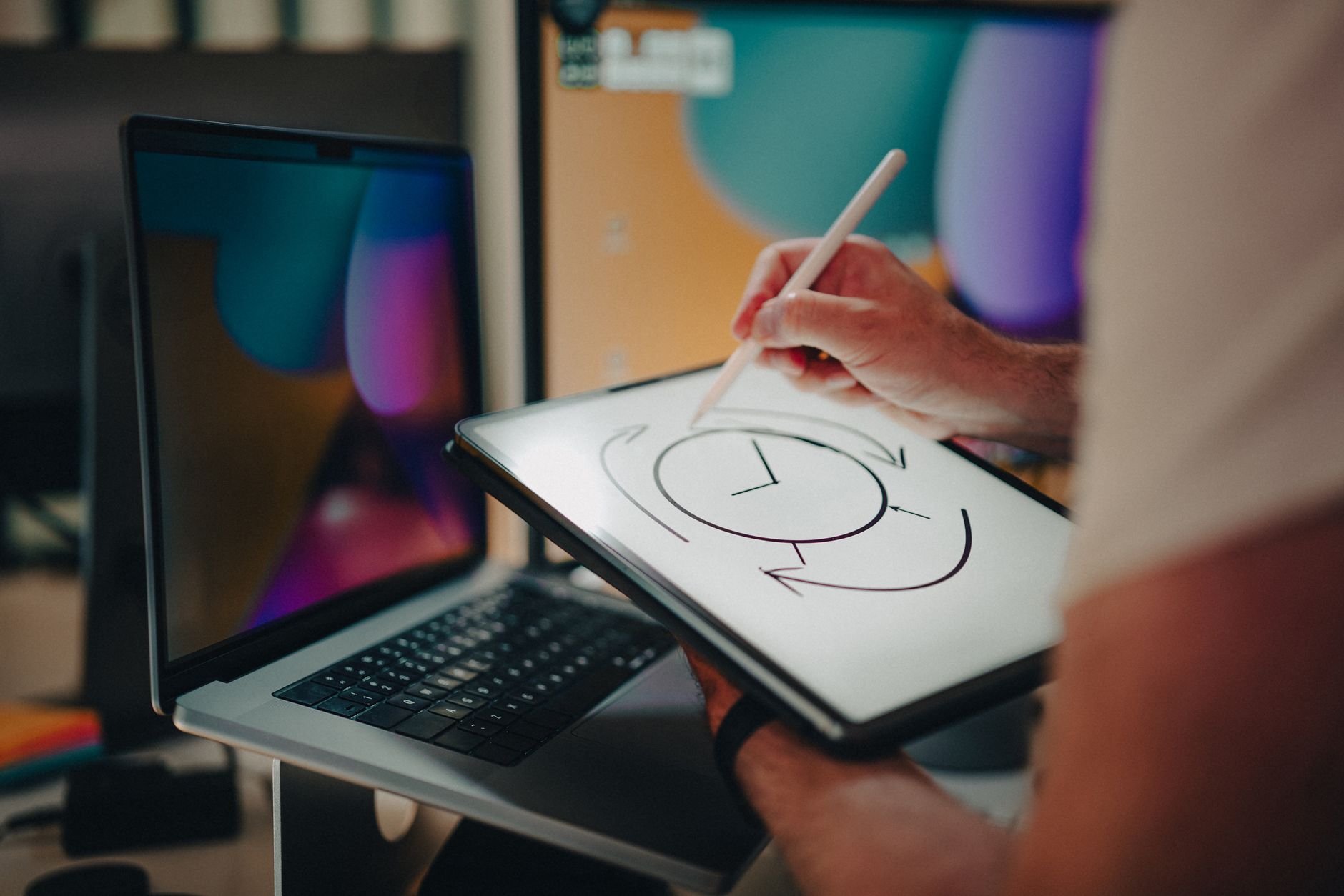
ChatGPT Images 2.5 replaces descriptive prompt writing with direct spatial interaction across a browser screen. According to ifanr, the update introduced creation templates alongside Sketch hand-drawn references and in-image comment editing. Users sketch outlines directly on the canvas. These marks act as visual guides for static images and GIFs, while pinpoint annotations designate exact areas for modification. A commenting bar positioned at the top of generated outputs lets creators request direct adjustments, woshipm notes.
Writing for woshipm, Karl's AI Watts argues that crafting complex prompts is no longer a prerequisite for controlling generation. Direct visual markup handles the geometry.
According to woshipm, OpenAI paired canvas sketching with higher resolution and faster generation speeds. Visual consistency across multi-turn editing improved as well. Yet locking these sketching surfaces and annotation pins inside proprietary web tabs isolates programmatic pipelines from the visual controls now driving the platform.
Canvas sketches and pinpoint markup replace descriptive prompts
Direct manipulation is replacing descriptive prompt engineering. With the release of GPT Image 2.5, OpenAI introduced canvas sketching alongside improved consistency across multi-turn editing, as reported by woshipm. Faster generation speeds and higher image resolution accompany the shift. Instead of struggling to describe intricate compositions with words, users summon the drawing workspace by calling @Sketch. According to ifanr, this feature allows users to draw layouts or outlines directly inside ChatGPT as visual references for static images and GIFs.
- August 1, 2024Black Forest Labs is founded by former Stability AI engineers
- August 14, 2024xAI releases Grok-2 with image generation powered by FLUX
- the month preceding October 2024Anthropic releases Claude Opus 5.5
Woshipm reports that the @Sketch tool converts rough doodles into refined graphics and complete scenes. As Karl's AI Watts argues via woshipm, crafting complex prompts is no longer a prerequisite for steering output.
This spatial control extends beyond the opening prompt. ChatGPT Images 2.5 also introduced creation templates alongside in-image comment editing, ifanr reports. When an output needs revision, users access a commenting feature located at the top of generated images to request direct modifications, according to woshipm. Pointing replaces verbose explanation. The canvas absorbs the critique directly.
According to ifanr, the comment editing feature allows users to place annotations directly on an image to specify locations for modification. Pinpoint markers isolate changes to targeted elements. Observers debate if in-image markup is merely an incremental tweak or a new interaction standard. Grounding layout decisions in physical coordinates treats visual intent as geometry rather than prose.
Comparison of AI Image Generation Interfaces, API Tiers, and Access Models
| Dimension | ChatGPT Web (GPT Image 2.5) | OpenAI API (GPT Image 2.5 Flare / Sunburst) | Black Forest Labs (FLUX.1 Ecosystem) | duck.ai (DuckDuckGo) |
|---|---|---|---|---|
| Direct Spatial Manipulation | Sketch canvas (@Sketch) for layouts/outlines; pinpoint comment annotations for localized edits | not covered (sketch canvas is on ChatGPT web version rather than via Codex) | not covered | not covered |
| Workflow Templates & Guidance | 15 templates (logos, posters, packaging, app mockups, etc.); prompt decomposition by style and scene | not covered | not covered | not covered |
| Model Offerings & Tiers | ChatGPT Images 2.5 / GPT Image 2.5 | GPT Image 2.5 Flare (cuts latency by 50%) and GPT Image 2.5 Sunburst (high precision for ads and product visuals) | FLUX.1 [pro] (API only), FLUX.1 [dev] (open-weight distilled), and FLUX.1 [schnell] (4-step model) | Image2 (alongside GPT-6 Luna, GPT-5.4 mini, and Claude Haiku 4.5) |
| Licensing & Access Constraints | Rolled out to ChatGPT, ChatGPT Work, and Codex users across desktop, mobile, and web | Developer API access | FLUX.1 [pro] restricted to commercial use; FLUX.1 [dev] non-commercial on GitHub; FLUX.1 [schnell] Apache 2.0 on Hugging Face | Anonymous use without registration; mainland China access without VPN; reverse proxies prohibited; user-reported 50 images per day quota |
| Output Specifications | Native transparent backgrounds; 1:1, 3:4, 4:3, 9:16, 16:9, and 21:9 aspect ratios; static images and GIFs | Native transparent backgrounds supported; higher precision with longer generation times on Sunburst | Powers Grok-2 image generation without watermarks; text-to-video model planned | Images limited to a resolution of 1K; specific limits not officially disclosed |
| Generation Wait Experience | Numerical progress indicator and playable Snake game during generation wait time | not covered | not covered | Chat conversation histories cached only in user browser |
Browser canvases isolate spatial tools from API endpoints
According to ifanr, ChatGPT Images 2.5 rolled out to ChatGPT, ChatGPT Work, and Codex users across desktop and mobile clients alongside the web. That shared release created early confusion regarding where spatial editing actually lives. While the core generation engine reached developer environments, woshipm reported that the sketch canvas feature for GPT Image 2.5 is accessible on the ChatGPT web version rather than via Codex. Programmers working in code editors cannot mark visual regions or draw guidance outlines. The interactive manipulation layer remains cordoned off inside consumer browser sessions.
Web sessions receive direct drawing tools. Headless scripts receive text fields. That separation strands programmatic builders on the linguistic side of generation.
To support backend integration, OpenAI launched two image models on its API alongside GPT Image 2.5: GPT Image 2.5 Flare and GPT Image 2.5 Sunburst. The two endpoints target opposing technical trade-offs. According to ifanr, OpenAI claims that GPT Image 2.5 Flare cuts latency by 50% compared to GPT Image 2. woshipm confirmed that Flare achieves this 50% speed increase at identical output quality, allowing automated systems to cycle through prompt iterations twice as fast.
For heavier production, GPT Image 2.5 Sunburst delivers higher generation precision with longer generation times, according to woshipm. ifanr observed that Sunburst is designed for demanding creative workflows such as advertising materials and high-end product visuals. Yet despite their specialized capabilities, neither Sunburst nor Flare accepts the canvas sketch strokes available online. API developers can scale batch jobs rapidly, but programmatic pipelines cannot submit the localized visual inputs that browser users draw by hand.
Multi-turn consistency improves while artifact noise divides users
Iterative image generation has historically degraded whenever systems lose track of previous edits across an ongoing session. According to woshipm, GPT Image 2 lost consistency after roughly five editing turns, causing subjects to drift or warp unexpectedly. GPT Image 2.5 counters that decay by preserving consistency across multi-turn dialogues. In an experiment generating the same blue cube 150 times, woshipm notes that GPT Image 2.5 maintained structural stability with minimal deformation. Rather than recalculating forms from scratch, the system locks object geometry across iterative exchanges.
Yet structural retention does not resolve underlying visual defects. An ifanr author argues that image noise in ChatGPT Images 2.5 remains disastrously bad, leaving messy artifacts across surfaces that otherwise keep their shape.
Aesthetic handling further divides user opinion. Citing analyst Karl's AI Watts, woshipm reports that style transfer in GPT Image 2.5 is softer and less effective than in GPT Image 2. Subtler restyling limits prompts that demand aggressive visual transformations. Conversely, woshipm contributor Yingliu Design points to distinct progress in generation speed and text rendering stability, noting improvements in image detail.
OpenAI also altered feedback mechanisms inside the consumer interface to manage generation delays. As ifanr reports, ChatGPT Images 2.5 displays numerical progress during image generation and includes a playable Snake game during the wait time. Users can guide an arcade snake across the canvas while the backend model finishes rendering. That interactive distraction fills the pause between iterative requests, keeping attention on the browser.
Selecting Image Generation Engines: Direct-Manipulation Interfaces vs. Programmatic Pipelines
- Rapid visual concepting, localized in-image edits, and template-driven design tasks Use the ChatGPT web interface with ChatGPT Images 2.5. Take advantage of the @Sketch tool to translate hand-drawn doodles into refined artwork, choose from the 15 structured generation templates (including logos, posters, packaging design, and app mockups), and place direct comment annotations at the top of generated images to guide localized modifications. Note that the sketch canvas is available on the ChatGPT web version rather than via Codex.
- High-volume, automated production pipelines requiring programmatic API access Deploy OpenAI's specialized API models: choose GPT Image 2.5 Flare to cut latency by 50% compared to GPT Image 2, or select GPT Image 2.5 Sunburst for high-precision outputs like advertising materials and high-end product visuals. However, recognize that UI-native spatial controls like the @Sketch canvas and in-image comment editing are not offered via these API interfaces.
- Open-weight deployments, self-hosted infrastructure, and commercially licensed workflows Select Black Forest Labs' FLUX.1 architecture. Use FLUX.1 [schnell] on Hugging Face for an open-source 4-step model licensed under Apache 2.0, or use FLUX.1 [pro] via API for commercial integration. Avoid FLUX.1 [dev] on GitHub and Qwen Image 2.1 for commercial products, as their licenses explicitly prohibit commercial use.
- Multi-turn subject consistency and asset generation with transparent backgrounds Use GPT Image 2.5, which introduces native transparent background generation (not supported in GPT Image 2) and maintains structural consistency across multi-turn dialogues-demonstrated by testing that preserved a blue cube across 150 generations with minimal deformation. However, note that ifanr reports image noise remains poor and style transfer is softer than in GPT Image 2.
- Zero-friction, anonymous generation without account registration or VPN overhead in mainland China Use duck.ai, which provides anonymous access without registration and functions in mainland China without a VPN. Be mindful of its constraints: Image2 resolution is capped at 1K, reverse proxies are officially forbidden, and online user feedback reports a daily limit of 50 images per day, while official usage quotas are not disclosed in sources.
Structured templates face commercial licensing and platform boundaries
According to woshipm, the ChatGPT web interface introduced 15 image generation templates to structure graphics creation. These options cover posters, interior design, logos, illustrations, avatars, icons, product images, merchandise, infographics, flyers, book covers, app mockups, packaging design, advertisements, and video covers. Within GPT Image 2.5, a dedicated Templates menu operationalizes this approach. It includes options for logos, posters, mockups, product shots, and app mockups. The Templates workflow prompts users directly for their preferences and generates four logo concepts.
OpenAI paired these tools with a prompt sharing feature. According to woshipm, the system decomposes shared image prompts into templates. It categorizes them by use case. It also organizes them by style and scene.
While structured templates anchor graphics inside hosted consumer tools, teams building automated pipelines face legal restrictions outside those boundaries. According to woshipm, the open-source license for Qwen Image 2.1 strictly prohibits commercial use. Self-hosted commercial deployments cannot run the model. Enterprise workflows looking for sovereign control find themselves blocked at the licensing gate.
Competing models from the FLUX ecosystem divide permissions across different distribution formats. Geekpark reports that FLUX.1 [pro] is accessible only via API and is restricted to commercial use. Local execution presents different barriers. According to geekpark, FLUX.1 [dev] is an open-weight, non-commercial distilled variant of FLUX.1 [pro] hosted on GitHub. That leaves FLUX.1 [schnell]. Released on Hugging Face as an open-source 4-step model, it operates under the Apache 2.0 license.
Frontier web canvases remain closed off. Instead of waiting for platform APIs to expose spatial markup tools, engineering teams should evaluate lightweight execution tiers for front-end tasks. ifanr authors Shan Yuzhe and Mo Chongyu compare the split between Flash models and flagship systems to PC-compatible computers challenging mainframes. In their tests, MiniMax M3.1 Flash Preview matched Claude Opus 5.5 on creative tasks, generating a 15-second MP4 motion design portfolio styled in black and neon green.
Commercial value is migrating away from prompt tinkering. Shan Yuzhe and Mo Chongyu argue that advantage now concentrates in agents, workflows, proprietary data, and application entry points.
The model also rendered an ink-wash narrative animation replicating 'Little Tadpole Looking for Mom' and an interactive New York skyline project with river reflections. Speed and deployment control matter more. Building custom visual canvases around responsive, specialized models offers a direct route forward while browser tools remain locked.
For readers outside China
- Availability: ChatGPT Images 2.5 is rolled out across web, desktop, and mobile for ChatGPT, ChatGPT Work, and Codex users, though its sketch canvas tool is restricted to the ChatGPT web interface. OpenAI also exposes two API endpoints: GPT Image 2.5 Flare and GPT Image 2.5 Sunburst. DuckDuckGo's duck.ai provides anonymous access without accounts and functions inside mainland China without a VPN (unlike DuckDuckGo's core search service, which requires a VPN). Black Forest Labs offers FLUX.1 [schnell] on Hugging Face, FLUX.1 [dev] on GitHub, and FLUX.1 [pro] via API, while its model also powers Grok-2 on xAI. Availability outside China for Chinese domestic models mentioned in sources-such as ByteDance's Doubao Seedream 5.0, Alibaba's Qwen Image 2.1 and 3.0, Tencent Hunyuan's Image 3.5, and MiniMax M3.1 Flash Preview-is not disclosed in sources.
- Pricing: Exact token and per-image pricing for OpenAI's GPT Image 2.5 API models (Flare and Sunburst) is not disclosed in sources. duck.ai is free to use without an account, with user reports indicating a ceiling of 50 images per day (DuckDuckGo provides paid subscriptions, but specific terms are not disclosed in sources). FLUX.1 [schnell] is free under the Apache 2.0 license, FLUX.1 [dev] is free for non-commercial use, and FLUX.1 [pro] is restricted to commercial API access, though per-call API rates are not disclosed in sources. Qwen Image 2.1 is distributed under an open-source license that strictly forbids commercial use.
- Closest Western equivalents: OpenAI ChatGPT Images 2.5 / GPT Image 2.5 (Flare and Sunburst); Black Forest Labs FLUX.1 ([pro], [dev], and [schnell]); xAI Grok-2; Midjourney; Anthropic Claude Opus 5.5 and Claude Haiku 4.5
- Data residency: duck.ai caches chat conversation histories locally within the user's web browser and does not mandate account signups, but it strictly prohibits reverse proxying. Grok-2 applies no watermarks to outputs and does not block prompts containing real people, but comprehensive data retention rules are not disclosed in sources. Regional data residency, storage locations, and compliance routing for OpenAI's models, Black Forest Labs, and Chinese foundational models (Doubao, Qwen, Tencent Hunyuan, and MiniMax) are not disclosed in sources.
Sources
- woshipm GPT Image2.5悄悄上线,靠提示语提升AI生图可控性的时代要过去了 https://woshipm.com/ai/6461898.html
- woshipm GPT Image 2.5正式上线!随手一画就能出图,连等图时间都不让你无聊! https://woshipm.com/ai/6462418.html
- woshipm 教你免费无限用GPT Image2生图 https://woshipm.com/ai/6473820.html
- ifanr 和 Opus 5.5 同题交卷,MiniMax M3.1 让 Flash 开始超纲了 https://ifanr.com/1682850
- geekpark 外网玩疯了,NSFW、毫无底线,FLUX 成为图片生成新王者 https://geekpark.net/news/371355
- ifanr GPT Images 2.5 突发上线!网友的「灵魂画作」一个比一个离谱 https://ifanr.com/1679329
The evidence: 46 facts from 6 Chinese articles
Each line below was extracted from the article it sits under, in Chinese, before any of this was written. The writing is done from these and never from the source prose - that separation is structural, not a promise. How we work.
geekpark外网玩疯了,NSFW、毫无底线,FLUX 成为图片生成新王者
- Elon Musk's xAI released Grok-2 with text-to-image generation capabilities powered by Black Forest Labs' FLUX model on August 14, 2024.
- German AI startup Black Forest Labs was founded on August 1, 2024.
- Black Forest Labs completed a $31 million seed funding round led by a16z, with participation from Y Combinator CEO Garry Tan and former Oculus CEO Brendan Iribe.
- Black Forest Labs is led by former Stability AI engineers Robin Rombach, Andreas Blattmann, and Dominik Lorenz.
- Robin Rombach is one of the two primary authors of Stable Diffusion.
- Andreas Blattmann and Dominik Lorenz are primary authors of the paper 'High-Resolution Image Synthesis With Latent Diffusion Models'.
- FLUX.1 [pro] is accessible only via API and is restricted to commercial use.
- FLUX.1 [dev] is an open-weight, non-commercial distilled variant of FLUX.1 [pro] hosted on GitHub.
- FLUX.1 [schnell] is an open-source 4-step model released under the Apache 2.0 license on Hugging Face.
- Grok's image generation feature does not reject prompts depicting real people and does not add identification watermarks to output images.
- Anjney Midha serves as a board member of Black Forest Labs.
- Black Forest Labs plans to develop and release a text-to-video generation model.
ifanrGPT Images 2.5 突发上线!网友的「灵魂画作」一个比一个离谱
- OpenAI launched its next-generation image generation model, ChatGPT Images 2.5.
- ChatGPT Images 2.5 introduced Sketch hand-drawn references, creation templates, and in-image comment editing.
- ChatGPT Images 2.5 displays numerical progress during image generation and includes a playable Snake game during the wait time.
- The Sketch feature allows users to draw layouts or outlines directly inside ChatGPT as visual references for generating static images and GIFs.
- ChatGPT's new image comment editing feature allows users to place annotations directly on an image to specify locations for modification.
- OpenAI launched two image models for its API: GPT Image 2.5 Flare and GPT Image 2.5 Sunburst.
- GPT Image 2.5 Sunburst is designed for demanding creative workflows such as advertising materials and high-end product visuals.
- ChatGPT Images 2.5 was rolled out across desktop, mobile, and web to ChatGPT, ChatGPT Work, and Codex users.
ifanr和 Opus 5.5 同题交卷,MiniMax M3.1 让 Flash 开始超纲了
- MiniMax released an AI model named MiniMax M3.1 Flash Preview.
- An anonymous AI model called Space Bunny gained developer attention on X and was linked by online users to MiniMax's M series.
- OpenCode co-founder Dax suggested testing the Space Bunny model using benchmark test prompts designed for Claude Opus 5.5.
- MiniMax M3.1 Flash Preview generated a 15-second MP4 motion design portfolio featuring a black-and-neon-green palette when given a prompt originally used on Claude Opus 5.5.
- MiniMax M3.1 Flash Preview generated a complete ink-wash narrative animation based on an Opus 5.5 prompt replicating 'Little Tadpole Looking for Mom'.
- MiniMax M3.1 Flash Preview generated an interactive New York skyline project whose scene lighting and river reflections transition across an interactive timeline.
- MiniMax M3.1 Flash Preview generated interactive prototypes for an arcade kart racing game, an underwater exploration game, and a narrative ghost game.
woshipm教你免费无限用GPT Image2生图
- DuckDuckGo is an internet search engine founded in 2008.
- DuckDuckGo launched duck.ai as an AI conversation tool that can be used anonymously without account registration.
- duck.ai has not officially disclosed its specific usage limits for its models.
- Images generated via Image2 on duck.ai are limited to a resolution of 1K.
- The open-source license for Qwen Image 2.1 prohibits commercial use.
woshipmGPT Image2.5悄悄上线,靠提示语提升AI生图可控性的时代要过去了
- OpenAI released GPT Image 2.5, featuring faster generation speeds, higher image resolution, improved consistency across multi-turn editing, and canvas sketching.
- OpenAI launched two image models on its API alongside GPT Image 2.5: GPT-Image-2.5 Flare, which boosts processing speed by 50% at the same quality level, and GPT-Image-2.5 Sunburst, which provides higher generation precision with longer generation times.
- GPT Image 2.5 supports generating native transparent backgrounds, a capability that was not available in GPT Image 2.
- The sketch canvas feature for GPT Image 2.5 is accessible on the ChatGPT web version rather than via Codex.
- The ChatGPT web interface introduced 15 image generation templates covering posters, interior design, logos, illustrations, avatars, icons, product images, merchandise, infographics, flyers, book covers, app mockups, packaging design, advertisements, and video covers.
- GPT Image 2.5 supports generating images in 1:1, 3:4, 4:3, 9:16, 16:9, and 21:9 aspect ratios.
- OpenAI introduced a sharing feature that decomposes shared image prompts into templates organized by use case, style, and scene.
- OpenAI scheduled OpenAI DevDay 2026 for the 29th.
woshipmGPT Image 2.5正式上线!随手一画就能出图,连等图时间都不让你无聊!
- GPT Image 2.5 has officially been released.
- GPT Image 2.5 provides a Templates menu that includes options for logos, posters, mockups, product shots, and app mockups.
- The Templates workflow in GPT Image 2.5 prompts users for preferences and generates four logo concepts.
- GPT Image 2.5 includes a commenting feature located at the top of generated images that allows users to request direct modifications.
- Users can access the drawing and sketch tool in GPT by calling @Sketch.
- GPT Image 2.5 includes a playable Snake game for users to play while waiting for images to generate.