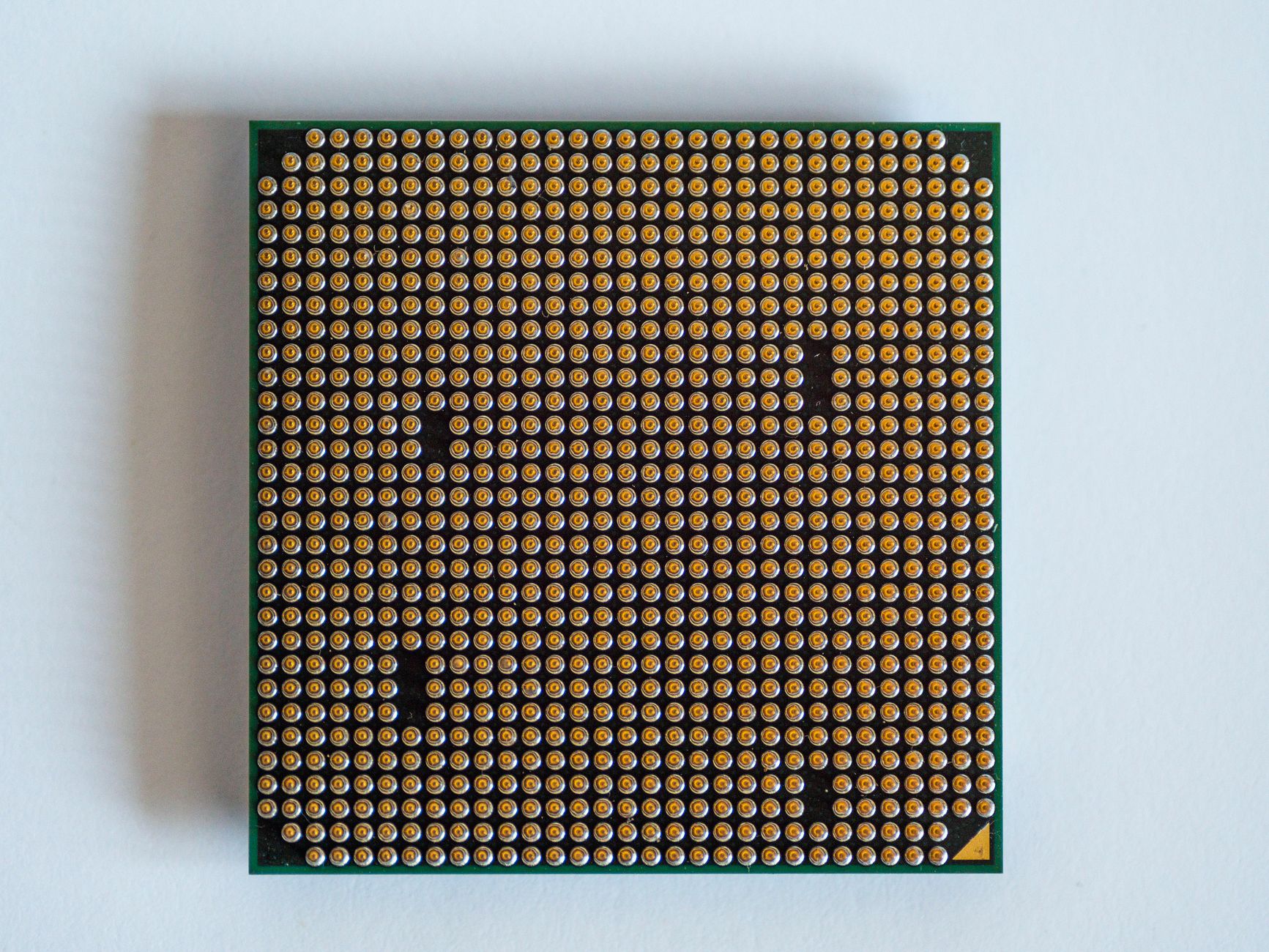
World Labs agreed on September 28 to an all-stock acquisition by AMD valued at approximately $8.2 billion. According to reporting from woshipm, founder Fei-Fei Li will join AMD as Executive Vice President and Chief Scientist under AMD Chair and CEO Lisa Su. The purchase capped an aggressive fundraising sprint: World Labs secured a $230 million round in September 2024 at a valuation over $1 billion, followed by a $1 billion round in February that reached about $5 billion.
The exit reveals a structural bottleneck. Generating spatial worlds on pure neural compute burns immense capital without commercial traction, forcing foundational models to anchor directly into dedicated chip architectures.
An investor cited by woshipm argued that World Labs yielded only demos throughout its two years of operation. World models without hardware integration cannot sustain their compute costs. As foundational systems retreat into silicon, practical graphics workflows are splitting between classical meshes and proprietary neural runtimes.
The compute trap behind the $8.2 billion exit
On September 28, AMD agreed to acquire World Labs in an all-stock transaction valued at approximately $8.2 billion, or around 55 billion yuan. The startup had raised a $230 million round in September 2024 at a valuation over $1 billion, followed by a $1 billion round in February led by Autodesk that pushed its post-money valuation to about $5 billion. Fei-Fei Li enters AMD as Executive Vice President and Chief Scientist, reporting directly to Chair and CEO Lisa Su.
- early 2024Fei-Fei Li and co-founders establish World Labs to focus on spatial intelligence
- September 2024World Labs completes a $230 million round valuing the company at over $1 billion
- November 2025World Labs launches Marble to generate editable 3D worlds from text and images
- February 2026World Labs raises $1 billion in funding at a valuation of about $5 billion
- September 28AMD announces agreement to acquire World Labs in an $8.2 billion all-stock deal
Private investors remained unconvinced. As reported by woshipm, an embodied AI investor argued to AIX Caijing that World Labs had produced only demos across two years, turning the sale into an exit before revenue materialized.
A brokerage analyst similarly described AMD buying an unprofitable startup as an insider cash-out for an early backer. Yet running generative spatial environments on generic hardware is ruinous. At CES in January, World Labs showed its Marble product reaching a fourfold acceleration when tailored directly to AMD chips. Hardware alignment offers a defensive play for both sides. IDC estimates cited by woshipm indicate Nvidia holds approximately 81% of the AI accelerator market, while AMD claims about 13%.
Hardware co-design is now standard math for surviving inference overhead. This Ascend deployment slashes inference costs by approximately 70% compared to equivalent GPU clusters. It operates at 30% to 50% of the cost of existing world models. Dedicated silicon runtimes have become the only viable barrier against bottomless compute burn.
Bifurcation of Spatial Intelligence: Creative Mesh Pipelines vs. Hardware-Locked World Models
| Dimension | Meshy | Moxie Technology (MoWorld) | World Labs (Marble / Atlas) |
|---|---|---|---|
| Core Product & Architecture | Meshy-1, 3D Agent, and Smart Topology | KOKONI-World prototype and MoWorld (28-billion-parameter Mixture-of-Experts world model) | Marble (subscription-based 3D scene generation) and Atlas (underlying world model demo) |
| Hardware & Runtime Environment | not covered | Ascend NPU supernodes without relying on high-end GPUs | AMD chips (demonstrated fourfold acceleration at CES) |
| Target Output & Formats | Exporting to STL, 3MF, GLB, and FBX formats | 3D scenes at 50 frames per second, six degrees of freedom camera control, up to 2,000 frames long | Editable 3D worlds; text, image, video, and 3D reconstruction, generation, and simulation |
| Inference & Cost Claims | Meshy-1 generation times under 60 seconds | Ascend NPU deployment reduces inference costs by approximately 70% compared to equivalent GPU deployment | not covered |
| Hardware Integration / Acquisition Status | not covered | Jointly released with Huawei Cloud; backed by Huawei Hubble and Loongson VC | Acquired by AMD in an all-stock transaction valued at approximately $8.2 billion |
| Scientific Leadership | Hu Yuanming (founder) and Tong Xin (Chief Scientist) | Chen Tianrun (founder and CEO) and Pan Yunhe research team | Fei-Fei Li, Justin Johnson, Ben Mildenhall, and Christoph Lassner |
Why practical studios demand clean topology over neural volumes
Production studios prioritize pipeline integration over novel neural representations. As reported by woshipm, World Labs launched Marble in November 2025 as a subscription-based platform to generate editable 3D worlds from text and images, while keeping its underlying Atlas world model in the demo stage. But full scene generation often collides with technical art pipelines that demand discrete assets with predictable edge flow. Game engines cannot rig or light an unpartitioned volume.
Practical tooling focused on standard meshes has delivered measurable production savings. Meshy released Meshy-1 in October 2023, reducing generation times for Text-to-3D and Image-to-3D down to under 60 seconds, while matching that threshold for Text-to-Texture. According to geekpark, game publisher 37 Interactive Entertainment reported that using Meshy in casual and mobile game production cut complete modeling cycles from about 5 days to about 2.5 days. For complex next-generation and Chinese-style game projects, the studio found Meshy reduced high-poly sculpting workloads by approximately 30% to 40%.
Pipelines require predictable surfaces. Pure neural outputs collapse when technical directors attempt skeletal binding or runtime performance passes.
Adoption followed this pragmatic approach. Geekpark noted that by 2026, the Meshy platform had accumulated over 12 million registered users and generated over 100 million 3D models. Meshy released 3D Agent in June 2026, which added conversational prompt generation alongside direct exports to STL, 3MF, GLB, and FBX formats. In July 2026, the company introduced Smart Topology. It targeted game development and real-time rendering directly, while extending utility to Web 3D projects without forcing artists into proprietary runtimes.
Physical reality splits reconstruction from generative hallucination
Generative models treat physical space as an inference problem. According to woshipm, World Labs released Atlas in September 2026 to process text, image, video, and 3D information. The system pairs reconstruction with generative simulation. Yet statistical synthesis frequently drifts from metric accuracy. When production environments demand verifiable physical structure, unanchored neural approximations yield errors that technical pipelines reject.
KIRI CEO Wang Zhengnan predicts that generative AI will replace 3D modeling workflows that do not require 1:1 real-world fidelity. Where physical accuracy matters, capture pipelines cannot tolerate imaginative drift.
That boundary anchors 3D Gaussian Splatting in production pipelines. The KIRI team began developing 3D reconstruction technology in 2021 and launched its first product, KIRI Engine, in 2022 to serve overseas professional users. 3D Gaussian Splatting became a primary technology direction for KIRI Engine after 2023. It serves as the core shared technology across two product lines: KIRI Engine for professional creators in commercial scenarios, and the consumer 3D spatial recording application Remy. Real-world utility followed. KIRI Engine has accumulated over 2 million professional 3D creators in fields like 3D printing and film visual effects.
Ground truth separates measured reality from synthetic generation. KIRI Innovations plans to use its Series A capital to lower barriers to 3D reconstruction, enhance 3D reconstruction clarity, explore 4D dynamic reconstruction, and promote marketing. Captured radiance fields tie visual detail directly to real spatial coordinates. Neural models can simulate plausible scenes, but technical graphics still demands physical verification.
Interactive simulation discards standard rendering engines
Real-time neural generation does not pass scenes through traditional rasterization pipelines or deterministic physics engines. Instead, running these dynamic representations requires custom silicon arrangements that bypass standard graphics hardware. In December 2025, Moxie Technology released a prototype of its interactive world model called KOKONI-World. By July, Moxie Technology partnered with Pan Yunhe's research team and Huawei Cloud to release MoWorld, a 28-billion-parameter Mixture-of-Experts world model.
MoWorld bypasses conventional game loops entirely. It delivers 50 frames per second with six degrees of freedom camera control, producing sequences up to 2,000 frames long directly from neural weights.
This operational shift depends on tight silicon integration. MoWorld runs entirely on Ascend NPU supernodes rather than high-end GPUs. Dedicated compute substrates replace traditional graphics APIs because raw neural inference cannot afford the translation overhead of geometry buffers. High-performance execution environments follow similar lines; during his tenure at MIT, Hu Yuanming built Taichi as an open-source programming language for high-performance parallel computing.

Hardware coupling extends beyond pure rendering into synthetic embodiment. As woshipm reported, World Labs acquired robotics firm SceniX in July 2026 before launching Atlas in September 2026. Atlas ingests text, image, video, alongside 3D information to manage spatial tasks like generation and physical simulation. Meanwhile, geekpark noted that Meshy launched Meshy Labs at GDC 2026, demonstrating an AI-native game demo titled Black Box: Infinite Construction (黑箱:无限构筑). These systems trade deterministic collision meshes for neural runtime execution.
Spatial Intelligence and 3D Asset Toolchain Selection
- Standard digital content creation, game production, and 3D printing pipelines requiring editable geometry and standard file interchange Deploy Meshy. Using its conversational 3D Agent (released in June 2026) and Smart Topology (released in July 2026), teams can generate assets with clean topology and export directly to GLB, FBX, STL, and 3MF. In game production benchmarks at 37 Interactive Entertainment, using Meshy shortened complete modeling cycles from about 5 days to about 2.5 days in casual/mobile titles, and reduced high-poly sculpting workloads by roughly 30% to 40% in next-generation projects.
- Interactive 3D simulation and virtual environment streaming requiring real-time camera control without high-end GPU reliance Use MoWorld. Co-developed by Moxie Technology, Pan Yunhe's research team, and Huawei Cloud, this 28-billion-parameter Mixture-of-Experts world model generates 3D scenes at 50 frames per second with six degrees of freedom camera control for runs up to 2,000 frames. Running entirely on Ascend NPU supernodes, it cuts inference costs by approximately 70% compared to equivalent GPU deployments, operating at 30% to 50% of the cost of existing world models.
- Text- and image-prompted 3D scene generation optimized for AMD hardware acceleration stacks Select World Labs' Marble platform. Launched in November 2025 to create editable 3D worlds from text and image prompts, Marble operates on a subscription model and demonstrated a fourfold acceleration on AMD chips ahead of AMD's agreement to acquire World Labs for approximately $8.2 billion.
- Photorealistic capture and navigable spatial recording of real-world scenes rather than synthetic non-faithful geometry Use 3D Gaussian Splatting capture pipelines such as KIRI Innovations' KIRI Engine or Remy. Remy reconstructs cloud-processed 360-degree, zoomable, first-person navigable 3D spaces with preserved audio from mobile video and Insta360 panoramic footage. Generative AI tools should be restricted to modeling scenarios that do not demand 1:1 real-world fidelity.
Structuring the bifurcated spatial toolchain
Practical 3D production splits around output formats and topology controls rather than raw model scale. The priority is file utility. In June 2026, Meshy released 3D Agent, supporting conversational prompt-based 3D generation and exporting to STL, 3MF, GLB, and FBX formats. Meshy then launched Smart Topology in July 2026 for game development and real-time rendering, as well as Web 3D. Clean meshes fit existing rendering pipelines without friction.
According to geekpark, 37 Interactive Entertainment documented these efficiency gains in practice. Using Meshy in casual and mobile game production shortened the complete modeling cycle from about 5 days to about 2.5 days. The savings are concrete. Polygonal automation accelerates existing studio toolchains instead of replacing their core DCC pipelines.
Generative AI will replace 3D modeling workflows that do not require 1:1 real-world fidelity, KIRI CEO Wang Zhengnan predicts. Growth is steep.
The simulation side of the bifurcation abandons traditional graphics engines entirely. According to woshipm, World Labs launched Marble in November 2025 as a subscription platform generating editable 3D worlds from inputs including text and images, while keeping its underlying Atlas world model in the demo stage. These systems create self-contained environments rather than exportable polygonal assets. Production studios cannot trade geometric control for neural approximation. As geekpark reports, Meshy founder Hu Yuanming argues that the core driving force of an outstanding game lies in its mechanics, gameplay, world-building, and interactive user experience. That focus keeps standard meshes firmly at the center of production.
Budgeting for universal models assumes platforms can absorb open-ended compute costs indefinitely. They cannot. In the first half of 2026, ByteDance recorded approximately $120 billion in revenue and around $20 billion in net profit, with margins pinched by rising AI expenditures. woshipm author Guai Ge argues the company is evolving into an "AI company factory" that incubates and spins off industry-specific businesses. Expect domain silos rather than all-in-one graphics runtimes.
Specialization follows capital. ByteDance confirmed plans to spin off Xingfuli (幸福里) in 2021, and automotive platform Dongchedi completed roughly $600 million in financing in 2024.
Vertical branches must fund their own compute. Anew Labs targets IL17 and IL4R alongside tools like AnewFold, while ByteDance's Seed division separates robotics from foundation models. Keep creative production anchored in standard DCC pipelines. Hardware-locked neural engines will remain sequestered inside dedicated spin-offs.
For readers outside China
- Availability: Meshy operates internationally with over 12 million registered users as of 2026 and showcased its AI-native game demo at GDC 2026. KIRI Engine has targeted overseas professional creators across film, gaming, and 3D printing since its 2022 launch, accumulating over 2 million users, while KIRI's consumer app Remy debuted on Huawei's HarmonyOS ecosystem in October 2025. World Labs was founded in San Francisco, and its platform Marble launched in November 2025. Conversely, MoWorld is tightly integrated with Huawei Cloud and Ascend NPU infrastructure; international availability outside China is not disclosed in sources. AI agent platform Manus resumed independent operations on September 1 and rolled out version 2.0 to overseas users on September 28.
- Pricing: World Labs operates Marble as a subscription-based platform, though specific tiered pricing is not disclosed in sources. Specific subscription and retail pricing for Meshy, Remy, and KIRI Engine are also not disclosed in sources. At the compute level, Moxie Technology reports that MoWorld's Ascend NPU deployment operates at 30% to 50% of the cost of existing world models, reducing inference costs by approximately 70% compared to an equivalent GPU cluster. Historical consumer hardware pricing in the source material includes the first batch of Oculus Rift shipping at $599 on March 28, 2016.
- Closest Western equivalents: World Labs (Marble, Atlas); Advanced Machine Intelligence Labs (AMI Labs); Autodesk; Hugging Face
- Data residency: Workflows divide heavily along sovereign cloud and compute boundaries. MoWorld is co-developed with Huawei Cloud and executes exclusively on Ascend NPU supernodes, anchoring training, inference, and spatial data inside mainland Chinese infrastructure. Remy processes user mobile video and panoramic footage via cloud rendering, but specific server jurisdictions and international data routing are not disclosed in sources. Cross-border asset transfers also face regulatory friction: Meta's planned acquisition of Chinese-founded agent firm Manus for more than $2 billion was officially terminated after being blocked by China's National Development and Reform Commission.
Sources
- woshipm 李飞飞上岸,具身创业者慌了 https://woshipm.com/ai/6472354.html
- geekpark 童欣加入 Meshy,3D 世界终于等到自己的「互联网时刻」 https://geekpark.net/news/369959
- woshipm 82亿美元,硅谷上演顶级版"Girls help girls" https://woshipm.com/it/6471958.html
- woshipm 张一鸣又孵出一家百亿估值AI公司 https://woshipm.com/ai/6465981.html
- 36kr 和梁文锋师出同门,浙大00后做世界模型,将再融10亿元|36氪首发 https://36kr.com/p/3978921197140998
- 36kr 把现实世界"搬进"3D,这家公司融资数亿元|36氪首发 https://36kr.com/p/3974164394438918
The evidence: 73 facts from 6 Chinese articles
Each line below was extracted from the article it sits under, in Chinese, before any of this was written. The writing is done from these and never from the source prose - that separation is structural, not a promise. How we work.
36kr和梁文锋师出同门,浙大00后做世界模型,将再融10亿元|36氪首发
- Following its prior financing round, Moxie Technology was valued at nearly 4 billion yuan.
- Moxie Technology recently completed a joint-stock system reform.
- Moxie Technology's historical investors include SCGC, Zhejiang VC, Huawei Hubble, Legend Holdings, Fullhan Microelectronics, Jinko Solar, SMIC Juyuan, Joulwatt, Prosperity7 Ventures, CDH Baifu, and Loongson VC.
- Moxie Technology founder and CEO Chen Tianrun was born in the 2000s and is a 2022-grade PhD student at Zhejiang University's College of Computer Science and Technology.
- Chen Tianrun studied under Chinese Academy of Engineering academician and former Zhejiang University president Pan Yunhe, sharing the same academic mentor as DeepSeek founder Liang Wenfeng.
- Chen Tianrun has published more than 50 papers in publications including Science, Nature Photonics, ICCV, and CVPR.
- Moxie Technology was founded in 2021 as a consumer-grade 3D printing hardware company, generating tens of millions of yuan in cumulative revenue before pivoting to spatial intelligence and world models at the end of 2024.
- Moxie Technology released a prototype of its interactive world model called KOKONI-World in December 2025.
- In July, Moxie Technology, Pan Yunhe's research team, and Huawei Cloud jointly released MoWorld, a 28-billion-parameter Mixture-of-Experts world model.
- MoWorld generates 3D scenes at a frame rate of 50 frames per second, supports six degrees of freedom camera control, and can generate videos up to 2,000 frames long.
- MoWorld runs entirely on Ascend NPU supernodes without relying on high-end GPUs.
- Approximately 20 days prior to its planned 1 billion yuan financing round, Moxie Technology disclosed a 500-million-yuan level financing round with participants including SCGC, Zhejiang VC, Huawei Hubble, and Legend Holdings.
36kr把现实世界“搬进”3D,这家公司融资数亿元|36氪首发
- KIRI Innovations completed a Series A funding round totaling hundreds of millions of yuan.
- Investors in KIRI Innovations' Series A funding round include Huawei Hubble, Orient Securities Capital, Cowin Capital, Junke Danmu, Leaguer Financial, Shenzhen High-Tech Investment, Heshi Family Capital, and 37 Interactive Entertainment.
- KIRI Innovations plans to use its Series A capital to lower barriers to 3D reconstruction, enhance 3D reconstruction clarity, explore 4D dynamic reconstruction, and promote marketing.
- KIRI Innovations operates two product lines: the consumer 3D spatial recording application Remy, and KIRI Engine for professional 3D creators and commercial scenarios.
- Wang Zhengnan is the founder and CEO of KIRI Innovations.
- Remy launched on Huawei's HarmonyOS ecosystem in October 2025.
- Remy creates 360-degree, zoomable, first-person navigable 3D spaces with preserved audio from mobile video recordings processed in the cloud.
- Remy partnered with Insta360 to allow users to convert panoramic camera video directly into interactive 3D spaces within the Insta360 app.
- The KIRI team began developing 3D reconstruction technology in 2021 and launched its first product, KIRI Engine, in 2022 to serve overseas professional users.
- 3D Gaussian Splatting became a primary technology direction for KIRI Engine after 2023 and serves as the core shared technology for both KIRI Engine and Remy.
geekpark童欣加入 Meshy,3D 世界终于等到自己的「互联网时刻」
- On March 28, 2016, the first batch of Oculus Rift shipped at a price of $599.
- In February 2016, Magic Leap raised $793.5 million in a funding round, reaching a post-money valuation of $4.5 billion prior to launching a consumer product.
- Tong Xin received his PhD from Tsinghua University in 1999 and joined Microsoft Research Asia less than a year after its establishment.
- During his 25 years at Microsoft Research Asia, Tong Xin published over 190 papers, including more than 60 in SIGGRAPH and ACM TOG, accumulating over 21,000 citations.
- In September 2026, Tong Xin officially joined Meshy, founded by Hu Yuanming, as Chief Scientist.
- In October 2023, Meshy released Meshy-1, reducing generation times for Text-to-3D, Image-to-3D, and Text-to-Texture to under 60 seconds.
- By 2026, the Meshy platform had accumulated over 12 million registered users and generated over 100 million 3D models.
- At GDC 2026, Meshy launched Meshy Labs and showcased an AI-native game demo titled Black Box: Infinite Construction (黑箱:无限构筑).
- Hu Yuanming holds an undergraduate degree from Tsinghua University's Yao Class and master's and doctoral degrees from MIT.
- During his time at MIT, Hu Yuanming created Taichi, an open-source programming language and system for high-performance parallel computing.
- In June 2026, Meshy released 3D Agent, supporting conversational prompt-based 3D generation and exporting to STL, 3MF, GLB, and FBX formats.
- In July 2026, Meshy launched Smart Topology for game development, Web 3D, and real-time rendering.
woshipm李飞飞上岸,具身创业者慌了
- On September 28, AMD officially announced an agreement to acquire AI startup World Labs in an all-stock transaction valued at approximately $8.2 billion (around 55 billion yuan).
- The acquisition of World Labs is scheduled to close before the end of 2026, subject to regulatory approval and customary closing conditions.
- The World Labs transaction is AMD's second-largest acquisition in history, surpassed only by its roughly $50 billion acquisition of Xilinx in 2022.
- World Labs was co-founded in early 2024 by Fei-Fei Li, Justin Johnson, Ben Mildenhall, and Christoph Lassner in San Francisco to focus on spatial intelligence and large world models.
- World Labs completed a $230 million funding round in September 2024 backed by a16z, NEA, Radical Ventures, and AMD Ventures, valuing the company at over $1 billion.
- In February, World Labs completed a $1 billion funding round led by Autodesk with participation from AMD, Nvidia, Fidelity, and Emerson Collective, reaching a post-money valuation of about $5 billion.
- Following the acquisition, Fei-Fei Li will join AMD as Executive Vice President and Chief Scientist, reporting directly to AMD Chair and CEO Lisa Su.
- World Labs co-founders Justin Johnson and Ben Mildenhall will continue to lead world model research and development at AMD.
- World Labs has developed Marble, a subscription-based 3D scene generation platform launched in late 2025, and Atlas, an underlying world model currently in the demo stage.
- Nvidia announced an acquisition of open-source platform Hugging Face for approximately $13 billion.
- Yann LeCun left Meta in late 2025 to establish Advanced Machine Intelligence Labs (AMI Labs) to build physical-world AI systems.
- According to IT Juzi, more than 20 world model startups were founded in China in the first seven months of 2026, following around 10 established in 2025.
- AMD's market capitalization briefly surpassed $1 trillion, and its stock gained over 180% year-to-date.
woshipm82亿美元,硅谷上演顶级版“Girls help girls”
- AMD announced on September 28 that it would acquire World Labs in an all-stock transaction valued at $8200000000.
- The $8.2 billion acquisition of World Labs is the second-largest acquisition in AMD's history.
- Following AMD's acquisition of World Labs, Fei-Fei Li will serve as AMD's Executive Vice President and Chief Scientist, reporting directly to Chairman and CEO Lisa Su.
- Lisa Su was an early investor in World Labs.
- At CES in January, World Labs demonstrated its product Marble achieving a fourfold acceleration on AMD chips.
- Lisa Su took over AMD in 2014 when the company had net losses and a market capitalization of more than $2 billion.
- AMD's acquisitions in recent years include Xilinx, Pensando, Silo AI, and ZT.
- World Labs raised $230 million in funding in 2024.
- In February 2026, World Labs raised $1 billion in a financing round with investors including AMD, Nvidia, and Autodesk.
- World Labs launched Marble in November 2025 to generate editable 3D worlds from inputs including text and images.
- World Labs released Atlas in September 2026 to process text, image, video, and 3D information for reconstruction, generation, and simulation.
- World Labs acquired robotics company SceniX in July 2026.
- Meta announced on December 30, 2025, that it would acquire AI agent company Manus for more than $2 billion.
- Meta's planned acquisition of Manus was cancelled after being halted by China's National Development and Reform Commission.
- Manus resumed independent operations on September 1 and launched version 2.0 to overseas users on September 28.
- Google acquired DeepMind in 2014 for an estimated £400 million.
woshipm张一鸣又孵出一家百亿估值AI公司
- Anew Labs, an AI drug discovery company spun out of ByteDance, closed a $290 million funding round at a post-money valuation of $1.5 billion.
- Anew Labs' $290 million funding round was led by HSG (formerly Sequoia China), IDG, and Hillhouse, co-led by 5Y Capital, with participation from Gaorong Capital, Primavera Capital, and Boyu Capital.
- ByteDance maintains an equity stake of approximately 56% in Anew Labs following its $290 million financing round.
- In early September, ByteDance secured an unsecured loan of $29.6 billion from nearly 30 banks.
- ByteDance originally planned to borrow $20 billion before increasing the facility to nearly $30 billion due to strong bank demand.
- In August, ByteDance consolidated its TRAE and Coze (扣子) teams into the Doubao organization and launched Doubao Work (豆包工作).
- In 2021, ByteDance confirmed plans to spin off its real estate platform Xingfuli (幸福里) to introduce external strategic shareholders.
- ByteDance's automotive platform Dongchedi completed roughly $600 million in financing in 2024 at a valuation of approximately $3 billion, with investors including Sequoia China, General Atlantic, KKR, and Gaorong Capital.
- Anew Labs' public product portfolio includes AnewFold, AnewSampling, AnewOmni, AnewDesign, and AnewMind, along with drug discovery pipelines targeting IL17 and IL4R.
- ByteDance's Seed division has established research and product tracks in foundation models, AI for Science, and robotics.