AI bills are no longer anchored to a neat token tariff. From March 2023 to April 2025, the same-intelligence inference price dropped from $30 per million tokens to $0.1 to $0.15 per million tokens, yet enterprise AI cloud spending still tripled.
That gap is the story. Woshipm says the cost shape is shifting from a predictable fixed cost into an explosive variable one, because call volume is rising faster than prices are falling. Capacity limits make the point concrete: Anthropic has repeatedly issued capacity-limited notices, OpenAI has repeatedly rate-limited its API, and domestic inference compute approvals are tight. The rest of this piece explains why the bill now depends on usage shape, not just token price.
Token prices are falling, but spend is rising elsewhere
From March 2023 to April 2025, the inference cost of models at the same intelligence level fell from $30 per million tokens to $0.1 to $0.15 per million tokens. Woshipm describes that drop as more than 99.7%.
- June 1GitHub Copilot moves to usage-based billing
- July 16Kimi K3 is released with higher prices
- August 1DeepSeek V4 Flash processes 8 trillion tokens on OpenCode
- August 4DeepSeek V4 Flash hits top global call volume and faces capacity problems
- August 6DeepSeek posts notice of an upcoming API price increase
That collapse does not mean AI bills got simple. Over the same period, enterprise AI cloud spending increased by three times, while the source argues token prices are falling and call volume is rising faster than prices are falling. The bill is shifting from a predictable fixed cost into an explosive variable cost.
The pressure shows up outside the headline rate card. Woshipm says Anthropic has repeatedly issued capacity-limited notices, OpenAI has repeatedly rate-limited its API, and domestic inference compute approvals are tight. Those limits matter because a cheap token is still useless if the service cannot answer at the moment you need it. In that setting, the cheapest part of AI pricing moves toward zero gross margin, leaving model vendors only two paths: scale to the lowest cost or offer unique capabilities that justify a premium. By March 2026, the pricing picture had already turned more uneven: Zhipu, Alibaba Cloud, Tencent Cloud, and Baidu collectively raised token prices by 5% to 460%.
Peak hours, cache hits, and free quota change the math
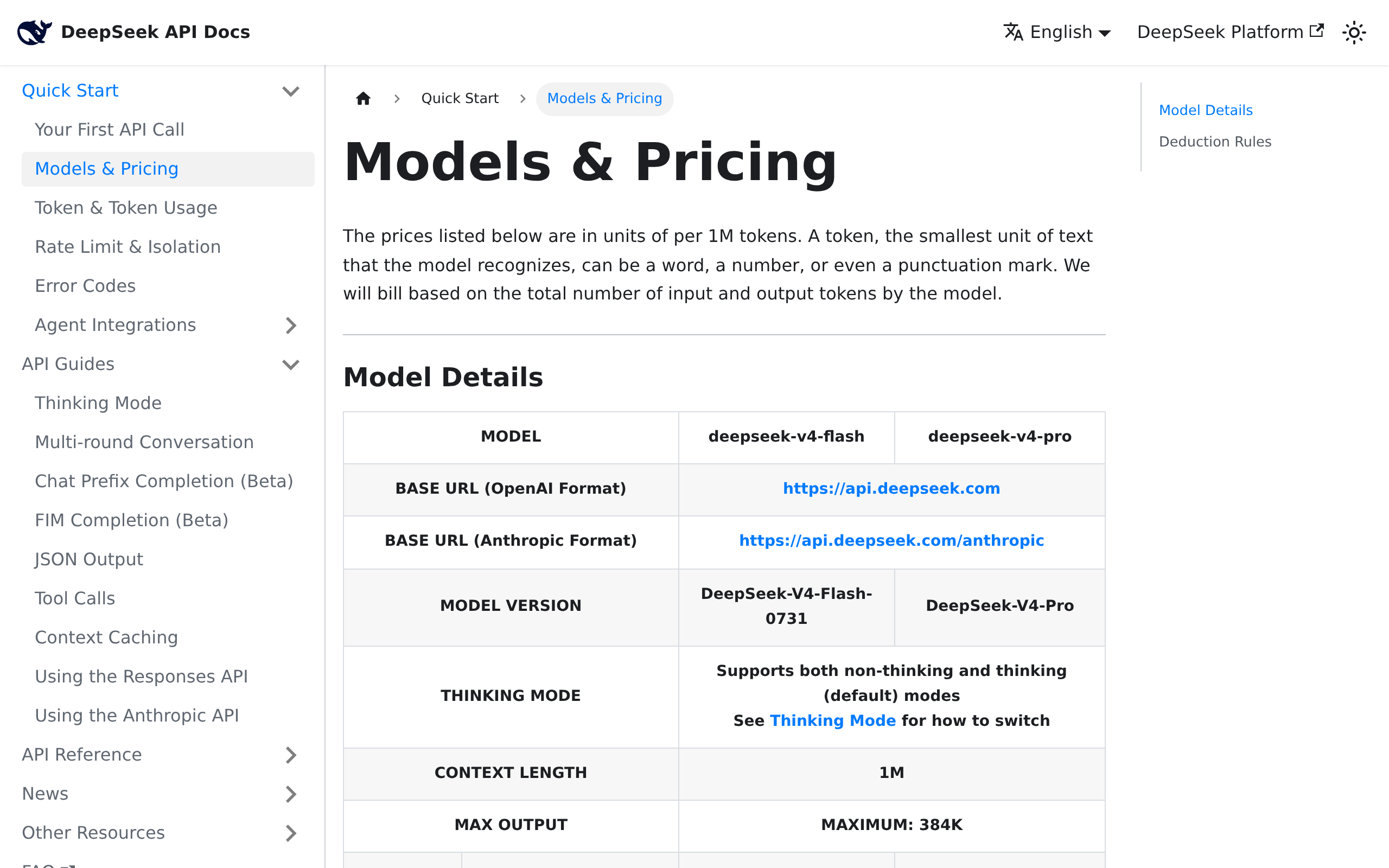
DeepSeek's pricing shows why the posted token rate is only the starting point. According to appinn, deepseek-v4-pro charges 0.025 yuan per 1 million input tokens with a cache hit, then 0.05 yuan during peak hours. The same pattern applies to cache misses and output tokens, where the normal 3 yuan and 6 yuan rates become 6 yuan and 12 yuan. Deepseek-v4-flash follows the same structure: 0.02 yuan becomes 0.04 yuan for cache hits, 1 yuan becomes 2 yuan for cache misses, and 2 yuan becomes 4 yuan for output.
That gap matters because cache hits and cache misses are not interchangeable. A request that reuses cached input can be priced almost at the floor, while a miss jumps to the full input rate before peak-hour doubling even starts. On August 4, geekpark said DeepSeek V4 Flash API had capacity problems because of "unprecedented traffic," and geekpark also reported that "DeepSeek Slash Line" was trending on Weibo that day. The billing shape and the traffic shape are linked.
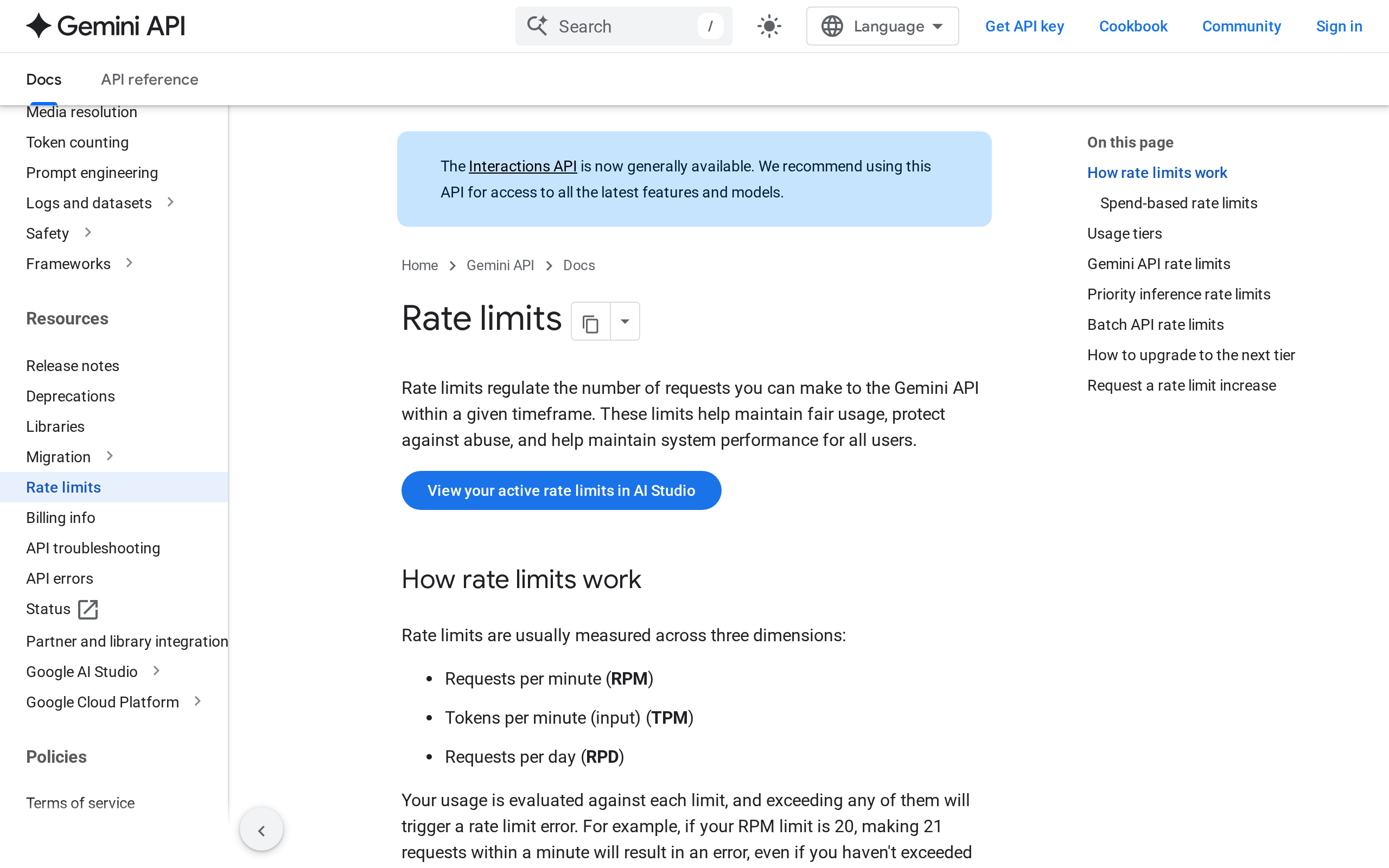
Free tiers can hide this until usage rises. Appinn reported that some users can use Gemini 2.5 Flash for free at up to 1,000,000 tokens per minute, but the free quota is not the same for all users. Free-tier Gemini users are also limited to 15 requests per minute and 1,500 requests per day, while Gemini 2.5 Flash-Lite has a 30 requests per minute cap and the same 1,500 requests per day cap. Qing Xiaowa's account, appinn said, had only 250K tokens per minute for Gemini 2.5 Flash and Gemini 2.5 Flash-Lite.
The fine print also changes the bill's meaning. Appinn said the free version of Google AI Studio lets Google use submitted prompts and received responses to improve its models, while users in the European Union are treated differently. Pro models sit outside the free tier entirely. A free quota is useful, but it is not a pricing guarantee.
Agent loops turn cheap calls into runaway spend
Agentic software changes the unit of pain. A single user input can now fan out into dozens or even hundreds of model calls when the product is doing agent collaboration, long-context memory, multi-step reasoning, code generation, or multimodal processing. That means the bill is shaped by loops and retries, not by one neat prompt-response exchange.
The failure mode is easy to see in the ledger. Uber opened AI coding tools to 5,000 engineers and burned through its entire 2026 budget in four months. At Mihoyo, Zheng Yinhe said a multi-agent test without a circuit breaker sent dozens of agents into a loop and created a 200 million yuan token bill in 13 hours. The short version: if you do not cap the loop, the loop caps you.
That is why launch-time budgeting has to come from logs, not from a token sticker price. Monday.com's CEO publicly announced in January that the company replaced an entire 100-person SDR team with AI Agents, and Atlassian reported its first-ever decline in enterprise seat count in the same year because AI Agents took over tasks that used to need dedicated staff. Once the workflow is agentic, token cost becomes only the visible edge of a much larger operating pattern.
The same pattern shows up at the individual level. A researcher in the AI field reportedly consumed nearly 4 billion tokens in a single day while coding. At GLM-5.2's price, that would cost about $1,084 in one day. That is still only one day. If a product can turn one task into repeated calls, the right controls are circuit breakers, caps, and budget estimates drawn from real logs before launch, not faith in the posted rate.
Subscriptions, quotas, and outcome pricing can beat metered APIs
Zendesk and HubSpot show why the bill can move away from a raw token meter. Zendesk's AI Agent charges about $1.5 per automatic resolution under committed volume and about $2 per automatic resolution on demand, so the unit is an outcome, not a token. HubSpot changed Breeze Customer Agent in April from $1 per handled conversation to $0.5 per successfully resolved conversation. That shift rewards finish rates and makes a cheap-looking per-request system expensive if it misses too often.
GitHub Copilot moved fully to usage-based billing starting on June 1, but usage-based does not mean simple metering. Woshipm says Futurum's survey in the first half of the year found that 43% of enterprise software decision-makers preferred consumption-based pricing and 27% preferred outcome-based pricing. The same source says the median growth of hybrid pricing, which combines a subscription base price and a usage component, is 21% higher than pure subscription or pure usage pricing, based on Stripe data. That helps explain why vendors keep mixing fixed access with variable charges.
The practical advantage for heavy users often comes from bundles and quotas, even when the list price looks higher. The researcher used a Codex subscription priced at $20 per month for Plus and starting at $100 per month for Pro. Another heavy developer said he spent 300 yuan in one week on Codex without company reimbursement. Woshipm also says Kimi Code has four tiers and its quota refreshes weekly, while GLM's coding subscription limits usage by the number of calls every 5 hours and deducts quota at three times the normal rate during peak periods. A friend working in operations said Alibaba Qoder's enterprise version ran out in three days under his usage.
That is the core tradeoff. Metered APIs look clean on a price sheet, but subscriptions, quotas, and per-resolution pricing can cap volatility or reward completion. For teams that generate lots of calls, a bundle can be cheaper than a supposedly low per-token rate, especially when the work is bursty or the vendor counts success instead of raw volume.
When token price matters less than the bill you actually incur
- You expect heavy, bursty, or agentic usage where one prompt can trigger many downstream calls. Do not budget only off posted token rates. The sources say a single user input can trigger dozens or even hundreds of model calls in agent collaboration, long-context memory, multi-step reasoning, code generation, and multimodal processing, and they give examples of explosive variable cost, including a 200 million yuan token bill in 13 hours when a multi-agent loop lacked a circuit breaker. In this situation, usage shape and loop control matter more than headline token price.
- Your workload depends on uninterrupted throughput during busy periods. Prefer vendors with clear capacity guarantees or generous quotas, and avoid assuming a cheap API will stay cheap under load. The ledger says Anthropic issued capacity-limited notices, OpenAI rate-limited its API, and DeepSeek planned to double prices during 9:00-12:00 and 14:00-18:00 Beijing time. For peak-sensitive workflows, surcharge exposure can outweigh a low base rate.
- Your usage is highly repetitive and benefits from cache hits or fixed workflow packages. Look for pricing models that reward successful resolution, cache hits, or bundled quotas rather than raw tokens. The sources show deepseek-v4-flash charging 0.02 yuan for 1 million input tokens with cache hit versus 1 yuan with cache miss, and HubSpot changing Breeze Customer Agent from $1 per handled conversation to $0.5 per successfully resolved conversation. These structures can be much cheaper than paying for every token.
- You are choosing between a flat subscription and a metered plan for developer tooling or agent workflows. Use consumption-based or hybrid pricing when usage is variable, but validate the quota rules carefully. The sources say 43% of enterprise software decision-makers preferred consumption-based pricing and 27% preferred outcome-based pricing, while hybrid pricing grew 21% faster than pure subscription or pure usage pricing. At the same time, Kimi Code has four tiers with weekly quota refreshes, and GLM's coding subscription limits calls every 5 hours and deducts quota at three times the normal rate during peak periods.
- You are a vendor or buyer deciding whether cheap tokens alone are enough to win or de-risk the stack. Treat token price as commodity-level input, not the core differentiator. The ledger shows model prices collapsing from $30 per million tokens in March 2023 to $0.1 to $0.15 per million tokens by April 2025, while enterprise AI cloud spending tripled. That points to competition moving toward capacity, quotas, workflow controls, and pricing design rather than simple per-token discounts.
Provider strategy is diverging, so procurement has to look past list price
DeepSeek's pricing story is no longer only about a low posted rate. On August 6, according to geekpark, it said in its open platform backend that it planned to raise DeepSeek API service prices overall in the near future and expected a large increase. That warning lands after OpenRouter's latest weekly statistics showed DeepSeek V4 Flash at the top globally in model call volume on August 4, and after OpenCode recorded 8 trillion tokens in a single day on August 1, with 5 trillion from free quota and 3 trillion from paid calls.
Gemini points in a different direction. According to appinn, some users can use Gemini 2.5 Flash for free at up to 1,000,000 tokens per minute, but the free quota is not the same for all users. Free-tier users are limited to 15 requests per minute and 1,500 requests per day, while Gemini 2.5 Flash-Lite has a 30-request ceiling and the same 1,500-request daily cap. The free version of Google AI Studio also reserves the right to use submitted prompts and received responses to improve its models, though free-tier data is not used for training for users in the European Union.
That split is why procurement has to look past input and output rates. Woshipm lists DeepSeek-V4-Pro at $0.435 per million input tokens and $0.87 per million output tokens, while Gemini 2.5 Flash is listed at $0.15 and $0.60. Those numbers matter, but so do quota ceilings, data-use rules, and whether a vendor can change the bill after adoption. Geekpark's author argues that the token is moving toward commodity status, and that relying on DeepSeek's floor-price API is risky for startups and independent developers. In practice, the purchasing question is who controls access, who can train on your prompts, and how exposed you are when a provider shifts prices or quota policy.
How AI pricing shifts from token rates to usage shape
| Dimension | DeepSeek V4 Flash / Pro | Gemini 2.5 Flash / Flash-Lite | GLM-5.2 | Codex subscriptions |
|---|---|---|---|---|
| Regular input pricing | V4 Flash: 1 yuan per million tokens; V4 Pro: 3 yuan per million input tokens | Flash: $0.15 input per 1M tokens; Flash-Lite: $0.075 input per 1M tokens | $1.4 per million input tokens | not covered |
| Regular output pricing | V4 Flash: 2 yuan per million tokens; V4 Pro: 6 yuan per million output tokens | Flash: $0.60 output per 1M tokens; Flash-Lite: $0.30 output per 1M tokens | $4.4 per million output tokens | not covered |
| Cache-hit vs cache-miss pricing | V4 Flash: 0.02 yuan cache hit / 1 yuan cache miss; V4 Pro: 0.025 yuan cache hit / 3 yuan cache miss | not covered | not covered | not covered |
| Peak-hour surcharge | Prices double during peak hours; V4 Flash output becomes 4 yuan and V4 Pro output becomes 12 yuan | not covered | GLM coding subscription deducts quota at three times the normal rate during peak periods | not covered |
| Free tier / quota design | 5 trillion of 8 trillion tokens on OpenCode came from free quota; 3 trillion came from paid calls | Free tier exists; some users can use Gemini 2.5 Flash for free at up to 1,000,000 tokens per minute | not covered | Plus at $20 per month; Pro starting at $100 per month |
| Rate limits or usage caps | Capacity problems on August 4 because of "unprecedented traffic" | Free-tier users are limited to 15 requests per minute and 1,500 requests per day; Flash-Lite has 30 requests per minute and 1,500 requests per day; one account had only 250K tokens per minute | limits usage by the number of calls every 5 hours | not covered |
| Packaging / billing basis | DeepSeek API pricing is being adjusted; official version planned for mid-July | Free tier does not require a credit card; Pro models are outside the free tier | not covered | Subscription pricing with Plus and Pro plans |
| Observed usage behavior | DeepSeek V4 Flash processed 8 trillion tokens in a single day on OpenCode's platform | not covered | not covered | A researcher used Codex subscription while consuming nearly 4 billion tokens in a single day |
When you compare Gemini models, start with the workload ceiling, not the sticker price. According to appinn, the account Qing Xiaowa checked had only 250K tokens per minute for Gemini 2.5 Flash and Gemini 2.5 Flash-Lite, while all Pro models sit outside the free tier. That changes the bill before a single token is counted.
Then price the path your app actually takes. Flash-Lite is listed at $0.075 input and $0.30 output per 1M tokens; Flash is $0.15 input and $0.60 output; Pro is $1.25 input and $10.00 output. In the free version of Google AI Studio, Google can use prompts and responses to improve its models, though free-tier data from the European Union is excluded. If your use case can run on another model, appinn reports Qing Xiaowa argues DeepSeek can replace Gemini here.
For readers outside China
- Availability: The sources discuss products and quotas from Chinese and U.S. vendors, but they do not provide a single unified availability map for outside China. DeepSeek, Zhipu, Alibaba Cloud, Tencent Cloud, Baidu, Google AI Studio, OpenRouter, Anthropic, OpenAI, HubSpot, Zendesk, GitHub Copilot, and Gemini are all mentioned, but country-by-country availability is not disclosed in sources.
- Pricing: Sourced examples include deepseek-v4-flash at 0.02 yuan input cache hit, 1 yuan input cache miss, and 2 yuan output, with peak-hour prices doubling to 0.04 yuan, 2 yuan, and 4 yuan; deepseek-v4-pro at 0.025 yuan input cache hit, 3 yuan input cache miss, and 6 yuan output, with peak-hour prices doubling; Gemini 2.5 Flash-Lite at $0.075 input and $0.30 output per 1M tokens; Gemini 2.5 Flash at $0.15 input and $0.60 output per 1M tokens; Gemini 2.5 Pro at $1.25 input and $10.00 output per 1M tokens; GLM-5.2 at $1.4 input and $4.4 output per million tokens; DeepSeek-V4-Pro at $0.435 input and $0.87 output; GPT-5.6 Sol at $5 input and $30 output; Claude Fable 5 at $10 input and $50 output; Zendesk AI Agent at about $1.5 per automatic resolution under committed volume and about $2 on demand; HubSpot Breeze Customer Agent at $1 per handled conversation before April and $0.5 per successfully resolved conversation after April. Exact local taxes and billing terms are not disclosed in sources.
- Closest Western equivalents: OpenAI API; Anthropic API; Google AI Studio / Gemini; GitHub Copilot; HubSpot AI agents; Zendesk AI Agent; OpenRouter
- Data residency: The sources do not provide full data-residency terms. They do say that in the free version of Google AI Studio, Google reserves the right to use submitted prompts and responses to improve its models, while for users in the European Union, free-tier data is not used for training. For the other products, data-residency and training-use details are not disclosed in sources.
Sources
- geekpark DeepSeek 的「斩杀线」,正在重塑 AI 行业的世界观 https://geekpark.net/news/368556
- woshipm Token 便宜了 99.7%,为什么你的 AI 账单还在涨 https://woshipm.com/ai/6442490.html
- appinn DeepSeek V4 调价预告:高峰时段价格翻倍,正式版7月中旬发布 https://appinn.com/deepseek-v4-pricing-preview-2607
- woshipm 高强度写代码的场景里,最便宜的 Token 反而是 Codex 套餐 https://woshipm.com/ai/6442487.html
- appinn 谷歌开始提高免费 Gemini API 配额,部分模型已达每分钟 100 万 Token,但不是全部 https://appinn.com/google-increases-free-gemini-api-quota-1m-tokens
The evidence: 75 facts from 5 Chinese articles
Each line below was extracted from the article it sits under, in Chinese, before any of this was written. The writing is done from these and never from the source prose - that separation is structural, not a promise. How we work.
appinnDeepSeek V4 调价预告:高峰时段价格翻倍,正式版7月中旬发布
- DeepSeek sent users an email titled "DeepSeek V4正式版发布计划及计费调整说明".
- The email says that the official version of DeepSeek V4 is planned to go live in mid-July.
- The email says that prices will double during peak hours.
- The peak hours are 9:00-12:00 and 14:00-18:00 every day, Beijing time.
- DeepSeek says it will notify users by email 24 hours before any actual price adjustment takes effect.
- For deepseek-v4-pro, the normal price for 1 million input tokens with cache hit is 0.025 yuan, and the peak-hour price is 0.05 yuan.
- For deepseek-v4-pro, the normal price for 1 million input tokens with cache miss is 3 yuan, and the peak-hour price is 6 yuan.
- For deepseek-v4-pro, the normal price for 1 million output tokens is 6 yuan, and the peak-hour price is 12 yuan.
- For deepseek-v4-flash, the normal price for 1 million input tokens with cache hit is 0.02 yuan, and the peak-hour price is 0.04 yuan.
- For deepseek-v4-flash, the normal price for 1 million input tokens with cache miss is 1 yuan, and the peak-hour price is 2 yuan.
- For deepseek-v4-flash, the normal price for 1 million output tokens is 2 yuan, and the peak-hour price is 4 yuan.
- The Appinn author says they used deepseek-v4-flash for about one month to update a World Cup calendar by automatically crawling scores, goals, and records and updating the calendar automatically.
- The Appinn author says normal daily usage was about 2 yuan, one problematic day cost 13 yuan, and the total monthly consumption was 60 yuan.
appinn谷歌开始提高免费 Gemini API 配额,部分模型已达每分钟 100 万 Token,但不是全部
- Some users can use Gemini 2.5 Flash for free at up to 1,000,000 tokens per minute.
- The free Gemini 2.5 Flash quota is not the same for all users.
- The free Gemini 2.5 Flash quota does not require a credit card to be linked.
- The free Gemini 2.5 Flash quota has no total usage limit.
- Free-tier Gemini users are limited to 15 requests per minute.
- Free-tier Gemini users are limited to 1,500 requests per day.
- Gemini 2.5 Flash-Lite has a free-tier limit of 30 requests per minute.
- Gemini 2.5 Flash-Lite has a free-tier limit of 1,500 requests per day.
- Gemini 2.5 Flash has a free-tier limit of 1,000,000 tokens per minute.
- Gemini 2.5 Flash-Lite has a free-tier limit of 1,000,000 tokens per minute.
- The account Qing Xiaowa checked had only 250K tokens per minute for Gemini 2.5 Flash and Gemini 2.5 Flash-Lite.
- All Pro models are outside the free tier.
- In the free version of Google AI Studio, Google reserves the right to use submitted prompts and received responses to improve its models.
- For users in the European Union, free-tier data is not used for training.
- The listed regular prices are $0.075 input and $0.30 output per 1M tokens for Gemini 2.5 Flash-Lite.
- The listed regular prices are $0.15 input and $0.60 output per 1M tokens for Gemini 2.5 Flash.
- The listed regular prices are $1.25 input and $10.00 output per 1M tokens for Gemini 2.5 Pro.
geekparkDeepSeek 的「斩杀线」,正在重塑 AI 行业的世界观
- On August 4, "DeepSeek Slash Line" became a trending topic on Weibo.
- On August 6, DeepSeek posted a notice in its open platform backend saying it planned to raise DeepSeek API service prices overall in the near future and expected a large increase.
- OpenRouter's latest weekly statistics showed that DeepSeek V4 Flash had reached the top position globally in model call volume on August 4.
- On August 1, DeepSeek V4 Flash processed 8 trillion tokens in a single day on OpenCode's platform.
- Of the 8 trillion tokens processed by DeepSeek V4 Flash on OpenCode's platform on August 1, 5 trillion came from free quota and 3 trillion came from paid calls.
- OpenRouter has integrated more than 400 models, and its platform processes about 6.6 trillion tokens per day on average.
- V4 Flash's uncached input price is 1 yuan per million tokens, and its output price is 2 yuan per million tokens.
- Kimi K3's comparable prices are 21 yuan for input and 105 yuan for output.
- DeepSeek V4 Flash API had capacity problems on August 4 because of "unprecedented traffic."
- Artificial Analysis's cost-performance scatter plot placed DeepSeek V4 Flash at the best position, with models in its lower-right "slash zone" having worse performance and higher prices.
- Zhihu's first-quarter earnings presentation disclosed that its API pricing had risen 83% from the end of last year, mainly because the March release of GLM-5-Turbo had higher pricing.
- After Kimi K3 was released on July 16, input prices rose by more than 3 times and output prices rose by nearly 4 times compared with the previous generation.
woshipmToken 便宜了 99.7%,为什么你的 AI 账单还在涨
- From March 2023 to April 2025, the inference cost of models at the same intelligence level fell from $30 per million tokens to $0.1 to $0.15 per million tokens.
- The source describes that drop as more than 99.7%.
- Over the same period, enterprise AI cloud spending increased by three times.
- Uber opened AI coding tools to 5,000 engineers and burned through its entire 2026 budget in four months.
- Mihoyo technical team lead Zheng Yinhe said that a multi-agent test without a circuit breaker caused dozens of agents to enter a loop and generate a 200 million yuan token bill in 13 hours.
- The source says a single user input can now trigger dozens or even hundreds of model calls in scenarios such as agent collaboration, long-context memory, multi-step reasoning, code generation, and multimodal processing.
- The source says Anthropic has repeatedly issued capacity-limited notices, OpenAI has repeatedly rate-limited its API, and domestic inference compute approvals are tight.
- The source says Monday.com's CEO publicly announced in January that the company replaced an entire 100-person SDR team with AI Agents.
- The source says Atlassian reported its first-ever decline in enterprise seat count in the same year because AI Agents took over tasks that previously required dedicated staff.
- Zendesk's AI Agent charges about $1.5 per automatic resolution under committed volume and about $2 per automatic resolution on demand.
- HubSpot changed Breeze Customer Agent in April from $1 per handled conversation to $0.5 per successfully resolved conversation.
- GitHub Copilot moved fully to usage-based billing starting on June 1.
- Futurum's survey in the first half of the year found that 43% of enterprise software decision-makers preferred consumption-based pricing and 27% preferred outcome-based pricing.
- The source says the median growth of hybrid pricing, which combines a subscription base price and a usage component, is 21% higher than pure subscription or pure usage pricing, based on Stripe data.
woshipm高强度写代码的场景里,最便宜的 Token 反而是 Codex 套餐
- OpenRouter data showed that from July 27 to August 2, global large-model usage totaled 56.8 trillion tokens.
- Chinese models accounted for 28.13 trillion tokens of global large-model usage from July 27 to August 2.
- Chinese models took the top five positions on the OpenRouter ranking for the week of July 27 to August 2.
- That lead had continued for 14 consecutive weeks.
- GLM-5.2 costs $1.4 per million input tokens and $4.4 per million output tokens.
- DeepSeek-V4-Pro costs $0.435 per million input tokens and $0.87 per million output tokens.
- GPT-5.6 Sol costs $5 per million input tokens and $30 per million output tokens.
- Claude Fable 5 costs $10 per million input tokens and $50 per million output tokens.
- At GLM-5.2's price, 4 billion tokens would cost about $1,084 in one day.
- The researcher actually used a Codex subscription priced at $20 per month for Plus and starting at $100 per month for Pro.
- Another heavy developer said he spent 300 yuan in one week on Codex without company reimbursement.
- Kimi Code has four tiers and its quota refreshes weekly.
- GLM's coding subscription limits usage by the number of calls every 5 hours and deducts quota at three times the normal rate during peak periods.
- In January 2026, Zhipu cut the daily sellable quota to 20% of the original amount because of compute shortages, and quota drops at 10 a.m. were sold out within minutes.
- China had 449 existing data centers, while the United States had 5,427.
- China had total computing power of 1,053 EFLOPS, while the United States had 2,400.
- From 2026 March, Zhipu, Alibaba Cloud, Tencent Cloud, and Baidu collectively raised token prices by 5% to 460%.
- From June 22 to 28, Chinese models used 20.39 trillion tokens, while U.S. models used 4.25 trillion.
- Zhipu's 2025 revenue was 724 million yuan and its losses exceeded 3 billion yuan.