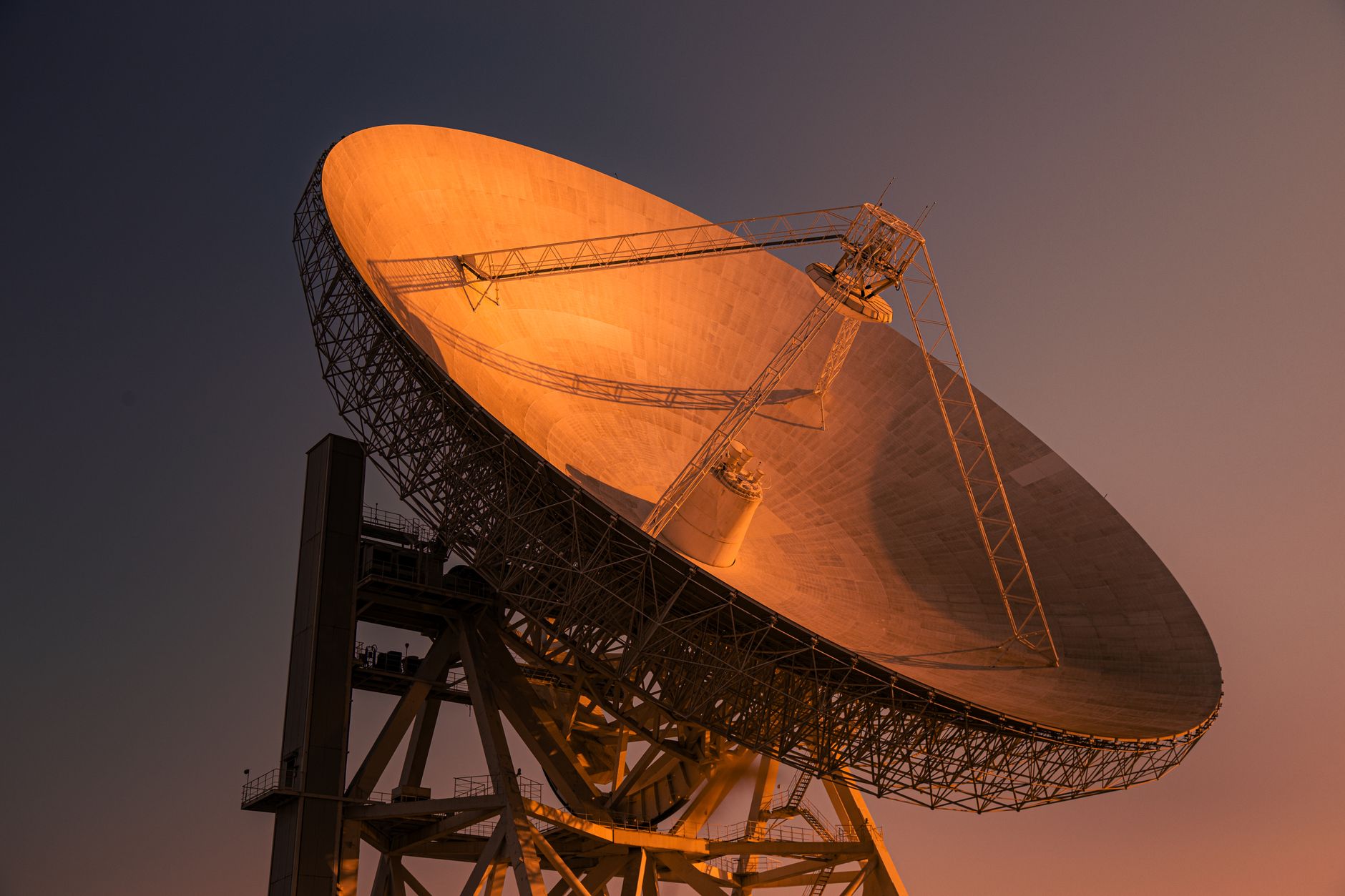
Chinese low Earth orbit satellites are running artificial intelligence directly on board to bypass a severe ground-station bottleneck. Domestic downlink windows are brutally brief. According to geekpark, a low Earth orbit satellite flies over China for less than eight minutes during a single pass. Because China lacks large-scale overseas ground receiving stations, domestic spacecraft generally must wait until passing over China to downlink their data. Daily downlinks from the Copernicus programme already reach the terabyte scale, as geekpark noted. Raw transmission cannot keep up.
Western operators pursue the opposite strategy. In November 2025, Elon Musk announced that SpaceX would deploy 1 terawatt (1 TW) of annual AI computing power across Starlink V3 satellites, according to 36kr.
That concept treats space as a relief valve for strained power grids. Industry projections cited by 36kr indicate that incremental electricity demand for North American AI data centers will surpass 20 gigawatts in 2026 and approach 30 gigawatts in 2027. American teams export server racks to orbit. Chinese aerospace engineers do the opposite. They deploy compact models onto the craft itself, converting raw sensor rasters into actionable decision vectors before the eight-minute window shuts.
The divergence between off-planet data centers and orbital edge inference
American plans for orbital computing focus on shifting power-hungry workloads off terrestrial grids. According to 36kr, projections show incremental electricity demand for North American AI data centers will surpass 20 gigawatts in 2026 and approach 30 gigawatts in 2027. To circumvent land-based energy ceilings, Starcloud targets a centralized computing infrastructure of 100 megawatts to gigawatt scale in low Earth orbit. In November 2025, Elon Musk announced that SpaceX would build the world's first space AI data center cluster using Starship launch capabilities and Starlink V3 satellites, aiming to deploy 1 terawatt (1 TW) of AI computing power annually. These architectures compute Earth data.
- February 2022STAR.VISION launches on-board processing module aboard Chaohu-1 satellite
- November 2025Starcloud launches Starcloud-1 verification satellite equipped with Nvidia H100
- December 2025Starcloud completes on-orbit LLM training and operates Google Gemma on Starcloud-1
- July 24, 2026Tianxu Intelligent deploys vertical weather model into orbit for verification
- 2027Tianxu Intelligent plans launch of two pilot test satellites for its constellation
Chinese operators face a different physical bottleneck. The primary constraint centers on transmission windows rather than ground-based electrical power.
According to geekpark, a low Earth orbit satellite flies over China for less than eight minutes during a single pass. Because China lacks large-scale overseas ground receiving stations, domestic satellites generally must wait until passing over China to downlink their data. Modern sensor payloads make this pipeline untenable. geekpark notes that daily downlinked data from the Copernicus programme has reached the terabyte scale. Rather than prematurely copying centralized space data center models designed to compute Earth data, a commercial aerospace investor told 36kr that China should prioritize on-orbit processing of space data. Satellites must process observations where they gather them.
Sub-10B foundation models meet radiation-tolerant orbital hardware
According to geekpark, TerraQuanta founder Wang Chi argues that satellite operations must still rely on data downlink and offline ground computation in the near term. His reasoning centers on silicon. High-performance GPUs like the Nvidia A100 cannot yet be deployed directly into orbit, keeping software-defined satellites an ambition rather than daily reality.
Recent flights challenge that ceiling. Rather than wait for space-hardened data-center chips, engineers either launch commercial hardware or shrink model weights into compact envelopes.
In November 2025, US startup Starcloud launched its first technology verification satellite, Starcloud-1, equipped with an Nvidia H100 chip, according to 36kr. The team moved quickly. In December 2025, Starcloud announced it completed on-orbit large language model training using an Nvidia H100 chip on Starcloud-1 and operated Google's Gemma model.
Chinese developers take another path by fitting compact models into existing bus capacities. Co-founded by Cao Dezhi, STAR.VISION (星测未来) deployed early processing modules into space. In February 2022, STAR.VISION's on-board processing module launched aboard the Chaohu-1 (巢湖一号) satellite, developed jointly by Spacety (天仪研究院) and the 38th Research Institute of CETC, according to geekpark. The company also launched its Xingxi 02 (星溪 02) universal on-board processing payload to verify intelligent data processing in orbit.
Model architectures are shrinking to match. Hardware startup Bot is designing an architecture using ternary representation to compress model weights into three discrete values, woshipm reported. Tianxu Intelligent applied similar constraint principles to orbital weather prediction. According to 36kr, Tianxu Intelligent's vertical weather model keeps a parameter size of under 10 billion by using a modified Transformer architecture called the Lorentz framework. Tianxu Intelligent deployed its weather model into orbit aboard a satellite for in-orbit verification on July 24, 2026.
Managing telemetry and weight updates across intermittent orbital windows
According to geekpark, a low Earth orbit satellite flies over China for less than eight minutes during a single pass. That tight contact window leaves no room for manual retries. To coordinate operations, Sixense Technology developed a task planning system that virtually schedules satellite resources. The software specifies capture requests by orbit, tracking assignments down to the minute and second. Sixense Technology also built a proprietary ground pre-processing system capable of directly processing Level-0 raw satellite data through to terminal products.
Short orbital windows demand rapid repeat passes. When individual flyovers last only minutes, continuous observation requires synchronized constellations rather than isolated nodes.
Constellation scaling closes these coverage gaps. According to 36kr, Tianxu Intelligent plans to launch two pilot test satellites in 2027, aiming for an 18-satellite constellation that provides global weather observations at a 1-kilometer resolution with 1-hour revisit intervals. Chang Guang Satellite already operates at scale. geekpark reported that with nearly 60 satellites in orbit, the company achieves a revisit rate of under one hour for a single location. 36kr also reported that Chinese space computing companies Zhongke Tiansuan (中科天算) and Zhongke Miwei (中科密位) each disclosed financing rounds exceeding 100 million yuan in 2026.
Automation lets smaller teams run these orbital software pipelines. As woshipm noted, Jared Friedman argues that AI coding tools have reduced the engineering bottleneck for hard tech startups by enabling small teams to accomplish work that previously required large software teams. Industry data shows an identical shift. In the current YC batch, woshipm reported the proportion of startups handling end-to-end complete tasks increased from 10% to more than 25%. Chinese startups Yiwei Yuhang (一苇宇航) and Guidao Chenguang (轨道辰光) each secured four funding rounds within a single year, reaching valuations of 4 billion yuan in their latest rounds, according to 36kr.
Orbital Edge Computing vs. Ground-Downlink Architecture Decision Matrix
- Rapid disaster management and emergency reconnaissance (e.g., assessing flood waters during Typhoon In-Fa) operating under constrained ground station windows (LEO passes over China lasting less than eight minutes). Deploy on-board processing modules (such as STAR.VISION's Xingxi 02 payload) or automated Level-0 ground systems (such as Sixense Technology's pipeline delivering terminal analysis in 27 minutes) to extract targeted features immediately rather than waiting to downlink full uncompressed raw rasters.
- Evaluating whether to deploy AI compute directly into orbit versus relying on terrestrial cloud infrastructure. Restrict in-orbit execution to compact, domain-specific edge models (such as Tianxu Intelligent's under-10-billion parameter Lorentz framework model verified in orbit on July 24, 2026), keeping heavy general computing offline on the ground because high-performance hardware like the Nvidia A100 cannot yet be deployed directly into orbit for standard operations.
- Serving national critical infrastructure operators (such as State Grid Corporation of China or China Southern Power Grid) facing potential foreign data embargoes. Procure and launch proprietary orbital constellations (such as Sixense Technology's multi-sensor optical, synthetic aperture radar, and thermal infrared satellites, or Tianxu Intelligent's planned 18-satellite constellation) to guarantee sovereign data origin rather than relying on external imagery feeds.
- Commercial risk profiling and commodity monitoring (e.g., bank agricultural credit checks, highway deformation tracking, or crop yield forecasting). Ingest multi-source feeds via API-based PaaS subscription models up to China's domestic commercial resolution limit of 0.5 meters (as demonstrated by TerraQuanta's 10 to 20 terabyte daily processing pipeline), competing on data fusion algorithms rather than raw satellite ownership alone.
Delivering decision vectors instead of gigabytes of raw sensor rasters
Commercial satellite pipelines still cling to raw sensor dumps. A satellite industry practitioner told HardKr, as reported by 36kr, that existing commercial customer demand remains predominantly focused on downlinking raw data rather than performing on-orbit edge computing. Downstream infrastructure often struggles with that intake. geekpark noted that TerraQuanta processes approximately 10 to 20 terabytes of newly added remote sensing data each day, delivering continuously updated geospatial database services to partners through APIs under a subscription-based PaaS model.
Emergency response teams and power grid operators do not need multi-gigabyte rasters. They need decisions.
Speed matters during rapid weather crises. During Typhoon In-Fa in 2021, Sixense Technology extracted water-body data and delivered an analysis report to emergency rescue authorities in Ningbo within 27 minutes of receiving radar satellite imagery, according to geekpark. Tianxu Intelligent shortens this timeline by moving processing directly to orbit. In October 2025, Tianxu Intelligent and the Public Meteorological Service Center of the China Meteorological Administration jointly launched CMA-WSP-AI in Zhongshan, Guangdong. Serving State Grid Corporation of China, China Southern Power Grid, and major state-owned power generation enterprises, the deployment pipes localized guidance directly into grid balancing systems.
The operational numbers explain the transition. Tianxu Intelligent's 1-kilometer wind speed forecasts outperform EC-HRES and AIFS in root-mean-square error and correlation coefficient metrics. The company also provides drone delivery weather forecasting services with a 10-meter-level resolution. In an extreme weather AI competition across hail, thunderstorm gales, thunderstorms, and short-term heavy precipitation, Tianxu placed first, achieving Threat Score improvements between 39.6% and 351% over baseline methods. As geekpark reported from Liu Yuting, maturing aerospace infrastructure shifts the competitive moat away from data ownership toward multi-source data fusion algorithms and product translation capabilities.
Architectural Comparison: Orbital Edge AI vs. Terrestrial Downlink vs. Centralized Space Compute
| Architectural Dimension | Western Centralized Orbit Data Center (Starcloud / SpaceX) | Chinese In-Orbit Edge Inference (Tianxu / STAR.VISION) | Traditional Terrestrial Downlink (TerraQuanta / Sixense) |
|---|---|---|---|
| Primary System Objective | Build 100 megawatts to gigawatt scale clusters or deploy 1 terawatt (1 TW) annual AI compute in orbit to offload terrestrial power grid demand | Embed vertical AI models directly on satellites to process space data on-orbit and beam down decisions rather than raw rasters | Downlink 10 to 20 terabytes of daily raw remote sensing data to ground stations for offline processing and subscription PaaS APIs |
| Compute Architecture & Model Scale | Hyperscale datacenter accelerators (Nvidia H100, Google TPU); runs foundation models such as Google's Gemma | Under 10 billion parameter vertical models using modified Transformer Lorentz framework; universal on-board payloads like Xingxi 02 | Offline ground computing systems; notes datacenter GPUs like Nvidia A100 cannot yet be deployed directly into orbit |
| Downlink & Pass Bottleneck Handling | Processes Earth data centrally in space; unaffected by China's ground station pass limits | Bypasses the less than eight minutes ground station pass window over China and lack of overseas ground receiving stations | Constrained by waiting to pass over China; relies on proprietary ground pre-processing systems to convert Level-0 raw data in 27 minutes |
| Constellation & Deployment Roadmap | Starcloud-1 launched in November 2025; SpaceX Starlink V3 constellation planned | Chaohu-1 test in February 2022; model deployed July 24, 2026; plans two pilot satellites in 2027 and an 18-satellite constellation | Constellations focus on sensor collection (e.g. Chang Guang Satellite nearly 60 satellites; Sixense planned three satellites on one rocket) |
| Industry Moat Perspective | not disclosed in sources | Liu Li (Tianxu): proprietary data origin is the barrier; Cao Dezhi (STAR.VISION): space data infrastructure integrating storage, compute, relay | Liu Yuting (Sixense): multi-source data fusion algorithms and product translation; Wang Chi (TerraQuanta): physical world search engine |
Terrestrial infrastructure constraints reinforce the urgency of moving inference directly to the sensor. According to woshipm, the hourly rental price of Nvidia's A100 GPU has been rising rather than falling. Data centers face physical bottlenecks, with Dipole Labs building photonic switches to replace electronic switches for GPU interconnects. Downlinking raw rasters cannot keep pace. Hardware startup Bot is designing an architecture using ternary representation to compress model weights into three discrete values, pointing toward viable edge payloads.
Deploying these targeted models no longer requires massive organizations. Jared Friedman argues that AI coding tools have reduced the engineering bottleneck for hard tech startups by enabling small teams to accomplish work that previously required large software teams.
For readers outside China
- Availability: Commercial availability outside China is severely limited. While Sixense Technology has monitored foreign targets (including German nighttime light activity and US soybean fields) and TerraQuanta was featured in the US Radiant Earth Foundation's 2020 and 2021 market maps, direct international access to their PaaS platforms or APIs is not disclosed in sources. Companies such as Tianxu Intelligent and STAR.VISION primarily serve domestic state-owned utilities, national meteorology centers, and Chinese satellite operators.
- Pricing: End-user pricing tiers for Tianxu Intelligent, Sixense Technology, and STAR.VISION are not disclosed in sources. TerraQuanta provides commercial analytics via an API subscription under a PaaS model, but specific rate cards are not disclosed in sources. Regarding underlying space hardware costs, the source material notes that a single SpaceX Starlink satellite costs less than 4 million yuan to manufacture, compared to traditional ton-class satellites costing between 500 million yuan and 1 billion yuan or more. Nvidia A100 hourly rental rates are noted to be increasing, but specific dollar amounts are not disclosed in sources.
- Closest Western equivalents: Starcloud (operated Starcloud-1 with an Nvidia H100 chip running Google's Gemma model to test on-orbit training); SpaceX Starlink (plans to deploy orbital AI data centers using Starlink V3 and Starship); Google Project Suncatcher (deploying TPU chips into solar-powered satellite constellations); Exosat (Y Combinator-backed developer building a sovereign Starlink alternative)
- Data residency: Commercial satellite ground sample distance within China is legally restricted to a maximum resolution of 0.5 meters for domestic commercial use. Because China lacks extensive overseas ground receiving stations, domestic low Earth orbit satellites generally must wait to downlink data until flying over China, where a single pass lasts less than eight minutes. Core infrastructure clients, including State Grid Corporation of China and municipal emergency authorities, rely on domestic satellite constellations specifically to hedge against foreign data cutoff risks. International cross-border data transfer policies for these platforms are not disclosed in sources.
Sources
- 36kr 36氪新风向丨在太空中建AI算力中心,马斯克又带火一个万亿美元赛道 https://36kr.com/p/4022305269600128
- geekpark 四象科技 刘雨婷:遥感技术如何撬动金融业? | Founder 100 https://geekpark.net/news/371372
- 36kr AI气象大模型公司获厚雪数千万投资,已建成自有卫星星座丨36氪首发 https://36kr.com/p/4023671039070081
- woshipm 顶级孵化器 YC 的 2026 创业公司观察报告 https://woshipm.com/ai/6467105.html
- geekpark 大地量子 王驰:AI+ 遥感打造数字全息地球 | Founder 100 https://geekpark.net/news/371370
- geekpark 星测未来 曹德志:卫星智能化如何解决太空数据应用难题?| Founder 100 https://geekpark.net/news/371384
The evidence: 61 facts from 6 Chinese articles
Each line below was extracted from the article it sits under, in Chinese, before any of this was written. The writing is done from these and never from the source prose - that separation is structural, not a promise. How we work.
36krAI气象大模型公司获厚雪数千万投资,已建成自有卫星星座丨36氪首发
- Tianxu Intelligent completed a Pre-A+ funding round of tens of millions of yuan exclusively invested by Thick Snow Capital, with Yirong Capital serving as exclusive financial advisor.
- Tianxu Intelligent was founded in October 2024 by Liu Li, who holds a doctorate in meteorology from the University of Chinese Academy of Sciences.
- Tianxu Intelligent's vertical weather model has a parameter size of under 10 billion and utilizes a modified Transformer architecture called the Lorentz framework.
- In October 2025, Tianxu Intelligent and the Public Meteorological Service Center of the China Meteorological Administration jointly launched CMA-WSP-AI, China's first energy meteorology large model, in Zhongshan, Guangdong.
- Tianxu Intelligent deployed its weather model into orbit aboard a satellite for in-orbit verification on July 24, 2026.
- Tianxu Intelligent plans to launch two pilot test satellites in 2027 and eventually build an 18-satellite constellation providing global weather observations at a 1-kilometer resolution with 1-hour revisit intervals.
- Tianxu Intelligent's client base includes State Grid Corporation of China, China Southern Power Grid, and major state-owned power generation enterprises.
- Tianxu Intelligent provides drone delivery weather forecasting services with a 10-meter-level resolution.
- More than 80% of Tianxu Intelligent's personnel hold a master's degree or higher.
36kr36氪新风向丨在太空中建AI算力中心,马斯克又带火一个万亿美元赛道
- In November 2025, Elon Musk announced that SpaceX would build the world's first space AI data center cluster using Starship launch capabilities and Starlink V3 satellites, aiming to deploy 1 terawatt (1 TW) of AI computing power annually.
- Global investment in space startups reached $55.3 billion in 2025, setting a new annual record.
- In the first quarter of 2026 alone, global investment in space startups reached a record $36 billion.
- In November 2025, US startup Starcloud launched its first technology verification satellite, Starcloud-1, equipped with an Nvidia H100 chip.
- In December 2025, Starcloud announced it completed on-orbit large language model training using an Nvidia H100 chip on Starcloud-1 and operated Google's Gemma model.
- Google announced Project Suncatcher to explore deploying TPU and other AI chips into solar-powered satellite constellations.
- Chinese space computing companies Zhongke Tiansuan (中科天算) and Zhongke Miwei (中科密位) each disclosed financing rounds exceeding 100 million yuan in 2026.
- Chinese startups Yiwei Yuhang (一苇宇航) and Guidao Chenguang (轨道辰光) each secured four funding rounds within a single year, reaching valuations of 4 billion yuan in their latest rounds.
- Multiple space computing companies were founded in China in the first half of 2026, including Xingji Yuandian (星纪原点), Huanyu Fanzhi (寰宇泛智), Shenkong Juzhen (深空矩阵), and Ruiqi Shenkong (瑞启深空).
- Chinese AI-listed firm PCI Technology (佳都科技) incubated an enterprise focused on space computing large models that reached a valuation of over 1 billion yuan following its pre-A funding round.
geekpark大地量子 王驰:AI+ 遥感打造数字全息地球 | Founder 100
- TerraQuanta raised a 50 million yuan Series A round in November 2020 and a Series A+ round in January 2021.
- TerraQuanta's main investors include Orchid Asia, SIG, and Shunwei Capital.
- TerraQuanta was the only Chinese company listed in the 2020 Global Machine Learning Earth Observation Market Map published by the US non-profit Radiant Earth Foundation, and was included again in the 2021 map.
- TerraQuanta founder and CEO Wang Chi holds a PhD in electrical engineering from the University of Southern California, participated in the D-WAVE quantum computing project, and was named to Forbes China's 30 Under 30 list in 2018.
- Wang Chi and co-founder Dr. Lv Tong founded TerraQuanta in 2017 to create a search engine for the physical world.
- TerraQuanta processes approximately 10 to 20 terabytes of newly added remote sensing data each day.
- In China, commercial satellite ground sample distance reaches 0.5 meters, which represents the maximum resolution permitted for domestic commercial use.
- TerraQuanta delivers continuously updated geospatial database services to partners through APIs under a subscription-based PaaS model.
- TerraQuanta collaborates with commercial banks to assess credit risk for rural farmers by using satellite data to identify historical crop planting and estimate past farm income.
- TerraQuanta's research projects include detecting terrain deformation along railways, monitoring landslides along highways, and computing deformation imagery using acoustic signals.
geekpark四象科技 刘雨婷:遥感技术如何撬动金融业? | Founder 100
- Sixense Technology (四象科技) reached the Pre-A+ financing round with investors including C&D Emerging Industry Investment, Zhengxuan Investment, CasStar, and Jinke Junchuang.
- Sixense Technology was founded in 2017 by three technical experts from China's state aerospace system, with Liu Yuting joining as a co-founder around 2019.
- During Typhoon In-Fa in 2021, Sixense Technology extracted water-body data and delivered an analysis report to emergency rescue authorities in Ningbo within 27 minutes of receiving radar satellite imagery.
- Sixense Technology developed a proprietary ground pre-processing system capable of directly processing Level-0 raw satellite data through to terminal products.
- Sixense Technology developed a task planning system that virtually schedules satellite resources and specifies capture requests by orbit, minute, and second.
- Sixense Technology planned to launch three satellites on a single rocket into the same orbital plane at the end of 2022: a 1-meter multispectral optical satellite, a synthetic aperture radar satellite, and a thermal infrared satellite.
- In early 2020, securities brokerage Guotai Junan partnered with Sixense Technology to use satellite remote sensing data to monitor construction resumption at sites in Tongzhou and Xiong'an.
- Sixense Technology launched the China Urban Construction Work Commencement Index covering the Beijing-Tianjin-Hebei, Yangtze River Delta, and Pearl River Delta regions.
- Sixense Technology launched a road network data product monitoring the construction progress of expressways, national highways, and provincial highways across 13 provinces in central and western China.
- In the second half of 2021, Sixense Technology provided German nighttime light data between midnight and 4:00 AM to investment institutions, detecting a decline in night light intensity during the European natural gas crisis.
- In mid-2021, Sixense Technology used satellite remote sensing to monitor US soybean fields and predicted that crop yield would not decrease significantly and could slightly increase, contradicting the USDA's forecast of a sharp reduction.
geekpark星测未来 曹德志:卫星智能化如何解决太空数据应用难题?| Founder 100
- Cao Dezhi is the co-founder of Chinese satellite intelligence company STAR.VISION (星测未来).
- STAR.VISION launched its Xingxi 02 (星溪 02) universal on-board processing payload to verify intelligent data processing in orbit.
- In February 2022, STAR.VISION's on-board processing module was launched aboard the Chaohu-1 (巢湖一号) satellite jointly developed by Spacety (天仪研究院) and the 38th Research Institute of CETC.
- A low Earth orbit satellite flies over China for less than eight minutes during a single pass.
- Because China lacks large-scale overseas ground receiving stations, Chinese low Earth orbit satellites generally must wait until passing over China to downlink their data.
- Developing and producing a traditional ton-class satellite typically costs between 500 million yuan and 1 billion yuan or more, with an average manufacturing cycle of 2 to 4 years.
- Chinese satellite manufacturer Chang Guang Satellite has an annual production capacity of at least 50 satellites.
- Zhejiang-based Geespace (时空道宇) has an annual satellite production capacity of between 50 and 100 satellites.
- With nearly 60 satellites in orbit, Chang Guang Satellite can achieve a revisit rate of under one hour for a single location.
- The daily downlinked data volume from the Copernicus programme has reached the terabyte scale.
woshipm顶级孵化器 YC 的 2026 创业公司观察报告
- The share of hard tech companies in Y Combinator (YC) batches has increased from 8% to 20%.
- The median monthly revenue of a startup graduating from a YC batch has risen from $8,000 to $20,000.
- Within YC batches, robotics companies grew from 1% to nearly 7%, industrial manufacturing from 4% to 10%, semiconductors and photonics from 1% to nearly 4%, and energy infrastructure from 1% to about 3%.
- One-sixth of the founders in the current YC batch hold PhD degrees, representing a historic high.
- In the current YC batch, the proportion of startups handling end-to-end complete tasks increased from 10% to more than 25%.
- YC-backed Exosat is developing a sovereign Starlink alternative, and Beyond Reach Labs is producing solar panels for space satellites.
- Knox Metals is rebuilding US metal manufacturing inside vacant factories in Detroit.
- Dipole Labs is building photonic switches to replace electronic switches for GPU interconnects in data centers.
- Hardware startup Bot is designing an architecture using ternary representation to compress model weights into three discrete values.
- Robotics startup Ultra fine-tuned Physical Intelligence's foundation model with thousands of hours of video footage of boxing objects.
- Over the past two years, YC funded more than a dozen companies that each generate over $10 million in annual revenue by selling data or reinforcement learning environments to AI laboratories.