DeepSeek plans to construct a 1-gigawatt AI data center in Ulanqab. As reported by woshipm, electricity costs account for 60% to 70% of an AI data center's operating expenses. Moving inland cuts that overhead dramatically. Large industrial electricity in Ulanqab costs 0.35 yuan per kilowatt-hour, compared to 0.7 to 0.8 yuan per kilowatt-hour for industrial electricity in eastern China. Cheap megawatts dictate site selection.
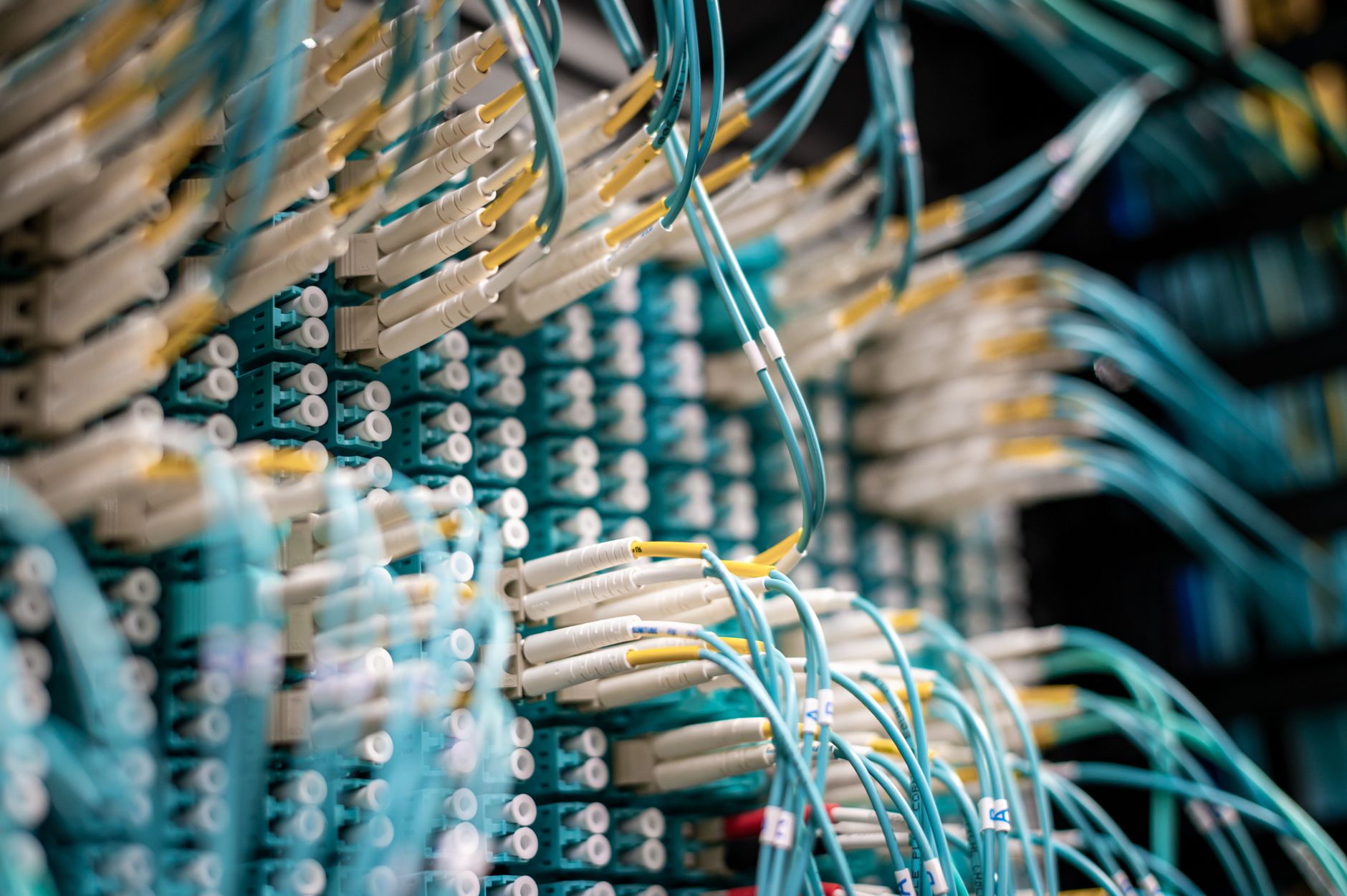
Physical networks present an equal barrier inside the facility. Xinxinguang founder and CEO Wei Jun believes that AI cluster networks are transitioning to an optical-electrical hybrid architecture where OCS manages high-bandwidth direct paths and electrical switching handles fragmented packet forwarding. Traffic shape determines switch selection.
Compute scaling has outgrown the single accelerator chip. Deploying large models is now a systems problem governed by regional energy grids and photonic interconnects.
Western data centers trade power cost against network scaling limits
Power economics determine where large models can afford to train. According to woshipm, electricity costs account for 60% to 70% of an AI data center's operating expenses. In Ulanqab, large industrial electricity costs 0.35 yuan per kilowatt-hour, compared to 0.7 to 0.8 yuan per kilowatt-hour in eastern China. Local generation is abundant. Ulanqab accounts for one-tenth of China's total wind power and maintains a 67% green electricity share. The site sits approximately 350 kilometers from Beijing, with network latency of 2 to 4 milliseconds. As of June, 89 data center projects representing over 500 billion yuan in total investment signed agreements there.
- AprilDeepSeek posts data center operations job openings in Ulanqab
- June89 data center projects sign investment agreements in Ulanqab
- JulyZhipu deploys and partially operates a 1-gigawatt domestic chip center
- late JulyBloomberg reports DeepSeek plans a 1-gigawatt AI data center in Ulanqab
- August 6Envision Group commissions its 120,000-square-meter Galaxy Base
Facility scale is surging into gigawatts. woshipm notes that DeepSeek plans a 1-gigawatt AI data center in Ulanqab, while Envision Group opened its 120,000-square-meter Galaxy Base (星河基地) on August 6 with 2 gigawatts of planned capacity.
Yet cheap energy introduces severe networking limits across these vast footprints. Concentrating gigawatts of compute strains electrical fabrics. Hardware scaling faces immediate supply friction. Google disclosed that it requires approximately 15,000 300-port OCS switches in 2026, of which about 3,000 units are slated for external procurement. Meanwhile, Cignal AI forecasts that the global OCS market will exceed $8 billion by 2030, representing a compound annual growth rate of more than 30% from 2026 to 2030.
Optical switching rewires the cluster network for sustained training flows
Training large models creates sustained, predictable streams between accelerators. Routing those flows through conventional electrical switches introduces continuous packet inspection and optical-electrical conversions that generate heat and consume power. Optical circuit switches bypass this layer entirely by steering light directly across physical mirrors. Commercial interest reflects this architectural pivot. In March 2026, Nvidia invested $2 billion each into optical companies Lumentum and Coherent.
Static light paths falter when cluster activity changes. Serving requests arrive unpredictably, scattering bursty, fragmented packets that optical circuits cannot route dynamically without reconfiguration lag.
In this setup, optical circuits establish high-bandwidth direct paths for bulk training traffic, leaving electrical switches to forward fragmented packets. Manufacturing such optical fabrics requires extreme physical precision. Xinxinguang created a manufacturing process for 2D fiber array units supporting over 400 channels, reaching a 90% yield during its production line break-in phase. Automated algorithms also shortened factory calibration for high-port units to 3 days.
Physical scale determines whether these optical topologies hold up in the field. Xinxinguang's NP-S200 Series uses a pluggable modular design supporting 64, 128, and 192 ports, with planned H400 and S400 switches covering 256, 320, and 384 ports due in 2027. To supply these networks, Xinxinguang is commissioning a 2,000-square-meter facility with planned annual capacity in the thousands of units. That throughput will be tested in massive sites, including the 1-gigawatt data center in Inner Mongolia that woshipm noted Zhipu put into partial operation in July.
Systems-Level AI Infrastructure: Energy, Optical Switching, and Edge Memory
| Dimension | Ulanqab Green Data Centers (Energy & Siting) | Xinxinguang OCS Systems (Cluster Interconnect) | Xiaomi Xuanjie Chip Series (Edge Memory Bandwidth) |
|---|---|---|---|
| Primary Systems Bottleneck Addressed | Data center electricity costs (60% to 70% of AI data center operating expenses) and high eastern China power tariffs (0.7 to 0.8 yuan/kWh) | AI cluster interconnect bandwidth limits; managing high-bandwidth direct paths versus fragmented packet forwarding | Edge memory bandwidth bottlenecks for local model execution (standard mobile LPDDR5X limited to 76.8 GB/s) |
| Core Architectural Approach | Source-grid-load-storage integration, wind power utilization, prefabricated modular data centers (5.0 Fangcang), and multi-chip scheduling software | Optical-electrical hybrid architecture using OCS for direct data paths, electrical switching for packet forwarding, and 2D fiber array units | 6nm wafer-level 3D stacking (bonding two AI memory wafers to an NPU compute wafer with 1.4-micrometer pitch), unified memory, and 5-value quantization |
| Representative Hardware & Facilities | 1-gigawatt domestic chip facility (Zhipu); 1-gigawatt planned facility (DeepSeek); 120,000-square-meter Galaxy Base with 2-gigawatt planned capacity (Envision) | NP-S200 Series (64, 128, and 192 ports); planned H400 and S400 series (256, 320, and 384 ports); 2,000-square-meter production facility | Xuanjie O3 (3nm SoC, 24B transistors, 10-core CPU, 16-core GPU); Xuanjie O100 (6nm 3D NPU); Xuanjie D100 (3nm, 20-core CPU, up to 160GB unified memory) |
| Reported Performance & Efficiency Metrics | 0.35 yuan/kWh electricity cost; 67% green electricity share; design PUE below 1.2; 2 to 4 ms latency to Beijing; construction time cut to 100 days | 90% manufacturing yield rate during break-in phase; high-port factory calibration duration shortened to 3 days | 1.22 TB/s memory bandwidth (16x LPDDR5X); 330 tokens/second local inference speed; 30% memory bandwidth savings; up to 200B parameters run locally |
| Scale & Commercial Deployment | 89 signed data center projects totaling over 500 billion yuan in investment; 848 million kWh green electricity consumed annually by Zhongjin Data | Planned annual capacity in the thousands of units; planned manufacturing center in Southeast Asia | 21 billion yuan investment over five years; nearly 3,000-person development team; commercial debut on Xiaomi 18 Fold |
| Key Organizations & Backers | DeepSeek, Zhipu, China Sciences Jiahua, Envision Group, Zhongjin Data, Alibaba Cloud, Huawei, Apple, ByteDance, Tencent, Baidu | Wuhan Xinxinguang Technology, Yida Capital, Youshan Capital, Jianhua Investment, Rixin Capital | Xiaomi |
High-bandwidth stacked memory challenges centralized cloud computing
Centralized hubs like Ulanqab attract massive facilities because large industrial electricity costs 0.35 yuan per kilowatt-hour, compared to 0.7 to 0.8 yuan per kilowatt-hour for industrial electricity in eastern China. As of June, 89 data center projects representing over 500 billion yuan in total investment signed agreements there, involving companies including Alibaba, ByteDance, Tencent, and Baidu. Yet woshipm author Wang Zhiyuan argues that Ulanqab acts primarily as a computing landlord, because chip design and algorithms remain in cities like Shanghai and Beijing. Remote clusters lower power overhead, but they cannot erase transit latency.
On-device silicon attacks that transit boundary directly at the memory interface. Moving model weights between off-chip storage and compute dies creates the primary bottleneck for edge inference.
On the afternoon of August 24, Xiaomi announced three chips: Xuanjie O3 (玄戒 O3), Xuanjie O100, and Xuanjie D100, backed by a 21 billion yuan investment over five years and nearly 3,000 developers. The Xuanjie O100 accelerator uses 6nm wafer-level 3D stacking that bonds two AI memory wafers to an NPU compute wafer with a 1.4-micrometer pitch. According to geekpark, Xiaomi claimed it reaches 1.22 TB/s of bandwidth, 16 times higher than the 76.8 GB/s bandwidth of typical LPDDR5X mobile memory. A prototype pairing the Xuanjie O3 and Xuanjie O100 achieved local speeds of up to 330 tokens per second running the MiMo model.
For larger workloads, the Xuanjie D100 smart driving chip uses a 3nm process with a 20-core CPU. It supports up to 160GB of unified memory and can run models with up to 200 billion parameters locally. Xiaomi packaged this hardware into a desktop prototype called AI Cube. According to geekpark, the unit houses the Xuanjie D100 to locally deploy a 120-billion-parameter model alongside a 3-billion-parameter model.
Silicon compression and system permissions dictate on-device viability
Running inference directly on client silicon exposes raw memory throughput as the primary physical ceiling. According to geekpark, Xiaomi specified its 3nm Xuanjie O3 with 24 billion transistors and a 10-core all-big-core CPU hitting 4.35GHz, backing the chip with LPDDR6 memory running at 113.8 GB/s bandwidth and 82 nanoseconds of memory access latency. To fit models through these fixed channels, manufacturers rely on tight compression. As geekpark noted, Xiaomi paired its Xuanjie O100 with a custom 5-value quantized MiMo model and in-NPU hardware lossless compression, claiming it matches INT4 quantization performance while saving 30% in memory bandwidth.
Silicon efficiency alone does not solve memory contention.
Local execution also runs into application boundaries. According to woshipm, the Nubia M153 prototype, priced at 3,499 yuan in late 2025 with ByteDance's Doubao AI assistant, stalled when external services intervened. WeChat, Alipay, Taobao, China Construction Bank, and Agricultural Bank of China triggered risk controls that halted automated tasks. Hardware capability ends where external security rules begin.
To navigate those boundaries, a Doubao phone release on September 16 introduced the SAEP screen automation operation declaration protocol alongside a 30-day public notification mechanism. According to woshipm, third-party apps can define operational limits under SAEP by refusing automation entirely or barring actions like publishing and deleting content. Services that do not explicitly consent within the 30-day window are excluded from automated operation by default.
Workload Siting and Infrastructure Selection Framework
- Planning hyperscale AI training or continuous inference clusters where power overhead dominates operational expenditure. Siting clusters in green-power hubs such as Ulanqab, Inner Mongolia, reduces power expenses-which account for 60% to 70% of an AI data center's operating expenses-by tapping large industrial electricity at 0.35 yuan per kilowatt-hour compared to 0.7 to 0.8 yuan per kilowatt-hour in eastern China, while preserving round-trip latency to Beijing at 2 to 4 milliseconds across 350 kilometers.
- Designing inter-node network topologies for large AI clusters experiencing packet congestion or high electrical switching latency. Adopt an optical-electrical hybrid network architecture by allocating optical circuit switches (OCS) to high-bandwidth direct paths and traditional electrical switches to fragmented packet forwarding. Deploy modular solutions such as Xinxinguang's NP-S200 Series (supporting 64, 128, and 192 ports) or prepare for higher-density configurations like the H400 and S400 series (supporting 256, 320, and 384 ports) planned for mass production in 2027.
- Deploying gigawatt-scale infrastructure exclusively powered by heterogeneous domestic Chinese accelerators. Integrate dedicated cross-chip software abstraction layers, mirroring Zhipu's approach of acquiring China Sciences Jiahua to orchestrate scheduling and coordination across varied domestic chip designs within its 1-gigawatt facility in Inner Mongolia.
- Executing high-speed local large model inference on edge or mobile hardware constrained by standard memory bandwidth. Couple host processors with 3D-stacked memory accelerators like Xiaomi's 6nm Xuanjie O100, which provides 1.22 TB/s of memory bandwidth (16 times the 76.8 GB/s bandwidth of typical LPDDR5X) and pairs with custom 5-value quantized models and hardware lossless compression to achieve local inference throughput of up to 330 tokens per second.
- Deploying autonomous OS-level AI phone agents to execute user tasks across third-party consumer applications. Implement formal permission and notification declarations rather than attempting to bypass application security barriers, adhering to protocols like the Doubao phone's September 16 SAEP standard and 30-day public notification mechanism to prevent risk-control lockouts from critical platforms such as WeChat, Alipay, and Taobao.
Workload profiling dictates the split between central clusters and the edge
Deciding where to place inference begins with utility bills. According to woshipm, electricity costs account for 60% to 70% of an AI data center's operating expenses. Operators offset this by placing clusters in regions like Ulanqab, which holds one-tenth of China's total wind power and maintains a 67% green electricity share. Sited approximately 350 kilometers from Beijing, the hub incurs network latency of 2 to 4 milliseconds. In 2024, computing-power-related industrial chains in Ulanqab generated 260 million yuan in revenue and paid 7.56 million yuan in taxes.
Cluster interconnects present their own trade-offs.
Client-side hardware sidesteps transmission lag altogether. According to geekpark, Xiaomi claimed a dual-chip prototype pairing Xuanjie O3 and Xuanjie O100 reached local inference speeds of up to 330 tokens per second running its proprietary MiMo model. For automotive deployments, Xiaomi claimed its 3nm Xuanjie D100 smart driving chip features a 20-core CPU and support for up to 160GB of unified memory, letting it run models with up to 200 billion parameters locally.
System permissions and commercial tensions set the ultimate operating perimeter. Under the Doubao phone's SAEP protocol, third-party apps can define operational boundaries by refusing automation entirely or by restricting specific operations like publishing and deleting content. Even when client silicon can process the weights, woshipm contributor Yuzhou Zhejiaoc argues that the primary commercial roadblock remains the redistribution of revenue and traffic among mobile internet ecosystem stakeholders.
Hardware integration plans must weigh ecosystem boundaries alongside physical compute limits. According to woshipm contributor Yuzhou Zhejiaoc, the primary commercial roadblock for AI hardware is the redistribution of revenue and traffic among stakeholders, not technical capability. Doubao phone illustrated that tension across a nine-month period. Its September 16 update introduced the SAEP protocol and a 30-day public notification mechanism, letting apps refuse automation or restrict publishing and deleting content.
Software consent dictates actual execution paths. Unapproved apps remain excluded by default, making permission protocols as decisive as memory bandwidth for local workloads.
Distribution relies on these formal channels. Tencent's WorkBuddy has integrated with over one hundred hardware manufacturers to anchor client deployment. Meanwhile, Yuzhou Zhejiaoc notes emerging revenue models built on user-authorized contextual memory data services. Practitioners must evaluate these operational firewalls alongside achievable throughput and memory constraints.
For readers outside China
- Availability: Most hardware and services described are concentrated in mainland China. Xiaomi's Xuanjie O3 SoC is set to make its commercial debut on the Xiaomi 18 Fold smartphone, while the Xuanjie D100 smart driving processor and Xuanjie O100 AI accelerator have only appeared in test prototypes, such as the AI Cube desktop system; commercial rollout timelines outside China are not disclosed in sources. Optical hardware vendor Xinxinguang is currently commissioning a 2,000-square-meter facility in Wuhan and planning a manufacturing center in Southeast Asia, but international distribution channels are not disclosed in sources. Renewable infrastructure developer Envision Group announced its 'Mission Gobi' initiative at VivaTech in Paris to deploy 5 gigawatts of green computing centers across global desert regions by 2030, but its active Galaxy Base and Zhongjin Data facilities operate in Inner Mongolia. Software platforms from Huguang Quantum and trapped-ion hardware from Weike Liangguang are deployed locally in Chinese university labs, state-owned telecom centers, and domestic chip production lines. The Doubao AI smartphone (Nubia M153) was released strictly as an engineering prototype in late 2025.
- Pricing: Direct component pricing for commercial hardware-including Xinxinguang OCS switches, Huguang Quantum licenses, and Xiaomi Xuanjie standalone silicon-is not disclosed in sources. For consumer hardware, the Nubia M153 engineering prototype launched at an official price of 3,499 yuan in late 2025. Data center operational inputs are explicitly priced: industrial electricity in Ulanqab costs 0.35 yuan per kilowatt-hour, compared to 0.7 to 0.8 yuan per kilowatt-hour in eastern China, addressing a cost center that constitutes 60% to 70% of an AI data center's operating expenses. Operational staffing costs in Ulanqab include DeepSeek engineer salary packages ranging from 15,000 to 30,000 yuan per month across 14 months per year. Capital investments include Xiaomi's 21 billion yuan chip R&D commitment over five years, strategic funding rounds exceeding 100 million yuan each for Huguang Quantum and Weike Liangguang, tens of millions of yuan for Xinxinguang's Pre-A round, and Nvidia's March 2026 investment of $2 billion each into optical suppliers Lumentum and Coherent.
- Closest Western equivalents: Lumentum and Coherent Optical Circuit Switches (OCS) (counterparts to Xinxinguang NP-S200, H400, and S400 OCS); Google Apollo Optical Circuit Switch infrastructure (counterpart to Xinxinguang datacenter OCS switching); Apple Silicon (M-series / A-series) and Qualcomm Snapdragon flagship mobile platforms (counterparts to Xiaomi Xuanjie O3 and D100); Tesla FSD Computer hardware (counterpart to Xiaomi Xuanjie D100 autonomous driving silicon); Stim and Clifft quantum simulation frameworks (counterparts to Huguang Quantum SymFT simulator); IBM Qiskit and Google Cirq (counterparts to Huguang Quantum isQ programming environment and compiler); IonQ and Quantinuum trapped-ion quantum computing platforms (counterparts to Weike Liangguang QCCD systems)
- Data residency: Data sovereignty and data residency considerations heavily influence compute deployment patterns in China. High-density data clusters are concentrated inland: 89 data center projects representing over 500 billion yuan in investment-including sites for Apple, Alibaba, ByteDance, Tencent, Baidu, and Huawei-are physically hosted in Ulanqab to align with domestic green power mandates and infrastructure planning. At the application layer, stringent data boundaries and platform risk controls govern automated execution. When ByteDance's Doubao assistant automated actions within third-party environments like WeChat, Alipay, and mobile banking apps, anti-fraud risk systems halted operations. This friction led to the SAEP protocol, under which third-party applications explicitly declare automation boundaries, restrict sensitive publishing or deletion tasks, or opt out by default if explicit consent is not provided within a 30-day notification window.
Sources
- 36kr 量子软件公司获中国移动超亿元投资,国产全栈量子软件加速落地丨36氪首发 https://36kr.com/p/3988267049155330
- woshipm 风机开始炼 Token 了 https://woshipm.com/ai/6445930.html
- 36kr 英伟达重仓赛道跑出"量产派"选手,OCS整机商「芯信光」完成数千万元Pre-A轮融资|36氪首发 https://36kr.com/p/3993019383331844
- geekpark 「米芯」三连发:雷军五年花了 210 亿,归来已「不只手机」 https://geekpark.net/news/369302
- 36kr 清华博士团队切入离子阱量子计算,押注玻璃基QCCD路线,获超亿融资丨36氪首发 https://36kr.com/p/3978313800285187
- woshipm 豆包手机的价值,被历史性地低估了 https://woshipm.com/share/6466695.html
The evidence: 50 facts from 6 Chinese articles
Each line below was extracted from the article it sits under, in Chinese, before any of this was written. The writing is done from these and never from the source prose - that separation is structural, not a promise. How we work.
36kr英伟达重仓赛道跑出“量产派”选手,OCS整机商「芯信光」完成数千万元Pre-A轮融资|36氪首发
- In March 2026, Nvidia invested $2 billion each into optical companies Lumentum and Coherent, accompanied by multi-billion dollar long-term purchase commitments.
- Wuhan Xinxinguang Technology Co., Ltd. completed a Pre-A financing round of tens of millions of yuan led by Yida Capital, with Youshan Capital and Jianhua Investment participating.
- Rixin Capital served as the financial advisor for Xinxinguang's Pre-A financing round.
- Xinxinguang was founded in Optics Valley in Wuhan in September 2025.
- Xinxinguang's NP-S200 Series OCS supports 64, 128, and 192 ports using a pluggable modular design.
- Xinxinguang plans to launch mass-produced H400 and S400 series switches covering 256, 320, and 384 ports in 2027.
- Xinxinguang is preparing to commission a 2,000-square-meter facility with a planned annual capacity in the thousands of units.
- Xinxinguang is planning a manufacturing center in Southeast Asia.
36kr清华博士团队切入离子阱量子计算,押注玻璃基QCCD路线,获超亿融资丨36氪首发
- Trapped-ion quantum computing company Weike Liangguang (维刻量光) completed a Pre-A funding round of over 100 million yuan.
- Jiuzhi Capital led Weike Liangguang's Pre-A round, with participation from Zhengxuan Capital and Hanhui Capital.
- Weike Liangguang completed two funding rounds within a six-month span and has launched a new financing round with Duowei Capital as its long-term exclusive financial advisor.
- Weike Liangguang was established in February to build full-stack trapped-ion quantum computing systems, chips, cloud quantum computing services for research, and AI-oriented application solutions.
- Weike Liangguang founder Ou Lingfeng is a doctoral student in the Department of Physics at Tsinghua University studying under trapped-ion expert Kihwan Kim.
- Weike Liangguang utilizes a glass-based QCCD (quantum charge-coupled device) technical architecture.
- Weike Liangguang's core team previously demonstrated a stable ion lattice of 531 ions and a coherence time exceeding 10 hours in a Tsinghua University laboratory.
- Weike Liangguang's technical roadmap outlines a transition from electrically integrated chips to optoelectronically integrated chips, followed by chip-to-chip quantum interconnects.
- Weike Liangguang has received commercial orders from Chinese universities and is collaborating with computing power centers to integrate quantum processing units into heterogeneous computing infrastructure.
36kr量子软件公司获中国移动超亿元投资,国产全栈量子软件加速落地丨36氪首发
- Beijing Zhongke Huguang Quantum Software Technology Co., Ltd. completed a strategic financing round of over 100 million yuan from the China Mobile Chain Leader Fund.
- Huguang Quantum plans to use the financing proceeds for quantum and AI integration R&D, high-end talent recruitment, and joint R&D in distributed chips and new measurement and control architectures.
- Huguang Quantum was established in November 2020.
- Huguang Quantum's technical team leads the "Theories, Methods and Core Technologies of Quantum Algorithms and Software Development" project under the Ministry of Science and Technology's Sci-Tech Innovation 2030 "Quantum Communication and Quantum Computer" major project.
- Huguang Quantum founder and chairman Ying Shenggang holds a doctorate from Tsinghua University, completed postdoctoral research at the University of Technology Sydney, and serves as a professor-level senior engineer at the Institute of Software of the Chinese Academy of Sciences.
- Huguang Quantum's software is deployed on quantum computing systems from QuantumCTek and Huayi Quantum.
- Huguang Quantum's customers include China Telecom Quantum, China Mobile Cloud, and Sinopec.
geekpark「米芯」三连发:雷军五年花了 210 亿,归来已「不只手机」
- On the afternoon of August 24, Xiaomi announced three self-developed chips: Xuanjie O3 (玄戒 O3), Xuanjie O100, and Xuanjie D100.
- The release of Xuanjie O3 came 459 days after the debut of Xiaomi's first-generation Xuanjie O1 chip.
- Xiaomi invested 21 billion yuan over five years and built a chip development team of nearly 3,000 people.
- Xuanjie O3 is built on a 3nm process with 24 billion transistors and features a 10-core all-big-core CPU reaching a maximum frequency of 4.35GHz.
- Xuanjie O3 will make its commercial debut on the Xiaomi 18 Fold foldable smartphone.
- Xuanjie O100 is an AI acceleration chip made with 6nm wafer-level 3D stacking that bonds two AI memory wafers to an NPU compute wafer with a 1.4-micrometer pitch.
- Xiaomi built a desktop prototype named AI Cube that houses the Xuanjie D100 chip and locally deploys a 120-billion-parameter model alongside a 3-billion-parameter model.
- Xiaomi launched its first self-developed SoC, the Surge S1 (澎湃 S1), for the Xiaomi 5c in 2017 before restarting its chip program in 2021.
- OPPO disbanded its in-house chip design subsidiary Zeku in May 2023.
woshipm风机开始炼 Token 了
- In April, DeepSeek posted job openings for senior data center operations and maintenance engineers and senior delivery managers in Ulanqab, Inner Mongolia, offering monthly salaries of 15,000 to 30,000 yuan with 14 months of pay per year.
- Large industrial electricity in Ulanqab costs 0.35 yuan per kilowatt-hour, compared to 0.7 to 0.8 yuan per kilowatt-hour for industrial electricity in eastern China.
- In July, Zhipu deployed and partially put into operation a 1-gigawatt data center in Inner Mongolia using exclusively domestic Chinese chips.
- Zhipu acquired underlying software company China Sciences Jiahua (中科加禾) to manage scheduling and coordination across different domestic chips.
- Electricity costs account for 60% to 70% of an AI data center's operating expenses.
- Ulanqab accounts for one-tenth of China's total wind power, maintains a 67% green electricity share, and is located approximately 350 kilometers from Beijing with network latency of 2 to 4 milliseconds.
- As of June, 89 data center projects representing over 500 billion yuan in total investment have signed agreements in Ulanqab, involving companies including Huawei, Alibaba, Apple, Kuaishou, ByteDance, Tencent, and Baidu.
- In July 2025, Zhongjin Data (中金数据) completed China's first source-grid-load-storage integrated project in Ulanqab, consuming 848 million kWh of green electricity annually with a design PUE below 1.2 and a carbon reduction of 567,000 tons.
- On August 6, Envision Group put into operation a 120,000-square-meter AI computing facility named 'Galaxy Base' (星河基地) in Ulanqab, with a total planned power capacity of 2 gigawatts.
- Envision Group has cumulative installed wind power capacity exceeding 100 gigawatts and has delivered 50 gigawatt-hours of energy storage systems.
- In 2024, computing-power-related industrial chains in Ulanqab generated 260 million yuan in revenue and paid 7.56 million yuan in taxes.
woshipm豆包手机的价值,被历史性地低估了
- The engineering prototype of the Nubia M153 smartphone equipped with ByteDance's Doubao AI assistant launched at an official price of 3,499 yuan in late 2025.
- Shortly after the Nubia M153 prototype launched, apps including WeChat, Alipay, Taobao, China Construction Bank, and Agricultural Bank of China triggered risk controls that halted the Doubao AI assistant's automated operations.
- Tencent's WorkBuddy open platform officially announced integrations with over one hundred hardware manufacturers.
- A new version of the Doubao phone released on September 16 introduced the SAEP screen automation operation declaration protocol alongside a 30-day public notification mechanism.
- Under the Doubao phone's SAEP protocol, third-party apps can define operational boundaries by refusing automation entirely or by restricting specific operations like publishing and deleting content.
- Under the Doubao phone's 30-day public notification mechanism, third-party apps that do not explicitly consent to integration are excluded from automated operation by default.