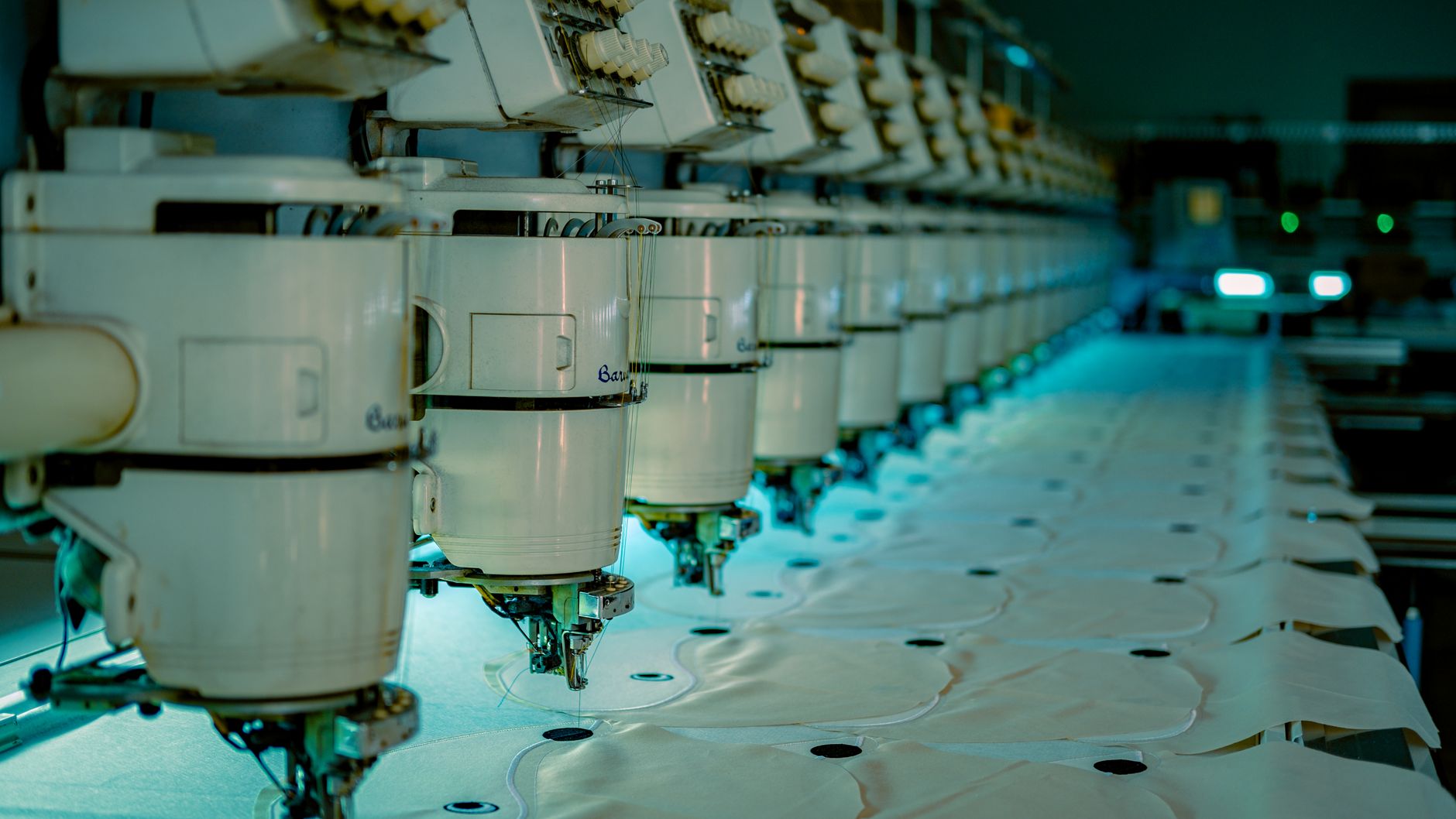
Feiliu Technology's SewSmart system deploys inside a garment factory in 3 days, replacing an enterprise setup that typically takes one to two months. According to geekpark, SewSmart evaluates new garment designs against an internal process database to map factory assembly steps. Software construction shows the same collapse. According to woshipm, a software team fed a requirement document into an AI tool and produced a functional approval module with user permissions in 40 minutes. Two years prior, that task occupied two backend engineers and one frontend engineer for two weeks.
Intercom co-founder Des Traynor noted that product teams treat shipping as success and treat learning as waste. Cheap generation punctures that illusion.
Shipping volume no longer proves strategic value. Contributor Jiandan Youdao argues in woshipm that feature obsession persists through literal requirement transcription, competitor-driven roadmap anxiety, delivery-based OKR evaluations, and anxiety over producing visible daily artifacts. When feature generation becomes automated, the discipline bifurcates. Product managers must engineer deterministic system boundaries around probabilistic models, while defending human taste against algorithmic optimization.
Feature velocity collapses into automated assembly
According to woshipm, a software team fed a product requirement document into an AI tool and generated a working front-end and back-end approval module with user permissions in 40 minutes. Two years prior, that identical task required two backend engineers and one frontend engineer across two weeks. The same compression reshaped core platform infrastructure. Feeding pseudocode, API documentation, sample payloads, and business rules to AI cut the deployment of an e-commerce platform's calculation service to an average of 2 to 3 days, down from the previous 6 to 12 months.
- between 2019 and 202564.4% of evaluated applicant enterprises enter overseas markets
- 202584.2% of applicant companies limit overseas CSR activities to two or fewer times
- first half of 2026McKinsey reports China's exports increase by 18% year-over-year
- September 1736Kr hosts the 2026 East Forward Global Expansion Conference in Shanghai
Physical manufacturing systems show the same acceleration. Feiliu Technology deploys its SewSmart system in a garment factory within 3 days, an installation that traditionally took one to two months, according to geekpark.
SewSmart operates by comparing new garment designs against an internal process database to assist factories in breaking down assembly steps. Once functional assembly runs this fast, delivery-based goals lose their purpose. Intercom co-founder Des Traynor stated that most product teams treat shipping as success and treat learning as waste. woshipm contributor Jiandan Youdao argues that feature-obsessed management persists through four habits: literal requirement transcription, competitor-driven roadmap anxiety, delivery-based OKR evaluations, and anxiety over producing visible daily artifacts.
Broader commerce timelines demonstrate the pace of this contraction. Shopify Asia head of commercial Vivey Wan stated that the shift from e-commerce to mobile commerce took around 15 years, while mobile commerce to social commerce took 9 years. The transition from social commerce to agentic commerce dropped to about 7 years, according to 36kr. When boilerplate software deployment collapses from half a year to an afternoon, velocity metrics stop measuring value.
Software Delivery Paradigms: Legacy Feature Production vs. AI Boundary Engineering vs. Taste-Driven Product Management
| Legacy Feature-Driven Delivery | Deterministic Boundary Engineering | Strategic Taste & Identity Defense | |
|---|---|---|---|
| Implementation Velocity & Deployment | Required two backend engineers and one frontend engineer two weeks for an approval module; calculation services required 6 to 12 months; traditional factory software deployment took one to two months | Generated approval module with permissions in 40 minutes from a PRD; deployed calculation services in 2 to 3 days using API docs and business rules; SewSmart factory deployment takes 3 days | not covered in sources |
| Production Reliability & Failure Modes | Required 193 iteration versions over approximately six months across more than 300 platforms; halted 3 major releases and spent days repairing hundreds of millions of data records | Direct deployment of raw AI code crashes workflows on launch day; mitigated by hard-coding three boundary layers: ODS data source validation, outlier interception, and user role permission filtering | Algorithmic optimization threatens to erase core product identity (e.g. automating away distinctive apparel cuts to minimize return rates) |
| Architectural Guardrails & Verification | Manual verification across disparate backends; users must manually diagnose root causes, decompose tasks, and coordinate steps across unintegrated systems | Field definition checks at the Operational Data Store (ODS) layer before LLM processing; secondary validation against pre-written statistical logic when metrics exceed normal fluctuation ranges | Validation requires three specific problem components: identifying who the user is, their scenario, and the specific obstacle blocking them |
| Problem Discovery Methodology | Literal requirement transcription and competitor-driven roadmaps; dormitory managers manually conducted roll calls across two floors for an hour nightly after 11:00 p.m. via Excel spreadsheets | AI cannot autonomously identify business information gaps, adjust designs, or verify operational results without human-engineered constraints and pre-written diagnostic logic | Uncovers root problems by asking three successive layers of 'why', directly observing users in physical work environments, and restating problems to clients for confirmation |
| Strategic Trade-off Exemplars | Built seven to eight custom approval workflows per account and added dozens of homepage entry points to mirror competitors while Net Promoter Scores consistently declined | Enforcing pre-written statistical logic over probabilistic LLM generation; automated line task assignments based on historical worker skill records in SewSmart | Pruned check-in features from Burbn to focus exclusively on photos and filters (Instagram); designed Wuling Hongguang Mini EV at 20,000 to 30,000 yuan for 3- to 5-kilometer trips; accepted higher clothing return rates to preserve brand cut |
Production demands deterministic boundaries around probabilistic code
Mu Feng proposes that future artificial intelligence should act as a product manager, allowing human operators to set constraints and goals while the model decides what code to write and deploy. Shopify's official documentation outlines a step in that direction: Shopify Sidekick can generate and modify backend applications from simple text descriptions, held back only by operational scope and permission restrictions. But handing runtime control to probabilistic code creates extreme fragility in enterprise environments.
Unbounded generation breaks databases. During an e-commerce integration project described by woshipm, three major releases were halted and rolled back, requiring several days to repair hundreds of millions of data records.
Such failures compound when external pressures mount. According to 36kr, local regulations and data compliance form the leading external challenge for 57.8% of applicant enterprises, with geopolitics and trade barriers troubling 44.4%. Dun & Bradstreet China head of go-global business Xie Huiqi noted that expanding firms face severe misjudgments whenever sales and financial data remain isolated from after-sales records. Shoving unpredictable machine output into fragmented corporate architectures only accelerates those errors.
Surviving this operational shift requires deterministic tripwires rather than prompt tweaks. In an AI reporting architecture documented by woshipm, input datasets must pass field definition checks that intercept invalid records at the Operational Data Store (ODS) layer before any large language model touches them. Furthermore, whenever generated outputs spit out metrics outside normal fluctuation ranges, the pipeline triggers secondary validation against pre-written statistical logic. Product teams cannot rely on model discretion to police itself. Hard boundaries must govern the code.
Behavioral telemetry cannot replace physical field diagnosis
Mu Feng at woshipm argues that an AI product manager should detect when an application lacks diagnostic data and update the software without user prompting. Yet telemetry only captures behavior that occurs inside the digital tool. Shopify senior solutions engineer Liang Yan told 36kr that scaling artificial intelligence requires an operational loop of problem discovery, judgment, action, and review before replicating it across teams. Confining problem discovery to automated code logs breaks that loop before it starts.

Digital telemetry cannot measure physical friction.
During field interviews for a factory dormitory system designed to replace Excel spreadsheets, researchers discovered that supervisors spent an hour every night after 11:00 p.m. manually taking roll calls across two floors. No clickstream can register those stairs. On-site research revealed an identical dynamic for Wuling. As documented by woshipm, the automaker built the four-seat Hongguang Mini EV at a price of 20,000 to 30,000 yuan after field interviews showed drivers in third- and fourth-tier cities needed vehicles for 3- to 5-kilometer trips like grocery shopping and school runs.
Without physical field diagnosis, software teams chase phantom optimization. woshipm notes that Chinese enterprise SaaS vendors frequently add seven to eight custom approval workflows for single accounts and dozens of homepage entry points to mirror competitors, while Net Promoter Scores consistently decline. According to geekpark, SewSmart tracks historical worker production records to evaluate skill levels and allocate assembly line tasks automatically. That algorithmic dispatch works on existing processes, but identifying real operational obstacles still requires contributor Jiandan Youdao's method of observing workers directly in their physical environments.
Decision Framework: Boundary Engineering and Taste Defense in AI-Accelerated Product Development
- Deploying generative AI or LLMs to generate production-level calculations, data models, or analytical reporting interfaces. Do not deploy raw AI-generated output directly to production, which has caused system workflows to crash on launch day and required multi-day rollbacks across hundreds of millions of data records. Instead, engineer three hard-coded deterministic boundary layers: validate field definitions and intercept invalid records at the Operational Data Store (ODS) layer before LLM ingestion, trigger secondary validation against pre-written statistical logic whenever AI-calculated metrics exceed normal fluctuation ranges, and enforce role-based permission filtering before datasets reach the model.
- Building standard, clearly defined CRUD modules, user permission systems, or API integration adapters. Delegate implementation to AI generation using pseudocode, API documentation, sample payloads, and standard operating procedures (SOPs). This reduces build times from traditional multi-week or multi-month engineering cycles (such as two backend engineers and one frontend engineer taking two weeks, or underlying calculation services requiring 6 to 12 months) down to 40 minutes for approval modules and 2 to 3 days for platform calculation services.
- Prioritizing feature roadmaps under competitive pressure or automated optimization suggestions. Exercise human judgment to enforce strategic trade-offs and resist feature bloat. Rather than duplicating competitor features-such as enterprise SaaS vendors building 7 to 8 custom approval workflows and dozens of homepage entry points while Net Promoter Scores fall-follow disciplined reduction (such as Burbn stripping all non-photo features to become Instagram, or Wuling designing the Hongguang Mini EV specifically for 3- to 5-kilometer trips) and defend core identity even when it requires accepting sub-optimal metrics, such as higher return rates on distinctive clothing cuts.
- Evaluating autonomous AI agent tools (such as Shopify Sidekick) to handle end-to-end product design, diagnostics, and workflow restructuring. Confine current AI tools to defined operational scopes and permission-restricted modifications. Current tools cannot autonomously identify business information gaps, restructure core workflows, or verify longitudinal operational results. Human product managers must retain ownership of problem definition by directly observing user environments, restating verified obstacles, and probing underlying root causes.
Protecting human taste and deliberate friction from algorithmic optimization
A woshipm author posits that any task defined as a clear, executable standard operating procedure in natural language will eventually be automated and replaced by AI agents and prompts. When mechanical execution turns into code, strategic friction becomes the product manager's primary domain. Mu Feng argues for woshipm that human judgment remains essential for strategic trade-offs. Preserving brand identity against automated algorithmic optimization often requires defending counterintuitive choices, such as accepting higher return rates on distinctive clothing cuts.
Algorithmic smoothing naturally strips away identity to maximize short-term throughput. Without deliberate taste dictating where to introduce friction, software collapses into functional uniformity.
Supply chains illustrate this tension between rapid automation and deliberate control. Feiliu Technology co-founder and CPO Liu Ke holds a doctorate degree, having managed quick-response supply chain solutions at IBM for brands including Zara. ByteDance invested in Feiliu Technology to support Douyin E-commerce's demand for small-batch, quick-response apparel production. According to geekpark, the company's Black Bag platform runs on a 5-day cycle for sampling. Manufacturing requires 7 days, alongside 3 days for reorders. Extreme responsiveness curbs catastrophic overproduction; Burberry incinerated approximately 250 million yuan worth of unsold clothing in 2018.
Managing this balance extends directly to international expansion. As reported by 36kr, Changan Automobile overseas brand PR director Peter Larko stated that the company shifted its product approach from global synchronization to globally native, regionally tailored offerings. Blind standardization fails local markets. In parallel, 36kr Vice President Xie Zuoqiang observed that the primary challenge for Chinese companies expanding abroad is whether brands can establish themselves while handling overseas governance and compliance challenges. The practitioner's enduring mandate is defending those local nuances against blanket algorithmic convergence.
According to 36kr, Shopify senior solutions engineer Liang Yan stated that scaling AI requires completing an operational loop of problem discovery, judgment, action, and review before replicating tools across markets. Speed alone guarantees nothing. Zhangyue Technology CEO Sun Kai reported that average production costs for AI short dramas fell by 75% over a three-month period, while supply expanded by approximately 300% within six months.
Practitioners survive by deciding what not to automate.
Shopify Asia head of commercial Vivey Wan observed how adoption windows contract. The migration to mobile commerce took around 15 years, while mobile to social commerce took 9 years. Agentic commerce took about 7 years. Navigating that pace requires deterministic validation boundaries around probabilistic outputs, alongside an active defense of the product traits automated systems flatten.
For readers outside China
- Availability: Feiliu Technology's SewSmart factory software and Black Bag (黑袋子) app are built for China's domestic garment manufacturing sector and Douyin E-commerce supply chains; their international availability outside China is not disclosed in sources. Shopify Sidekick is integrated into Shopify's platform. The described AI-assisted approval module generation, ODS-layer reporting architecture, and e-commerce financial consolidation pipelines were implemented as internal enterprise systems.
- Pricing: End-user SaaS subscription pricing for SewSmart, Black Bag, and Shopify Sidekick is not disclosed in sources. Related commercial figures in the source material include Feiliu Technology's 200 million yuan Series A2 funding round in May 2021, Wuling's Hongguang Mini EV retail pricing of 20,000 to 30,000 yuan, and a 75% reduction in production costs for AI short dramas over a three-month period.
- Closest Western equivalents: Shopify Sidekick (for natural-language backend app modification and workflow assistance); IBM quick-response supply chain solutions (historical enterprise benchmark previously handled by Feiliu CPO Liu Ke for brands including Zara); Intercom (referenced regarding customer learning versus feature shipping dogma)
- Data residency: Data compliance, local laws, and regulations represent the leading external challenge for 57.8% of outbound Chinese enterprises covered in the 2026 expansion research. Within technical implementations, data protection is addressed via architectural boundaries: input data is filtered by user role permissions before reaching the large language model, and invalid data is intercepted at the Operational Data Store (ODS) layer. Specific cross-border data transfer protocols, cloud hosting regions, and international regulatory frameworks (such as GDPR) are not disclosed in sources.
Sources
- geekpark 刘珂:用 AI 做衣服,让工人多赚钱|Founder 100(002) https://geekpark.net/news/371363
- woshipm 功能是答案,问题是题目:AI 时代,产品经理唯一稀缺的产出 https://woshipm.com/pmd/6475555.html
- woshipm 技术终将平权,做产品真正稀缺的是灵感与品味 https://woshipm.com/pd/6474001.html
- woshipm 未来的 AI 产品应该怎么被"定义" https://woshipm.com/share/6467146.html
- 36kr 36氪East Forward 2026出海全球化系列名册重磅发布 https://36kr.com/p/3988360877882121
- 36kr 2026 East Forward出海大会:全球化到达下一站,中国企业如何走得更远 https://36kr.com/p/3994316084214534
The evidence: 37 facts from 6 Chinese articles
Each line below was extracted from the article it sits under, in Chinese, before any of this was written. The writing is done from these and never from the source prose - that separation is structural, not a promise. How we work.
36kr36氪East Forward 2026出海全球化系列名册重磅发布
- 36Kr published its East Forward 2026 outbound globalization roster across three categories: Global Navigation Enterprises, Global Pioneer Enterprises, and Global Roadbuilder Enterprises.
- Companies applying for 36Kr's East Forward 2026 evaluation launched overseas business operations an average of approximately six years after their founding.
- 64.4% of applicant companies for the 36Kr East Forward 2026 evaluation entered overseas markets between 2019 and 2025.
- 31% of applicant companies for 36Kr's East Forward 2026 evaluation chose to expand overseas immediately upon their founding.
- Among applicant companies for 36Kr's East Forward 2026 evaluation, 35.6% expand abroad primarily through product exports, while 37.8% provide localized supporting services to outbound enterprises.
- North America and Southeast Asia both hold a 73.3% market coverage rate among applicant companies in 36Kr's East Forward 2026 evaluation.
- Among applicant companies for 36Kr's East Forward 2026 evaluation, 60% operate in Europe, while Northeast Asia and the Middle East each have a coverage rate of 46.7%.
- 55.6% of applicant companies in 36Kr's evaluation identified a lack of key overseas networking and channel resources as their primary internal challenge.
- Local laws, regulations, and data compliance represent the leading external challenge for 57.8% of applicant companies, while geopolitics and trade barriers affect 44.4%.
- Among applicant companies founded within five years, 75% allocate more than 20% of their revenue to research and development.
- 83.4% of applicant companies founded within five years expect their overseas business revenue to grow by more than 50% over the next one to two years, with 41.7% projecting growth above 100%.
- 31.6% of applicant companies in 36Kr's East Forward 2026 evaluation have established an ESG committee and regularly publish reports.
- 84.2% of applicant companies conducted overseas corporate social responsibility or charitable activities two or fewer times in 2025.
- 57.9% of applicant companies in 36Kr's East Forward 2026 evaluation have not initiated carbon emission management for their overseas markets.
36kr2026 East Forward出海大会:全球化到达下一站,中国企业如何走得更远
- 36Kr hosted the 2026 East Forward Global Expansion Conference in Shanghai on September 17 under the theme 'Meet at the Shore as the Tide Rises'.
- The conference released three corporate rosters: East Forward Global Expansion Pilot Enterprises, Pioneer Enterprises, and Roadbuilder Enterprises.
- A total of 28 companies participated in business negotiations at the East Forward global expansion resource matchmaking session.
geekpark刘珂:用 AI 做衣服,让工人多赚钱|Founder 100(002)
- In May 2021, Feiliu Technology raised 200 million yuan in a Series A2 funding round.
- Feiliu Technology's Series A2 funding round was led by Hillhouse Capital, with participation from Double Lake Capital, INCE Capital, GGV Capital, ByteDance, and SoftBank China Venture Capital.
- Feiliu Technology co-founder and CPO Liu Ke holds a doctorate degree and previously worked as an IBM product manager handling quick-response supply chain solutions for brands including Zara.
- Burberry incinerated approximately 250 million yuan worth of unsold clothing in 2018.
- Feiliu Technology developed the SewSmart system, which can be deployed in a garment factory within 3 days.
- Feiliu Technology's SewSmart system compares new garment designs against an internal process database to assist factories in breaking down assembly steps.
- SewSmart tracks historical worker production records to evaluate skill levels and automatically assigns garment assembly line tasks accordingly.
- Feiliu Technology developed an app called Black Bag (黑袋子) to connect apparel buyers with manufacturing supply.
- Feiliu Technology's Black Bag platform operates on a production cycle of 5 days for sampling, 7 days for manufacturing, and 3 days for reorders.
woshipm未来的 AI 产品应该怎么被“定义”
- Shopify's official documentation states that Shopify Sidekick can generate and modify backend applications based on text descriptions, subject to operational scope and permission restrictions.
woshipm功能是答案,问题是题目:AI 时代,产品经理唯一稀缺的产出
- Intercom co-founder Des Traynor stated that most product teams treat shipping as success and treat learning as waste.
- Instagram originated as Burbn, a feature-heavy check-in app whose founders removed all other features after realizing that users almost exclusively uploaded photos and applied filters.
- Wuling designed the Hongguang Mini EV as a four-seat vehicle priced at 20,000 to 30,000 yuan after field research showed consumers in third- and fourth-tier cities needed transport for 3- to 5-kilometer trips like grocery shopping and school runs.
woshipm技术终将平权,做产品真正稀缺的是灵感与品味
- An e-commerce platform consolidation project managed by the woshipm author integrated order and financial amount systems across more than 300 platforms, requiring 193 iteration versions over approximately six months for data model validation and adaptation.
- During the e-commerce integration project, three major releases had to be halted and completely rolled back, each resulting in several days of repairing hundreds of millions of data records.
- By feeding pseudocode, API documentation, sample payloads, and business rules to AI, deploying a new e-commerce platform's underlying calculation service took an average of 2 to 3 days, down from the previous 6 to 12 months.
- To deploy an AI-generated business reporting feature, the author's team hard-coded three boundary layers into the system: data source validation, outlier interception, and hierarchical permission control.
- In the author's AI reporting architecture, all input datasets must undergo field definition checks and have invalid data intercepted at the Operational Data Store (ODS) layer before being fed to the large language model.
- In the author's AI reporting architecture, when AI-generated reports contain metrics exceeding normal fluctuation ranges, the system automatically triggers secondary validation against pre-written statistical logic.
- In the author's AI reporting architecture, datasets are filtered according to user roles before reaching the large language model to prevent unauthorized data access.