SenseTime's RoboDojo benchmark exposes the friction between large cloud models and physical machines. According to woshipm, running GPT-6 Astra on the platform to stack bowls required approximately 131 minutes at a cost of $19, while placing pens into a pen holder consumed approximately 263 minutes at a cost of $55. The brute-force method worked. Granting the system extra steps turned nine failed tasks into complete successes, lifting the overall task success rate to 81.9%.
Software retry loops fix digital code errors cheaply. Transferred to physical workbenches, that same iterative loop falters under severe latency and mounting runtime bills.
Executive expectations remain aggressively optimistic. According to geekpark, Wang Xingxing demonstrated a robot connected to GPT-6 that washed brushes and accurately placed Go stones without prior training, later claiming at the Shanghai Industry Fair that GPT-7 next year could directly solve embodied intelligence. Yet bridging cloud intelligence with physical work demands splitting sparse semantic planning from dedicated execution engines.
The digital agent retry loop breaks on physical floors
In August at the World Robot Conference, Wang Xingxing predicted that the 'ChatGPT moment' for embodied intelligence would take 2 to 3 years at the fastest, or 5 to 10 years at the slowest. Two months after August, he shortened that expected timeline to 1 to 2 years at the fastest, or 2 to 3 years at the slowest. The timeline kept shrinking. At the Shanghai Industry Fair, Wang claimed the release of GPT-7 next year could directly solve the challenges of embodied intelligence. Geekpark reported his demonstration of a robot connected to GPT-6 that accurately placed Go stones without prior training, alongside washing brushes and changing paints.
- February 2025Figure terminates OpenAI alliance to develop proprietary Helix model
- March 2026AgiBot cumulative robot production surpasses 10,000 units
- JuneAlibaba launches Qwen-Robot manipulation, navigation, and world models
- JulyZhipu invests in Yuanli Lingji and open-sources 2.6B parameter ZR-0
- AugustDeepSeek invests 141 million yuan into Unitree strategic placement
- October 22, 2026Unitree hosts World Physical AI Conference in Hangzhou
Software retry loops do not translate cleanly to the physical world. Digital models treat mistakes as cheap compute cycles, but physical floors charge for every wasted second.
Data from SenseTime's RoboDojo benchmark underscores this friction. According to woshipm, allowing GPT-6 Astra more steps turned nine previously failed tasks into complete successes, raising the overall task success rate to 81.9%. Yet that precision demanded staggering delays. Stacking bowls required approximately 131 minutes at a cost of $19, while placing pens into a pen holder required approximately 263 minutes at a cost of $55.
Commercial automation cannot tolerate such drag. Industry estimates cited by woshipm place the collection cost of valid real-world robot operational data at 500 yuan to 1,000 yuan per hour. Meanwhile, the annual comprehensive operation and maintenance cost of a single wheeled-arm or bipedal humanoid robot ranges from 500,000 yuan to 700,000 yuan. A control loop that burns hours on ordinary tabletop manipulation collapses against those operating realities.
Hardware makers lose control when they rent cloud brains
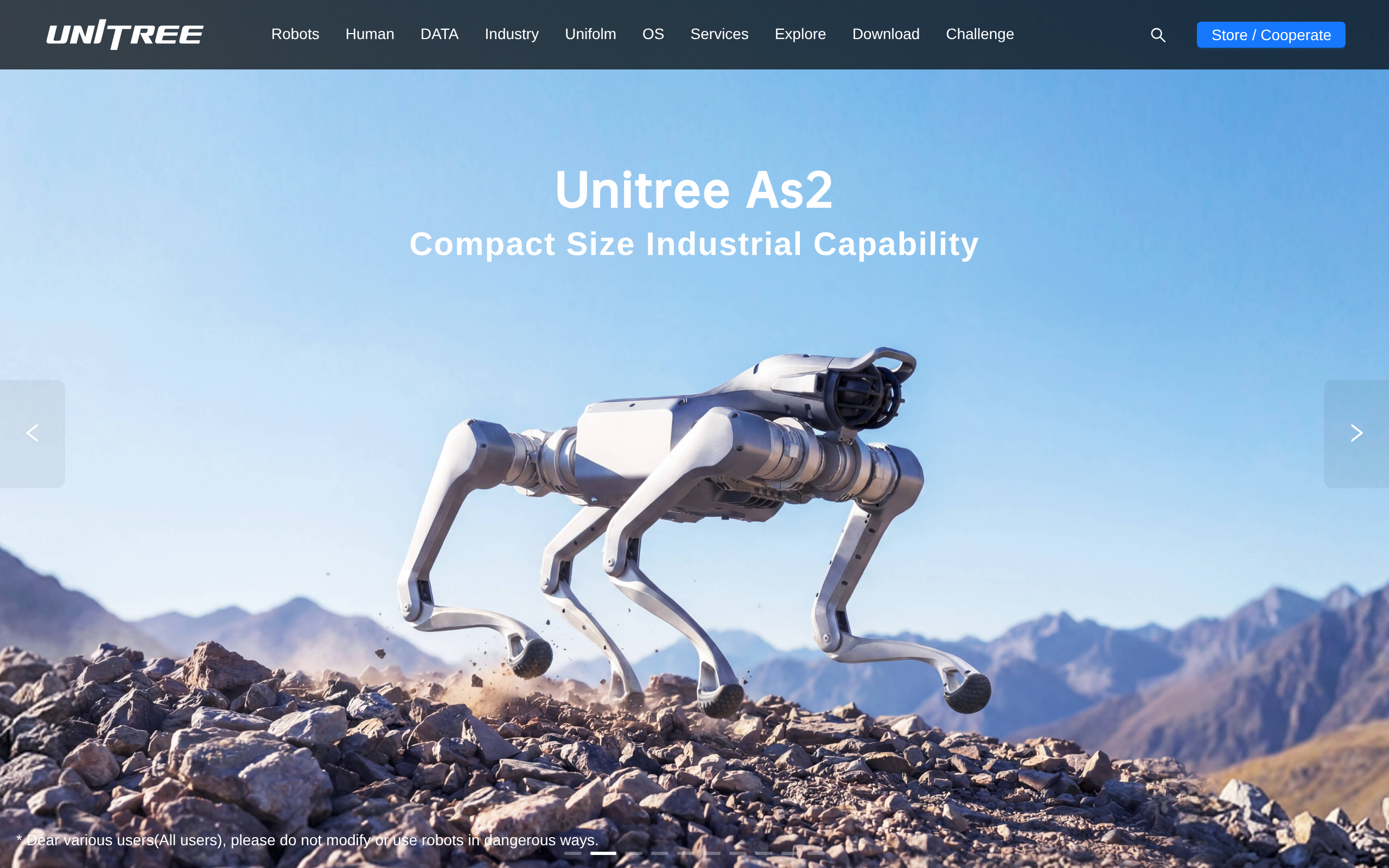
Unitree released its G1 humanoid robot in May 2024, reaching cumulative production of approximately 10,000 to 20,000 units. According to geekpark, Wang Xingxing claims that the Unitree G1 has the largest shipment volume globally for any single humanoid robot model, supported by an internal manufacturing pipeline that produces tens of thousands of robots and hundreds of thousands of joint motors annually. Wang aims higher. He believes that achieving true widespread adoption of robots requires an annual output of at least 10 million units. This hardware-first posture assumes that downstream builders can treat physical intelligence as a rented utility.
Renting intelligence carries severe structural risks. Hardware builders risk marginalization once upstream frontier labs build their own bodies.
Partnerships between hardware developers and foundation model labs tend to fracture quickly. According to woshipm, OpenAI and Figure terminated their collaboration in February 2025, after which Figure transitioned to developing its proprietary model, Helix. OpenAI did not abandon embodiment. As of October 2026, OpenAI listed 27 robotics-related job openings on its official website, up from 11 in May 2026. OpenAI Chief Executive Officer Sam Altman stated on a podcast that OpenAI expects to launch an impressive humanoid robot demo prototype in 2027.
Capital allocation reflects this defensive shift. In the first half of 2026, financing in China's embodied AI sector reached approximately 43.8 billion yuan, according to woshipm. Brain-layer algorithm and software control firms secured 22.253 billion yuan, capturing 50.8% of all funds, while robot body manufacturers secured 12.8%. Domestic platforms are absorbing that territory. In June, Alibaba launched the Qwen-Robot series, combining a VLA manipulation model and a VLN navigation model with a world model. Tencent released the Tairos open robotics platform, jointly developed by Futian Laboratory and Tencent Robotics X, which has been integrated with Unitree's G1 robot.
DeepSeek hedges the crushing capital cost of robot data
Pure digital tokens scale with negligible overhead. In tests conducted by a Nebius employee using the Pi programming framework across 10 tasks, DeepSeek-V4.1-Flash-1017 recorded 30 successful completions in 30 runs, costing an average of 4.5 cents and consuming 550,000 tokens per task. Physical execution breaks this math completely. According to woshipm, harvesting valid real-world operational data costs 500 yuan to 1,000 yuan per hour. Maintaining a single wheeled-arm or bipedal humanoid robot demands between 500,000 yuan and 700,000 yuan every year.
Software runs survive on cheap iterations. Physical machines bleed capital through hardware wear and continuous onsite maintenance.
To acquire physical grounding without absorbing that overhead, DeepSeek adopted an asset-light equity posture. In August, the model builder put 141 million yuan into Unitree Robotics' strategic placement under a 36-month lockup, pairing the capital with a bilateral preferential procurement memorandum of understanding and joint R&D commitments. Hardware brings heavy burdens. According to geekpark, Unitree produces tens of thousands of robots annually, having shipped 5,500 units in 2025 with targets between 10,000 and 20,000 units for 2026. Reports tracked by woshipm on October 12 also revealed DeepSeek's plan to lead seed funding for Hu Han's Winverse AI at a $400 million post-investment valuation alongside Meituan DragonBall.
This structure secures data pipelines while insulation holds. woshipm notes that Liang Wenfeng's public roadmap places embodied intelligence as the final step after language models, chain-of-thought, agents, continual learning, and self-iteration. Buying minority equity lets DeepSeek tap real hardware without paying the daily fleet bill.
Architectural and Deployment Guidelines for Physical AI Workflows
- Evaluating end-to-end multimodal foundation models (such as GPT-6 Astra) directly as real-time robot controllers for fine-motor tasks Avoid direct end-to-end execution for latency-sensitive or cost-constrained tasks. On SenseTime's RoboDojo benchmark, executing multi-step physical manipulation directly through GPT-6 Astra required 131 minutes and $19 to stack bowls, and 263 minutes and $55 to insert pens into a holder. While additional reasoning steps raised overall task success to 81.9% (recovering 9 failed tasks), the extreme latency and per-step token expense require decoupling high-level semantic task planning from low-latency physical controllers.
- Architecting real-time spatial representations and multi-platform robot interaction layers Adopt a dedicated physical space engine architecture rather than relying solely on predictive generative world models. As structured by Yitai Technology's five-layer stack (input, core capability, spatial asset, platform, and application), underlying physical engines express spatial states deterministically and achieve sub-millimeter precision in interaction data collection, rendering physical space runnable and computable without the computational overhead of predicting next-state video frames.
- Selecting embodied foundation model stacks for robotics control and navigation Deploy specialized modular models rather than monolithic vision-language models. Adopt purpose-built suites such as Alibaba's Qwen-Robot series (which partitions intelligence into a VLA manipulation model, a VLN navigation model, and a world model) or lightweight open-source models such as the 2.6-billion-parameter ZR-0 VLA model open-sourced by Zhipu and Yuanli Lingji.
- Budgeting operational data collection and fleet maintenance for bipedal and wheeled humanoid hardware Factor high physical upkeep into deployment economics rather than treating hardware as zero-marginal-cost execution nodes. Valid real-world robot operational data collection costs between 500 yuan and 1,000 yuan per hour, while the comprehensive annual operation and maintenance cost for a single bipedal or wheeled-arm humanoid robot ranges from 500,000 yuan to 700,000 yuan.
- Designing thermal management systems for high-compute onboard physical AI processors and dense actuators Replace conventional thermal interface materials like tungsten-copper or molybdenum-copper (which offer thermal conductivities slightly over 200 W/(m-K)) with diamond-metal matrix composites. Utilizing diamond/aluminum materials (550 to 750 W/(m-K)) or diamond/copper materials (750 to 980 W/(m-K)) eliminates thermal bottlenecks that otherwise throttle onboard computing clusters during continuous actuation.
Decoupling semantic planning from high-frequency spatial engines
Cloud architectures cannot manage real-time physical balance and contact forces. In June, Alibaba launched its Qwen-Robot line with distinct components: a VLA manipulation model, a VLN navigation model, alongside a world model, according to woshipm. In July, Zhipu invested in Yuanli Lingji (原力灵机) and jointly open-sourced the 2.6-billion-parameter VLA model ZR-0 with a dedicated dataset. Tencent similarly split system duties when releasing the Tairos open robotics platform with Futian Laboratory and Tencent Robotics X, deploying the framework onto Unitree's G1 robot.
Physical execution cannot wait on remote networks. When contact occurs, control loops require deterministic math running on local silicon rather than generative predictions streaming from remote clusters.
Local spatial engines bridge that operational gap. As 36kr reported, Yitai Technology (乙太科技) was founded in December 2025 to build spatial intelligence infrastructure, raising over 100 million yuan across seed and angel rounds. Founder Yang Yeqing argues that world models predict and generate future environments, whereas a physical space engine expresses spatial states directly without generating them. Static mirroring is replaced by functional execution. The engine makes space computable and runnable across platforms.
Yitai Technology organizes this pipeline across five layers: input, core capability, spatial asset, platform, and application. At the data input layer, the company prioritizes human hand motion and interaction, which Yang claims achieves sub-millimeter precision. Deterministic performance matters at lower levels. Reporting from 36kr showed that SOG Computing used R2DPack to run multi-physics simulations on mainstream automotive chips, hitting millisecond-level response times. Local processing absorbs the shock of physical contact.
Architectural Decoupling in Physical AI: End-to-End Foundation Models vs. Spatial Engines vs. Hardware Actuation
| Dimension | End-to-End LLM Agent (SenseTime RoboDojo / GPT-6 Astra) | Physical Space Engine (Yitai Technology) | Embodied Hardware Platform (Unitree Robotics) |
|---|---|---|---|
| Primary Architectural Role | Direct end-to-end task execution and multi-step iterative agent control | Spatial intelligence infrastructure expressing computable, runnable, and deployable spatial states across five technical layers | Humanoid robot body manufacturing and large-scale joint motor actuation |
| Observed Execution Latency & Duration | Approximately 131 minutes for stacking bowls; approximately 263 minutes for placing pens into a pen holder | not disclosed in sources | Battery run time increased from approximately 3 hours on H2 to approximately 8 hours on H2-X; task execution latency not disclosed in sources |
| Direct Task & Operating Costs | $19 per task execution for stacking bowls; $55 per task execution for placing pens into a pen holder | not disclosed in sources | Single wheeled-arm or bipedal humanoid robot annual operation and maintenance cost ranges from 500,000 yuan to 700,000 yuan (industry estimate) |
| Benchmark Performance & Accuracy | 81.9% overall task success rate achieved when granted additional execution steps to recover nine previously failed tasks | Sub-millimeter precision in human interaction and hand motion data collection | Demonstrated accurate Go stone placement, brush washing, and paint changing without prior training when linked to GPT-6 |
| Deployment & Production Scale | not disclosed in sources | not disclosed in sources | Cumulative production of approximately 10,000 to 20,000 units for G1; 5,500 units shipped in 2025 with a delivery target of 10,000 to 20,000 units for 2026 |
| Financing & Strategic Ecosystem | Evaluated via SenseTime RoboDojo platform; corporate equity financing not disclosed in sources | Cumulative financing exceeding 100 million yuan from Huawei Hubble, JLCPCB, Zibianliang, AgiBot, CAS Fifth Epoch, and iSoftStone | 141 million yuan strategic placement from DeepSeek with a 36-month lockup period; tens of millions of yuan allocated for competition prize money |
Engineering teams building physical systems should isolate cloud reasoning from motor loops. In digital workflows, DeepSeek-V4.1-Flash-1017 resolves software tasks cheaply. According to woshipm, tests run by a Nebius employee using the Pi programming framework across 10 tasks achieved 30 successful completions in 30 runs, averaging approximately 4.5 cents and 550,000 tokens per task. That iterative loop fails when routed through physical actuators.
Physical control belongs on the machine. Local engines must absorb real-time forces.
Industrial deployment follows this split. In August, DeepSeek invested approximately 141 million yuan in Unitree Robotics under a 36-month lockup period. It also pursued stakes in ventures led by ICCV 2021 Marr Prize winner Hu Han and Yu Tao, who created System 0 whole-body tracking at LimX Dynamics. High-level planners determine intent. Local controllers handle contact.
For readers outside China
- Availability: Unitree's G1 humanoid robot entered production in May 2024, shipping 5,500 units in 2025 with cumulative production reaching between 10,000 and 20,000 units. AgiBot also crossed 10,000 units in cumulative production by March 2026. While commercial availability and delivery outside mainland China are not disclosed in sources, Unitree organized an international World Physical AI Competition offering tens of millions of yuan in prize money. On the software side, Zhipu and Yuanli Lingji jointly open-sourced the 2.6-billion-parameter ZR-0 VLA model along with robotics datasets; Tencent released the open Tairos platform integrated with the Unitree G1; and DeepSeek offers DeepSeek-V4.1-Flash-1017 via its deepseek-flash API endpoint.
- Pricing: Hardware retail unit pricing for the Unitree G1 is not disclosed in sources. However, the comprehensive annual operation and maintenance cost for a single bipedal or wheeled-arm robot ranges from 500,000 yuan to 700,000 yuan, and gathering valid real-world physical operational data costs 500 yuan to 1,000 yuan per hour. For model inference, DeepSeek-V4.1-Flash-1017 maintains its predecessor's API pricing, averaging approximately 4.5 cents and 550,000 tokens per software task in benchmark testing. In robotic benchmark execution via GPT-6 Astra on SenseTime's RoboDojo, physical task completion costs were documented at $19 for stacking bowls and $55 for inserting pens into a holder.
- Closest Western equivalents: OpenAI Robotics Platform (OpenAI terminated its collaboration with Figure in February 2025 to pursue internal robotics development, expanding its robotics team to 27 job openings as of October 2026 and targeting a humanoid demo prototype in 2027); Figure Helix (Figure's proprietary foundation model developed following the termination of its OpenAI partnership); Claude Opus 5 (Anthropic's flagship model benchmarked alongside DeepSeek-V4.1-Flash-1017 on software engineering benchmarks like DeepSWE v1.1 and HLE); GPT-5.6 Sol (OpenAI frontier model benchmarked on DeepSWE v1.1)
- Data residency: Data residency, localization requirements, and export regulations governing cross-border robotics telemetry, the 10 million hours of planned video in JD's EgoLive dataset, and cloud-hosted model inferences (such as Alibaba's Qwen-Robot models or the DeepSeek API) are not disclosed in sources.
Sources
- geekpark 宇树 10 周年,王兴兴:我劝你相信 AI https://geekpark.net/news/372759
- 36kr 华为投后,一盛新材再获元禾璞华等近亿融资,热控材料站上AI风口丨36氪首发 https://36kr.com/p/4023646561668995
- woshipm DeepSeek新模型升级,梁文锋正在为具身智能铺路? https://woshipm.com/ai/6480789.html
- 36kr AI新材料公司获数千万天使轮融资,已合作固态电池与化工龙头丨36氪首发 https://36kr.com/p/3996737880559493
- woshipm 大模型厂商,为什么决定不了自己在具身智能的位置? https://woshipm.com/embodied/6482581.html
- 36kr 36氪首发丨华为、高瓴等押注,物理空间智能基础设施公司完成超亿元融资 https://36kr.com/p/4035014691345540
The evidence: 61 facts from 6 Chinese articles
Each line below was extracted from the article it sits under, in Chinese, before any of this was written. The writing is done from these and never from the source prose - that separation is structural, not a promise. How we work.
36kr36氪首发丨华为、高瓴等押注,物理空间智能基础设施公司完成超亿元融资
- Yitai Technology (乙太科技) completed consecutive seed and angel funding rounds with a cumulative financing amount exceeding 100 million yuan.
- Strategic investors participating in Yitai Technology's funding rounds include Huawei Hubble, JLCPCB, Zibianliang, AgiBot, CAS Fifth Epoch, and iSoftStone.
- Financial investors in Yitai Technology's funding rounds include Hillhouse, Shenzhen High-Tech Investment, Shanghai Semiconductor, Zhongping Capital, Xinneng Venture Capital, Jiaoyuan Assets, Neuron VC, Deshi, and Xichen.
- Yitai Technology was founded in December 2025 to build spatial intelligence infrastructure centered on a physical space engine.
- Yitai Technology founder and CEO Yang Yeqing previously served as Chief of Staff at HTC VIVE, as well as head of its China metaverse business division and software and services division.
- Core team members of Yitai Technology previously worked at or graduated from HTC VIVE, Microsoft, JD.com, Meituan, Peking University, the Hong Kong University of Science and Technology, and Beihang University.
- Yitai Technology's physical space engine technical architecture comprises five layers: the input layer, core capability layer, spatial asset layer, platform layer, and application layer.
- At the data input layer, Yitai Technology currently prioritizes the collection of human hand motion and interaction data.
- Yitai Technology has launched applications and partnerships centered on spatial data in the robotics and world model sectors.
36kr华为投后,一盛新材再获元禾璞华等近亿融资,热控材料站上AI风口丨36氪首发
- Harbin Yisheng New Material Technology Co., Ltd. raised nearly 100 million yuan in a Series A3 financing round.
- Yisheng New Materials' Series A3 financing round was co-led by Oriza Hua and Changjiang Innovation, with participation from CSC Financial Capital, Bangsheng Capital, Fengyuan Investment, Yinbai Investment, and ZGC Qihang's Xinchuang Fund.
- Huawei previously invested in Yisheng New Materials prior to its Series A3 financing round.
- Yisheng New Materials was founded on September 18, 2024, and focuses on research, development, and production of high-end metal matrix composite materials.
- Yisheng New Materials' core technology relies on the National and Local Joint Engineering Laboratory of Metal Matrix Composites at Harbin Institute of Technology.
- Yisheng New Materials founder Wu Gaohui developed China's first metal matrix composite in 1982.
- Wu Gaohui's team developed diamond/aluminum composite materials in China in 2012 and applied them in batches to satellite spacecraft.
- Conventional tungsten-copper and molybdenum-copper thermal materials possess thermal conductivities of slightly over 200 W/(m-K).
- Yisheng New Materials' diamond/aluminum composite material has a thermal conductivity of 550 to 750 W/(m-K), while its diamond/copper composite material reaches 750 to 980 W/(m-K).
- Yisheng New Materials uses proprietary liquid-state pressure infiltration technology and has an annual production capacity exceeding 10 million pieces.
- Thermal control products from Yisheng New Materials have been applied in more than 20 satellites.
36krAI新材料公司获数千万天使轮融资,已合作固态电池与化工龙头丨36氪首发
- SOG Computing (Shanghai) Technology Co., Ltd. (索格智算) completed an angel funding round of tens of millions of yuan.
- Fosun Capital led SOG Computing's angel round, joined by Nantong Industrial Control Siyuan Artificial Intelligence Leading Fund, Yunqi Partners, and Zhongying Capital, with follow-on funding from existing investor Zizhu Science and Technology Investment.
- SOG Computing was founded in 2025 to develop AI-driven computational engines for new materials research and development.
- SOG Computing founder and chief scientist Xu Zhenli is a distinguished professor at Shanghai Jiao Tong University, director of the AI New Materials Research Center, and recipient of the National Science Fund for Distinguished Young Scholars.
- SOG Computing employs an R&D team of over 30 people across four centers: AI algorithms, application technology, intelligent agents, and quantum computing.
- SOG Computing's SOGNet algorithm directly learns long-range atomic correlations in Fourier space, with corresponding research published in Physical Review Letters in 2025 as an Editors' Suggestion.
- SOG Computing's random batch algorithm achieves over 95% parallel efficiency across 10,000 computing cores and won the First Prize of the Shanghai Natural Science Award.
- Polymer candidate formulations recommended by SOG Computing's SOG Omni agent for a listed chemical company have entered wet-laboratory experimental validation.
- SOG Computing plans to target molecular design and formulation development for photoresists and semiconductor packaging adhesive materials.
geekpark宇树 10 周年,王兴兴:我劝你相信 AI
- Unitree held the World Physical AI Conference at the Hangzhou International Expo Center on October 22, 2026.
- The year 2026 marks the 10th anniversary of Unitree's founding.
- Unitree released its G1 humanoid robot in May 2024, with cumulative production reaching approximately 10,000 to 20,000 units.
- On October 21, Unitree published a video of its H2-X robot demonstrating a battery life increased from approximately 3 hours on the H2 to approximately 8 hours.
- Wang Xingxing demonstrated a robot connected to GPT-6 that washed brushes, changed paints, and accurately placed Go stones without prior training.
- In August at the World Robot Conference, Wang Xingxing predicted that the 'ChatGPT moment' for embodied intelligence would take 2 to 3 years at the fastest, or 5 to 10 years at the slowest.
- Two months after August, Wang Xingxing shortened his expected timeline for the 'ChatGPT moment' of embodied intelligence to 1 to 2 years at the fastest, or 2 to 3 years at the slowest.
- Unitree currently produces tens of thousands of robots and hundreds of thousands of joint motors annually.
- The release of ChatGPT in late 2022 prompted Unitree to officially enter the humanoid robot sector in 2023.
- Unitree launched the World Physical AI Competition, providing tens of millions of yuan in prize money to support global robot development.
woshipm大模型厂商,为什么决定不了自己在具身智能的位置?
- In August, DeepSeek invested 141 million yuan in Unitree's strategic placement with a 36-month lockup period and signed a bilateral preferential procurement memorandum of understanding.
- OpenAI Chief Executive Officer Sam Altman stated on a podcast that OpenAI expects to launch an impressive humanoid robot demo prototype in 2027.
- In July, Zhipu invested in general embodied intelligence company Yuanli Lingji (原力灵机) and jointly open-sourced the 2.6-billion-parameter VLA model ZR-0 alongside a robotics dataset.
- In SenseTime's RoboDojo benchmark using GPT-6 Astra, stacking bowls required approximately 131 minutes at a cost of $19, while placing pens into a pen holder required approximately 263 minutes at a cost of $55.
- Allowing GPT-6 Astra more steps on SenseTime's RoboDojo platform turned nine previously failed tasks into complete successes, raising the overall task success rate to 81.9%.
- As of October 2026, OpenAI listed 27 robotics-related job openings on its official website, up from 11 in May 2026.
- OpenAI and Figure terminated their collaboration in February 2025, after which Figure transitioned to developing its proprietary model, Helix.
- In the first half of 2026, financing in China's embodied AI sector reached approximately 43.8 billion yuan, with brain-layer algorithm and software control firms securing 22.253 billion yuan (50.8%) and robot body manufacturers securing 12.8%.
- In June, Alibaba launched the Qwen-Robot series, comprising a VLA manipulation model, a VLN navigation model, and a world model.
- Tencent released the Tairos open robotics platform, jointly developed by Futian Laboratory and Tencent Robotics X, which has been integrated with Unitree's G1 robot.
- JD's EgoLive dataset initiative plans to gather 10 million hours of real human first-person video data over a two-year timeframe.
- Unitree shipped 5,500 robot units in 2025 and set a delivery target of 10,000 to 20,000 units for 2026.
- AgiBot's cumulative robot production volume surpassed 10,000 units in March 2026.
woshipmDeepSeek新模型升级,梁文锋正在为具身智能铺路?
- DeepSeek released DeepSeek-V4.1-Flash-1017 with the promotional slogan 'wish-style programming comes true with one click'.
- DeepSeek-V4.1-Flash-1017 maintains the same base model architecture and API pricing as its predecessor, accessible via the deepseek-flash API endpoint.
- DeepSeek-V4.1-Flash-1017 achieved a Pass@1 score of 77.0 on DeepSWE v1.1, compared to 74.0 for Claude Opus 5 and 73.0 for GPT-5.6 Sol.
- DeepSeek-V4.1-Flash-1017 scored 42.3 on Terminal-Bench 4.0, up from 31.2 in the previous version.
- DeepSeek-V4.1-Flash-1017 scored 42.6 on the HLE benchmark, trailing Claude Opus 5's score of 56.3.
- In August, DeepSeek invested approximately 141 million yuan to participate in Unitree Robotics' IPO strategic placement with a 36-month lockup period and signed a joint R&D memorandum.
- Hu Han is a primary author of the Swin Transformer paper and won the ICCV 2021 Marr Prize.
- Yu Tao previously developed the motion mimic and System 0 whole-body tracking systems at LimX Dynamics.
- In tests conducted by a Nebius employee using the Pi programming framework across 10 tasks, DeepSeek-V4.1-Flash-1017 achieved 30 successful completions in 30 runs, averaging approximately 4.5 cents and 550,000 tokens per task.