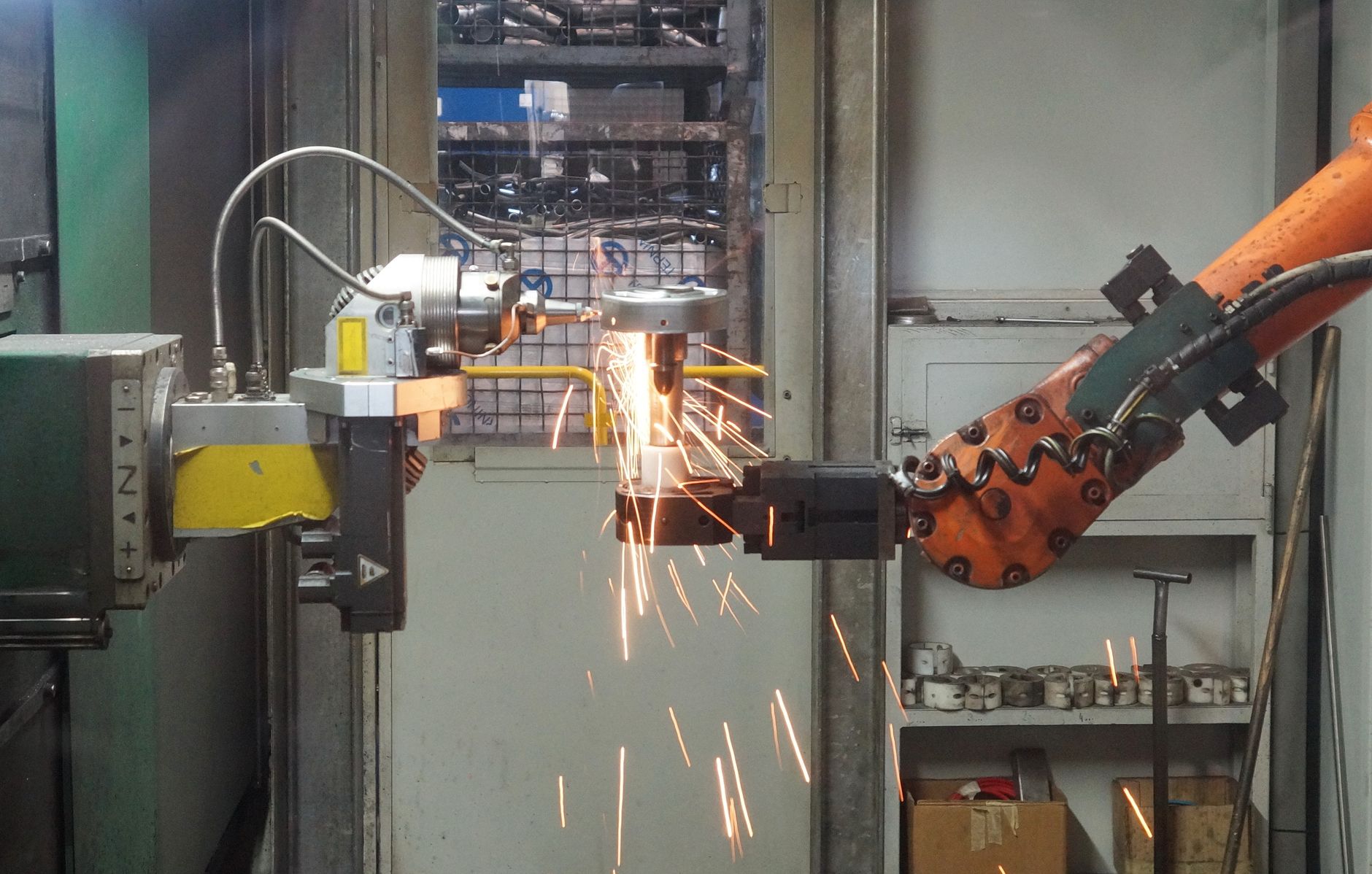
Qiyuan Robotics operates a production line capable of rolling out one robot every 2.5 minutes while tracking assembly data for traceability. According to ifanr, factory throughput is accelerating, yet mechanical output runs far ahead of software capability. Investor Zhu Xiaohu stated at Peking University Innovation and Entrepreneurship School that China has approximately 200 embodied AI companies, warning via woshipm that the vast majority will fail without commercial differentiation. Mech-Mind CEO Shao Tianlan also criticized peers who fabricate unsustainable revenue through related-party transactions to rush toward initial public offerings.
Basic foundational model architectures remain undetermined, as Baidu Ventures investor Cui Kedi argued to 36kr. Commercial viability is lagging. When generalized autonomy fails, survival demands de-scoping.
Venture capital has started to pull back. According to 36kr, Baidu Ventures shifted its investment thesis across three phases between 2023 and 2025 before abandoning the framework entirely at the end of 2025. Rather than waiting for general-purpose home assistants, hardware teams are retreating to structured niches or selling bare developer kits that abandon chore promises altogether.
The model purism rift meets factory floor reality
According to 36kr, Xiang Qiqi of 360 Group argues that embodied AI model startups should remove commercialization goals from their business plans and focus entirely on improving model capabilities. Theoretical purity offers an appealing shelter while technical foundations remain unsettled. Cui Kedi of Baidu Ventures similarly contends that current embodied AI sits in an embryonic stage because developers have not yet determined the appropriate foundational model architectures. Founders are urged to chase intelligence first and postpone commercial delivery indefinitely.
- fourth quarter of 2025Robots deploy in Taobao and Meituan structured O2O fulfillment warehouses
- end of 2025Baidu Ventures abandons its three-phase embodied intelligence framework
- first half of 2026Logistics parcel sorting robots reach 1,000 to 1,200 items per hour
- August 2026Unitree Robotics completes IPO, reaching 400 billion yuan market cap
- September 20Qiyuan Robotics launches Q1 and T1 personal robots starting at 19,999 yuan
According to 36kr, Baidu Ventures shifted its embodied intelligence investment thesis across three successive phases from 2023 to 2025. It began with embodiment plus intelligence before rotating to data plus intelligence. Next came scenarios plus intelligence. By the end of 2025, the firm abandoned the framework altogether as shifting technical ground made neat taxonomies useless.
Paper roadmaps collide directly with solvency. According to woshipm, investor Zhu Xiaohu stated at Peking University Innovation and Entrepreneurship School that China has approximately 200 embodied AI companies, with the vast majority doomed by minimal differentiation and commercialization.
Commercial desperation has already distorted corporate accounting. Mech-Mind CEO Shao Tianlan publicly criticized a trend among embodied AI startups of fabricating unsustainable revenue through related-party transactions to rush toward initial public offerings, woshipm reported. While algorithmic teams sidestep monetization, hardware makers stake their survival on mechanical velocity. According to ifanr, Qiyuan Robotics stated that its production line can roll out one robot every 2.5 minutes while tracking assembly data for traceability. Factory cadence dictates who endures.
Structured logistics warehouses claim the only repeatable ROI
Domestic chore robots stall because unstructured domestic rooms present boundless physical disorder. According to woshipm, the supply shortfall for high-quality real-world data in the embodied AI industry exceeds 90%. Structured warehouses avoid that data deficit entirely. Standardized shelving and uniform bins convert chaotic manipulation tasks into predictable geometry. Dramatic speed followed strict environmental control. According to 36kr, logistics parcel sorting robots handled about 400 items per hour in 2025 and reached 1,000 to 1,200 items per hour in the first half of 2026. At the 2026 World Robot Conference, sorting systems achieved 1,800 items per hour.
Strict spatial boundaries produce repeatable commercial economics where open environments fail. According to 36kr, robots achieved unmanned deployment in structured O2O front fulfillment warehouses connected to Taobao and Meituan starting in the fourth quarter of 2025.
Scaling these operations still requires specialized compute. woshipm reported that JD Cloud is advancing the construction of a 100,000-card domestic computing cluster and has completed unified scheduling of heterogeneous computing power for robot simulation alongside embodied AI model training and world models. Even with heavy compute, agency stays constrained. At the September Apsara Conference, Cainiao's Huang Zhong described a system where large models manage high-level orchestration, while small models enforce domain rules and constraints. Humans retain final decision authority. woshipm cited an Nvidia technical blog explaining that human planners consistently outperform quantitative models because humans integrate external context, including emails, weather forecasts, geopolitical events, and supplier reviews.
Component makers outearn general humanoid platforms
Capital across Chinese robotics is rotating away from broad embodied autonomy toward narrow mechanics. According to woshipm, investor Zhu Xiaohu argues that ventures targeting defined niches like underwater hull cleaning or AI toys achieve far better commercialization than broad embodied AI startups. Component builders capture the earliest returns from this shift. Corporate data platform Tianyancha reports that component maker Lingxin Qiaoshou (灵心巧手) holds a rumored valuation exceeding 40 billion yuan, a figure comparable to Unitree Robotics following its IPO filing.
Specialized component suppliers command an immediate grip on the physical supply chain. Eight out of every 10 high-degree-of-freedom dexterous hands globally originate from the Lingxin Qiaoshou team.
Pipeline activity reflects where enterprise revenue actually materializes. Lingxin Qiaoshou, Deep Robotics (云深处), and Leqi (乐奇) are currently either preparing for or actively pursuing initial public offerings. Enterprise buyers refuse to subsidize unproven autonomy. According to 36kr, potential enterprise clients test quadruped robots for campus delivery scenarios under the condition that the complete product solution price falls below $10,000.
Consumer brands bypass humanoid bodies altogether by embedding articulated mechanisms straight into dedicated fixtures. Jomoo Group launched the Jomoo X80 AI robotic arm smart toilet, built around six robotic arm technologies. Its chassis incorporates flexible lifting, dual-vortex flushing, AI self-cleaning, microbubble washing, and red-blue light therapy. The focus remains narrow. Rather than funding speculative bipedal platforms, Chinese hardware deployments favor bounded mechanics that solve specific physical tasks within rigid cost envelopes.
The sub-3,000-dollar companion retreats to an open sandbox
Domestic robotics manufacturers are stepping back from autonomous housework to dodge unmanageable edge cases. According to woshipm, UBTECH pitched its U1 series ultra-bionic humanoid robot toward emotional companionship rather than physical chores. On September 20 in Shanghai, Shangwei New Materials' embodied AI brand, Qiyuan Robotics, took a complementary route by releasing the Qiyuan Q1 and Qiyuan T1 personal robots at a starting price of 19,999 yuan. Both machines shift the burden of real-world utility away from factory models and directly onto buyers.
Instead of delivering a finished autonomous servant, the Qiyuan Q1 Exploration Edition ships as an open workbench. It supplies SDK and HDK packages alongside hardware expansion interfaces for full-stack secondary development.
Hardware compromises dictate this retreat. Qiyuan built proprietary QDD quasi-direct drive joints roughly the size of an egg to compress mechanical dimensions. For the wheeled Qiyuan T1 Pro, the team fitted an Nvidia Orin Nano chip to handle 360-degree omnidirectional obstacle avoidance, voice summoning, load-carrying following, and low-battery auto-recharge. These baseline reflexes keep the chassis upright, but practical domestic chores remain unaddressed. To bootstrap software, Qiyuan introduced the PrimeStore application marketplace alongside PrimeHub for skill creation. It added PrimeFLOW for exterior casing customization.
Qiyuan plans to spend 1 billion yuan across five years through its Qiyuan Star Ecosystem Plan to sustain this developer network, citing over 1,000 ecosystem participants. It also outlined plans for a chore agent built on the Harness architecture alongside its PrimeMind foundation model. Offloading programming onto outside hobbyists leaves developer monetization unresolved. As ifanr's author Liu Xuewen argues, current personal robots resemble pre-smartphone PDAs. The robotics industry's defining iPhone moment has not arrived.
Chinese Embodied AI Deployment Playbooks: Structured Niches vs. Developer Platforms
| Dimension | Consumer Developer Platforms | Structured Logistics Automation | Single-Task Sanitary Fixtures |
|---|---|---|---|
| Primary hardware examples | Qiyuan Q1 and Qiyuan T1 | Unmanned warehouse picking and parcel sorting robots | Jomoo X80 smart toilet and Xiaomu AI shower |
| Target operational environment | Consumer-grade personal and household settings | Structured O2O front fulfillment warehouses and parcel hubs | Household bathrooms |
| Agency de-scoping approach | Abandons immediate household chores to serve as hackable platform with SDK and HDK | Restricted to bounded sorting and transport; AI suggests while humans decide | Locks six robotic arm technologies strictly into sanitation and hygiene routines |
| Commercial price point | Starting price of 19,999 yuan (Q1 Exploration: 26,999 yuan; T1 Pro: 29,999 yuan) | Testing condition under $10,000 for complete quadruped solution | not disclosed in sources |
| Throughput and capacity metrics | Production line rolls out one robot every 2.5 minutes | Sorting scaled from 400 items per hour in 2025 to 1,800 items per hour | not disclosed in sources |
| Ecosystem and human control structure | PrimeStore, PrimeHub, and over 1,000 co-creation developers | Human-in-the-loop execution capped at rollback-capable level L3 | not disclosed in sources |
Embodied AI Deployment and Hardware De-Scoping Decision Framework
- Automating logistics fulfillment, parcel sorting, or retail warehouse distribution Deploy single-task robotic systems inside strictly bounded environments rather than generalized humanoids. Bounded sorting mechanisms demonstrated throughput progression from approximately 400 items per hour in 2025 to 1,000 to 1,200 items per hour in the first half of 2026, reaching 1,800 items per hour at the 2026 World Robot Conference, while unmanned deployment succeeded in structured O2O front fulfillment warehouses tied to Taobao and Meituan starting in the fourth quarter of 2025.
- Targeting domestic consumer robotics and personal household assistance Strip out unverified promises of autonomous household chores due to an industry real-world data shortfall exceeding 90% and unestablished foundation model architectures. Reframe consumer units as low-cost, open developer kits or bounded companion hardware; for example, Qiyuan Robotics targeted secondary developers by releasing the Qiyuan Q1 and T1 at 19,999 yuan, offering the Q1 Exploration Edition at 26,999 yuan with an SDK, HDK, and hardware expansion interfaces, while relegating chore automation (such as the PrimeMind foundation model) to future roadmap initiatives.
- Deploying autonomous AI decision-making across physical operations and supply chain management Cap autonomous execution at Level 3 (rollback-capable execution) and enforce strict human-in-the-loop guardrails. Avoid granting Level 4 (high-risk approval) or Level 5 (irreversible actions) autonomy due to unhedged financial liability, aligning with enterprise architectures at Cainiao, AWS, and Oracle where models execute within guardrails and humans maintain final decision authority.
- Selecting commercialization paths for early-stage physical robotics ventures Pivot away from broad embodied AI platforms competing among approximately 200 domestic startups and target narrow, defensible single-purpose niches (such as underwater hull cleaning, AI toys, or campus delivery quadrupeds priced below $10,000 for complete solutions), or integrate single-task robotic actuators directly into existing consumer fixtures (such as the Jomoo X80 robotic arm toilet featuring flexible lifting and self-cleaning).
Workflow rules for physical AI with human guardrails
Cui Kedi of Baidu Ventures points out via 36kr that embodied AI remains embryonic because the industry has yet to settle on foundational model architectures. Without dependable base models, production teams limit mechanical autonomy by policy. Cainiao requires AI to supply suggestions while people retain final authority. Amazon Web Services (AWS) follows an identical model, structuring operational workflows so human managers supervise agent teams directly.
Gartner forecasts that by 2030, only 5% of enterprises with supply chain planning automation will let software autonomously settle at least 10% of planning decisions. Restraint is standard operating procedure.
An operational model detailed on woshipm organizes supply chain autonomy into five tiers: L1 suggestions, L2 low-risk actions, L3 rollback-capable execution, L4 high-risk approval, and L5 irreversible actions. Commercial implementations peak at L3. Builders avoid L4 and L5 because physical mistakes produce unrecoverable financial losses. Oracle enforces comparable limits, requiring automated tools to work strictly within defined guardrails and present exceptions whenever human judgment becomes essential.
Nominal oversight often breaks under volume. A report on September 10 highlighted by woshipm documented that review checkpoints decay into theatre when notifications trigger after execution or review queues pile up thousands of unread tasks. The woshipm analysis outlines concrete counters. Software must present supporting evidence before physical triggers fire, while granting staff sufficient reaction time. In addition, systems must throttle task volumes so queues never exceed human processing limits.
Designing deployment boundaries means deciding which actions can fail safely. The woshipm author categorizes supply chain autonomy into five tiers, spanning L1 suggestions to L5 irreversible operations. In practice, production systems stop at level L3 rollback-capable execution to avoid permanent financial damage. Irreversible L4 and L5 commitments stay behind human checkpoints.
Automated review queues often turn into rubber stamps. Notifications that trigger after execution or dump thousands of unread items on staff eliminate real control.
Practitioners can look to the model Cainiao's Huang Zhong described at the September Apsara Conference. Large models handle high-level orchestration. Meanwhile, small models enforce domain rules and humans retain final decision authority. According to the woshipm author, genuine oversight requires showing evidence before actions occur while keeping pending task volumes within a team's actual processing capacity.
For readers outside China
- Availability: Commercial consumer units mentioned in the source material are currently targeted at mainland China. For instance, Qiyuan Robotics announced experience stores restricted to seven domestic cities (Shanghai, Guangzhou, Shenzhen, Hangzhou, Xiamen, Wuhan, and Xi'an). International consumer availability, direct overseas shipping, and global channel distribution for the Qiyuan Q1 and T1 systems are not disclosed in sources.
- Pricing: Hardware prices specified in the source material include the Qiyuan Q1 and Qiyuan T1 starting at 19,999 yuan each, the Qiyuan Q1 Exploration Edition at 26,999 yuan, and the Qiyuan T1 Pro at 29,999 yuan. In enterprise testing, prospective clients evaluate campus delivery quadruped solutions under the explicit ceiling that the complete product solution price falls below $10,000. Component and enterprise ecosystem valuations noted include Lingxin Qiaoshou's rumored valuation exceeding 40 billion yuan and Unitree Robotics' peak post-IPO market capitalization exceeding 400 billion yuan.
- Closest Western equivalents: Amazon Web Services (AWS) agentic workflow orchestration frameworks; Oracle enterprise AI guardrail management architectures; Palantir supply chain orchestration platforms; Nvidia Jetson / Orin embedded developer platforms
- Data residency: The source material does not cover data residency, overseas telemetry storage, cross-border privacy compliance, or server locations for developer platforms like Qiyuan's PrimeHub/PrimeStore or infrastructure initiatives run by JD Cloud and Alibaba.
Sources
- woshipm 供应链AI集体"变怂":真正落地的,都不敢让AI自己拍板 https://woshipm.com/ai/6471113.html
- woshipm 具身智能最性感的生意,藏在"边角料"里? https://woshipm.com/embodied/6473110.html
- ifanr 19999 元起,启元机器人想把「个人机器人」先卖进普通人的生活 https://ifanr.com/1681137
- 36kr 医疗器械创新提速,新机会在哪?| 最前线 https://36kr.com/p/3967062669811204
- 36kr 圆桌:「具身智能」 打通技术到场景的最后一公里|36氪 2026 产业未来大会 https://36kr.com/p/4003813673865351
- 36kr 36氪2026年度「产业投资行业」系列名册正式发布 https://36kr.com/p/3982887655160834
The evidence: 57 facts from 6 Chinese articles
Each line below was extracted from the article it sits under, in Chinese, before any of this was written. The writing is done from these and never from the source prose - that separation is structural, not a promise. How we work.
36kr圆桌:「具身智能」 打通技术到场景的最后一公里|36氪 2026 产业未来大会
- 36kr hosted the 2026 Future Industry Conference in Yizhuang, Beijing, on September 9 and September 10.
- Baidu Ventures made early investments in brain-computer interface companies Neuracle (博睿康) and Zhiran (智冉), as well as commercial aerospace firm Orbit Light (轨道辰光).
- Jinqiu Capital was established in 2022 to invest in next-generation intelligent systems, including AI chips, embodied intelligence, AI applications, AI hardware, and hard tech.
- Jinqiu Capital's embodied intelligence investment portfolio includes Unitree Robotics, Manifold Space (流形空间), Octo Dynamics (章鱼动力), and Momenta.
- Unitree Robotics went public in August 2026 and achieved a peak market capitalization exceeding 400 billion yuan.
- Baidu Ventures shifted its embodied intelligence investment thesis across three phases from 2023 to 2025-"embodiment plus intelligence," "data plus intelligence," and "scenarios plus intelligence"-before abandoning the framework at the end of 2025.
36kr36氪2026年度「产业投资行业」系列名册正式发布
- In 2025, industrial corporations including Meituan, BYD, and TCL participated in financing rounds for embodied AI enterprises.
- 36Kr Venture Capital Research Institute released its 2026 Annual Industry Investment Series Roster.
- Lighthouse Capital, Cygnus Equity, and Duowei Capital ranked as the top three boutique investment banks on 36Kr's industry influence list.
- IO Capital, Yundao Capital, and Tuofeng Capital ranked as the top three boutique investment banks on 36Kr's industry growth potential list.
- Nineteen investment institutions overlap between 36Kr's Top 30 lists for Artificial Intelligence and Embodied AI, representing an overlap of more than 60 percent.
- The 19 investment institutions appearing simultaneously on 36Kr's AI and Embodied AI Top 30 lists include Sequoia China, Hillhouse Venture Capital, and IDG Capital.
- 36Kr Venture Capital Research Institute released the Top 10 Young Genius Founders Most Watched by Investors in 2026 roster.
- All ten entrepreneurs selected for 36Kr's Top 10 Young Genius Founders Most Watched by Investors in 2026 list were born in or after the year 2000.
- Nine of the ten entrepreneurs selected for 36Kr's 2026 young genius founders roster were born between 2000 and 2001.
- Seven of the companies founded or co-founded by the entrepreneurs on 36Kr's 2026 young genius founders list were established in 2025 or later.
- Four of the ten entrepreneurs on 36Kr's 2026 young genius founders list possess study or research experience at Tsinghua University.
- Among the ten founders on 36Kr's 2026 young genius founders roster, five focus on embodied AI and smart hardware, and five focus on AI and its intersections with consumer products and entertainment.
- Liu Songming's startup LiberAI focuses on physical world models.
- Qin Shentao's startup Yuanchétaichu (渊澈太初) focuses on robot motion data acquisition.
- Hu Yucheng's startup Qianjie Technology (潜界科技) integrates tactile sensing into embodied AI foundation models.
- Li Wenxuan's startup ThetaWave AI develops educational products centered on student learning and exam preparation.
- Cen Rongkang's startup PulsePixel AI links overseas consumer demand with Chinese supply chains.
36kr医疗器械创新提速,新机会在哪?| 最前线
- The 2026 Zhangjiang Pharma Valley Innovation Conference Medical Device Forum was held at the Shanghai Zhangjiang Science Hall on August 28-29.
- The Zhangjiang Pharma Valley Innovation Conference featured a main forum, 10 sub-forums, and investment roadshows covering brain-computer interfaces, surgical robots, device exports, biomaterials, and high-end implants and interventions.
- The 14 Class III innovative medical devices approved from Zhangjiang include Neuracle's implantable brain-computer interface hand motor compensation system, Fengkaili's interventional left ventricular assist device, and China's first domestic dual-source photon-counting CT.
- Linyan Medical officially launched a project for what it terms the world's first humanoid surgical robot based on a surgical world model.
- Li Yi, a researcher at the Chinese Academy of Sciences Center for Excellence in Brain Science and Intelligence Technology and founder of Naoji Medical, stated that his team is working to convert research on motor function reconstruction after nerve injury into a new closed-loop brain-computer interface system.
- Naoji Medical raised over 100 million yuan in a financing round led by the HKUST Redbird Fund.
ifanr19999 元起,启元机器人想把「个人机器人」先卖进普通人的生活
- Peng Zhihui, known online as Zhihui Jun, is the co-founder and CTO of Zhiyuan Innovation.
- Zhiyuan Innovation acquired A-share listed company Shangwei New Materials last year.
- Qiyuan Robotics is an embodied AI brand under Shangwei New Materials focused on consumer-grade personal and household robotics.
- On September 20, Qiyuan Robotics held a product launch in Shanghai, officially releasing the Qiyuan Q1 and Qiyuan T1 personal robots.
- Both the Qiyuan Q1 and Qiyuan T1 personal robots have a starting price of 19,999 yuan.
- The Qiyuan Q1 Exploration Edition is priced at 26,999 yuan, while the Qiyuan T1 Pro is priced at 29,999 yuan.
- Qiyuan Robotics' first batch of authorized experience stores will cover seven cities: Shanghai, Guangzhou, Shenzhen, Hangzhou, Xiamen, Wuhan, and Xi'an.
- The Qiyuan Q1 Exploration Edition provides an SDK, HDK, and hardware expansion interfaces to support full-stack secondary development.
- The Qiyuan T1 Pro incorporates an Nvidia Orin Nano chip and supports 360-degree omnidirectional obstacle avoidance, low-battery auto-recharge, voice summoning, and load-carrying following capabilities.
- Qiyuan Robotics unveiled three AI models: PrimeMotion for motion control, PrimeGo for multimodal perception and following across humanoid and quadruped forms, and PrimeVista for multimodal interaction.
- Qiyuan Robotics announced three platforms: PrimeFLOW for exterior casing customization, PrimeStore as a robot application store, and PrimeHub for developer skill creation and sharing.
- Ecosystem partners for Qiyuan Robotics' PrimeStore include Ximalaya, QQ Music, Youdao, JD Health, and Trip.com.
woshipm具身智能最性感的生意,藏在“边角料”里?
- Mech-Mind CEO Shao Tianlan publicly criticized a trend among embodied AI startups of fabricating unsustainable revenue through related-party transactions to rush toward initial public offerings.
- JD Cloud is advancing the construction of a 100,000-card domestic computing cluster and has completed unified scheduling of heterogeneous computing power for world models, embodied AI model training, and robot simulation.
- JD.com announced a plan to mobilize up to 600,000 people over two years to accumulate more than 10 million hours of high-quality data across retail, logistics, health, industrial, food delivery, and housekeeping scenarios.
- Alibaba announced an investment plan last year exceeding 380 billion yuan over the next three years to build cloud and AI hardware infrastructure.
- Mifeng Technology (觅蜂科技), a data collection company incubated by AgiBot, has produced over 1 million hours of disembodied data.
- Jomoo Group launched the Jomoo X80 AI robotic arm smart toilet, featuring six robotic arm technologies including flexible lifting, dual-vortex flushing, AI self-cleaning, microbubble washing, and red-blue light therapy.
- Jomoo Group's Xiaomu Bathroom launched an AI healing shower series that includes a karaoke music shower.
- QuestMobile reported that Hongguo Short Drama reached 168 million daily active users in July, surpassing the combined daily active users of Tencent Video, iQIYI, Youku, and Mango TV.
- UBTECH launched the U1 series ultra-bionic humanoid robot focused on emotional companionship.
woshipm供应链AI集体”变怂”:真正落地的,都不敢让AI自己拍板
- Cainiao adopts the operational principle that AI provides suggestions while humans make the final decisions.
- Amazon Web Services (AWS) promotes a framework where humans lead AI agent teams in operations.
- Oracle designs AI to execute within guardrails and present cases to humans whenever human judgment is necessary.
- Gartner forecasts that by 2030, only 5% of enterprises with supply chain planning automation will allow AI to autonomously make at least 10% of planning decisions.
- At the September Apsara Conference, Cainiao's Huang Zhong described a system where large models manage high-level orchestration, small models enforce domain rules and constraints, and humans retain final decision authority.
- On September 10, Nvidia and Palantir announced a partnership to incorporate AI into Nvidia's supply chain.
- A single Nvidia Vera Rubin rack involves approximately 1.3 million components sourced across thousands of suppliers and global manufacturing partners.