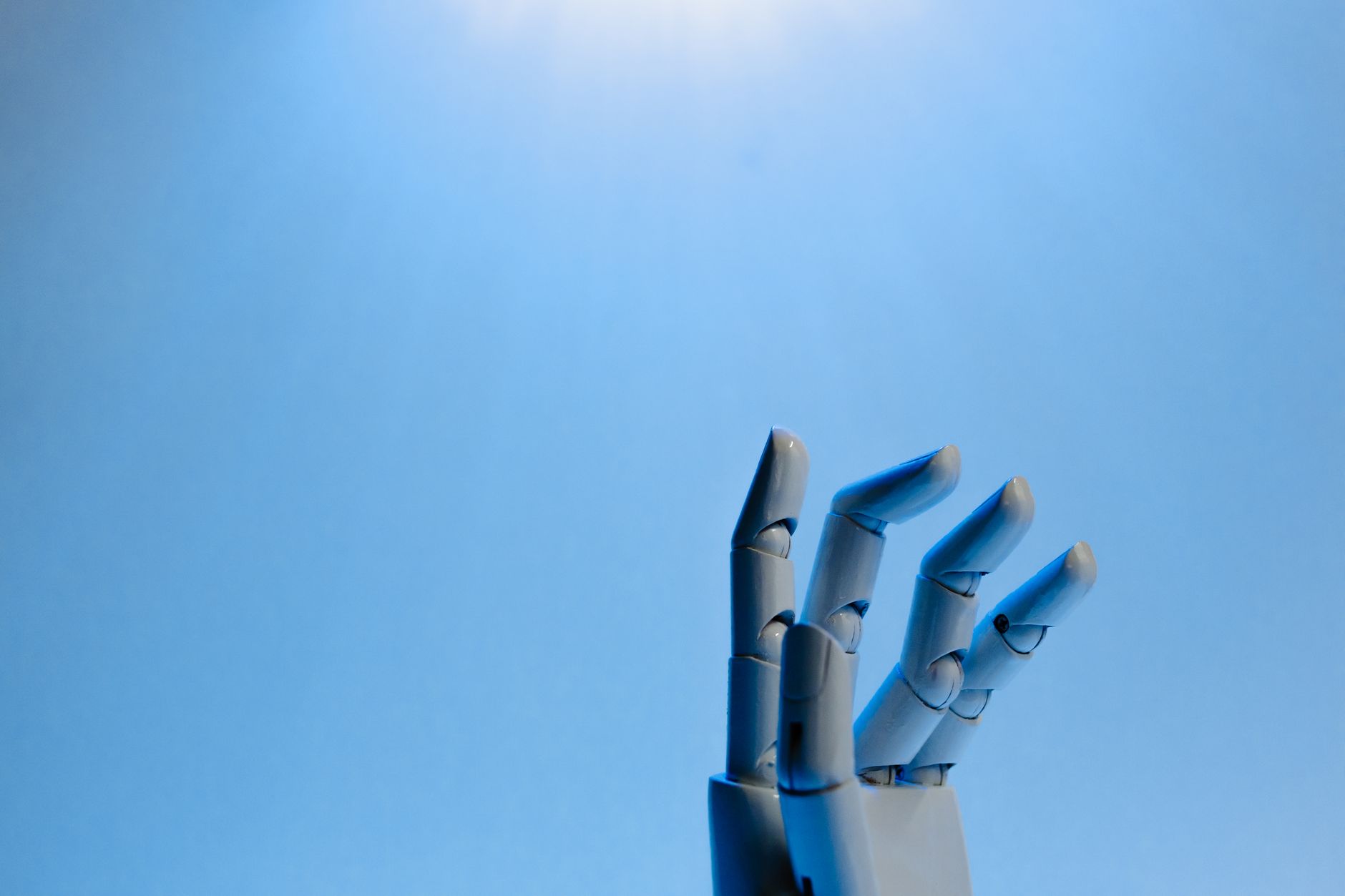
The next bottleneck in robot manipulation is showing up at the fingertip, not in another stage demo. According to a Chinese tech media report, Ommo Technologies chose permanent-magnet magnetic-field positioning after evaluating optical positioning and millimeter-wave radar, because mainstream optical positioning can fail when objects block the line of sight.
That detail points to a larger shift.
A hand that can grasp is useful. A hand that can measure what happens during the grasp is the start of a data loop. Ommo's route uses mechanical rotation of a permanent magnet to generate a characteristic magnetic field, then calculates complete 6DoF position and posture data from real-time signals collected by miniature magnetic sensors. Its smallest sensor is about 0.8 millimeters, and the system can currently reach sub-millimeter accuracy within a specified working range.
The pattern is clear: better embodied AI depends on treating hands, sensors, teleoperation tools, and data pipelines as one machine for producing repeatable manipulation evidence.
The hand is becoming a data instrument
Robot-hand debates commonly start with the visible mechanics: five fingers, tendon drives, modular fingertips, more joints. The more useful question is what the hand can record while it is touching the world. During grasping, the object blocks cameras, fingers cover each other, and the moment that matters is hidden from an external sensor.
- 2025GGII reports China dexterous hand sales at about 19,200 units
- 2026 H1GGII issues China Dexterous Hand Industry Research Report
- July 2026CASBOT embodied intelligence is established in Hunan
- August 7CASBOT debuts in Changsha and releases three dexterous hands
- 2026GGII forecasts China dexterous hand sales reaching 70,200 units
That is why end-effector sensing changes the evaluation frame.
Ommo Technologies is a useful example. According to the report, the company chose a permanent-magnet magnetic-field positioning route after comparing optical positioning and millimeter-wave radar. Zheng Minjie told the outlet that mainstream optical positioning fails when objects block the line of sight. Ommo's route uses mechanical rotation of a permanent magnet to generate a characteristic magnetic field, then calculates complete 6DoF position and posture data from real-time magnetic-field signals collected by miniature magnetic sensors.
The important detail is size. Ommo's smallest magnetic sensor is about 0.8 millimeters, and the company says its sensors can be embedded in robot end-effectors, wearable devices, or medical devices. Its system can currently reach sub-millimeter accuracy within a specified working range. That turns the hand from a moving tool into a data instrument, especially when the same sensing approach appears in Ommo's first data collection glove, which uses medical-grade permanent-magnet sensors to collect human hand operational posture data.
CASBOT's dexterous-hand lineup shows the other side of the shift. The same report describes D1 as a high-degree-of-freedom general-purpose five-finger dexterous hand, with emphasis on motion flexibility, independent multi-joint movement, multi-finger coordination, and tactile sensing. M1 is built as a modular scenario hand, using a standardized main body plus functional fingertips for rapid switching. The F series explores high degrees of freedom and compliant manipulation through a tendon-driven biomimetic structure. Those designs matter most when their motions can be captured as reliable contact trajectories, not just demonstrated on video.
The data bottleneck has two competing starting points
The bottleneck looks different depending on where a team stands in the data loop. Ommo Technologies starts with the moment of capture. Zheng Minjie told the outlet that mainstream optical positioning fails when objects block the line of sight, which is exactly the kind of failure a hand creates for itself when fingers, tools, and parts crowd the workspace.
Ommo's answer is to move tracking into the object-contact zone. According to the outlet, its system calculates complete 6DoF position and posture data from magnetic-field signals collected in real time by miniature magnetic sensors, and can currently reach sub-millimeter accuracy within a specified working range. The company says those sensors can be embedded in robot end-effectors, wearable devices, or medical devices. Its first data collection glove uses medical-grade permanent-magnet sensors to collect human hand operational posture data.
That is one starting point: if tracking breaks, the dataset is compromised before software can clean it.
Qiongche Intelligence's starting point is later in the chain. According to geekpark, Qiongche uses the UMI approach for data collection, with a device that synchronously records first-person-view images, gripper poses, and motion trajectories. But geekpark also describes the raw capture as only the beginning. Before the data can enter model training, it must go through pose recovery, fisheye camera calibration, action segmentation, and multimodal annotation.
For Qiongche, the choke point is not only seeing the manipulation event. It is processing the event at cloud scale. Geekpark says Visual SLAM reconstruction consumes large amounts of GPU computing power in Qiongche's workflow, so Qiongche and Alibaba Cloud built an end-to-end UMI Data + AI Pipeline. Alibaba Cloud MaxCompute MaxFrame splits video undistortion, SLAM pose recovery, and multimodal annotation across cloud resources for parallel execution.
The contradiction is useful. Ommo says poor capture poisons the source; Qiongche says unprocessed capture stalls before training. Geekpark reports that Qiongche achieved full-process automation, more than 10 times higher overall data processing throughput, and elastic scaling to more than 100,000 CU through Alibaba Cloud.
A useful manipulation dataset needs a workflow, not a folder of videos
A useful manipulation dataset starts before the model sees anything. According to geekpark, Qiongche Intelligence frames its robot infrastructure as data-training-deployment, and its UMI collection method begins with an operator holding a device while doing ordinary manipulation: grasping, opening doors, carrying objects. That matters because the capture format is already tied to the end effector. UMI synchronously records first-person-view images, gripper poses, and motion trajectories, so the dataset is not merely video evidence of a task. It is a record of what the hand saw and how it moved.
The folder is the wrong mental model.
Geekpark describes the next layer as a processing chain that robot teams should audit item by item. Raw operation data has to pass through pose recovery, fisheye camera calibration, action segmentation, and multimodal annotation before training. Qiongche Intelligence and Alibaba Cloud built an end-to-end UMI Data + AI Pipeline for that work, with MaxCompute MaxFrame splitting video undistortion, SLAM pose recovery, and multimodal annotation across cloud resources for parallel execution. Large-model capabilities are embedded in the workflow to semantically annotate action clips automatically.
The less glamorous pieces are what make the loop repeatable. DataWorks orchestrates the whole processing workflow, including periodic scheduling, historical data reruns, and automatic exception recovery on a unified platform. Processed data then enters Hologres for unified management, where it supports real-time sample retrieval, data review, and training management. After that, the data enters PAI for model training, performance optimization, and deployment validation.

That schema turns collection into a production system: capture, clean, label, retrieve, review, train, validate. It also explains why the outlet's note on CASBOT matters. CASBOT proposed a dual-flywheel logic of multi-series bodies x data collection, and said it would help build a specialized dexterous hand skills training ground for data collection, skills training, and application verification around real tasks. The value is not another clip of a hand succeeding once. It is the ability to reproduce the path from task attempt to usable skill evidence.
Task validation is the antidote to parameter competition
CASBOT is a useful case because its story does not stop at another hand specification sheet. According to media reports, the company debuted in Changsha, Hunan on August 7 and released three dexterous hand products, but its stated direction is to turn dexterous hands from single hardware components into a software-hardware manipulation capability platform.
That shift matters more than the product spread. The L1 takes a lightweight route with simplified degrees of freedom. The D1 is positioned as a high-degree-of-freedom general-purpose five-finger hand. The M1 uses a standardized main body plus functional fingertips, so different operating capabilities can be switched in and out.
Specs still have a role. They do not prove skill.
The more important row is CASBOT's proposed dual-flywheel logic of "multi-series bodies x data collection." Media reports also say that the company will participate in building a specialized dexterous hand skills training ground for data collection, skills training, and application verification around real tasks. That is the right unit of progress: a task where the hand drops the object, slips on a surface, misses a grasp, recovers, or fails to recover.
A robot band can show range. Media reports say CASBOT's L-series hands have been used by the CASBOT BAND robot band to play guitar, bass, and electronic keyboard. But the manufacturing lesson is not that musical demos settle the question. It is that repeated contact gives teams a way to observe timing errors, finger placement, and recovery behavior under a defined task.
This is where parameter competition starts to look thin. GGII's report, cited in media coverage, put China's dexterous hand market sales at about 19,200 units in 2025 and forecast 70,200 units in 2026. More hands will create more trials, but only if teams capture the failures as carefully as the successes.
Choose tools by where your manipulation-data loop is weakest
- Your data bottleneck is accurate hand or end-effector pose capture, especially where cameras lose line of sight. Consider an end-effector sensing route like Ommo Technologies' permanent-magnet positioning system: the sources say it calculates complete 6DoF position and posture data from real-time magnetic-field signals, currently reaches sub-millimeter accuracy within a specified working range, and uses magnetic sensors as small as about 0.8 millimeters. This is most relevant when optical positioning is blocked by objects; it is less justified if your manipulation tasks can already be captured reliably with cameras.
- Your team can collect demonstrations but cannot turn raw video and trajectory data into training-ready datasets fast enough. Prioritize an automated data pipeline like Qiongche Intelligence's UMI Data + AI Pipeline with Alibaba Cloud: the ledger says raw operation data needs pose recovery, fisheye camera calibration, action segmentation, and multimodal annotation before training, and that MaxCompute MaxFrame parallelizes video undistortion, SLAM pose recovery, and multimodal annotation. This is a data-engineering investment, not just a robot-hardware purchase.
- Your manipulation roadmap requires validating specific skills, not just buying a dexterous hand as a component. Use a hand-plus-validation approach like CASBOT embodied intelligence's stated plan: it proposed a dual-flywheel logic of "multi-series bodies x data collection" and announced participation in building a specialized dexterous hand skills training ground for data collection, skills training, and application verification around real tasks. This fits teams that need repeatable task validation; it is less suitable if you only need a standalone gripper.
- You need different hand designs for different manipulation regimes. Map the hand to the task class rather than choosing one universal option: CASBOT's L1 uses a lightweight route with simplified degrees of freedom; D1 is a high-degree-of-freedom general-purpose five-finger dexterous hand; M1 uses a standardized main body plus functional fingertips for rapid switching; and the F series explores tendon-driven biomimetic, high-degree-of-freedom compliant manipulation. The sources do not disclose performance benchmarks or prices for comparing them.
- Your goal is consumer engagement, creator customization, or education rather than industrial manipulation-data collection. AgiBot Q1 Exploration Edition fits that lane better than a production manipulation platform: the sources describe open-source exterior structural parts, full-body 3D-printed customization, modular replacement, and a zero-code visual platform for appearance modeling and motion choreography. Do not treat the Q1 evidence as proof of an industrial manipulation-data loop; the ledger frames it mainly around personal robots, customization, and technology designer toys.
Consumer robots may win attention before they win tasks
AgiBot's Q1 Exploration Edition shows why a consumer robot can attract attention before it proves much task value. At ChinaJoy, ifanr reported shells themed as a Space Marine, an armored fighter, a superpowered mecha, and an astronaut. The largest crowd gathered around a World of Warcraft murloc version, which also visited the Blizzard booth beside a human murloc cosplayer.
That is not a manipulation benchmark. It is a market signal.
The Q1 Exploration Edition is AgiBot's first-generation personal prototype robot, standing 88 centimeters tall and weighing about 15 kilograms, according to ifanr. Its pitch is emotional participation: fully open-source exterior structural parts, full-body 3D-printed customization, modular replacement, and a zero-code visual platform for appearance modeling and motion choreography. Users can change the shell, movements, personality, voice, expressions, and behavior logic.
ifanr describes Q1 as the world's first personal robot with DIY character customization, and also as the world's first small-size humanoid robot with full-body force control. Its self-developed miniature QDD quasi-direct-drive joints are meant to preserve force-control performance and high dynamic response from larger models. During the 4-day ChinaJoy exhibition, tens of thousands of players visited AgiBot's booth, which supports ifanr's argument that technology designer toys may be a realistic route for personal robots into the consumer market.
Customization can create attachment. ifanr cites a 2024 human-computer interaction experiment in which participants involved in customization showed stronger psychological ownership of robots. It also cites Bambu Lab data showing that 90% of users were still printing 12 months after buying a 3D printer. AgiBot is aiming beyond companies with engineering teams, toward independent creators, designer toy enthusiasts, and students.
CASBOT is walking a different path. A Chinese outlet reports that its embodied intelligence work starts from dexterous hands and manipulation capability, with a goal of turning hands from single hardware components into a software-and-hardware capability platform. Its stated development logic is "multi-series bodies x data collection," and it plans to help build a specialized dexterous-hand skills training ground for data collection, skills training, and application verification around real tasks.
These paths can coexist. Character sells the body; validated manipulation makes it useful. The deeper shift is that the winning robot project will treat the hand, the training ground, and the data pipeline as one product system.
Embodied-AI workflow pieces across sensing, capture, processing, and validation
| Dimension | Ommo Technologies | Qiongche Intelligence + Alibaba Cloud | CASBOT embodied intelligence | AgiBot Q1 Exploration Edition |
|---|---|---|---|---|
| Primary role in the manipulation-data loop | End-effector and device spatial positioning via permanent-magnet sensing | Cloud-based automated data processing pipeline for robot operation data | Dexterous hands and embodied manipulation capability platform | Personal prototype robot focused on open-source customization and zero-code choreography |
| Data capture approach | First data collection glove equipped with medical-grade permanent-magnet sensors to collect human hand operational posture data | UMI approach: operators hold a device to perform natural actions such as grasping, opening doors, and carrying objects | Dual-flywheel development logic of multi-series bodies x data collection | Zero-code platform for appearance modeling and motion choreography; not covered as standardized manipulation-data capture |
| What is recorded or sensed | Complete 6DoF position and posture data from magnetic-field signals collected in real time by miniature magnetic sensors | First-person-view images, gripper poses, and motion trajectories | Dexterous hand manipulation capabilities; D1 emphasizes tactile sensing capabilities | Custom shell, movements, personality, voice, expressions, and behavior logic |
| Sensing or hardware route | Permanent-magnet magnetic-field positioning; mechanical rotation of a permanent magnet generates a characteristic magnetic field | UMI data collection device plus cloud processing; device hardware details not covered | L1 lightweight simplified degrees of freedom; D1 high-degree-of-freedom general-purpose five-finger hand; M1 standardized main body plus functional fingertips; F series tendon-driven biomimetic structure | Self-developed miniature QDD quasi-direct-drive joints; fully open-source exterior structural parts; full-body 3D-printed customization; modular replacement |
| Claimed hardware or sensing advantage | Sub-millimeter accuracy within a specified working range; smallest magnetic sensor is about 0.8 millimeters; sensors can be embedded in robot end-effectors, wearable devices, or medical devices | Not covered | L1 emphasizes high cost performance, high stability, long life, and easy deployment; D1 emphasizes motion flexibility, independent multi-joint movement, multi-finger coordination, and tactile sensing capabilities | Described as the world's first personal robot with DIY character customization and the world's first small-size humanoid robot with full-body force control |
| Pre-training processing steps | Not covered | Pose recovery, fisheye camera calibration, action segmentation, and multimodal annotation before model training | Not covered | Not covered |
| Automation and orchestration | Not covered | End-to-end UMI Data + AI Pipeline; DataWorks orchestrates the entire workflow and supports periodic scheduling, historical data reruns, and automatic exception recovery | Not covered | Zero-code platform is fully visual and does not require coding for appearance modeling or motion choreography |
| Cloud or data infrastructure | Not covered | MaxCompute MaxFrame splits video undistortion, SLAM pose recovery, and multimodal annotation across cloud resources; processed data enters Hologres; then enters PAI for model training, performance optimization, and deployment validation | Not covered | Not covered |
| Model-training connection | Not covered | Processed data enters PAI for model training, performance optimization, and deployment validation; large-model capabilities automatically semantically annotate action clips | Not covered | Not covered |
| Task or skill validation | Worked with a global leading surgical navigation company on technical validation for multiple years | Deployment validation on PAI | Will participate in building a specialized dexterous hand skills training ground for data collection, skills training, and application verification around real tasks; L-series hands used by CASBOT BAND to play guitar, bass, and electronic keyboard | ChinaJoy booth demonstrations and customization examples; task-specific manipulation validation not covered |
| Deployment or commercialization focus | Series A proceeds for technical iteration of core spatial positioning system, construction of a mass production system, and product cooperation in embodied intelligence, advanced manufacturing, and medical scenarios | Robot infrastructure around data-training-deployment | Using dexterous hands as product entry point; aims to move dexterous hands from single hardware components into a manipulation capability platform combining software and hardware | Aimed at independent creators, designer toy enthusiasts, students, and not only companies with engineering teams |
| Reported scale or performance metric | Cooperative customers cover more than 100 domestic and overseas medical device companies | Overall data processing throughput increased by more than 10 times; cloud computing power can elastically scale to more than 100,000 CU | GGII reported China dexterous hand market sales of about 19,200 units in 2025 and forecast 70,200 units in 2026 | Standing height of 88 centimeters and weighs about 15 kilograms; tens of thousands of players visited the booth during the 4-day ChinaJoy exhibition |
| Pricing | Not disclosed in sources | Not disclosed in sources | Not disclosed in sources | Not disclosed in sources |
Watch for the teams that treat the hand sale as the start of the loop, not the finish. The outlet reports GGII's forecast of China dexterous hand sales moving from about 19,200 units in 2025 to 70,200 units in 2026. That growth will make demos easier to stage and harder to trust.
In your own roadmap, ask for the missing venue and the missing data path. CASBOT's F series points to tendon-driven, biomimetic, high-degree-of-freedom compliant manipulation, but its more useful clue is organizational: a dual-flywheel of multi-series bodies and data collection, plus a specialized skills training ground for real-task collection, training, and verification. Treat insertion, rotation, tool use, and deformable-object handling as acceptance tests.
For readers outside China
- Availability: Availability outside China is not disclosed for most products. Ommo Technologies' cooperative customers currently cover more than 100 domestic and overseas medical device companies, but product availability, export access, and sales channels are not disclosed in sources. Qiongche Intelligence is described as a Chinese embodied intelligence company working with Alibaba Cloud. CASBOT embodied intelligence has settled in Hunan Xiangjiang New Area. AgiBot Q1 Exploration Edition appeared at ChinaJoy, but overseas availability is not disclosed.
- Pricing: Product pricing is not disclosed in sources. The only financing figure given is that Ommo Technologies completed a Series A financing round worth tens of millions of dollars. No prices are disclosed for Ommo's sensing system or glove, Qiongche Intelligence's pipeline, Alibaba Cloud usage, CASBOT's dexterous hands, or AgiBot Q1 Exploration Edition.
- Closest Western equivalents: Not disclosed in sources for Ommo Technologies' magnetic positioning system; UMI, or Universal Manipulation Interface, for Qiongche Intelligence's data collection approach; Not disclosed in sources for CASBOT's dexterous hand product matrix; Not disclosed in sources for AgiBot Q1 Exploration Edition
- Data residency: The Qiongche Intelligence workflow uses Alibaba Cloud services including MaxCompute MaxFrame, DataWorks, Hologres, and PAI. Processed data enters Hologres for unified management and then PAI for model training, performance optimization, and deployment validation. The sources do not disclose cloud region, cross-border data transfer arrangements, retention policies, or whether data remains inside China.
Sources
- 36kr 赋予机器人"空间直觉",「Ommo Technologies」获数千万美元A轮融资|36氪首发 https://36kr.com/p/3927419946629256
- geekpark 打破机器人「数据焦虑」,穹彻智能想建一条「训练数据」生产线 https://geekpark.net/news/368553
- ifanr 在 ChinaJoy ,我看到了第一台「科技潮玩」机器人 https://ifanr.com/1674308
- 36kr 最前线|中科慧思发布三款灵巧手产品,要从"抓取"走向真实场景作业 https://36kr.com/p/3931010805579139
The evidence: 63 facts from 4 Chinese articles
Each line below was extracted from the article it sits under, in Chinese, before any of this was written. The writing is done from these and never from the source prose - that separation is structural, not a promise. How we work.
36kr赋予机器人“空间直觉”,「Ommo Technologies」获数千万美元A轮融资|36氪首发
- Ommo Technologies recently completed a Series A financing round worth tens of millions of dollars.
- Ommo Technologies' Series A financing round was jointly led by Hong Kong's VMS Group and an unnamed well-known fund.
- Kangjun Capital participated in Ommo Technologies' Series A financing round.
- Dianstone Capital served as Ommo Technologies' long-term exclusive financial adviser for the Series A financing round.
- Ommo Technologies plans to use the Series A financing proceeds for technical iteration of its core spatial positioning system and construction of a mass production system.
- Ommo Technologies plans to use the Series A financing proceeds to promote product cooperation in embodied intelligence, advanced manufacturing, and medical scenarios.
- Zheng Minjie is the founder of Ommo Technologies.
- Ommo Technologies chose a permanent-magnet magnetic-field positioning route after evaluating positioning technologies including optical positioning and millimeter-wave radar.
- Ommo Technologies' permanent-magnet positioning technology mainly uses mechanical rotation of a permanent magnet to generate a characteristic magnetic field.
- Ommo Technologies' system calculates complete 6DoF position and posture data from magnetic-field signals collected in real time by miniature magnetic sensors.
- Ommo Technologies' system can currently achieve sub-millimeter accuracy within a specified working range.
- Ommo Technologies' smallest magnetic sensor is about 0.8 millimeters.
- Ommo Technologies has built a full-stack team covering magnetic-field modeling, spatial solving, sensors, precision machinery, electronic systems, production testing, and quality management.
- Core members of Ommo Technologies have experience at Apple, Intel, Riot Games, TTI, and Samsung.
- Ommo Technologies has established a quality system that complies with ISO 13485.
- Ommo Technologies has worked with a global leading surgical navigation company on technical validation for multiple years.
- Ommo Technologies' cooperative customers currently cover more than 100 domestic and overseas medical device companies.
- Ommo Technologies' first data collection glove is equipped with medical-grade permanent-magnet sensors to collect human hand operational posture data.
36kr最前线|中科慧思发布三款灵巧手产品,要从“抓取”走向真实场景作业
- CASBOT embodied intelligence (Hunan) Co., Ltd. debuted in Changsha, Hunan on August 7 and released three dexterous hand products.
- CASBOT embodied intelligence (Hunan) Co., Ltd. was established in July 2026 by Beijing CASBOT Robot Technology Co., Ltd., Lens Technology Co., Ltd., and Hunan Huaxia Investment Group Co., Ltd.
- CASBOT embodied intelligence focuses on dexterous hands and embodied manipulation capabilities, using dexterous hands as its product entry point.
- CASBOT embodied intelligence's L1 dexterous hand uses a lightweight product route with simplified degrees of freedom.
- The L-series dexterous hands have been used by the CASBOT BAND robot band to play real instruments including guitar, bass, and electronic keyboard.
- CASBOT embodied intelligence's D1 is positioned as a high-degree-of-freedom general-purpose five-finger dexterous hand.
- CASBOT embodied intelligence's M1 is positioned as a modular scenario dexterous hand designed around manipulation needs in complex scenarios.
- CASBOT embodied intelligence's M1 uses a modular architecture of a standardized main body plus functional fingertips to enable rapid switching between different operating capabilities.
- CASBOT embodied intelligence's F series was a pre-release product at the launch event.
- CASBOT embodied intelligence's F series explores high degrees of freedom, biomimetic structures, and compliant manipulation.
- The F series uses a tendon-driven biomimetic structure to explore high-degree-of-freedom compliant manipulation capabilities closer to human hand movement.
- GGII's 2026 H1 China Dexterous Hand Industry Research Report showed that China's dexterous hand market sales were about 19,200 units in 2025, up 236.84% year on year.
- GGII's 2026 H1 China Dexterous Hand Industry Research Report forecast that China's dexterous hand market sales will reach 70,200 units in 2026, up 265.63% year on year.
- Zhang Zhengtao, founder and chairman of Beijing CASBOT Robot Technology Co., Ltd., said that after CASBOT embodied intelligence was established, the team would further productize and serialize its capabilities and experience.
- CASBOT embodied intelligence proposed a dual-flywheel development logic of "multi-series bodies x data collection" based on its dexterous hand product matrix.
- CASBOT embodied intelligence has settled in Hunan Xiangjiang New Area.
- CASBOT embodied intelligence announced that it will participate in building a specialized dexterous hand skills training ground for data collection, skills training, and application verification around real tasks.
geekpark打破机器人「数据焦虑」,穹彻智能想建一条「训练数据」生产线
- Qiongche Intelligence is a Chinese embodied intelligence company.
- Qiongche Intelligence and Alibaba Cloud recently built a cloud-based automated data processing pipeline.
- Qiongche Intelligence uses the UMI (Universal Manipulation Interface) approach for data collection.
- With Qiongche Intelligence's UMI data collection approach, operators hold a device to perform natural actions such as grasping, opening doors, and carrying objects.
- Qiongche Intelligence's UMI data collection device synchronously records first-person-view images, gripper poses, and motion trajectories.
- Qiongche Intelligence and Alibaba Cloud built an end-to-end UMI Data + AI Pipeline.
- Alibaba Cloud MaxCompute MaxFrame provides distributed computing capabilities for Qiongche Intelligence's UMI Data + AI Pipeline.
- Alibaba Cloud MaxCompute MaxFrame splits tasks such as video undistortion, SLAM pose recovery, and multimodal annotation across cloud resources for parallel execution.
- Large-model capabilities are embedded directly into Qiongche Intelligence's data processing workflow to automatically semantically annotate action clips.
- DataWorks orchestrates Qiongche Intelligence's entire data processing workflow.
- DataWorks supports periodic scheduling, historical data reruns, and automatic exception recovery for Qiongche Intelligence's data pipeline on a unified platform.
- Processed data from Qiongche Intelligence's pipeline enters Hologres for unified management.
- Hologres provides real-time data services for subsequent sample retrieval, data review, and training management in Qiongche Intelligence's workflow.
- Processed data then enters the PAI platform for model training, performance optimization, and deployment validation in Qiongche Intelligence's workflow.
ifanr在 ChinaJoy ,我看到了第一台「科技潮玩」机器人
- At ChinaJoy, AgiBot's Q1 Exploration Edition appeared with shells themed as a Space Marine, an armored fighter, a superpowered mecha, and an astronaut.
- A World of Warcraft murloc-themed AgiBot Q1 attracted the largest crowd at ChinaJoy and visited the Blizzard booth with a human murloc cosplayer.
- AgiBot Q1 Exploration Edition has fully open-source exterior structural parts, supports full-body 3D-printed customization, and supports modular replacement.
- AgiBot Q1 Exploration Edition has a zero-code platform that is fully visual and does not require coding for appearance modeling or motion choreography.
- AgiBot Q1 Exploration Edition lets users customize its shell, movements, personality, voice, expressions, and behavior logic.
- Pop Mart founder Wang Ning rejected adding a USB drive function to dolls because consumers who only need one USB drive would not buy a second one.
- AgiBot Q1 Exploration Edition is AgiBot's first-generation personal prototype robot.
- AgiBot Q1 Exploration Edition has a standing height of 88 centimeters and weighs about 15 kilograms.
- AgiBot Q1 Exploration Edition can fit into a backpack after being folded.
- AgiBot Q1 Exploration Edition uses self-developed miniature QDD quasi-direct-drive joints to retain force-control performance and high dynamic response from full-size models in a smaller body.
- During the 4-day ChinaJoy exhibition, tens of thousands of players visited the AgiBot robot booth to check in.
- A 2024 human-computer interaction experiment showed that participants involved in customization displayed stronger psychological ownership of robots.
- Bambu Lab data shows that 90% of users were still printing 12 months after buying a 3D printer.
- AgiBot's open-source modular structure and zero-code platform are aimed at independent creators, designer toy enthusiasts, students, and not only companies with engineering teams.