Meta Muse assigns an isolated Secure Virtual Machine to each user so browser and web actions run without human oversight. According to woshipm, these tasks keep executing in the cloud even after the user closes the application. The architecture detaches the worker from the personal computer.
Tencent updated Marvis to version v1.60.2211, rebranding the software as a 24-hour AI butler that stays rooted in local hardware.
To make persistent local runtime viable, the updated version cut required specifications from a six-core processor and 16GB of RAM down to a four-core processor and 8GB of RAM, according to 36kr. Hardware alliances followed the code shrink. Both woshipm and 36kr documented partnerships linking Tencent with Intel, UGREEN, and Feiniu (飞牛) to embed Marvis directly into network-attached storage devices ahead of an October rollout. Where cloud agents spin up remote identities, local daemons colonize private silicon.
Two opposing architectures for persistent background autonomy
According to woshipm, Meta Muse assigns an isolated Secure Virtual Machine (Secure VM) to each user to execute browser and web actions in the cloud. Because the environment lives remotely, Meta Muse continues executing tasks after a user closes the application. geekpark notes that Manus 2.0 builds on this architecture by allowing users to purchase cloud PCs to provide continuous runtime environments for automation workflows and multiplayer game servers. These systems isolate execution entirely from local client hardware.
- March 6, 2025Manus launches its initial AI agent product
- MayTencent launches desktop AI agent Marvis
- September 1Manus founding team announces resumption of independent operations
- September 24Tencent releases major Marvis update repositioning it as an AI Butler
- OctoberTencent, Intel, and Feiniu schedule customized Marvis NAS release
- December 24Tencent sets scheduled shutdown date for AI agent product QClaw
Tencent Marvis takes the opposite direction. Instead of renting remote virtual machines, Marvis anchors persistent background work directly inside host operating systems and private network storage.
That local footprint requires strict hardware discipline. Tencent updated Marvis to version v1.60.2211, rebranding its slogan to position it as a 24-hour AI butler, according to woshipm. To keep that continuous runtime practical on standard personal computers, 36kr reports that the updated version of Marvis reduced hardware requirements from a six-core processor and 16GB of RAM to a four-core processor and 8GB of RAM. The software now fits baseline consumer desktops.
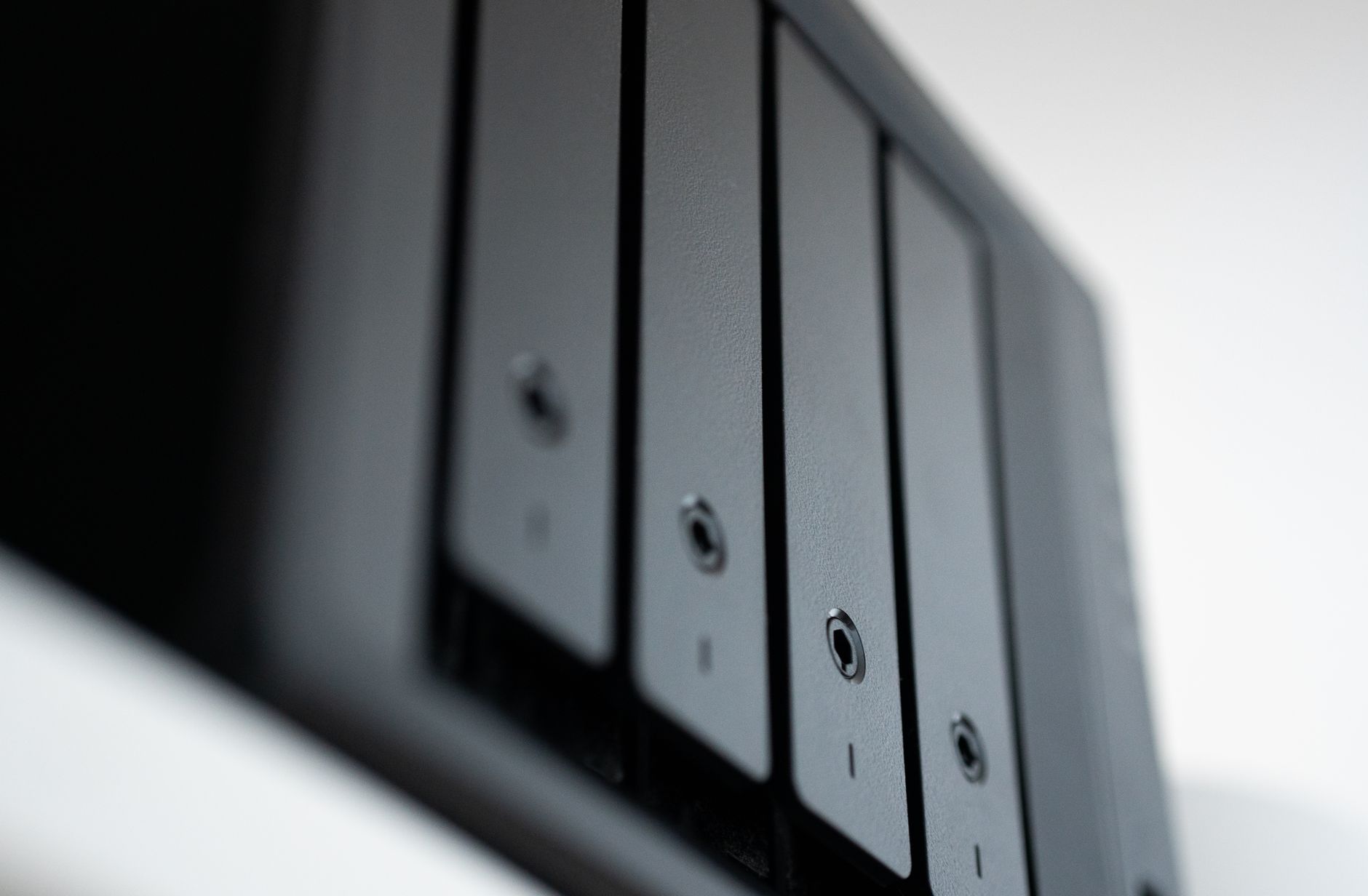
Background persistence also pushes the agent into hardware that never shuts down. woshipm notes that Marvis announced partnerships with UGREEN, Feiniu (飞牛), and Intel to bring its AI butler system to network-attached storage (NAS) devices. Building on those ties, 36kr reports that Tencent partnered with Intel and Feiniu to develop a customized NAS integrated with Marvis, scheduled for release in October. Private disks take over the workload.
Why desktop automation abandoned the prompt box for the system butler
Less than a month after announcing its return to independence, Manus released version 2.0 and introduced a standalone personal assistant application called Cue, according to 36kr. Built on shared Manus infrastructure across mobile and desktop platforms, Cue models automation as conversational collaboration. As geekpark reported, Cue agents answer phone calls and generate call summaries. They also collaborate with peer agents inside group chats. These conversational swarms demand active steering from the person operating them.
Tencent Marvis followed an opposite design path by discarding conversational office framing entirely. Marvis business head Cai Jiantao stated that his team decided in the first month of project inception not to position the tool as an office AI, according to 36kr. Real telemetry revealed that users did not treat the software as an executive secretary. Instead, 36kr reported that local file management accounts for 44% of Marvis user scenarios, while 28% of users turn to it for computer and hardware management. Prior to the product redesign, between 40,000 and 50,000 users relied on Marvis daily just to install software.
Users wanted maintenance rather than conversation. The prompt box gave way to direct utility toggles.
To align with those daily habits, the software abandoned speculative terminology. According to woshipm, updated Marvis builds replaced the label 'Agent' with 'Butler' (管家) across the interface. The platform reorganized its tools into a Team Butler section containing Computer Butler, File Butler, Software Butler, and Browser Butler, renaming the previous Computer Agent, File Agent, APP Agent, and Browser Agent. Rather than negotiating tasks in chat channels, Marvis's Computer_agent runs system health checks and executes one-click system optimizations directly on the host machine, woshipm noted.
Cloud Virtual Machines vs. Local Host Daemons: Architectural Comparison
| Dimension | Manus 2.0 / Cue | Meta Muse | Tencent Marvis |
|---|---|---|---|
| Architectural Paradigm | Cloud PC automation runtime paired with standalone personal agent application (Cue) | Isolated cloud Secure Virtual Machine (Secure VM) | Edge-indexed host operating system daemon and personal AI Butler |
| Runtime & Hardware Requirements | Purchasable continuous cloud PCs; remote control via desktop workspace (Manus Studio) | Cloud-hosted Secure VM executing browser and web actions | Host hardware reduced to a 4-core processor and 8GB of RAM (down from 6-core / 16GB RAM) |
| Identity & System Access Model | Independent synthetic identity per agent (dedicated email address, phone number, digital wallet, virtual computer) | User-assigned isolated Secure VM; synthetic identity details not covered in sources | Host OS sub-agents (Computer, File, Software, Browser) executing system health checks, file scans, and local automation |
| Storage & Private Data Boundary | Cloud workspaces (Manus Studio for docs, code, game development, video editing); domestic ecosystem integrations in development | Cloud-based execution; local or private storage integration not covered in sources | Local knowledge bases built from authorized local files, folders, and images; NAS integration with Intel, Feiniu, and UGREEN |
| Execution Persistence & Remote Control | Event-triggered workflows (incoming emails, calendar events, Slack, Notion, ad metric changes) | Continues executing cloud tasks after the user closes the application | 24-hour AI butler daemon; mobile remote control commands sent to PCs over 18 million times since launch |
| Underlying Model Routing | Proprietary Cascade framework (claimed 23.2% fewer tokens, 28.2% faster completion, 32% lower cost) | Not covered in sources | Default dual-model routing (Hy4 preview paired with DeepSeek V4 Flash by difficulty); supports custom models |
| Pricing & Access Tier | Cloud PCs available for purchase; Cue early access free via invite codes (MEETCUE limited to first 1,000 users) | Not covered in sources (accumulated over 3.4 million downloads by September 24) | 10 million free tokens per day; operates no paid membership or subscription plan |
How disposable cloud identities navigate platform verification and bot defenses
Cloud-hosted agents cannot rely on a human operator to bypass CAPTCHAs or solve verification prompts in real time. Instead, platforms fabricate complete operational personas to navigate consumer services. According to 36kr, Cue assigns each personal agent an independent identity: an email address, a phone number, a digital wallet, and a virtual computer. A report from geekpark noted the same four-part configuration. That structure allows agents to send messages and answer phone calls with summaries, while handling payments within user-defined budgets. These synthetic profiles satisfy SMS confirmations and card verifications without human intervention.
Web verification systems search for headless scripts. Giving an agent a dedicated phone line and digital wallet supplies the human-like credential footprint platforms expect during checkout.
Cloud systems also maintain continuous awareness across external software. According to geekpark, Manus 2.0 triggers automated tasks from incoming emails, advertising metric changes, calendar events, Slack messages, and Notion page updates. Yet open-ended web autonomy brings sharp friction. Writing for woshipm, Dujia argues that personal agents require a delicate balance between task planning and compliance boundaries. Ecosystem tool openness introduces another obstacle when platforms resist synthetic accounts.
Local architectures evade synthetic identity hurdles by operating inside established user sessions. Reporting from woshipm shows Marvis runs its Browser_agent directly through a Google Chrome plugin to execute web scraping and form filling under existing browser profiles. To handle commercial checkout, Marvis partnered with Luckin Coffee on an end-to-end purchase pipeline. The integration uses MCP and GUI automation across four steps: querying products, collecting coupons, placing orders, and processing payments.
Document privacy and metadata exposure in local knowledge bases
Marvis establishes persistence by grounding its indexing directly in host storage. According to woshipm, the application's File_agent scans local computer files and images, cataloging installed software alongside authorized folders to generate local knowledge bases. This architecture links host files directly to Tencent Docs. Local indexing is no longer restricted to personal workstation drives. woshipm reports that Marvis is collaborating with Ugreen and Feiniu (飞牛) to deploy agent capabilities to network-attached storage appliances, placing persistent daemons on shared home and office servers.
Private drives do not guarantee complete data containment. Reading a file locally still requires an external intelligence to parse and interpret its contents.
That interpretation step exposes host data to external inference pipelines. According to woshipm, Marvis pairs its Hy4 preview model with DeepSeek V4 Flash by default, automatically routing tasks between them based on difficulty. Users can also connect custom third-party AI models or apply custom model configurations. When the agent reasons over indexed files, extracted text snippets and path metadata travel to these upstream engines. Raw files stay on the disk. Their contents do not.
The operational volume makes this metadata exchange continuous. According to 36kr, users have activated Marvis's mobile remote control feature to send commands to personal computers more than 18 million times since its May launch. Remote triggers wake host hardware from afar to search indexed files and dispatch extracted context to remote neural networks.
Architectural Selection: Cloud Virtual Machine vs. Edge OS Butler Agents
- You require 24/7 autonomous background task execution, off-device web navigation, or autonomous identity actions without keeping local hardware running. Choose cloud-virtualized agent architectures such as Meta Muse or Manus 2.0 with Cue. Meta Muse assigns an isolated Secure Virtual Machine to execute browser and web tasks in the cloud even after the user closes the application. In Cue, agents are provisioned with disposable synthetic identities-including an email address, phone number, digital wallet, and virtual computer-to place calls, collaborate in group chats, and execute payments within designated budgets.
- You need hardware-level system maintenance, local disk indexing, application management, or on-premises storage integration. Deploy local host daemons like Tencent Marvis (version v1.60.2211). Marvis embeds directly into the desktop operating system via specialized sub-agents: Computer_agent (system health checks and optimizations), File_agent (indexing local files, images, and folders into private knowledge bases), and Software_agent. It operates locally on hardware as low as a 4-core processor and 8GB of RAM, and supports dedicated network-attached storage (NAS) deployments.
- Your workflow relies on third-party Western productivity tools and event-driven SaaS triggers (e.g., Slack, Notion, incoming email). Opt for Manus 2.0. Its workspace (Manus Studio) supports event-triggered automations initiated by incoming emails, calendar events, advertising metric changes, Slack messages, and Notion page updates, utilizing cloud PCs for continuous runtimes.
- You require zero-subscription desktop execution or automated integration with domestic Chinese consumer platforms. Select Tencent Marvis. It provides 10 million free tokens per day with no paid membership or subscription plan, routing queries between Hy4 preview and DeepSeek V4 Flash. It natively integrates Chinese life service connectors including Autohome, SMZDM, VariFlight, Kuaidi100, and Luckin Coffee ordering via GUI automation and MCP.
The ongoing cost of 24-hour runtime and the practical workflow split
Persistent cloud runtime generates an unrelenting server bill. According to geekpark, Manus 2.0 allows users to purchase cloud PCs to provide continuous runtime environments for automation workflows and multiplayer game servers. Background virtual machines cannot idle for free. To contain compute expenses, Manus built its proprietary Cascade agent framework. In one test configuration cited by 36kr and geekpark, Cascade used 23.2% fewer tokens and reduced task completion time by 28.2% compared to the previous system. The framework also lowered operating costs by 32%.
Local execution shifts that financial burden onto user hardware instead. According to woshipm, Marvis grants users 10 million free tokens per day and does not operate a paid membership or subscription plan.
Rationing access remains standard practice while remote runtime architectures stabilize. Geekpark reported that Cue launched in early access offering free use via invite codes, with the code MEETCUE limited to the first 1,000 users. Hardware allocations stay bounded until platforms can prove their unit economics.
When platform operators absorb ongoing runtime overhead, product consolidation follows. In June, 17 Chinese desktop AI-native office agents recorded over 60 million combined visits, with Tencent's WorkBuddy accounting for 20.97 million visits, according to 36kr. Scale separates viable runners from shuttered experiments. Tencent announced that its AI agent product QClaw will cease operations on December 24, allowing users to migrate data to WorkBuddy, 36kr reported. Centralized deployment eventually balanced its own books. Tencent Chief Strategy Officer James Mitchell stated in an August earnings call that gross margins from paying WorkBuddy users have reached parity with Tencent Cloud's overall level.
Engineers configuring automated web workflows can monitor how platforms isolate disposable synthetic personas. Cue, the personal agent application Manus launched across desktop and mobile, gives every agent an email address, phone number, digital wallet, and virtual computer. Cue opened early access with the code MEETCUE for its initial 1,000 users. Host credentials stay offline. According to geekpark, Cue agents answer phone calls and generate call summaries, while Manus Studio lets mobile hardware drive remote machines using Computer Use inside an authorized workspace.
The next deployment frontier sits in regional infrastructure. On its official WeChat account, Manus confirmed it is assembling a team for the Chinese market, cooperating with domestic model vendors and ecosystem partners.
For readers outside China
- Availability: Manus 2.0 and Cue are primarily targeted at international users outside China, with Cue launched in early access via invite codes (such as code MEETCUE, limited to the first 1,000 users); Manus is separately preparing products for the domestic Chinese market. Tencent Marvis is publicly available for PC and mobile download at marvis.qq.com, requiring a 4-core processor and 8GB of RAM (down from its previous 6-core and 16GB requirement). Meta Muse is available as a standalone app and had surpassed 3.4 million downloads by September 24. Other products remain restricted: Tencent's Handy Bot and ByteDance's assistant (codenamed 'Spell') are in internal testing or development, while Tencent's QClaw will cease operations on December 24.
- Pricing: Tencent Marvis does not operate a paid membership or subscription plan and grants users 10 million free tokens per day. Manus 2.0 offers early access via invite codes for Cue and charges users to purchase cloud PCs for continuous runtime environments, though specific dollar pricing tiers are not disclosed in sources (early invitation codes previously traded informally on Xianyu for over 40,000 yuan). Pricing for Meta Muse is not disclosed in sources. For Tencent's WorkBuddy, commercial subscriptions exist and achieve Cloud-parity gross margins according to Tencent leadership, but specific consumer pricing tables are not disclosed in sources.
- Closest Western equivalents: Meta Muse (cloud-hosted Secure Virtual Machine agent); Anthropic Computer Use (desktop and GUI automation); Cloud PC and autonomous browser sandbox environments
- Data residency: Cloud virtual machine architectures (Meta Muse, Manus 2.0) execute tasks remotely in cloud environments. Meta Muse isolates user web activities inside cloud-hosted Secure VMs. Manus 2.0 runs workflows on remote cloud PCs, with its current overseas product distinct from domestic Chinese infrastructure being planned with domestic model vendors. Conversely, Tencent Marvis acts as a local edge daemon: its File_agent builds knowledge bases directly from authorized local files, folders, and Tencent Docs on the host machine or on local NAS hardware developed with Intel, UGREEN, and Feiniu. When cloud inference is triggered, Marvis pairs Hy4 preview and DeepSeek V4 Flash, or allows users to connect custom third-party models; specific data routing and cross-border data transfer policies for these models are not disclosed in sources.
Sources
- geekpark Manus 正式发布 2.0!个人 AI 助手、云电脑、远程控制,Manus 想做 AI 时代全家桶 https://geekpark.net/news/371493
- 36kr Manus 回来了,可Agent 的战场已经挤满对手 https://36kr.com/p/4004527155171460
- woshipm Marvis大升级,或将成为腾讯第二个跑出来的Agent https://woshipm.com/ai/6470536.html
- woshipm 腾讯秘密开发Personal Agent独立App"Handy Bot" https://woshipm.com/ai/6472701.html
- 36kr 腾讯 Marvis做 Agent 的不同选择:把用户的电脑"管理起来" https://36kr.com/p/4004514681016456
- woshipm Marvis马维斯定位升级成AI管家,好像要支棱起来了 https://woshipm.com/ai/6471641.html
The evidence: 58 facts from 6 Chinese articles
Each line below was extracted from the article it sits under, in Chinese, before any of this was written. The writing is done from these and never from the source prose - that separation is structural, not a promise. How we work.
36kr腾讯 Marvis做 Agent 的不同选择:把用户的电脑“管理起来”
- Tencent released an updated version of its personal AI agent Marvis, repositioning the product as an AI Butler.
- Marvis was developed by Tencent's MyApp (应用宝) team.
- The updated version of Marvis reduced hardware requirements from a six-core processor and 16GB of RAM to a four-core processor and 8GB of RAM.
- Tencent partnered with Intel and Feiniu to develop a customized NAS integrated with Marvis, scheduled for release in October.
- Tencent has released an OEM version of Marvis targeted at personal computer manufacturers.
- A July survey of 5,067 US adults by Menlo Ventures and Morning Consult found that 41% of AI users had tried AI agents and 24% used them regularly.
- In June, 17 Chinese desktop AI-native office agents tracked by Analysys recorded over 60 million combined visits, with Tencent's WorkBuddy accounting for 20.97 million visits.
- Tencent announced that its AI agent product QClaw will cease operations on December 24, allowing users to migrate data to WorkBuddy.
- Tencent Chief Strategy Officer James Mitchell stated in an August earnings call that gross margins from paying WorkBuddy users have reached parity with Tencent Cloud's overall level.
36krManus 回来了,可Agent 的战场已经挤满对手
- Manus was launched on March 6, 2025.
- Xiao Hong is the founder of Manus.
- Ji Yichao is the chief scientist of Manus.
- Manus announced that it was joining Meta at the end of 2025.
- Manus announced on September 1 that it was resuming independent operations led by its founding team.
- Manus released version 2.0 and introduced a standalone personal assistant application called Cue less than a month after announcing its return to independence.
- Manus invitation codes were listed for sale on Xianyu for more than 40,000 yuan after its initial launch in 2025.
- Manus upgraded its desktop application to Manus Studio, integrating document, spreadsheet, PDF, slide, web, code, game, and video workspaces, along with a video editor and a game development environment.
- Manus 2.0 added event-triggered workflow capabilities that can be initiated by new emails, calendar events, or updates in Slack and Notion.
- Manus integrated its Agent into Telegram in February before launching Cue in September.
- The release of Manus 2.0 and Cue is primarily targeted at overseas users, while Manus is separately preparing products for the domestic Chinese market.
geekparkManus 正式发布 2.0!个人 AI 助手、云电脑、远程控制,Manus 想做 AI 时代全家桶
- Manus announced the release of Manus 2.0 on its official website and social media channels.
- Manus 2.0 allows users to purchase cloud PCs to provide continuous runtime environments for automation workflows and multiplayer game servers.
- Manus 2.0 supports event-triggered automations based on incoming emails, advertising metric changes, calendar events, Slack messages, and Notion page updates.
- Manus Studio includes a timeline-based video editor targeted at 30-to-60-second product ads, animated data charts, tutorials, and vlogs.
- Manus Studio's video editor includes an Alchemy mode that combines creative direction, video generation, and code generation.
- Manus Studio enables mobile devices to remotely control computers using Computer Use technology within an authorized desktop workspace.
- Manus launched Cue, an independent personal AI agent application available on mobile and desktop platforms that shares infrastructure with Manus.
- Cue assigns each personal agent an independent identity consisting of an email address, phone number, digital wallet, and virtual computer.
- Cue agents can answer phone calls, generate call summaries, and collaborate with other agents in group chats.
- Cue launched in early access offering free use via invite codes, with the code MEETCUE limited to the first 1,000 users.
- Manus stated on its official WeChat account that it is forming a team to build products for the Chinese market and is cooperating with Chinese domestic model vendors and ecosystem partners.
woshipm腾讯秘密开发Personal Agent独立App“Handy Bot”
- Tencent has quietly launched a WeChat service account for Handy Bot displaying the bio 'Your Personal AI Agent'.
- Meta has introduced a consumer personal agent product named Muse.
- Meta Muse assigns an isolated Secure Virtual Machine (Secure VM) to each user to execute browser and web actions in the cloud.
- Meta Muse can continue executing tasks in the cloud after a user closes the application.
- At the Apsara Conference, Alibaba's Qwen team announced an objective to transition Qwen into a persistent personal agent featuring broader personal contextual memory.
woshipmMarvis大升级,或将成为腾讯第二个跑出来的Agent
- Tencent released a major update to its desktop AI agent Marvis on September 24.
- The updated Marvis replaced the label 'Agent' with 'Butler' (管家) across its interface.
- Marvis introduced a 'Team Butler' section comprising Computer Butler, File Butler, Software Butler, and Browser Butler, which correspond to the former Computer Agent, File Agent, APP Agent, and Browser Agent.
- Marvis's Software Butler can automatically claim limited-time free games from Steam and Epic Games.
- Marvis added an entry point allowing users to build custom AI butlers and plans to officially launch a dedicated Game Butler.
- Marvis introduced a local knowledge base feature that generates knowledge bases from authorized local files and folders and integrates with Tencent Docs.
- Marvis's default model setup pairs Hy4 preview with DeepSeek V4 Flash, while also supporting custom model configurations.
- Marvis integrates life service connectors including Autohome, SMZDM, VariFlight, and Kuaidi100.
- Marvis partnered with Luckin Coffee to enable an end-to-end purchasing process including querying products, collecting coupons, placing orders, and processing payments using MCP and GUI automation.
- Marvis announced partnerships with UGREEN, Feiniu (飞牛), and Intel to bring its AI butler system to network-attached storage (NAS) devices.
woshipmMarvis马维斯定位升级成AI管家,好像要支棱起来了
- Tencent's MyApp (应用宝) team developed the AI agent product Marvis.
- Tencent announced the shutdown of its AI agent product Qclaw.
- Tencent updated Marvis to version v1.60.2211, rebranding its slogan to position it as a 24-hour AI butler.
- Marvis is available on PC and mobile devices and can be downloaded from marvis.qq.com.
- Marvis grants users 10 million free tokens per day and does not operate a paid membership or subscription plan.
- Marvis pairs the Hy4 model and the Deepseek V4 Flash model by default, automatically routing tasks based on difficulty.
- Marvis allows users to connect custom third-party AI models.
- Marvis features a Butler Team consisting of four specialized sub-agents: Computer_agent, File_agent, APP_agent, and Browser_agent.
- Marvis's Computer_agent performs system health checks on a user's PC and executes one-click system optimizations.
- Marvis's File_agent scans local computer files, images, and installed software to manage them as local knowledge bases.
- Marvis's Browser_agent executes browser automation tasks, including web scraping, form filling, and web page summarization, through a Google Chrome plugin.
- Marvis is collaborating with Ugreen and Feiniu (飞牛) to deploy agent capabilities to network-attached storage devices.