OpenAI's ChatGPT points to a shift in AI design: the useful product is increasingly a bounded task with context and an outcome, rather than a digital stand-in for a whole job. woshipm reports that OpenAI analyzed more than 800,000 work-related messages from U.S. ChatGPT users; once general writing was removed, along with requests to summarize or schedule, tasks spanning occupations made up 43.5% of those messages. That pattern makes the job title a weak starting point.
36kr frames the hardware version of the same question: can a machine do a task, or help a person do more?
This article follows the limits that make task-bound systems useful beyond a demo, including evidence. It also considers permissions and escalation.
Start with the task, not the job title
A job title hides the smaller actions that move work forward. OpenAI analyzed more than 800,000 work-related messages from U.S. ChatGPT users, according to woshipm. Once general requests to write were excluded, along with requests to summarize or schedule work, cross-occupation tasks made up 43.5% of those messages. The overlap matters because a task can pass between roles even when the people doing it have different titles.
- 2023Hypershell begins research and development for Halo
- SeptemberHypershell unveils Halo at IFA
- September 4 to 8IFA 2026 is held in Berlin, Germany
That makes the handoff, rather than the profession, the useful place to inspect software.
The woshipm author argues that AI products should be organized around tasks instead of job roles. In practice, that means asking what a person is trying to complete at a particular moment, then seeing where a separate handoff can disappear. A generic chat interaction can span many roles, but it does not by itself define the work it is meant to finish. Task crossover is a clue that the same bounded piece of work may be worth supporting across occupations.
Physical AI makes the test harder to evade. The 36kr author argues that the next phase of AI hardware competition will turn on whether machines perform tasks for people or help people do more. That shifts attention away from a device's broad promise and toward a concrete real-world action. The question is simple: can the system help a person complete the defined task? If it cannot, a claim to replace or extend a role remains too vague to evaluate.
Define an accepted outcome before automating work
An automation should begin with a finished state that someone can accept, not with a vague promise to assist. The woshipm author describes an AI-manageable task through six elements. It has a goal and inputs. It also specifies constraints and callable capabilities. Deliverables and acceptance criteria complete the map. That map turns a request into a route from trigger to usable result.
Acceptance changes what teams measure. According to woshipm, task completion rate and deliverable adoption rate show different things: a system can finish a task while producing an output nobody uses. Time from problem discovery to a usable result captures speed, while the number of human handoffs reveals where work still crosses boundaries. A handoff is not automatically failure.
Some handoffs expose tool friction: a person is re-entering information or translating a clear request between systems. Others need accountable expertise because the AI has inferred rather than established what the user means. Li Wei argues in woshipm that an AI can tailor questions to a user's background and recent actions, but the user must confirm the inferred intent. For consequential decisions, quality also depends on traceability: important research conclusions should retain who made a statement and its context. They should also retain relevant behavior plus supporting sample or business data.
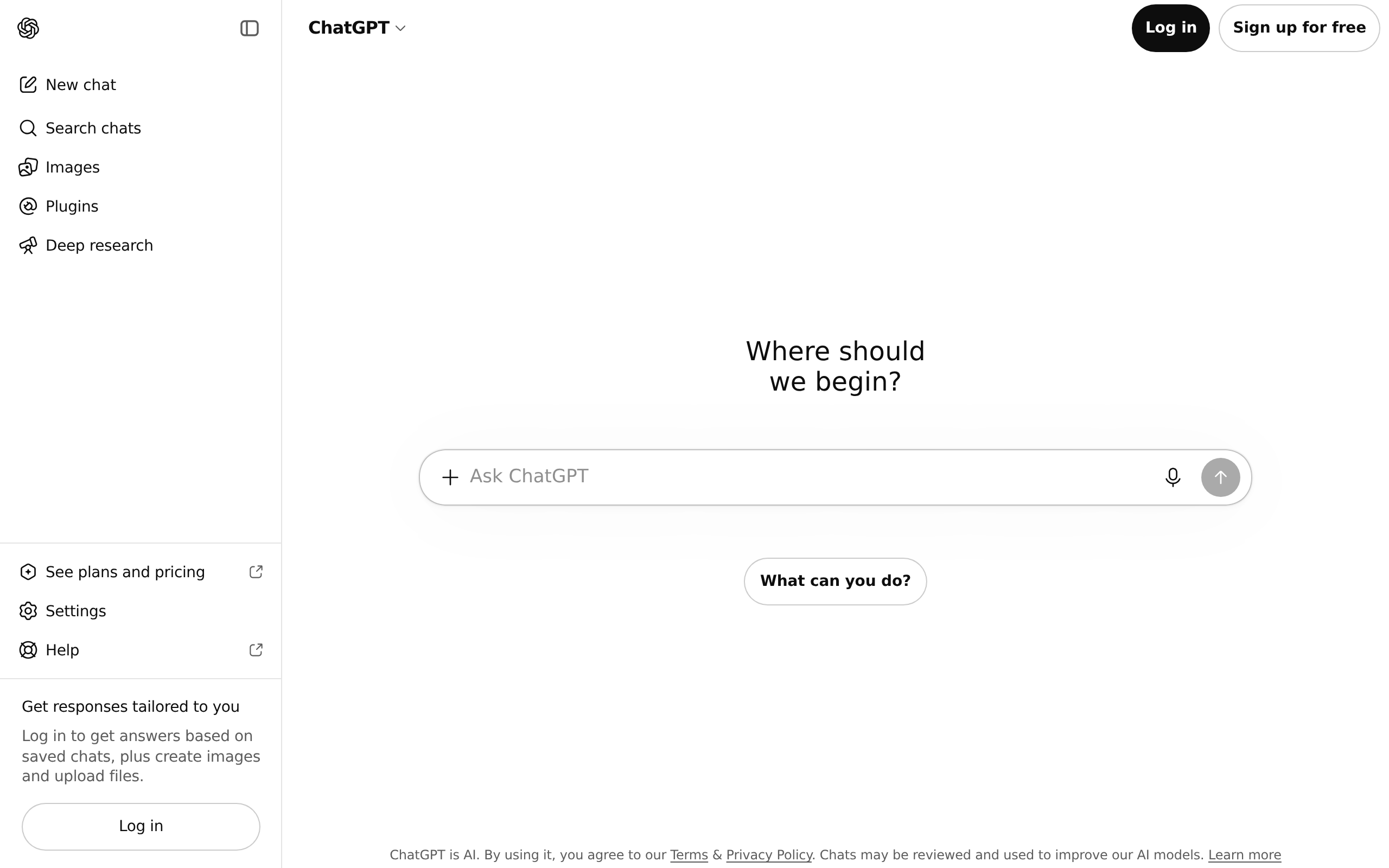
The trigger-to-result map should also absorb feedback after release. geekpark reports that feedback on a previous-generation product showed users needed knee-joint assistance. That is a specific accepted outcome emerging from use, rather than a general demand for more AI. Teams can then decide whether the missing step is automation. It may instead be a clearer confirmation or a specialist handoff.
How task-specific AI designs define context, verification and outcomes
| Dimension | Task-oriented AI product design | Aquria.AI research workflow | Hypershell Halo exoskeleton |
|---|---|---|---|
| Primary unit of design | A task rather than a job role | A research workflow tied to local-market discovery and user interviews | A lower-limb assistance product rather than a single general-purpose line |
| Inputs and context | Goal, inputs, constraints, callable capabilities, deliverables and acceptance criteria | Public discussions, local expressions and cultural context; device-language settings; user behavior and interviews | Motion data from people in different postures and underlying dynamics principles |
| Verification mechanism | Deliverables should have acceptance criteria | Users must confirm AI-inferred intent; important conclusions should identify sources, users, number of users holding the view and original quotation | User feedback identified a need for knee-joint assistance |
| Usable outcome | A usable result, measured through task completion, deliverable adoption, handoffs and time from problem discovery | Chinese interview outline; original local-language records, Chinese translations and organized results | Integrated hip-and-knee lower-limb assistance with an added motor on the side of each knee joint |
| Permissions or specialist boundaries | Permissions should be tied to temporary tasks rather than permanently assigned user accounts | Screen recording in one project was authorized by users; AI-generated summaries cannot replace original records | Not covered |
| Evidence retained | Not covered | User voices, interview videos, questionnaires, customer-service records, business data and public materials remain available as original records | Not covered |
| Targeted user differentiation | Users can perform parts of adjacent professional work without fully mastering another profession's skills | Questions may differ according to each user's background and recent actions | Outdoor users and elderly users have distinct needs and pain points |
One task model cannot erase user context
Mobility assistance can sound like a single task, yet the user context changes what a safe outcome means. According to geekpark, Sun Kuan said Hypershell has served elderly people with mobility difficulties. It has also served hiking and travel enthusiasts, as well as outdoor workers. Those groups may all seek help moving, but their bodies and routes are not interchangeable. Their tolerance for risk also differs. A device intended for travel or outdoor work cannot simply be treated as the same product for an older person who needs dependable support in daily movement.
The task has to stay tied to the person using it.
Sun Kuan told geekpark that one general-purpose product line cannot meet the distinct needs and pain points of outdoor users and elderly users. That is a limit on task-based design rather than a rejection of it. Designers can define mobility support narrowly, but cannot strip away the conditions that determine whether assistance is appropriate. The product boundary may need to follow gait. It must also account for likely hazards and the user's ability to recover from a loss of balance.
The Tashan S1 illustrates what that specialization looks like. According to 36kr, it is aimed primarily at active older adults and was tuned with gait data from more than 10,000 elderly people. Its anti-fall airbag accessory and multi-layer mechanical locking structure make safety features part of the intended use, rather than an afterthought. Remote footprint sharing also gives others a way to see where the user has been. A task-bound AI product therefore needs more than a stated goal: it needs limits that reflect who is performing the task and what can go wrong.
Keep evidence and permissions attached to the task
Research tasks should retain the trail that produced an answer. According to woshipm, Aquria.AI begins cross-border work by scanning a local market's public discussions. It also examines local expressions and cultural context before drafting a Chinese interview outline. Its backend returns original local-language records alongside Chinese translations. It also provides organized results. That design keeps the researcher close to the material rather than presenting a conclusion as an unexplained output.
Evidence changes what AI may safely do.
Aquria.AI also requires AI-generated conclusions to identify sources, the users involved, the number of users who hold a view, and the original quotation, woshipm reports. That sets a practical boundary: AI can assemble research and draft an outline when the underlying record remains available. A conclusion that will steer a consequential decision needs a person able to inspect its evidence and decide whether the cited material supports it.

Permissions need the same task-level treatment. 36kr reports that GMKtec describes the EVO-X5 Pro as capable of running a 300B-parameter large language model completely offline. It is aimed at uses including government affairs, biomedicine, financial investment, confidential scientific research, and commercial enterprise work. The machine also includes out-of-band remote management and an independent security chip. Local inference may keep sensitive task context nearer to the device, but those management features show that control does not disappear. The unresolved choice is between local execution and centrally orchestrated research systems. In either case, access should be temporary and tied to a defined task. Escalation to a specialist is needed when the evidence or permission boundary is unclear.
Choose AI by the task's evidence, stakes and physical context
- A worker needs to complete an adjacent discipline's task-such as a customer-service, design, HR, legal or marketing task-without becoming a full specialist in that field. Use AI to reduce handoffs, but define the task before invoking it: specify the goal, inputs, constraints, callable capabilities, deliverable and acceptance criteria. Measure whether the result is adopted, how many human handoffs remain, and the time from problem discovery to a usable result.
- A product team is interpreting behavior that could have several explanations, such as a user lingering on a payment page and then leaving. Use AI to connect authorized behavioral evidence with a prompt soon after the event, but require the user to confirm any inferred intent. Treat AI's summary as a working layer rather than a replacement for recordings, interviews, questionnaires, customer-service records, business data and public materials.
- A research team needs to scale international qualitative work while retaining the local wording and cultural context behind a finding. Use a workflow that first examines local public discussions, expressions and cultural context, then preserves original-language records alongside translations and organized results. Do not accept an important conclusion unless it identifies its sources, including the users involved, the number holding the view and the original quotation.
- The task involves confidential government, biomedical, financial-investment, scientific-research or enterprise material that may be unsuitable for remote model processing. Consider an offline-capable workstation rather than treating a cloud chat interface as the default. GMKtec says its EVO-X5 Pro can run a 300B-parameter large language model completely offline; it also includes out-of-band remote management and an independent security chip. Confirm the organization's own security requirements before deployment.
- A person needs physical assistance with mobility, hiking, travel or outdoor work, where body movement and safety matter more than a generic AI interaction. Choose hardware designed for that user group and task, and provide a way to try it before committing. Hypershell says outdoor users and elderly users have distinct needs that a single general-purpose line cannot meet; Farsight's Tashan S1 is aimed primarily at active older adults and includes an anti-fall airbag accessory and a multi-layer mechanical locking structure.
Test repeat use outside the demo
A convincing demonstration is not proof that people will return to a product when the task becomes ordinary. It may become inconvenient or consequential. Hypershell's Sun Kuan said the wearable exoskeleton company's core goal before this year was validating product-market fit. According to geekpark, it recently opened offline stores so prospective users could learn about and try the products with fewer barriers. That moves evaluation from a staged claim toward repeated, situated contact.
The useful question is what users do after the first trial.
Scale can reveal patterns, but it cannot substitute for inspection. 36kr says Farsight Intelligent Mobility has reached hundreds of experience sites across more than 50 cities nationwide and cumulatively served more than 10,000 elderly users. Its routes to market include cultural tourism rentals and senior-care communities. It also sells directly to consumers. Those settings expose a product to different reasons for use, making return behavior more meaningful than a single enthusiastic encounter.
Feedback also has to be specific enough to change the task design. In a Southeast Asian robot vacuum and mop project, woshipm reports that AI held in-depth conversations with more than 1,000 users in two days. More than 300 users independently raised similar issues involving branches and fruit shells. They also mentioned other non-standard debris. That recurrence is more useful than a generic satisfaction signal: teams can examine where a product fails. They can then test a revised outcome and see if the complaint fades during real use.
Repeat adoption therefore depends on visible evidence from actual situations, not model capability alone.
Before letting an AI research tool shape a product decision, require each conclusion to carry its trail: the people involved, their original words, the context, relevant behavior, and the supporting sample or business data. woshipm describes Aquria.AI as identifying the users behind a conclusion, the number sharing a view, and the original quotation. Keep interview video, questionnaires, customer-service records, business data and public materials available beside the summary; the summary is a working layer, not the record.
Set an escalation rule for unexpected evidence. More than 300 users reporting debris that jams a robot vacuum's rotating shaft deserve specialist review, not a polished synthesis alone.
For readers outside China
- Availability: International availability is only partly described. Hypershell reports global shipments exceeding 30,000 units last year and recently opened offline stores for product learning and trials, but the sources do not say which countries its stores serve. GMKtec globally launched the EVO-X5 Pro at IFA 2026. Farsight's Tashan S1 made its overseas debut at IFA 2026, while its reported experience sites are in more than 50 cities nationwide; the sources do not say where overseas buyers can purchase it.
- Pricing: Pricing for Hypershell products, the Tashan S1, the Banshan M1 and the EVO-X5 Pro is not disclosed in sources.
- Closest Western equivalents: The source material does not identify specific Western equivalents for Hypershell or Farsight exoskeletons.; The source material does not identify a specific Western equivalent for the GMKtec EVO-X5 Pro.; For the research workflow, the closest comparison is an AI-assisted user-research platform that combines behavioral evidence, interviews, multilingual records, translation and source-traceable findings; no Western product is named in the sources.
- Data residency: The clearest data-location claim concerns the EVO-X5 Pro: GMKtec says it can run a 300B-parameter large language model completely offline. That may matter for confidential work, but the sources do not specify data-residency guarantees, telemetry practices, cloud dependencies, retention policies or deployment locations. Aquria.AI is described as handling local-language research records and Chinese translations, but the source material does not cover where those records are stored or processed. The e-commerce research example involved user authorization for screen recording; its consent, retention and access controls are not disclosed in sources.
Sources
- woshipm AI没有先消灭岗位,先消灭的是"交接" https://woshipm.com/zhichang/6438947.html
- geekpark 对话极壳创始人孙宽:年出货 3 万台后,外骨骼「全班第一」的成长和焦虑 https://geekpark.net/news/370150
- woshipm AI让调研快了,为什么真需求反而更难找? https://woshipm.com/ai/6458294.html
- 36kr 硬氪直击IFA--AI硬件不再只会回答问题 https://36kr.com/p/3975817977868549
The evidence: 31 facts from 4 Chinese articles
Each line below was extracted from the article it sits under, in Chinese, before any of this was written. The writing is done from these and never from the source prose - that separation is structural, not a promise. How we work.
36kr硬氪直击IFA——AI硬件不再只会回答问题
- IFA 2026 was held in Berlin, Germany, from September 4 to 8.
- IFA 2026 brought together more than 1,900 brands, according to official data.
- Robots, artificial intelligence, smart homes, and flying cars were key exhibition focuses at IFA 2026.
- GMKtec globally launched the desktop AI supercomputing workstation EVO-X5 Pro at IFA 2026.
- The GMKtec EVO-X5 Pro is equipped with an AMD Ryzen AI Max+ PRO 495 processor.
- The EVO-X5 Pro uses a CPU, GPU, and NPU collaborative architecture.
- The EVO-X5 Pro has 192GB of unified shared memory and supports allocating up to 160GB as dedicated video memory.
- The EVO-X5 Pro supports connecting multiple machines into a distributed computing cluster.
- The EVO-X5 Pro includes out-of-band remote management and an independent security chip.
- Farsight Intelligent Mobility has launched exoskeleton robots, quadruped robots, and a cloud technology platform.
- Farsight Intelligent Mobility presented the Tashan S1 hip-assist exoskeleton and the Banshan M1 lightweight carrying exoskeleton at IFA 2026.
- The Tashan S1 made its overseas debut at IFA 2026.
- The Tashan S1 includes an anti-fall airbag accessory, a multi-layer mechanical locking structure, and remote footprint sharing.
- Farsight Intelligent Mobility is commercializing its products through cultural tourism rentals, senior-care communities, and direct-to-consumer sales.
geekpark对话极壳创始人孙宽:年出货 3 万台后,外骨骼「全班第一」的成长和焦虑
- Hypershell's global shipments exceeded 30,000 units last year.
- Sun Kuan founded Hypershell.
- Hypershell began research and development for the Halo project in 2023.
- Hypershell recently opened offline stores to reduce barriers for users to learn about and try its products.
- The new-generation Halo is a multi-joint lower-limb product with an integrated hip-and-knee design and one added motor on the side of each knee joint.
woshipmAI没有先消灭岗位,先消灭的是“交接”
- OpenAI analyzed more than 800,000 work-related messages from U.S. ChatGPT users.
- Among all work-related ChatGPT messages in OpenAI's analysis, 16.8% involved tasks from other occupations.
- After excluding general tasks such as writing, summarizing, and scheduling, cross-occupation tasks accounted for 43.5% of work-related messages.
- OpenAI calls the phenomenon of users performing tasks outside their occupations "Task Crossover."
- After general tasks were excluded, 77% of messages from customer service and experience roles involved tasks from other occupations.
- After general tasks were excluded, 75% of messages from design roles involved tasks from other occupations.
- After general tasks were excluded, 69% of messages from HR roles involved tasks from other occupations.
- After general tasks were excluded, 56% of messages from legal roles involved tasks from other occupations.
- After general tasks were excluded, 53% of messages from marketing roles involved tasks from other occupations.
- Among general active users in OpenAI's data, cross-occupation tasks accounted for 18.9% in workspaces with 2 to 5 people and 16.3% in workspaces with more than 100 people.
woshipmAI让调研快了,为什么真需求反而更难找?
- Li Wei is the founder of YueShu Insights and Aquria.AI.
- Li Wei gave a presentation titled "Breaking the Insight Bottleneck: How AI Reshapes Product Managers' User Research Workflow" at the 2026 AI Product Conference.