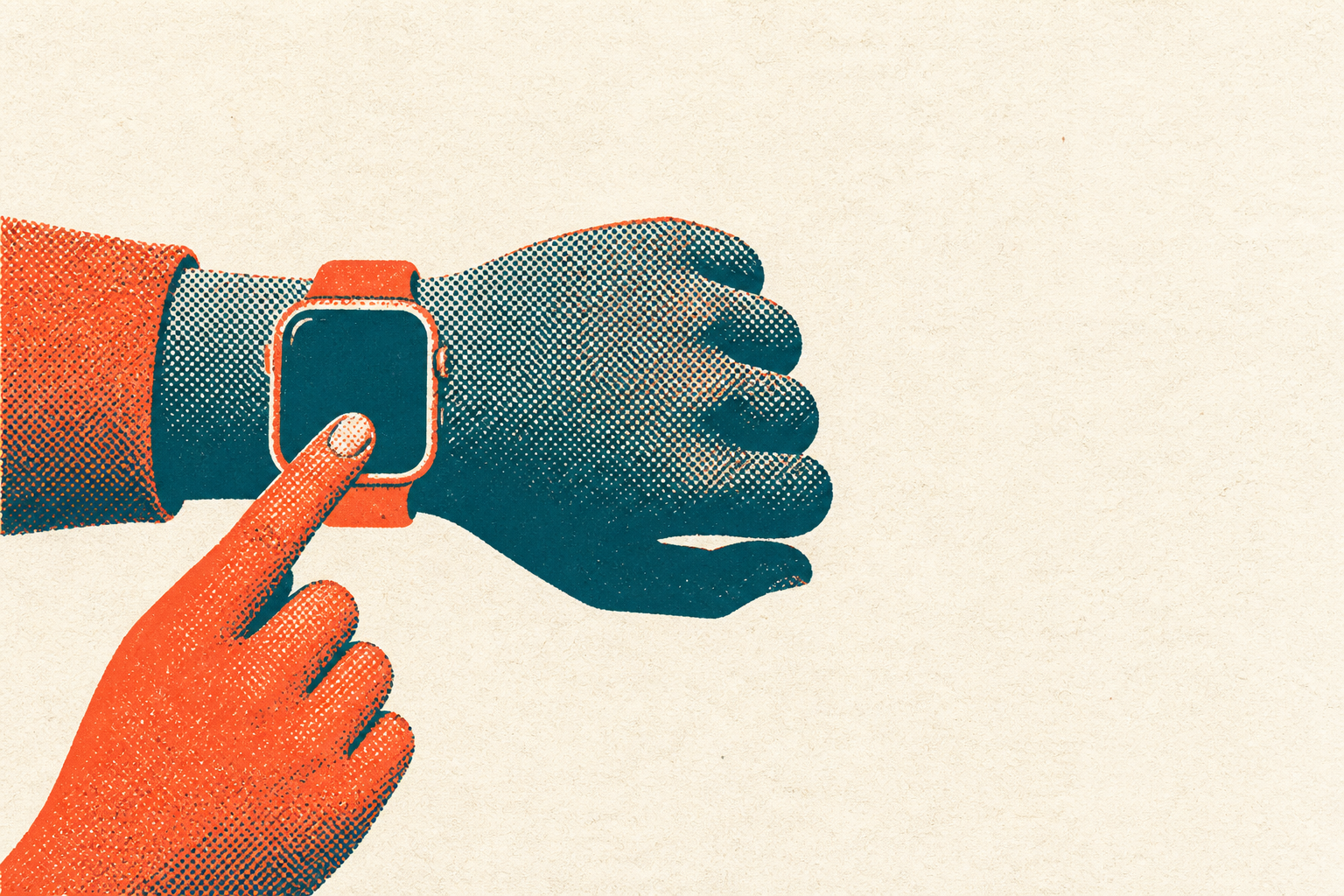
ChatGPT, Claude, Codex, and Workbody are turning product management's visible artifacts into drafts, which makes the harder interface the judgment behind them. woshipm's author Liu Xing Liao Chanpin argues that AI tools have moved into daily product work, taking on PRDs, prototypes, data analysis, process sorting, and code writing. A requirement document that once took half a day can now be generated in a few minutes, in Liu's account. That changes what competence looks like.
The old proof of work was often a document, a chart, or a prototype. If tools can produce those on demand, the valuable question shifts upstream: what should be built, when should it interrupt the user, and where could confident automation cause harm? Liu's sharper claim is that AI lowers the threshold for doing product work while raising the threshold for the product manager profession. The job moves from producing artifacts to defining context, boundaries, and trust.
AI turns product outputs into drafts, not decisions
AI is making the old evidence of product work easier to manufacture. Woshipm's author Liu Xing Liao Chanpin argues that tools such as ChatGPT, Claude, Codex, and Workbody have entered product managers' daily routines, taking over execution-level tasks that once signaled competence: PRDs, prototypes, data analysis, process sorting, and code writing.
- 2015The New Yorker records Apple Watch as wrist notifications device
- 2022Jeff Williams says health monitoring must be unobtrusive
- earlier this yearBloomberg reports Apple reconsidering health services
- over the past yearApple design team reevaluates the Apple Watch line
The change is clearest in time compression. Liu says requirement documents that once took half a day can now be generated in a few minutes. Chang Sixing, who ran AI through every stage of his own product manager work for half a year, gives the same pattern at task level: a weekly report fell from 20 minutes to 3 minutes, and a competitor feature list fell from half a day to 30 minutes.
That does not make the output decisive.
Chang says Feishu Minutes can produce meeting notes with sections for decisions, to-do items, and risks, with accuracy above 95%. He also says AI can draft the "background and goals" section of a PRD from meeting recordings, requirement emails, and related data, leaving him to make minor edits. User stories changed too: one module used to take 2 hours to split, while AI now produces a first draft in 15 minutes and he spends 45 minutes adjusting it.
Even SQL is becoming a draft surface. Chang says complex SQL used to take 30 minutes to write; now AI generates it from natural language, and he finishes in 5 minutes after changing table names and fields. The artifact arrives sooner, but the remaining work has shifted toward checking assumptions, fit, and consequence.
Chang's own accounting is the useful warning. His time spent writing documents fell from 40% to 15%, and the freed 25% now goes into validating AI outputs and making deeper decisions. He argues the outputs are above average but below excellent: complete in structure, thin in insight and sharp judgment. Liu's broader point lands there too. AI lowers the threshold for product work, but raises the threshold for the profession.
The PM skill floor rises when tools raise the output floor
The clean answer is not to ignore tools. If AI can now produce acceptable execution work, tool use becomes the floor, not the edge. Chang Sixing argues in woshipm that a well-prompted AI already beats a junior product manager with 3 months of experience on execution-level tasks. He also says that since 2024, hiring for product manager assistants and junior product specialists has clearly declined because AI performs more than 50% of the work those roles used to carry.
That does not make tool-chasing a career plan.
The harder lesson is that juniors must stop treating AI output as proof of product ability. Woshipm's Liu Xing Liao Chanpin argues that AI replaces execution rather than judgment, lowering the threshold of work while raising the threshold of the profession. His point comes from implementation, not abstraction: he says he has explored AI in government services over the past two years, with his team trying mainstream large-model capabilities across intelligent Q&A, intelligent guidance, service-handling assistance, and AI Agent applications.
In those projects, Liu argues, the model is only part of the solution. The business is the difficult part. No model can decide where AI should intervene, when automatic processing is appropriate, when human review is necessary, how the knowledge base should be maintained, or whether the user needs a chatbot instead of an assistant that completes tasks.
That reframes the junior practice path. First, study scenarios until the process has edges: user intent, exception cases, handoff points, and failure costs. Then build workflows with AI as the execution layer. Finally, review the output as a product decision, not a writing sample.
Chang says his own information-input workflow has an AI replacement rate of about 70%, and he recorded a course with 55 lessons and 280 subsections covering AI toolchain practice, problem-definition methodology, and cross-departmental promotion. The ordering matters. Tools are learned, but value comes from defining the problem, defending the process, and knowing when the machine should stop.
Active assistance has to pass a scenario threshold
Active assistance should not pass review because it can produce a plausible notification, summary, or prompt. It has to pass a scenario threshold. Woshipm's author frames that threshold with demand-review questions: whether the function works only in a specific situation, whether the information must attach to the user's current action, whether AI should wait for commands or observe, and whether the beneficiary is also the person affected.
The diary push-notification case shows why this matters. According to woshipm, a customized diary push feature increased push open rates and daily active users after launch, but after two weeks it did not increase the number of people writing diaries. The feature brought users back. It did not make them want to write.
That is the difference between activation and fit.
A review process for AI features should start by asking what moment the feature claims. AirPods, woshipm's author argues, worked because they occupied walking, commuting, or both-hands-occupied situations where audio control mattered. For glasses, the same author says the physical advantage over phones appears only when the user's hands are occupied. A feature that sounds useful at a desk may lose its reason to exist when the phone is available.
The second check is attachment. Woshipm identifies the question as whether information must be connected to the action happening now. Many AI glasses, the author says, have no display and rely on voice to read information aloud. If the information can wait, or if hearing it interrupts the action, the AI has created noise rather than assistance.
The third and fourth checks are more sensitive. Most current AI glasses, woshipm argues, still follow a user-asks, device-answers model, while Meta is pushing toward glasses that silently remember what they see. That changes the affected party. Photography, video recording, and real-time understanding may feel powerful to the wearer, but threatening to nearby people. Review cannot stop at usefulness for the owner.
From visible product outputs to context, boundaries, and trust
| Dimension | AI product-manager workflows | Screenless health wearables | Apple Watch health direction | AI glasses demand review | iPhone Air as artifact |
|---|---|---|---|---|---|
| Visible artifact being de-emphasized | PRDs, prototypes, meeting notes, weekly reports, competitor feature lists, SQL, data analysis, process sorting, and code writing | Screen, watch face, buttons, time, map, notification, and exercise interfaces | The current Apple Watch as a "mini iPhone worn on the wrist" and a screen built for lists such as contacts and schedules | Function lists across 71 new AI glasses products | Pro-series feature abundance such as three cameras, ProRes, open gate, and GenLock |
| What replaces the artifact | Judgment about prioritization, user value, cross-functional balance, where AI should intervene, when automatic processing is appropriate, and when human review is necessary | Continuous and consistent health data, understandable suggestions, proactive next actions, and model reliability after the screen disappears | All-day health monitoring, continuous sleep and wrist temperature data, trend and abnormality identification, and possible Health App functions from an AI health coach | Scenario thresholds: hands occupied, information attached to current action, whether AI observes on the user's behalf, and who is affected | A lighter role as a content consumption, social connection, and AI control device |
| Core context question | Whether the business process needs a chatbot or an intelligent assistant that can complete tasks | Whether a screenless sensor terminal can provide reliable data to AI and receive trustworthy interpretation back | How monitoring can integrate into daily life unobtrusively because people cannot actively pay attention to health at all times | Whether glasses physically beat phones only when the user's hands are occupied | Whether a product focused obsessively on one dimension can fit a user whose priorities are not mainstream |
| Boundary or trust problem | AI lowers the threshold for work but raises the threshold for the profession; the scarce skill is knowing when to trust AI and when to trust oneself | AI coach features can bring hallucination, forgetting, misunderstanding context, and confident wrong answers into health scenarios | The iPhone Health App can identify trends and abnormalities but does not provide a straightforward interpretation for users | Photography, video recording, and real-time understanding can feel like a superpower to the wearer but a threat to nearby people | Weak battery life and obvious heating are accepted by the author, while eSIM, a single camera, and a single speaker are not shortcomings for the author |
| Evidence of execution becoming easier | Requirement documents that previously took half a day can be generated in a few minutes; weekly reports went from 20 minutes to 3 minutes; competitor feature lists went from half a day to 30 minutes | not covered | Third-party AI tools such as ChatGPT Health and Ant Group's Afu have begun reading Apple Health data and analyzing sleep and training through conversation | High-frequency functions are mostly first-person shooting and voice interaction | not covered |
| Evidence that judgment remains scarce | AI outputs are above average but below excellent, with complete structure but insufficient insight and sharp judgment | The reliability of the model speaking for Fitbit Air after the screen disappears will determine how far the product can go | Whoop packages complex indicators into a daily "recovery score"; Oura uses scores across three dimensions to tell users their body's "readiness" for the day | None of the 71 new AI glasses products passed all four demand-review questions | The author argues that products like iPhone Air, which refuse to cater to most people, are almost destined to fail commercially |
| Commercial or market signal | Since 2024, hiring volume for product manager assistants and junior product specialists has clearly declined because AI performs more than 50% of those roles' previous work | Fitbit Air was priced at $99.99 with three months of Google Health Premium; WHOOP starts at $199 per year and includes hardware | Apple Watch accounts for nearly 60% of global smartwatch sales by revenue, while annual shipment growth in the global smartwatch market has slowed to single digits | Several major companies are pulling back from AI glasses while 71 new products are being launched | The author closed the Apple Store page after seeing an 8000 yuan price and later bought iPhone Air for 5500 yuan |
| What sources do not disclose | Pricing for the AI tools used by the product managers is not disclosed in sources | Fitbit Air's long-term subscription pricing after the included period is not disclosed in sources | Pricing for rumored Apple Watch changes is not disclosed in sources | Pricing and exact specifications for the 71 AI glasses products are not disclosed in sources | Sales performance for iPhone Air is not disclosed in sources |
Screenless devices do not remove the interface problem
Removing the screen changes the interface problem; it does not make the problem disappear. According to geekpark, Fitbit Air has no screen, no watch face, and no buttons. Users can double-tap the body to make a side LED show approximate battery level, while the main body weighs 5.2 grams. GeekPark's Zhang Yongyi argues that it is not meant to be a watch, and that the point of the screenless wristband is to remove enough interaction that users can forget it exists.
That only works if something else explains the product.
Fitbit Air removes time interfaces, map interfaces, notification interfaces, and exercise interfaces, according to geekpark. Zhang's stronger point is that the device is a sensor terminal for continuously feeding data to AI, not a smartwatch with its screen taken away.
The risk sits there: after the screen disappears, the model speaking for the device has to be reliable enough to carry the user's trust.
Apple shows why this is hard. ifanr cites Mark Gurman describing the current Apple Watch as a mini iPhone worn on the wrist, a useful phrase because the Watch began with visible interaction as its premise. In 2015, The New Yorker recorded that Apple wanted the Apple Watch to help people check notifications and messages on the wrist. Its square face suited lists such as contacts and schedules, and the Digital Crown appeared because two-finger zooming on a small screen was awkward.
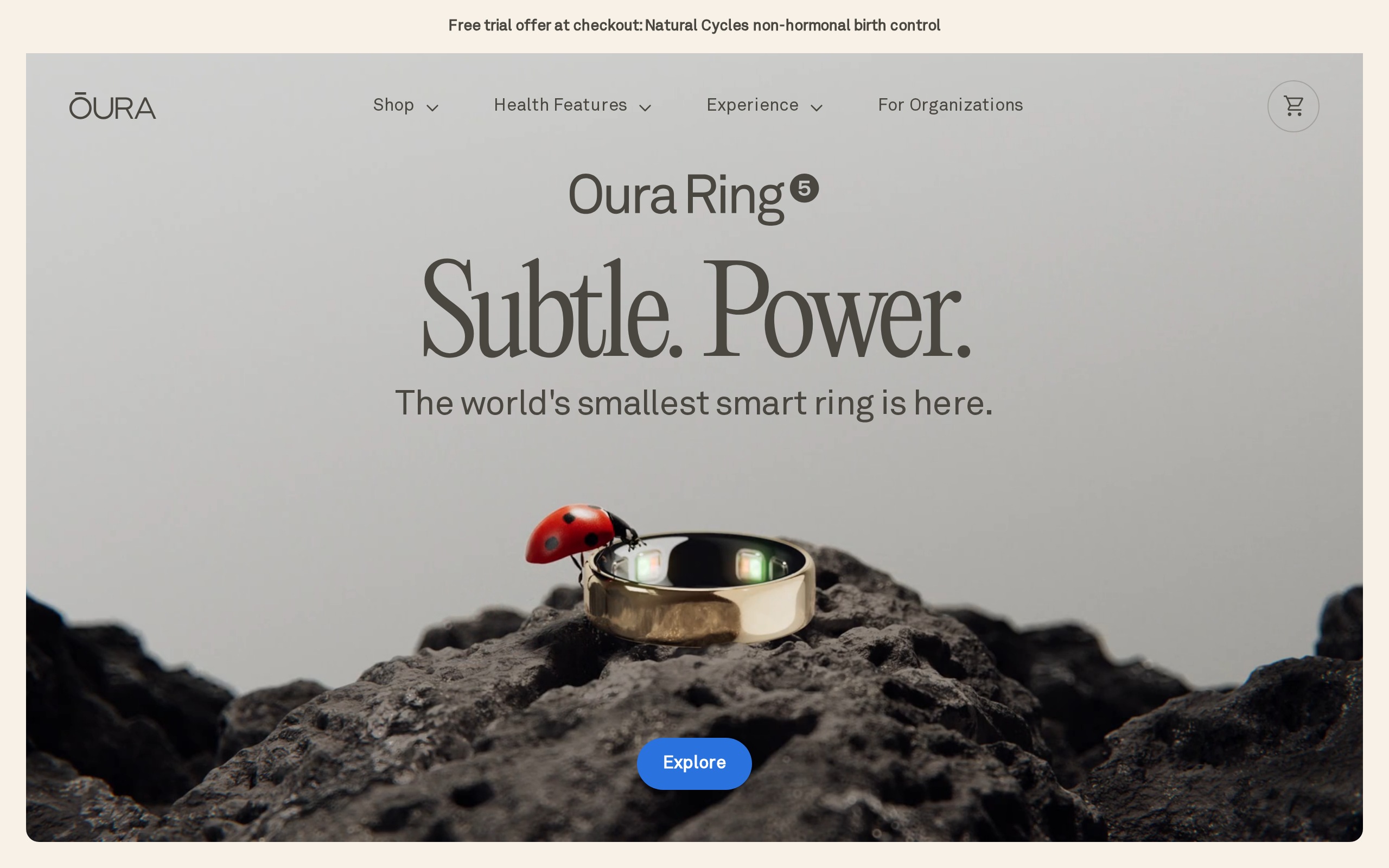
Oura and Whoop took the opposite route. ifanr says both removed screens and gave up complex interaction. They focused on wearability and battery life, but they did not leave users with raw signals. Whoop packages indicators into a daily recovery score. Oura uses scores across three dimensions to describe readiness for the day.
The same tradeoff appears in sspai's iPhone Air account. The author moved from iPhone 15 Pro after 7 years of Pro-series iPhones, with iOS 26's Liquid Glass in the background.
The device became a content consumption device. It became a social connection device. It became an AI control device, while weak battery life and heating still mattered. Thin hardware can fade back, but judgment cannot.
Use AI for outputs; reserve human judgment for context, intervention, and harm
- You need meeting notes, weekly reports, competitor tables, PRD drafts, user-story splits, or SQL first drafts. Use AI aggressively for the first pass. The sources describe Feishu Minutes producing meeting notes with decisions, to-do items, and risks at accuracy above 95%; weekly reports falling from 20 minutes to 3 minutes, or being drafted in 30 seconds; competitor feature lists falling from half a day to 30 minutes; user-story splitting falling from 2 hours to a 15-minute first draft plus 45 minutes of human adjustment; and SQL falling from 30 minutes to 5 minutes after edits. Treat the output as structured material to inspect, not as final judgment.
- The product question is where AI should intervene, when automatic processing is appropriate, when human review is necessary, how to maintain accurate knowledge, or whether the user needs a chatbot or an assistant that completes tasks. Do not delegate the decision to the model. The woshipm source argues that in real AI implementation projects, the model is only part of the solution and the difficult part is the business itself; no model can directly answer those boundary and responsibility questions. Use AI as input, but make the intervention rules, review points, and operating process explicit yourself.
- A feature improves engagement metrics but does not change the underlying user behavior you care about. Do not mistake artifact success for product success. The diary push-notification case increased push open rates and daily active users after launch, but after two weeks it did not increase the number of people writing diaries. The source's lesson is that the feature brought users back but did not make them want to write.
- You are evaluating AI glasses, screenless wearables, or other ambient devices. Judge them by scenario thresholds, not feature count. The woshipm source argues that the gap between dispensable and indispensable products is a scenario threshold: whether the function only works in a specific scenario, whether information must attach to the user's current action, whether AI waits for commands or observes on the user's behalf, and whether the beneficiary is also the person affected. This is especially important for glasses, where photography, video recording, and real-time understanding can feel like a superpower to the wearer but a threat to nearby people.
- You are designing health wearables or AI health coaching. Prioritize continuous data, unobtrusive wear, and model reliability over screens and complex interaction. Fitbit Air has no screen, no watch face, no buttons, no independent GPS, and removes time, map, notification, and exercise interfaces; GeekPark frames it as a sensor terminal that continuously provides data to AI rather than a traditional smartwatch with the screen removed. But use caution: the same source warns that AI coach features can introduce hallucination, forgetting, misunderstanding context, and confidently wrong answers into health scenarios.
Health AI exposes the cost of wrong confidence
Health is where proactive assistance becomes most tempting. Apple has pushed Apple Watch toward all-day health monitoring and wants users to wear it during sleep for continuous sleep and wrist temperature data, according to ifanr. Jeff Williams told ifanr in 2022 that people cannot actively watch their health at all times, so monitoring has to slip into daily life. GeekPark's Zhang Yongyi makes the same sensor argument from another angle: once basic accuracy is good enough, continuous and consistent data becomes more valuable.
That is the appeal of Fitbit Air's Health Coach. GeekPark says it tries to turn collected health data into directly understandable suggestions and can proactively offer next actions. The hardware is also positioned for reach: Fitbit Air costs $99.99 and includes three months of Google Health Premium, while WHOOP starts at $199 per year and includes hardware in the membership relationship.
But health advice is not a notification category. A confident mistake can change training, sleep, recovery, and anxiety.
Zhang's warning is the useful one: AI coach features can bring large-model failure modes into health scenarios, including hallucination, forgetting, misunderstanding context, and confident wrong answers. Fitbit Air also has no independent GPS, which matters because missing context can be as dangerous as bad inference. A model that speaks as if it knows why a run looked wrong, while lacking part of the location record, is not merely summarizing data. It is performing judgment.
The competitive pressure is clear. Apple Watch accounts for nearly 60% of global smartwatch sales by revenue, while IDC and Counterpoint data show global smartwatch shipment growth slowing to single digits. The same data put smart rings at 49% growth and AI glasses at 110% growth. Lighter devices create more chances for continuous sensing, but fewer visible moments to question the machine.
So the product question shifts from output quality to permission. The woshipm author's demand-review rule applies directly: ask whether the person enjoying the feature is the same person affected by it. For health wearables, that means consent boundaries, bystander rules when sensors expand beyond the wearer, and audits for missing context as much as hallucination. GeekPark's Zhang argues that after the screen disappears, the reliability of the model speaking for Fitbit Air will decide how far it can go. That is the interface now.
Treat saved document time as a budget, not a trophy. Chang Sixing says AI cut his writing-documents share from 40% to 15%; the useful part is what happened to the freed 25%. He moved it into checking outputs and making deeper decisions, according to woshipm.
Watch for the moment when a generated artifact looks complete before the scenario is understood. In 2022, Chang worked on a data analysis product for small and medium-sized e-commerce sellers, then spent 3 weeks in the offices of 5 sellers. The finding changed the product: 80% of sellers checked only sales, order volume, and advertising spend every day. The answer was not more "intelligent interpretation." It became abnormality alerts plus one-click attribution.
Use AI for the 70% replacement zone. Spend the remaining work on deciding what should interrupt a person, and what should stay quiet.
For readers outside China
- Availability: The source material covers Chinese commentary on Apple, Fitbit, WHOOP, Oura, AI glasses, Feishu Minutes, ChatGPT, Claude, Codex, Workbody, and government-service AI implementations, but it does not provide a full availability map outside China. The sspai author saw an 8000 yuan iPhone Air price on Apple's mainland China website, later borrowed a Hong Kong version after iPhone Air went on sale overseas, and bought iPhone Air for 5500 yuan. Fitbit Air is described as officially on sale for more than two months, but buyers still needed to pay an extra 200~300 yuan on second-hand platforms. Availability for Feishu Minutes, Workbody, the cited AI glasses, and the government-service deployments outside China is not disclosed in sources.
- Pricing: Prices disclosed in the sources are limited. iPhone Air appeared at 8000 yuan on Apple's mainland China website in the sspai account, and the author later bought iPhone Air for 5500 yuan. Fitbit Air is priced at $99.99 and includes three months of Google Health Premium; the same source says buyers still needed to pay an extra 200~300 yuan on second-hand platforms. WHOOP starts at $199 per year and includes hardware in the membership relationship. Other pricing is not disclosed in sources.
- Closest Western equivalents: Feishu Minutes is closest in role to AI meeting-note tools that turn recordings into decisions, to-do items, and risks; specific Western product comparisons are not disclosed in sources.; Workbody is named alongside ChatGPT, Claude, and Codex as an AI tool entering product-manager workflows; a closer Western equivalent is not disclosed in sources.; Fitbit Air is positioned against WHOOP and Oura-style screenless or low-interaction health wearables focused on continuous data rather than smartwatch interaction.; AI glasses are discussed as a category whose current high-frequency functions are mostly first-person shooting and voice interaction; the sources mention Meta as tackling sensing and social-perception thresholds.
- Data residency: Data residency, cross-border data transfer, storage location, and enterprise privacy terms are not disclosed in sources. The sources do note that health and ambient devices raise trust issues: Fitbit Air's value depends on continuous health data flowing to AI, and GeekPark warns that AI health coaches can hallucinate, forget, misunderstand context, or give confidently wrong answers. For AI glasses, woshipm highlights a social harm boundary: the wearer may benefit from photography, video recording, and real-time understanding while nearby people experience the device as a threat.
Sources
- woshipm AI降低了产品工作的门槛,却提高了产品经理的门槛 https://woshipm.com/share/6437224.html
- woshipm 评审需求时,我只问四个问题 https://woshipm.com/share/6428346.html
- sspai 我,与「唯一」的 iPhone Air https://sspai.com/post/112880
- ifanr 下一块 Apple Watch,苹果连屏幕都不想要 https://ifanr.com/1674558
- woshipm AI到底能不能取代产品经理?我拿自己做了半年实验 https://woshipm.com/ai/6429434.html
- geekpark Fitbit Air 手环深度体验:「无屏」只是手段,模型能力才是护城河 https://geekpark.net/news/368562
The evidence: 46 facts from 6 Chinese articles
Each line below was extracted from the article it sits under, in Chinese, before any of this was written. The writing is done from these and never from the source prose - that separation is structural, not a promise. How we work.
geekparkFitbit Air 手环深度体验:「无屏」只是手段,模型能力才是护城河
- Fitbit Air had been officially on sale for more than two months, yet buyers still needed to pay an extra 200~300 yuan on second-hand platforms.
- Fitbit Air has no screen, no watch face, and no buttons.
- Fitbit Air users can double-tap the device body to make a side LED show approximate battery level.
- Fitbit Air's main body weighs 5.2 grams.
- Fitbit Air weighs about 12 grams after being placed into the strap.
- Fitbit Air has no independent GPS.
- Fitbit Air removes time, map, notification, and exercise interfaces.
- Fitbit Air is priced at $99.99 and includes three months of Google Health Premium.
- WHOOP starts at $199 per year and includes hardware in the membership relationship.
- Google has Gemini, Fitbit's years of accumulated health data, a user base, and distribution channels in the health wearable field.
- WHOOP has accumulated vertical data, training and recovery algorithms, and a mature subscription system.
ifanr下一块 Apple Watch,苹果连屏幕都不想要
- Apple Watch accounts for nearly 60% of global smartwatch sales by revenue.
- IDC and Counterpoint data show that annual shipment growth in the global smartwatch market has slowed to single digits.
- IDC and Counterpoint data show that annual shipment growth rates for smart rings and AI glasses reached 49% and 110%, respectively.
- In 2015, The New Yorker recorded that Apple originally wanted the Apple Watch to be a device for checking notifications and messages on the wrist.
- The Apple Watch's square face was suited to displaying lists such as contacts and schedules.
- The Apple Watch's Digital Crown emerged because two-finger zooming on such a small screen was awkward.
- Apple increasingly emphasizes "all-day health monitoring" for Apple Watch and wants users to wear it while sleeping to obtain continuous sleep and wrist temperature data.
- Light smart devices from Huawei and Xiaomi in the Chinese market often have battery life of two weeks.
- Oura Ring and Whoop bands removed screens, gave up complex interaction, and focused on wearability and battery life.
- In 2022, Apple COO Jeff Williams told ifanr that Apple's core understanding of health products is that people cannot actively pay attention to their health at all times, so technology must integrate monitoring into daily life unobtrusively.
- Whoop packages complex health indicators into a daily "recovery score."
- Oura uses scores across three dimensions to tell users their body's "readiness" for the day.
- Third-party AI tools such as ChatGPT Health and Ant Group's Afu have begun reading Apple Health data and analyzing the relationship between sleep and training through conversation.
sspai我,与「唯一」的 iPhone Air
- The sspai author closed the Apple Store page after seeing an 8000 yuan price for iPhone Air on Apple's mainland China website after the launch event.
- The sspai author borrowed a Hong Kong version of iPhone Air from a friend working in tech media after iPhone Air went on sale overseas.
- The sspai author bought iPhone Air for 5500 yuan in the year of the essay.
- The sspai author had owned personal mobile phones since 2011.
- The sspai author switched from iPhone 15 Pro to iPhone Air.
- The sspai author used Pro-series iPhones for 7 years before switching to iPhone Air.
- iOS 26 added the Liquid Glass design language.
- The sspai author uses iPhone Air as a content consumption, social connection, and AI control device.
- The sspai author wrote the author's China Telecom card into iPhone Air on the second day after buying it.
- The sspai author traveled to Hainan with iPhone Air and iPhone 15 Pro after buying iPhone Air.
- The sspai author made iPhone Air the author's only main phone after the Hainan trip and converted the remaining SIM card from iPhone 15 Pro into an eSIM for iPhone Air at a business hall.
woshipm评审需求时,我只问四个问题
- The woshipm author says a customized diary push-notification feature increased push open rates and daily active users after launch.
- The woshipm author says the customized diary push-notification feature did not increase the number of people writing diaries after two weeks.
- The woshipm author says 71 new AI glasses products were released in a cluster recently.
woshipmAI降低了产品工作的门槛,却提高了产品经理的门槛
- woshipm's author Liu Xing Liao Chanpin says he recorded a video about AI product managers yesterday.
- woshipm's author Liu Xing Liao Chanpin says the question "As AI becomes stronger, do product managers still have a future?" was raised repeatedly after he recorded a video about AI product managers.
- woshipm's author Liu Xing Liao Chanpin says he has explored AI implementation in the government services field over the past two years.
- woshipm's author Liu Xing Liao Chanpin says his team has tried almost all current mainstream large-model capabilities in scenarios including intelligent Q&A, intelligent guidance, service-handling assistance, and AI Agent applications in government services.
woshipmAI到底能不能取代产品经理?我拿自己做了半年实验
- Chang Sixing ran AI through every stage of his own product manager work for half a year as an experiment.
- In 2022, Chang Sixing worked on a data analysis product for small and medium-sized e-commerce sellers.
- Chang Sixing spent 3 weeks in the offices of 5 sellers observing how they used data.
- Chang Sixing recorded a course with 55 lessons and 280 subsections covering AI toolchain practice, problem-definition methodology, and cross-departmental promotion.