Dudao Technology's proposed agent compiler for the business world frames the real test for agent software: can a system turn fragmented business rules into work an agent can carry out? It must also interpret processes in context. 36kr says the company seeks a business-understanding and orchestration layer that moves AI beyond answering questions toward completing real work. That distinction matters because useful work has a lifecycle, rather than ending with a plausible response.
According to woshipm, agent software emerges from deep integration between large models and software. Its definition reaches beyond execution to include perception and memory. It also covers decision-making and interaction. Application-function aggregation, reorganization, plus cross-system collaboration are included as well. The synthesis here is a practical one: agent software earns the name when it carries a goal through managed work while keeping the user able to see the result. The user must also be able to govern it and recover the result.
An agent starts with a work lifecycle
Agent software is defined less by a model feature than by the work it can carry from an initial goal into an organized course of action. According to woshipm, the official interpretation treats it as a new software form created by deeply integrating large models with software. That framing matters because the model is only one part of the system. The software must supply the structure that turns an instruction into managed work.
- May 8, 2026Three departments released the Opinions on agents
- August 25Doubao Work officially launched
- September 11, 2026The ministry released the Artificial Intelligence + Software action plan
Context is the starting material, not an optional add-on.
The same interpretation cited by woshipm describes capabilities that begin with perception and memory. It then covers decision-making, interaction, and execution. It also includes the aggregation and reorganization of application functions, along with collaboration across systems. These capabilities describe a lifecycle in which the agent takes in a situation. It retains relevant information before selecting an action. It then coordinates the software functions needed to pursue that action. A chat response may help with a question. Agent software must organize the conditions under which work proceeds.
Enterprise use makes the distinction sharper. Business work is governed by fragmented rules and established processes. Its context may sit across separate systems. Dudao Technology, cited by 36kr, calls for an "Agent compiler for the business world" that converts those materials into capabilities an agent can understand and invoke. Its proposed orchestration layer is meant to move AI beyond answering questions toward completing real work. The core test is therefore not button-clicking alone. It is whether business understanding can be made executable as an agent moves through a defined work lifecycle.
A deliverable must land where work continues
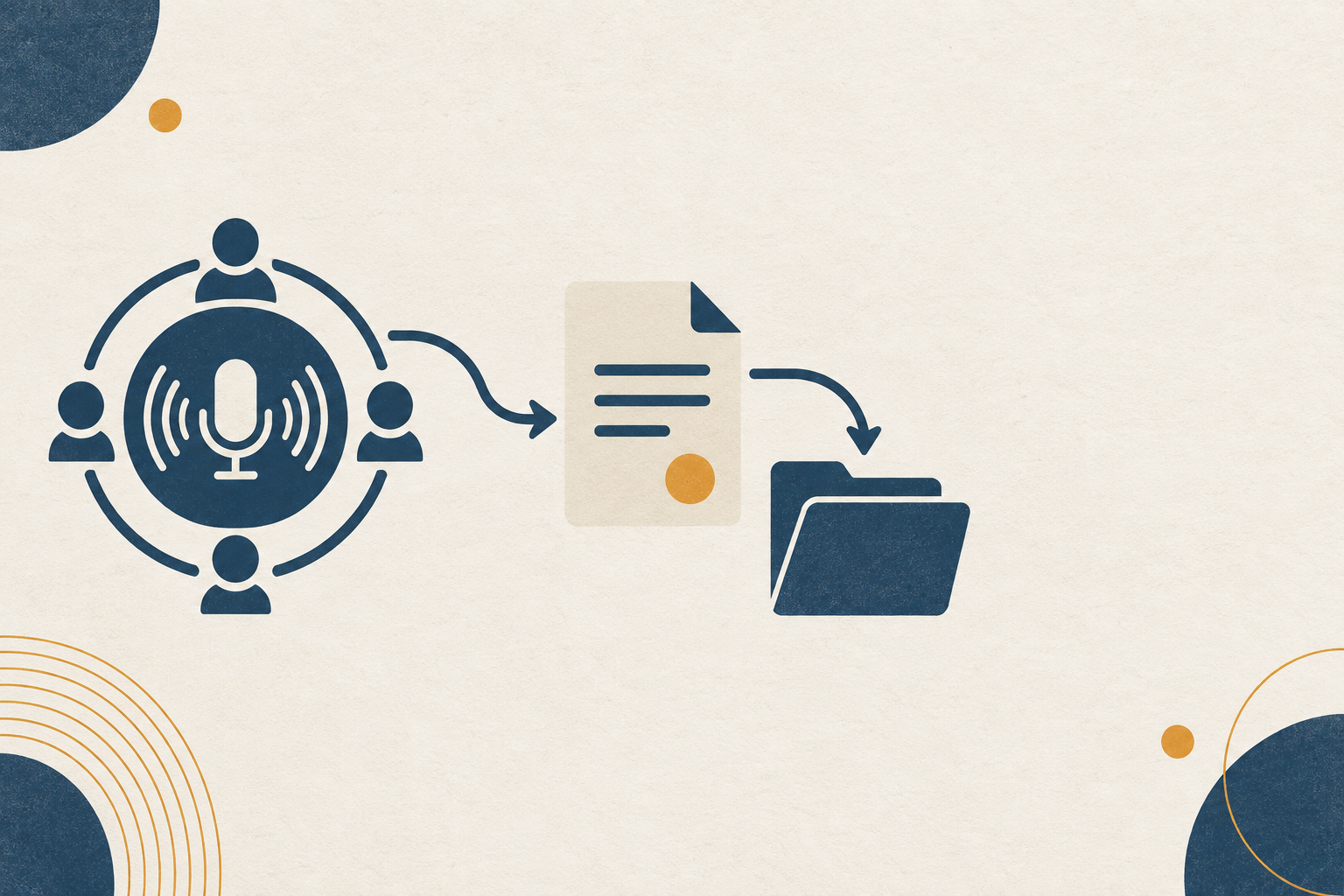
A generated file has value only if it enters the place where work continues. The woshipm author argues that AI-generated content should sit where users will open it again within their existing workflow. Doubao Work provides a defined return path. After authorization, it can access Feishu documents. It can also access meeting minutes and chat records; generated content can then be saved back to Feishu. According to woshipm, the resulting output was a Feishu document that could be used directly.
The destination is part of the deliverable.
That matters because the file is not left as an isolated result of a prompt. Material already held in Feishu can inform the work, and the completed content can return to Feishu for later use there. The user does not need to treat the generated document as an item detached from the system named in the task. In woshipm's framing, this is the practical test for placement: content should appear where the user is likely to reopen it.
Doubao Phone Assistant presents a different deliverable-oriented model. Its Professional Edition includes a Work Tasks mode for complex office-work scenarios, according to ifanr. From goals described by the user, it can produce Word files. It can also produce Excel or PPT files. That makes the output concrete: the request ends in a file type associated with office work. But the description identifies the formats it can create, while the Doubao Work account identifies Feishu as the system to which generated content returns.
The distinction is consequential. A Word, Excel, or PPT file can be a completed deliverable, yet its format alone does not establish where surrounding work resumes. Doubao Work ties output to Feishu documents. It also ties output to meeting minutes and chat records after authorization; Phone Assistant's Work Tasks mode is described through the office files it can generate.
Background execution needs a visible trail
Doubao Phone Assistant frames the attraction of background agency clearly: it can reach calendars. It can also reach files and recordings. Connected third-party services remain available while work continues without constant prompting. According to ifanr, the larger ambition is an "action terminal" that understands a goal, calls relevant capabilities, arranges the task sequence, runs in the background, and returns when a decision requires the user. That promise makes the final answer insufficient. A user also needs to know what happened between request and result.
Background work must leave a visible trail, not a black box.
Doubao Work exposes why. The woshipm author warns that information added during processing may not originate in the recording itself, and argues that the product should distinguish original recording text from model summaries and AI-added material. Each claim should therefore retain a source link back to the relevant recording point, so a user can inspect the underlying material rather than accept a polished synthesis on faith.
For multi-app work, that trail also needs intermediate outputs and execution records: which files or services supplied context, what the system produced at each stage, and what it changed before presenting a result. woshipm argues that complex tasks require visible processes, traceable sources, and editable sections. Editability matters because a result may be useful while still needing correction. The same author cautions that success with a recording does not prove reliable cross-file analysis, professional data processing, or complex software operations. An agent earns background authority when its work can be checked and revised without reconstructing the whole task manually. It should also be recoverable.
Permissions must follow the decision
Permission design starts by separating who may decide from what software may execute. The Opinions on Regulating the Application and Innovative Development of Agents, released by three departments on May 8, 2026, requires a distinction between decisions reserved for users, actions needing user authorization, and actions an agent may take autonomously. It also says agents must stay within the authorization a user has given.
That boundary makes an agent controllable rather than merely capable.
The product question is therefore attached to each operation: can it proceed, must it stop for confirmation, or is it unavailable? The woshipm author argues that governance should define which actions may be automated, which need human confirmation, and whether a problematic action can later be reconstructed. Reconstruction matters after an error, but it cannot substitute for consent before a consequential operation.
Third-party software needs its own boundary. According to ifanr, Doubao Phone Assistant released its Screen Automation Execution Protocol, or SAEP, for third-party app integration and began a 30-day public notice period for the rules. Under SAEP, an app can allow or reject an assistant's screen-automation activity inside that app. Doubao Phone Assistant says it will not automate operations where an app explicitly rejects them.
Sensitive actions can use an AI button combined with fingerprint verification, ifanr reports. This connects approval to the moment of action.
Modes can also restrict authority rather than merely label a task. ifanr reports that Expert Mode and Work Tasks are separate modes, and users cannot use Operate Phone or other assistant tools while either is active. A blocked tool is a clear recovery aid: it limits what can go wrong while the task is being handled.
How policy, phone assistance, and work software frame the agent lifecycle
| Official agent-software framework | Doubao Phone Assistant | Doubao Work | |
|---|---|---|---|
| Core framing | A new software form created through deep integration of large models and software | An assistant with phone-operation, context, memory, and task modes | A work tool for documents, spreadsheets, PPT presentations, web operations, and cloud computers |
| Context gathering | Perception and cross-system collaboration are mentioned | The current screen can become context; with authorization it can retrieve personal-device data | After authorization, it can access Feishu documents, meeting minutes, and chat records |
| Memory | Memory is included in the official interpretation | Users can save memories and can view, modify, and delete saved memories | Not covered |
| Tool and system coordination | Aggregation and reorganization of application functions and cross-system collaboration networks are mentioned | Can access connected third-party services; SAEP supports third-party app integration | Promotes Feishu connectivity, web operations, and cloud computers |
| In-workflow deliverable | Not covered | Can produce Word, Excel, or PPT files from user-described goals | Generated study notes were delivered as a Feishu document that could be used directly |
| Authorization and permissions | Agents must distinguish user-only decisions, user-authorized decisions, and autonomous decisions; they must not exceed user authorization | Fingerprint verification can authorize sensitive operations; memory requires informed and active authorization; third-party apps can allow or reject screen automation | Feishu access is available after authorization |
| Human control during execution | Governance should determine what can be automated and what requires human confirmation | Expert Mode and Work Tasks prevent use of Operate Phone or other assistant tools while active | Not covered |
| Provenance and recovery | Governance should address whether actions can be reconstructed after problems occur | Not covered | The author says generated content should distinguish original recording text, model summarization, and AI-added information, with links back to the recording for verification |
| Observed limitation or caution | Not covered | Operate Phone remains a beta feature with certain capability limitations | Success with one recording does not establish reliability for cross-file analysis, professional data processing, or complex software operations |
Choose an agent by the work it removes-and the control it preserves
- You need to turn a single recording into usable notes and want the result to land in the collaboration system where work already happens. Use Doubao Work for bounded organization tasks. In a reported test, it reorganized a learning recording by topic, categorized and summarized it, and produced a Feishu document that could be used directly. After authorization, it can access Feishu documents, meeting minutes, and chat records, then save generated content back to Feishu. Do not treat that result as proof that it can reliably perform cross-file analysis, professional data processing, or complex software operations.
- The output may affect a decision, record, or deliverable where factual provenance matters. Use an agent only if the workflow preserves a review path. Doubao Work may add background information beyond the original recording; the source material argues that original text, model summaries, and AI-added material should be distinguished, with direct jumps to the relevant point in the recording for verification. For complex work, favor products with visible processes, traceable sources, and editable sections.
- You want a phone assistant to act across apps or retrieve personal information. Use Doubao Phone Assistant when you can explicitly authorize the required access and accept its current limitations. Its Consumer Edition retains "Operate Phone" as a beta feature, while SAEP lets third-party apps allow or reject screen-automation operations. With user authorization, the assistant can retrieve recordings, contacts, photos, text messages, notes, and calendar data. Avoid delegating actions beyond the scope you are prepared to authorize: the cited agent rules require agents not to operate beyond user authorization.
- You need an assistant to retain context across recurring personal work. Use memory only when the ability to inspect and correct it is important. Doubao Phone Assistant lets users save information to memory through several interaction methods, but its memory features require informed and active authorization; users can view, modify, and delete saved memories.
- A task requires a deliverable, background execution, and a human decision at a sensitive point. Prefer an agent workflow that separates autonomous execution from approval. Doubao Phone Assistant's Professional Edition includes "Work Tasks" for complex office-work scenarios and is described as able to produce Word, Excel, or PPT files from user-described goals. Its AI button can be combined with fingerprint verification for sensitive operations. More generally, the cited regulatory approach distinguishes decisions limited to users themselves, decisions requiring user authorization, and decisions agents may make autonomously.
Test recurring work before granting broad access
Test an agent on a recurring task before extending it across a workspace. The useful measure is the work left after its result arrives, as woshipm's author argues. Does the output eliminate the next round of sorting and checking, or does a person still need to reconstruct context, verify what changed, and prepare the handoff? Doubao Work may be worthwhile for organizing recordings, according to woshipm, but complex work needs further testing before it resembles a dependable colleague.
Inspect the context boundary as closely as the deliverable. Doubao Phone Assistant can use the current screen when the AI button is pressed, and, with authorization, can retrieve recordings, contacts, photos, text messages, and notes from natural-language requests. It can also retrieve calendar data. Its Consumer Edition keeps "Operate Phone" as a beta feature with capability limits. Those facts make recurring-task trials a way to find out which context is genuinely needed, what review remains necessary, and where a limited capability interrupts the work loop.
Memory is the harder retention test. Users can deliberately save information through voice commands, button gestures, a swipe, or the Memory control after a screenshot. ifanr reports that saved memories require informed, active authorization and can be viewed or modified. They can also be deleted.
Ask what happens after each completed cycle: which memories persist, which should change, and whether they can be removed without damaging later work. Also test portability and review time. Then test cost and contamination when personal context enters shared work. woshipm's proposed software model includes Workspace and Context, Knowledge and Memory, Work Loop, and Governance and Responsibility Boundary; a recurring task exposes whether those boundaries hold.
Start with a recurring recording task and place the result where the team will reopen it in its existing workflow, as woshipm's author advises. Then count the work that remains: checking claims, moving notes, restoring context, and revising the output.
Require the agent to label original recording text, model summaries, and AI-added material. A useful result should also let a user jump back to the relevant point in the recording. Those links matter when added information cannot be traced to the source.
Do not treat competent organization of one recording as proof of cross-file analysis, professional data processing, or complex software operations. For those tasks, keep processes visible, make sources traceable, and ensure each section remains editable. Test recovery too: if a result needs correction, the user should be able to locate the basis for it and change it without rebuilding the work. woshipm's author sees value in the recording scenario, while reserving judgment on a reliable AI colleague for complex work.
For readers outside China
- Availability: The source material discusses Doubao Work, Doubao Phone Assistant Consumer Edition, and Professional Edition, but does not say whether any are available outside China, which devices or regions they support, or how international users can obtain them. Doubao Work officially launched on August 25; the year is not disclosed in sources.
- Pricing: No pricing, subscription terms, or usage limits are disclosed in sources.
- Closest Western equivalents: A workplace AI assistant that can read authorized collaboration records and place generated documents back into the team's existing workspace.; A phone-level assistant that uses current-screen context, can access authorized personal data, and can perform limited app automation.; An agent platform that turns business rules, processes, and context into capabilities other agents can invoke.
- Data residency: The source material does not cover data-residency location, cross-border transfers, retention periods, encryption, enterprise-administration controls, or whether data from Feishu, recordings, contacts, photos, messages, notes, calendars, or connected third-party services is processed on device or in the cloud. It does state that Doubao Phone Assistant memory requires informed and active authorization and can be viewed, modified, and deleted by users; it also states that Doubao Work can access authorized Feishu documents, meeting minutes, and chat records, and that SAEP gives third-party apps a choice to allow or reject screen automation.
Sources
- 36kr 36氪项目推荐周榜|第15期,本期热度TOP10 https://36kr.com/p/3957138356206978
- woshipm 豆包工作体验-AI办公大战 https://woshipm.com/ai/6454359.html
- ifanr 新「豆包手机」首发体验,智能手机正在变成「行动终端」 https://ifanr.com/1679983
- woshipm 工信部把"智能体软件"写进专项行动,下一代软件到底会变成什么? https://woshipm.com/ai/6464485.html
The evidence: 34 facts from 4 Chinese articles
Each line below was extracted from the article it sits under, in Chinese, before any of this was written. The writing is done from these and never from the source prose - that separation is structural, not a promise. How we work.
36kr36氪项目推荐周榜|第15期,本期热度TOP10
- 36Kr's Project Recommendation Weekly Ranking, Issue 15, presents a heat-based TOP10 list.
- Delta Intelligence and Wuji Technology are jointly advancing data collection for full-body coordinated dexterous manipulation.
ifanr新「豆包手机」首发体验,智能手机正在变成「行动终端」
- Doubao Phone Assistant Consumer Edition was officially released.
- The Consumer Edition retains its "Operate Phone" capability as a beta feature with certain capability limitations.
- Doubao Phone Assistant Consumer Edition adds a dedicated AI button.
- Long-pressing the AI button launches Doubao Assistant, and double-clicking it opens real-time video conversation.
- Users can ask Doubao general questions such as weather information from the lock screen.
- The AI button can be combined with fingerprint verification to authorize sensitive operations.
- Pressing the AI button makes the current screen available as context for Doubao Phone Assistant's understanding of a question.
- Doubao Phone Assistant released the Screen Automation Execution Protocol (SAEP) for third-party app integration and began a 30-day public notice period for its rules.
- Under SAEP, third-party apps can specify whether to allow or reject an AI assistant's screen-automation operations within their apps.
- With user authorization, Doubao Phone Assistant can retrieve recordings, contacts, photos, text messages, notes, and calendar data using natural-language requests.
- Users can save information to Doubao Phone Assistant's memory through voice commands, pressing the AI button and volume button simultaneously, a three-finger upward swipe, or tapping "Memory" after taking a screenshot.
- Doubao Phone Assistant's Professional Edition includes a "Work Tasks" mode for complex office-work scenarios.
- "Expert Mode" and "Work Tasks" are separate task modes, and users cannot use "Operate Phone" or other assistant tools while either mode is active.
- Doubao Phone Assistant's memory features require users' informed and active authorization, and users can view, modify, and delete saved memories.
woshipm工信部把“智能体软件”写进专项行动,下一代软件到底会变成什么?
- China's Ministry of Industry and Information Technology publicly released the Implementation Plan for the 'Artificial Intelligence + Software' Special Action on September 11, 2026.
- The official interpretation defines 'agent software' as a new form created through the deep integration of large models and software.
- The official interpretation of agent software mentions perception, memory, decision-making, interaction, execution, aggregation and reorganization of application functions, and cross-system collaboration networks.
- The Ministry of Industry and Information Technology discussed 'AI-assisted' and 'AI-native' as two different paths for industrial software.
- At a press conference, China Software Industry Association Vice Chairman and Secretary-General Lü Weifeng said intelligent software services are shifting from product sales toward continuous service operations.
- Lü Weifeng said intelligent software services are expanding from selling products to selling capabilities and results, with models as a service and agents as a service emerging as new models.
- The Opinions on Regulating the Application and Innovative Development of Agents was released by three departments on May 8, 2026.
- The Opinions on Regulating the Application and Innovative Development of Agents requires distinctions among decisions limited to users themselves, decisions requiring user authorization, and decisions that agents can make autonomously.
- The Opinions on Regulating the Application and Innovative Development of Agents requires agents not to perform operations beyond user authorization.
woshipm豆包工作体验-AI办公大战
- Doubao Work officially launched on August 25.
- Doubao Work promotes capabilities for documents, spreadsheets, PPT presentations, web operations, and cloud computers.
- The woshipm author tested Doubao Work by asking it to turn a real learning recording into study notes without using a complex prompt.
- In the test, Doubao Work reorganized the recording by topic rather than presenting it strictly in chronological order.
- In the test, Doubao Work categorized and summarized the recording's content and used cleaner language than the original recording.
- In the test, Doubao Work added some background information that made the generated notes easier to read and remember.
- The generated result was a Feishu document that could be used directly.
- Doubao Work's official launch promotion presented Feishu connectivity as a key capability.
- After authorization, Doubao Work can access Feishu documents, meeting minutes, and chat records, and generated content can be saved back to Feishu.