
DeepSeek V4.1 Flash generated a 3D Tesla flight telemetry webpage in 35 minutes, consuming 37.52 million input tokens for approximately 4 yuan. According to ifanr, the session sustained a 99.6% cache hit rate alongside 330,000 output tokens. Matching that build on GPT-6.1 Sol or Claude models costs at least 100 yuan. The math rests on cache reuse. DeepSeek charges 0.04 yuan per million tokens for cached input hits during peak hours and 8 yuan per million tokens for output.
Tool platforms are adapting immediately. According to appinn, both OpenCode and Command Code provide six times the DeepSeek V4.1 Flash quota in their $10 plans.
According to woshipm, DeepSeek V4.1-Flash-1017 improves code and Agent benchmark performance while reducing runtime and token costs. An ifanr author argues that shrinking performance gaps between low-cost open-source models and closed-source alternatives will continuously pressure proprietary labs to justify premium pricing. Yet unlocking these loops requires moving past conversational wrappers into structured harnesses with strict cache protection.
The caching economics behind multi-million token loops
DeepSeek charges 0.04 yuan per million tokens for cached input hits during peak hours, balanced against 8 yuan per million tokens for output. According to woshipm, the API pricing for DeepSeek V4.1 Flash is the same as that for DeepSeek V4 Flash. In autonomous loops, this disparity shifts engineering incentives. Iterative system prompts must strictly append new observations to preserve identical prefixes across rounds. Changing an early instruction forces the entire sequence to miss the cache, discarding the discount.
- July 31DeepSeek launches official API for DeepSeek V4 Flash
- August 13DeepSeek officially releases DeepSeek V4 Pro
- August 21DeepSeek launches V4 Flash Vision Exp supporting image input
- September 10DeepSeek V4.1 Flash test version is scheduled to expire
- 00:00 on November 1, 2026DeepSeek concludes free trial for Search and Fetch features
A test reported by ifanr showed the resulting economics. Generating a 3D Tesla flight telemetry webpage took 35 minutes and consumed 37.52 million input tokens. The final bill was approximately 4 yuan.
That run succeeded because it maintained a 99.6% cache hit rate while producing 330,000 output tokens. Producing the equivalent 3D interactive demonstration on GPT-6.1 Sol or Claude models costs at least 100 yuan, according to ifanr. The ifanr author argues that shrinking performance gaps will shift market dynamics. Low-cost open-source models exert continuous pressure on closed-source providers to justify charging premium prices.
Development environments have structured subscriptions around these figures. According to appinn, both OpenCode and Command Code provide six times the DeepSeek V4.1 Flash quota in their $10 plans. Efficiency gains compound further with newer checkpoints. According to woshipm, DeepSeek V4.1-Flash-1017 improves code and Agent benchmark performance. The update reduces runtime. It also lowers output length and token costs.
How test flags masked a benchmark-topping release
The cadence of updates accelerated through late summer. DeepSeek launched the official API for DeepSeek V4 Flash on July 31, deployed DeepSeek V4 Pro on August 13, and introduced the image-capable V4 Flash Vision Exp on August 21. Shortly after, an unannounced model surfaced inside the existing API base_url. According to woshipm, developers were directed to an intermediate string: deepseek-v4.1-flash-expires-on-0910. The internal test build was scheduled to expire on September 10. It was accompanied by surveys asking whether the trial model could outright replace V4 Pro.
That expiration flag masked an architectural shift. woshipm's author argued the build was a transitional step toward production. It bundled a new model architecture with native multimodal support.
DeepSeek proved that thesis on a Saturday following its September preview. It released DeepSeek V4.1-Flash-1017 across its API, web interface, and mobile app. Update notes documented by ifanr revealed the driver behind the release: self-feedback-based reinforcement learning had expanded its ability to generate 3D projects and games from scratch. The resulting performance gains were immediate. In programming benchmarks, ifanr reported that V4.1 Flash overtook Kimi K3, taking first place among open-source models.
Those code generation gains scaled directly into broader reasoning benchmarks. On the DeepSWE leaderboard, ifanr recorded V4.1 Flash-1017 surpassing GPT-6.1 Sol, Claude Fable 5, Opus 5, and GPT-6 Astra. Spatial tasks saw a parallel jump. On the BuildingBench 3D architectural reconstruction benchmark, DeepSeek surged from 13th place in September into the top five, overtaking Gemini 4 Argon. While competitors like Kimi, MiniMax, Zhipu AI, and Qwen released no open-source models across September and October, DeepSeek converted an experimental test flag into a production engine that challenged elite closed frontiers.
DeepSeek Agent Execution Ecosystem vs. Third-Party Wrappers and Closed-Source Baselines
| Dimension | DeepSeek Native API & DeepSeek Harness | OpenCode Environment | Closed-Source Models (GPT / Claude) |
|---|---|---|---|
| Pricing & Token Economics | 0.04 yuan per million cached input tokens (peak hours), 8 yuan per million output tokens; approximately 4 yuan for 3D Tesla telemetry demo (35 minutes, 37.52 million input tokens, 99.6% cache hit rate, 330,000 output tokens) | Free access offered via /model; $10 plans provide six times the DeepSeek V4.1 Flash quota | At least 100 yuan for equivalent 3D interactive demonstration on GPT-6.1 Sol or Claude models |
| Harness & Workflow Integration | DeepSeek Harness (requires version 0.2.1-rc.1 or higher); Tencent CodeBuddy and WorkBuddy | OpenCode CLI (installed via curl, choco, scoop, npm, or WSL) and OpenCode Cowork (operates on local files) | Claude Code (configured in China via Code80 API endpoints) and Claude Cowork |
| Context Window & Limits | Concurrency limit of 20 requests per account during testing; context window limit not disclosed in sources | Context window limit of 200KB | not disclosed in sources |
| Search & Web Retrieval Interfaces | Search (filtering by domain, language, publication time) and Fetch (Markdown conversion); 5 yuan per 1,000 successful requests (equivalent to 0.005 yuan per request; free trial until 00:00 on November 1, 2026) | not covered | DeepSeek Search and Fetch can be invoked inside Claude Code or Codex workflows via DeepSeek API |
| Benchmark Performance | Ranked first among open-source models in programming (surpassing Kimi K3); top five on BuildingBench (rose from 13th place in September); outperformed competitors on DeepSWE | not covered | Outperformed on DeepSWE (GPT-6.1 Sol, Claude Fable 5, Opus 5, GPT-6 Astra) and BuildingBench (Gemini 4 Argon) |
The structural collapse of chat wrappers at agent scale
Desktop wrappers treat code generation as a conversational exchange, but that framing breaks down during recursive development tasks. OpenCode announced on X that it is offering the DeepSeek V4.1 Flash model for free. Access requires only updating the program and entering the command `/model`. It works locally. Through OpenCode Cowork, the application operates on local files as an alternative to Claude Cowork. Yet the DeepSeek V4.1 Flash model provided in OpenCode has a context window limit of 200KB. appinn author Qingxiaowa considers a 200KB context window to be better than having none at all.
Full builds demand an entirely different order of magnitude. According to ifanr, generating a 3D Tesla flight telemetry webpage using DeepSeek V4.1 Flash took 35 minutes. It consumed 37.52 million input tokens and produced 330,000 output tokens.
That run achieved a 99.6% cache hit rate and cost approximately 4 yuan. A fixed 200KB boundary cannot preserve the accumulated prompt cache required to sustain such looping runs, causing interactive desktop wrappers to stall. The context chokes. Without automated test harnesses to catch regression, unverified generation drifts into silent syntax failures. Desktop environments cannot provide that autonomous validation. woshipm author Yi'an Shuo AI argues that wishful programming is suitable for prototyping and internal tools. Production deployments involving payments, permissions, privacy, or production configurations remain fundamentally different. They demand manual review alongside automated testing, reinforced by rollback strategies.
DeepSeek V4.1-Flash Execution and Deployment Framework
- Iterative, multi-turn autonomous coding loops, game creation, or 3D prototyping from scratch. Use DeepSeek V4.1 Flash via an execution harness that maximizes prompt caching. With cached input hits costing 0.04 yuan per million tokens during peak hours and outputs costing 8 yuan per million tokens, large-scale iterative runs become viable-demonstrated by a 35-minute generation run that processed 37.52 million input tokens with a 99.6% cache hit rate and 330,000 output tokens for approximately 4 yuan, compared to at least 100 yuan on GPT-6.1 Sol or Claude models.
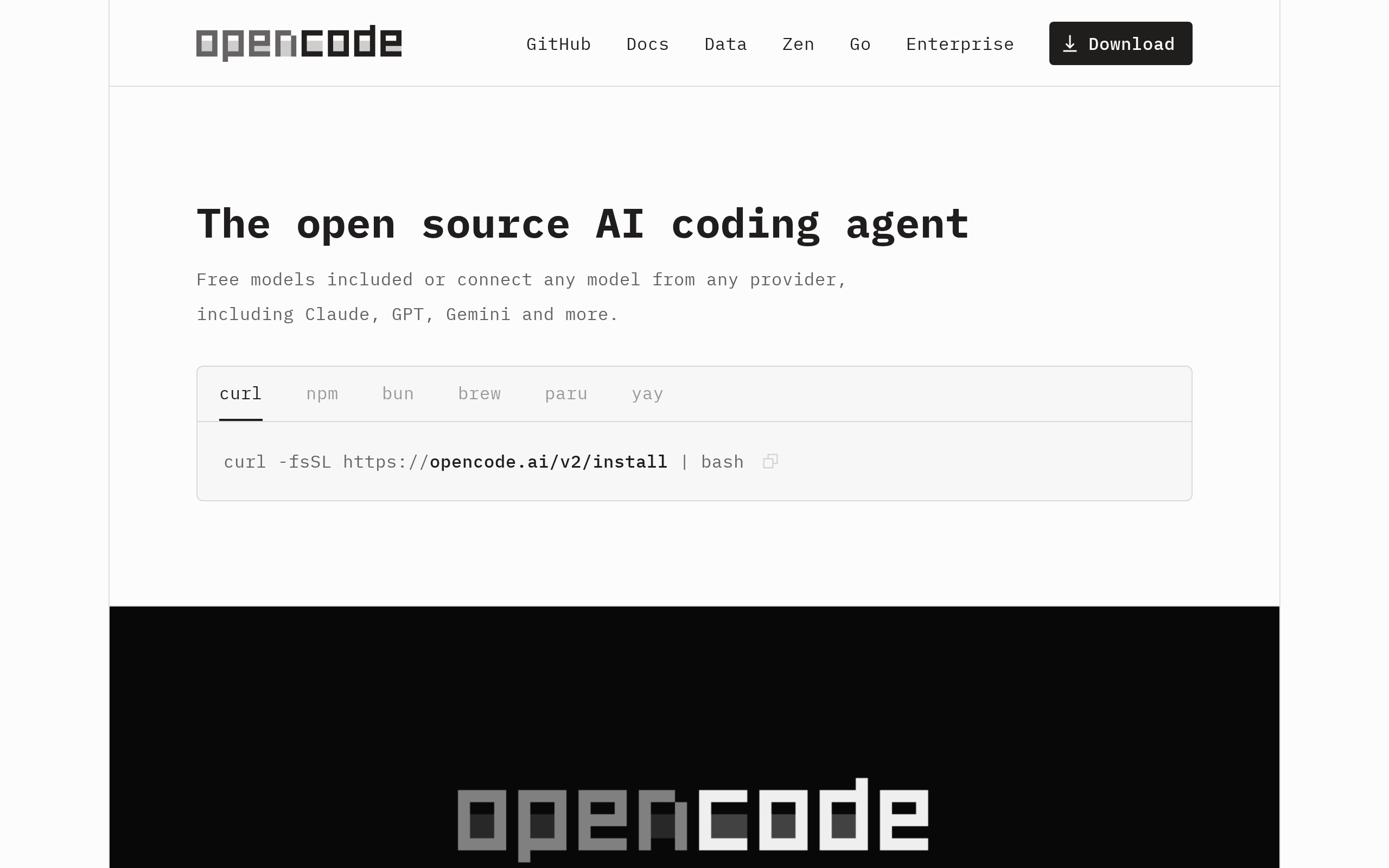
- Selecting an agent execution harness or developer IDE environment. Deploy DeepSeek Harness updated to version 0.2.1-rc.1 or higher, for which V4.1-Flash-1017 received specific training optimizations. If using third-party wrappers, OpenCode supports the model natively for free (limited to a 200KB context window) and can be installed via curl on macOS/Linux or via choco, scoop, and npm on Windows. Tencent CodeBuddy and WorkBuddy can also be used.
- Agent workflows requiring live web searching and HTML/text extraction. Use DeepSeek's native Search and Fetch interfaces directly inside DeepSeek Harness, Claude Code, or Codex pipelines. Take advantage of domain, language, and time filters or Markdown body extraction at zero cost during the free trial running until 00:00 on November 1, 2026 (priced thereafter at 5 yuan per 1,000 successful requests, with failed, empty, or timed-out requests not billed).
- Deploying code to production environments involving payments, permissions, privacy, or production infrastructure. Do not leave autonomous loops unmonitored. While self-feedback reinforcement learning handles prototyping and internal tools well, the source material notes that deployments involving sensitive infrastructure still require manual review, automated testing, and rollback strategies.
- High-throughput enterprise pipelines requiring high parallel concurrency. Design queuing architecture to respect the concurrency limit of 20 requests per account enforced on the DeepSeek V4.1 Flash API.
Harness sandboxing and cross-border API routing
According to appinn, DeepSeek released an open-source agent framework called DeepSeek Harness. Updating to version 0.2.1-rc.1 or higher is mandatory to unlock its full capabilities, according to woshipm. The underlying model, DeepSeek V4.1-Flash-1017, was trained specifically for DeepSeek Harness. That training pays off elsewhere too. woshipm notes that Tencent CodeBuddy and WorkBuddy share those execution gains.
Concurrency limits set strict operational borders, and DeepSeek V4.1 Flash restricts each account to 20 concurrent requests.
Agent execution loops rely on two self-developed interfaces: Search and Fetch. DeepSeek's Search filters queries by domain and language, alongside publication time parameters, and Fetch extracts target page bodies and converts them directly into Markdown. Both tools function inside DeepSeek Harness, Claude Code, and Codex workflows using the DeepSeek API. Pricing remains low. DeepSeek charges 5 yuan per 1,000 successful requests, or 0.005 yuan per query. Failed calls cost nothing, and empty or timed-out requests are never billed. Access is covered by a free trial running until 00:00 on November 1, 2026.
Routing matters across regional networks. woshipm points out that developers in China can route Claude Code workflows through Code80 endpoint configurations. Setting up the client environment requires choosing an appropriate package channel. According to appinn, OpenCode installs on macOS and Linux by running curl -fsSL https://opencode.ai/v2/install | bash. For Windows users, OpenCode recommends Windows Subsystem for Linux. Native Windows installations can run through Chocolatey via choco install opencode, Scoop via scoop install opencode, or npm via npm install -g opencode-ai.
Engineers running autonomous agent loops must work within hard boundaries. DeepSeek V4.1 Flash imposes a concurrency limit of 20 requests per account, requiring disciplined queue management. Developer tests cited by woshipm recorded output speeds exceeding 500 tokens per second, with multiple instances topping 300 tokens per second. The runway is brief. The test version is scheduled to expire on September 10.
DeepSeek's feedback survey asks testers whether this intermediate version can fully replace the online DeepSeek V4 Pro, which was officially released on August 13.
woshipm's author argues that DeepSeek V4.1 Flash is likely a transitional version before the new architecture formally integrates into DeepSeek's official product line. That rollout followed July 31, when the official API for DeepSeek V4 Flash launched, and August 21, when DeepSeek launched V4 Flash Vision Exp to support image input.
For readers outside China
- Availability: DeepSeek V4.1-Flash-1017 is available via DeepSeek's official web interface, mobile app, and API endpoints. It is accessible through developer tooling including DeepSeek Harness (version 0.2.1-rc.1 or higher), OpenCode (available across macOS and Linux via a curl installation script, or Windows via WSL, Chocolatey, Scoop, and npm), Tencent CodeBuddy, and WorkBuddy. Chinese developers can also connect it to Claude Code workflows using Code80. Global regional restrictions or IP geoblocking details are not disclosed in sources.
- Pricing: API pricing charges 0.04 yuan per million tokens for cached input hits during peak hours and 8 yuan per million tokens for output. Native Search and Fetch interfaces cost 5 yuan per 1,000 successful requests (0.005 yuan per request; failed, empty, or timed-out calls are free), with a free trial available until 00:00 on November 1, 2026. Third-party client OpenCode offers the model for free with a 200KB context window limit, while both OpenCode and Command Code offer six times the V4.1 Flash quota on their $10 subscription plans.
- Closest Western equivalents: GPT-6.1 Sol; Claude Fable 5; Opus 5; GPT-6 Astra; Gemini 4 Argon; Claude Cowork; Claude Code; Codex
- Data residency: Data residency, server hosting regions, and cross-border transmission rules are not disclosed in sources. The model is developed and hosted by China-based DeepSeek, billed in Chinese yuan (RMB) via domestic API structures, and integrates directly with domestic development ecosystems like Tencent CodeBuddy and Code80.
Sources
- woshipm DeepSeek新模型发布,性能涨了费用降了,许愿式编程成真 https://woshipm.com/ai/6480375.html
- appinn OpenCode 免费提供 DeepSeek V4.1 Flash 模型 https://appinn.com/opencode-free-deepseek-v4-1-flash
- woshipm DeepSeek突然上新!V4.1 Flash开启内测:新架构+原生多模态,直指V4 Pro? https://woshipm.com/ai/6461756.html
- ifanr 我向新版 DeepSeek 许了个愿,4 块钱让特斯拉飞起来 https://ifanr.com/1684880
The evidence: 34 facts from 4 Chinese articles
Each line below was extracted from the article it sits under, in Chinese, before any of this was written. The writing is done from these and never from the source prose - that separation is structural, not a promise. How we work.
appinnOpenCode 免费提供 DeepSeek V4.1 Flash 模型
- OpenCode announced on X that it is offering the DeepSeek V4.1 Flash model for free.
- Users can access DeepSeek V4.1 Flash in OpenCode by updating the program and entering the command /model.
- The DeepSeek V4.1 Flash model provided in OpenCode has a context window limit of 200KB.
- OpenCode can be installed on macOS and Linux by running curl -fsSL https://opencode.ai/v2/install | bash.
- OpenCode recommends that Windows users run the tool via Windows Subsystem for Linux (WSL).
- OpenCode can be installed natively on Windows using Chocolatey via the command choco install opencode.
- OpenCode can be installed natively on Windows using Scoop via the command scoop install opencode.
- OpenCode can be installed natively on Windows using npm via the command npm install -g opencode-ai.
- DeepSeek released an open-source agent framework named DeepSeek Harness.
ifanr我向新版 DeepSeek 许了个愿,4 块钱让特斯拉飞起来
- DeepSeek released DeepSeek V4.1 Flash-1017 on a Saturday following an earlier update to V4.1 Flash in September.
- DeepSeek stated in its update notes that V4.1 Flash enhanced its capability to build games and 3D projects from scratch using self-feedback-based reinforcement learning.
- DeepSeek charges 0.04 yuan per million tokens for cached input hits during peak hours and 8 yuan per million tokens for output.
- Generating a 3D Tesla flight telemetry webpage using DeepSeek V4.1 Flash took 35 minutes, consumed 37.52 million input tokens with a 99.6% cache hit rate, produced 330,000 output tokens, and cost approximately 4 yuan.
- Aside from DeepSeek, Chinese AI developers including Kimi, MiniMax, Zhipu AI, and Qwen released no new open-source models across September and October.
woshipmDeepSeek新模型发布,性能涨了费用降了,许愿式编程成真
- DeepSeek has released DeepSeek V4.1-Flash-1017 across its web interface, mobile app, and API.
- DeepSeek V4.1-Flash-1017 was trained with specific optimizations for DeepSeek Harness.
- DeepSeek Harness must be updated to version 0.2.1-rc.1 or higher to use its full capabilities.
- DeepSeek released self-developed web search capabilities consisting of two interfaces: Search and Fetch.
- DeepSeek's Search interface supports filtering web search results by domain, language, and publication time.
- DeepSeek's Fetch interface extracts the body text of a designated web page and converts it into Markdown.
- DeepSeek's Search and Fetch capabilities can be invoked within DeepSeek Harness, Claude Code, or Codex workflows when using the DeepSeek API.
- DeepSeek charges 5 yuan per 1,000 successful requests for Search and Fetch (equivalent to 0.005 yuan per request), while failed, empty, or timed-out requests are not billed.
- DeepSeek's Search and Fetch features are available on a free trial until 00:00 on November 1, 2026.
- Developers in China can configure API endpoints using Code80 to integrate Claude Code workflows into existing environments.
woshipmDeepSeek突然上新!V4.1 Flash开启内测:新架构+原生多模态,直指V4 Pro?
- DeepSeek launched internal closed testing for an intermediate model version named DeepSeek V4.1 Flash.
- Developers can call DeepSeek V4.1 Flash through the existing API base_url using the model identifier deepseek-v4.1-flash-expires-on-0910.
- The API pricing for DeepSeek V4.1 Flash is the same as that for DeepSeek V4 Flash.
- DeepSeek V4.1 Flash imposes a concurrency limit of 20 requests per account.
- The DeepSeek V4.1 Flash test version is scheduled to expire on September 10.
- DeepSeek's feedback survey for V4.1 Flash specifically asks testers whether the intermediate version can fully replace the online DeepSeek V4 Pro.
- Early developer tests reported by Zhidx recorded output speeds exceeding 500 tokens per second for DeepSeek V4.1 Flash, with multiple instances topping 300 tokens per second.
- The official API for DeepSeek V4 Flash was launched on July 31.
- DeepSeek V4 Pro was officially released on August 13.
- DeepSeek launched V4 Flash Vision Exp, which supports image input, on August 21.