DeepSeek Harness is turning the agent plugin model from an app-store metaphor into a workspace assembly problem. Woshipm reported that developer preview version 0.1 went online on the evening of August 13, then passed 100000 GitHub stars in 3 days and had more than 4300 third-party open-source plugins after the same span. The peak was 99 plugins per hour. That is the obvious growth story, but it is not the useful one.
The sharper signal is duplication. In the desktop track, woshipm counted 55 projects with the same name, dsh-desktop; among 33 projects named deepseek-harness-desktop, the top-ranked one had 6897 stars while the remaining 32 had 255 stars combined.
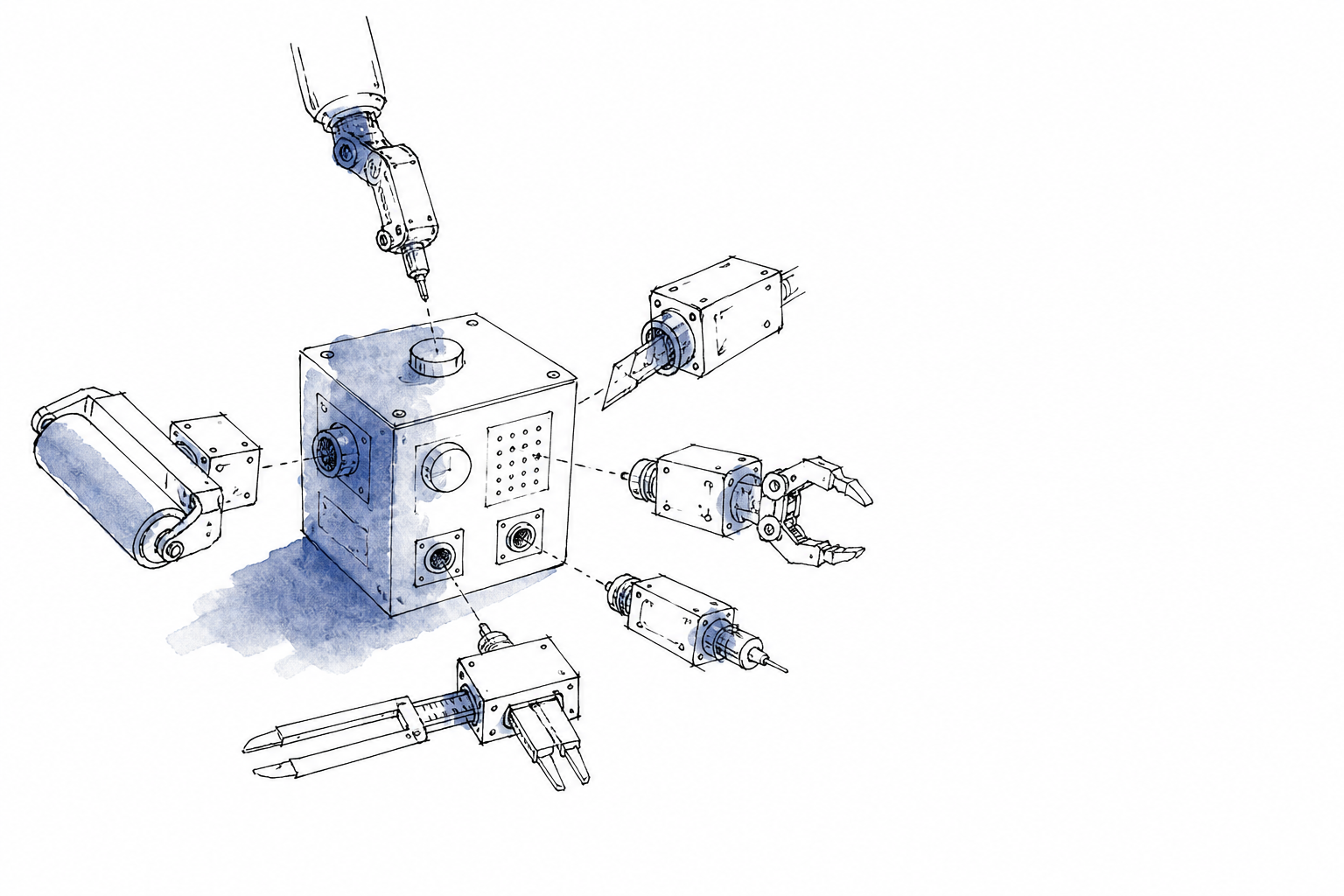
That pattern makes Harness less like a single product to install and more like an environment to inspect. The question shifts from which agent wins on default behavior to which pieces of a daily toolchain should become replaceable, scriptable, and visible enough for an agent to operate inside them.
The plugin count is real, but it is not the product
DeepSeek Harness can look finished if the only number on screen is the plugin count. According to woshipm, it had more than 4300 third-party open-source plugins 3 days after release, and surpassed 100000 GitHub stars in 3 days. Its developer preview version 0.1 went online on the evening of August 13. Plugin growth peaked at 99 plugins per hour.
- evening of August 13DeepSeek Harness developer preview version 0.1 went online
- August 14Omarchy released version 4.0
- noon on August 16DeepSeek Harness plugin data analysis cutoff was reached
- August 19Omarchy held its first plugin competition
- August 21DHH announced the Omacom Foundation
That is ecosystem motion, but not yet product maturity.
The same ledger also describes a sandbox still forming its edges. Woshipm says DeepSeek Harness is in internal testing, has no TUI and no client, and can only be opened through a web interface. Ifanr says the official installation paths are source installation and quick startup through Node.js. It also notes that launching with `npx @deepseek-ai/dsh web` ties the service to the terminal process: close that terminal or end the process, and the service stops.
The repository data is noisy too. In the desktop track, woshipm counted 55 projects with the same name, `dsh-desktop`. Among 33 projects named `deepseek-harness-desktop`, the top-ranked one had 6897 stars, while the remaining 32 had 255 stars combined. Woshipm also identified 216 older tag-riding projects that used the `dsh-plugin` tag while being unrelated to DeepSeek Harness; those projects had 47105 stars, accounting for 23%.
Most plugins were small bursts, not hardened tools. Woshipm found that only 87 of the 4300 plugins had more than 100 stars, accounting for 2%. More than half had a production time of no more than 6 hours, from repository creation to last commit, and the median active span was about 3.58 hours. Ifanr adds that Anywhere Lab built a third-party desktop client with 14000 GitHub Stars and a plugin marketplace entry, which shows demand. It also shows the official shape is still incomplete.
From plugin-based agent apps to agent-ready operating environments
| Dimension | DeepSeek Harness | Omarchy 4.0 |
|---|---|---|
| What it is | A detachable plugin-based system built around a Cordis kernel; officially provides `web` and `headless` forms | A Linux distribution |
| Core customization idea | "Everything is a plugin"; software interface, MCP calls, Skills system, sandbox environment, and system prompts can be hot-swappable plugins | System configuration changed into Lua scripts; a plugin is a Git repository |
| Where the agent runs | Currently has no TUI and no client, and can only be opened in a web interface; quick launch can normally be opened in a browser at http://127.0.0.1:3080 | Installs AI directly into the operating system and lets users tell it what they want in one sentence so it can operate the computer for them |
| Inspectable execution | Has a trajectory page showing tool calls, assistant replies, context injection, and Token usage; `dsh --profile web --dump-config` can show which plugins actually start | External programs can directly send commands to the Omarchy 4.0 shell |
| Replaceable components | Model adapters, tool registries, session logs, and the Agent Loop itself are plugins; supports adding third-party large models in settings | During boot setup, users can choose one of nine providers as the system default programming Agent, including Claude Code, Codex, Gemini, Grok, and Copilot |
| Workflow primitives exposed to users | Web interface for sessions, workspaces, and settings; Agent Loop; tool system; session records; permission policy; plugin system | Status bar, launcher, menus, notifications, and lock screen are all inside Quickshell |
| Permission and approval model | Permission policy blocks before high-risk operations; pops up notifications when it needs the user to make a decision or approve authorization | not covered |
| Plugin ecosystem signal | More than 4300 third-party open-source plugins 3 days after release; plugin growth peaked at 99 plugins per hour | More than 500 plugins one week after release; community wrote 1,074 plugins within ten days of release |
| Quality and noise signal | Among 4300 plugins, only 87 projects had more than 100 stars, accounting for 2%; the source identified 216 older tag-riding projects | not covered |
| Desktop/client ecosystem | Officially no client; Anywhere Lab developed a third-party desktop client with 14000 GitHub Stars and a plugin marketplace entry | The desktop environment was rewritten into one process called Quickshell |
| Installation or startup | Officially provides installing from source and quick startup through Node.js; can be installed with `npx @deepseek-ai/dsh web` | System image reduced to under 6GB and installation made 30% faster |
| Funding or governance | not disclosed in sources | DHH announced the Omacom Foundation; its first $8 million came from eight people, with each person contributing $1 million |
| Best-fit user, according to sources | More suitable for developers studying Agent Loop, context, and tool execution mechanisms; teams building Agent products; heavy users replacing models, tools, sandboxes, interfaces, and permission policies | not covered |
Everything is a plugin changes what users are trusting
DeepSeek Harness asks users to trust a stack, not a single extension. According to woshipm, its core design is "everything is a plugin," with a detachable system built around the Cordis kernel. That is broader than a marketplace idea. The software interface, MCP calls, Skills system, sandbox environment, and system prompts can all be treated as hot-swappable parts.
The trust boundary moves inward.
Woshipm describes model adapters, tool registries, session logs, and the Agent Loop itself as plugins. The same design includes a tool system for executing commands and file operations, plus session records for restoring, forking, and replaying context. That means a plugin can sit close to the places where an agent decides what to ask the model, what tool to call, and what previous context to carry forward.
Permission policy becomes the practical brake. DeepSeek Harness includes a policy layer that blocks before high-risk operations, and ifanr says it pops up notifications when it needs a user decision or authorization approval. Those prompts matter because the tool system is not decorative. It is the path toward local files and command execution.
Inspection has to happen before convenience wins. Woshipm notes that `dsh --profile web --dump-config` can show which plugins DeepSeek Harness actually starts. That command is less exciting than a new agent skill, but it answers the first operational question: what is loaded, and therefore what could influence behavior?
The official split between `web` and `headless` also changes the risk shape. Woshipm says `web` is a complete application with a browser interface, while `headless` has no server and receives one task before returning a result. Ifanr also points to a trajectory page showing tool calls, assistant replies, context injection, and Token usage. For practitioners, that page is where trust becomes inspectable.
Installation is getting easier than evaluation
DeepSeek Harness lowers the first barrier in a very familiar way. A command line, then a browser tab. According to ifanr and woshipm, the quick path is `npx @deepseek-ai/dsh web`, and ifanr says the service normally opens at `http://127.0.0.1:3080`. The official routes are installing from source or starting through Node.js; the source route begins with `git clone https://github.com/deepseek-ai/deepseek-harness`.
That matters because the product does not yet ask beginners to choose a full client stack before seeing the interface.
It is still a web-first tool. Woshipm notes that DeepSeek Harness currently has no TUI and no client, and can only be opened through a web interface.
Even that setup step is being delegated. Ifanr says Codex can be given the DeepSeek Harness GitHub repository link and full access permissions to install it locally. The same outlet says WorkBuddy can do the local deployment when prompted with the repository and the target address `http://127.0.0.1:3080`. This is the practical direction: installation becomes another agent task, not a ritual the user must memorize.
Skills make the entry point feel even lighter. Ifanr gives the example of a PPT Skill, ppt-master, installed by sending the Skill link `https://github.com/hugohe3/ppt-master/blob/main/skills/ppt-master/SKILL.md` in the chat box. Anywhere Lab's third-party desktop client also adds a plugin marketplace entry compared with the official WebUI. But easier discovery is not the same as proof of usefulness.
The evaluation problem shows up in the visible add-ons. Ifanr counted 189 skin plugins in the DSH skin market, including Deep Sea Maid Workshop, Back to 2005 advertising portal website, ocean skin, sliding ancestor transformation, and sticky notes. Those entries may make the workspace feel alive, but they do not by themselves prove better agent loops, safer tool execution, or cleaner context handling.
Woshipm's author frames the stronger fit more narrowly: developers studying Agent Loop mechanics, teams building Agent products without starting from zero, and heavy users who want to replace models, tools, sandboxes, interfaces, and permission policies themselves. Installation is becoming casual. Evaluation is becoming the actual work.
The useful lesson today is observability, not replacement
DeepSeek Harness is most useful today as a way to watch an agent work, not as an automatic replacement for Claude Code, Codex, Cursor, or a stable IDE. That distinction matters because the project itself was developed with Claude Code, according to woshipm, and ifanr describes Codex and WorkBuddy as tools that can install it locally from the GitHub repository or deploy it to `http://127.0.0.1:3080`. The point is not that the harness makes those tools obsolete. It shows which parts of an agent session should be visible.
The valuable surface is the trace.
ifanr says DeepSeek Harness can split a user request into multiple trackable tasks, then use goal mode to keep those tasks tied to the original requirement. It also has permission notifications when a decision or authorization is needed. Its trajectory page exposes tool calls, assistant replies, context injection, and Token usage, which turns an agent run from a black-box chat into something closer to an inspectable build log.
That is why model switching matters less as a leaderboard claim and more as an evaluation tool. woshipm notes that DeepSeek Harness supports adding third-party large models in settings, and its Agent presets include standard mode and PTC mode, where the Code Mode SDK lets the model combine multi-step operations with TypeScript programs. The official forms also separate usage patterns: `web` is a browser application, while `headless` takes one task and returns a result. Those choices let teams compare behavior across model, interface, and execution style.
The cost evidence is still narrow. woshipm cites one run with DeepSeek-V4-Flash: 1 round, 14 steps, LLM 3m55s, tool calls 18.2s, average first token 1.2s, 112 tok/s, cache hit 93%, input 680K tok, and output 24.5K tok. Useful data, but not a budget model.
The same caution applies to multimodal work. The 0820 update log added native image-request configuration for the DeepSeek adapter, image-text input for `/goal` and `/plan`, and file or session references through the `@` menu. ifanr also notes that DeepSeek-V4-Pro is not multimodal, so Harness can send images only to models that support vision. Before that update, image-heavy multi-turn chats could crash from Token overrun or unsupported API formats. Observability is the practical lesson because it makes those failure modes findable.
When to assemble the agent environment, and when to leave it alone
- You want to study or modify how an agent actually works rather than just use a finished coding assistant. Use DeepSeek Harness. Its design exposes the Agent Loop, model adapters, tool registries, session logs, sandbox behavior, system prompts, and permission policy as replaceable plugin components, and `dsh --profile web --dump-config` can show which plugins actually start.
- Your team is building an agent product and does not want to start from zero. Use DeepSeek Harness as a base layer. The source material describes it as more suitable for teams building their own Agent products, with official `web` and `headless` forms, a Cordis-driven plugin system, session records for restoring, forking, and replaying context, and a tool system for commands and file operations.
- You want a local browser-based agent workspace with inspectable task progress and approval gates. Try DeepSeek Harness through `npx @deepseek-ai/dsh web`. The sources say it normally opens at `http://127.0.0.1:3080`, can split a request into multiple trackable tasks, shows a trajectory page with tool calls, assistant replies, context injection, and Token usage, and asks for user decisions or authorization before certain operations.
- You need a polished desktop client or terminal UI today. Do not assume the official DeepSeek Harness provides that. The sources say DeepSeek Harness currently has no TUI and no client, and can only be opened in a web interface. A third-party Anywhere Lab desktop client exists and adds a plugin marketplace entry, but it is not described as the official client.
- You want the agent environment to include the desktop operating system itself. Watch Omarchy rather than DeepSeek Harness. Omarchy is a Linux distribution; Omarchy 4.0 rewrote the desktop environment into one process called Quickshell, put the status bar, launcher, menus, notifications, and lock screen inside it, changed system configuration into Lua scripts, and lets external programs directly send commands to the shell.
- You are evaluating plugin ecosystems by raw plugin count or GitHub stars. Be cautious. DeepSeek Harness had more than 4300 third-party open-source plugins 3 days after release and surpassed 100000 GitHub stars in 3 days, but only 87 projects among 4300 had more than 100 stars, 216 older tag-riding projects were identified as unrelated, and more than half of plugins had a production time of no more than 6 hours.
Omarchy shows where the harness may go next
DeepSeek Harness stops at the application boundary. Its "everything is a plugin" design, described by woshipm, makes model adapters, tool registries, session logs, and the Agent Loop replaceable inside the agent shell. Omarchy points to the next boundary: the desktop itself. According to geekpark, Omarchy is a Linux distribution, and version 4.0 released on August 14 with AI installed directly into the operating system.
That matters because Omarchy 4.0 does not only add an assistant window. Geekpark says the whole desktop environment was rewritten into one process called Quickshell, with the status bar, launcher, menus, notifications, and lock screen all inside it. System configuration moved into Lua scripts. A plugin is a Git repository.
External programs can send commands directly to the shell.
This is the same harness idea, lowered one layer, and the provider choice makes the direction clearer. During boot setup in Omarchy 4.0, users can choose one of nine providers as the default programming Agent, including Claude Code, Codex, Gemini, Grok, and Copilot. The agent is no longer just a product picked after login. It becomes part of how the machine is assembled.
The plugin numbers show why this matters, but also why caution belongs here. Geekpark reported more than 500 plugins one week after Omarchy 4.0, then 1,074 plugins within ten days. Omarchy held its first plugin competition on August 19. That pace resembles the DeepSeek Harness pattern: once the extension point is simple enough, users stop waiting for the vendor roadmap.
For now, this remains mostly a Linux path. Omarchy 4.0 reduced the system image to under 6GB and made installation 30% faster, according to geekpark, but its deeper bet is not installation speed. It is an AI-readable desktop: Lua for configuration, Git repositories for plugins, Quickshell for visible surfaces, and shell commands for action.
Treat DeepSeek Harness as a sandbox before it becomes a daily driver. Run it with `npx @deepseek-ai/dsh web`, and remember that closing the terminal or ending the process stops the service; according to ifanr, npm uninstall is not required.
In your own work, watch the trajectory page first. It exposes tool calls, assistant replies, context injection, and Token usage, which makes it a good place to see where an agent is guessing, carrying stale context, or spending budget. The 0820 update also matters: `/goal`, `/plan`, and the `@` menu can accept image-text input when the chosen model supports vision. DeepSeek-V4-Pro does not.
Audit the boring parts next. Local folders, repeatable commands, text config, and plugin-like components are the places where an agent can act safely. Cordis handles plugin loading, unloading, and dependencies; the skin market's 189 plugins show how quickly the surface area can grow.
For readers outside China
- Availability: DeepSeek Harness is open-source enough to be installed from source with `git clone https://github.com/deepseek-ai/deepseek-harness` or launched through Node.js with `npx @deepseek-ai/dsh web`, but the sources also say it is currently in internal testing. The official forms are `web`, a browser interface, and `headless`, which receives one task before returning a result. The source material does not say whether it is officially available outside China, whether hosted services are region-limited, or whether support is offered in English. Omarchy is described as a Linux distribution, but availability outside China is not disclosed in sources.
- Pricing: Pricing is not disclosed in sources for DeepSeek Harness, the Anywhere Lab desktop client, Omarchy, or Omarchy plugins. The only funding figure given is that the Omacom Foundation's first $8 million came from eight people, with each person contributing $1 million; that is foundation funding, not product pricing.
- Closest Western equivalents: Claude Code, Codex, Gemini, Grok, and Copilot are named as programming Agent provider choices in Omarchy 4.0.; DeepSeek Harness is closest to an inspectable agent runtime or agent workbench rather than a single coding assistant: it exposes model adapters, tool registries, session logs, the Agent Loop, MCP calls, Skills, sandbox environment, and prompts as plugins.; Omarchy is closer to an AI-native Linux desktop environment than to a plugin inside an editor, because its shell, configuration, and desktop components are made scriptable and commandable.
- Data residency: The sources do not disclose data residency, hosting location, telemetry behavior, retention policy, or whether prompts and files are sent to servers outside the user's machine. DeepSeek Harness can run locally in a browser at `http://127.0.0.1:3080`, supports adding third-party large models in settings, and can send images to models that support vision after the multimodal update, but the source material does not cover where model requests are processed or stored.
Sources
- woshipm DeepSeek Harness 上线 3 天,4300 个第三方插件都在干什么? https://woshipm.com/ai/6447872.html
- woshipm DeepSeek Harness 安装,初体验,没有惊喜。 https://woshipm.com/share/6447430.html
- ifanr 零基础速通DeepSeek Harness,带你玩转赛博乐高 https://ifanr.com/1675781
- geekpark 硅谷押注的下一个 Harness,是整个桌面操作系统 https://geekpark.net/news/369298
The evidence: 73 facts from 4 Chinese articles
Each line below was extracted from the article it sits under, in Chinese, before any of this was written. The writing is done from these and never from the source prose - that separation is structural, not a promise. How we work.
geekpark硅谷押注的下一个 Harness,是整个桌面操作系统
- Omarchy is a Linux distribution.
- Omarchy released version 4.0 on August 14.
- The Omarchy community wrote 1,074 plugins within ten days of the release of Omarchy 4.0.
- DHH announced the creation of the Omacom Foundation on August 21.
- The Omacom Foundation's first $8 million came from eight people, with each person contributing $1 million.
- The eight founding sponsors of the Omacom Foundation include Michael Dell, Jack Dorsey, the CEOs of Shopify and Stripe, the CEO of Cloudflare, the co-founder of Oculus, and the two founders of 37signals.
- DHH is one of the two authors of the bestselling book Rework.
- DHH is the creator of Ruby on Rails.
- GitHub and Shopify still run on Ruby on Rails.
- Omarchy 4.0 rewrote the entire desktop environment into one process called Quickshell.
- In Omarchy 4.0, the status bar, launcher, menus, notifications, and lock screen are all inside Quickshell.
- Omarchy 4.0 changed all system configuration into Lua scripts.
- In Omarchy 4.0, a plugin is a Git repository.
- External programs can directly send commands to the Omarchy 4.0 shell.
- During the boot setup stage in Omarchy 4.0, users can choose one of nine providers as the system default programming Agent, including Claude Code, Codex, Gemini, Grok, and Copilot.
- Omarchy 4.0 reduced the system image to under 6GB and made installation 30% faster.
- The Omarchy plugin market had more than 500 plugins one week after the release of Omarchy 4.0.
- Omarchy held its first plugin competition on August 19.
- The Omacom Foundation's $8 million is intended to hold trademarks, maintain infrastructure, promote Omarchy, and fund open-source projects that Omarchy depends on.
ifanr零基础速通DeepSeek Harness,带你玩转赛博乐高
- DeepSeek officially provides two installation methods for DeepSeek Harness: installing from source and quick startup through Node.js.
- The source-install command for DeepSeek Harness is git clone https://github.com/deepseek-ai/deepseek-harness.
- DeepSeek Harness can be quickly launched through Node.js with the command npx @deepseek-ai/dsh web.
- After running the quick-start command, DeepSeek Harness can normally be opened in a browser at http://127.0.0.1:3080.
- Anywhere Lab has developed a third-party desktop client based on the open-source DeepSeek Harness repository.
- The Anywhere Lab desktop client for DeepSeek Harness had 14000 GitHub Stars at the time described.
- The Anywhere Lab desktop client adds a plugin marketplace entry compared with the official WebUI.
- DeepSeek Harness can split a user request into multiple trackable tasks and use goal mode to keep tasks aligned with the original requirement.
- DeepSeek Harness pops up notifications when it needs the user to make a decision or approve authorization.
- A PPT Skill named ppt-master can be installed in DeepSeek Harness by sending the Skill link https://github.com/hugohe3/ppt-master/blob/main/skills/ppt-master/SKILL.md in the chat box.
- DeepSeek Harness has a "trajectory" page that shows tool calls, assistant replies, context injection, and Token usage.
- The 0820 update log for DeepSeek Harness stated: "New feature: enhanced multimodal support, the DeepSeek model adapter supports configuration to enable native image requests, /goal, /plan and other commands can accept image-text input, and the @ menu supports referencing files and sessions."
- DeepSeek-V4-Pro is not a multimodal model and cannot read image content in DeepSeek Harness.
- After the multimodal update, DeepSeek Harness can send images to models that support vision, but V4-Pro itself does not accept images.
- DeepSeek Harness uses the Cordis kernel for plugin loading, plugin unloading, and dependency management.
- The DSH skin market at https://kingofsoysauce.github.io/dsh-skin-market/ contained 189 skin plugins, including Deep Sea Maid Workshop, Back to 2005 advertising portal website, ocean skin, sliding ancestor transformation, and sticky notes.
- If DeepSeek Harness is launched with npx @deepseek-ai/dsh web, closing the terminal running it or ending the corresponding process stops the service, and npm uninstall is not required.
woshipmDeepSeek Harness 上线 3 天,4300 个第三方插件都在干什么?
- DeepSeek Harness had more than 4300 third-party open-source plugins 3 days after its release.
- DeepSeek Harness surpassed 100000 GitHub stars in 3 days.
- DeepSeek Harness uses an "everything is a plugin" architecture.
- DeepSeek Harness itself is described as a detachable plugin-based system built around a Cordis kernel.
- DeepSeek Harness can treat its software interface, MCP calls, Skills system, sandbox environment, and system prompts as hot-swappable plugins.
- DeepSeek Harness developer preview version 0.1 went online on the evening of August 13.
- DeepSeek Harness's official website displayed the "community plugins" entry alongside the source code entry.
- The data analysis cutoff time was noon on August 16.
- DeepSeek Harness plugin growth peaked at 99 plugins per hour.
- Plugins related to basic Agent capabilities accounted for nearly 50% of DeepSeek Harness plugins.
- 17.6% of DeepSeek Harness plugins focused on the DeepSeek Harness UI.
- In the DeepSeek Harness desktop track, 55 projects had the same name, dsh-desktop.
- Among 33 projects named deepseek-harness-desktop, the top-ranked project had 6897 stars, while the remaining 32 projects had 255 stars combined.
- There were 69 DeepSeek Harness projects for whale desktop pets.
- Among 4300 DeepSeek Harness plugins, only 87 projects had more than 100 stars, accounting for 2%.
- The 216 tag-riding older projects had 47105 stars, accounting for 23%.
- More than half of DeepSeek Harness plugins had a total production time of no more than 6 hours, measured from GitHub repository creation to the last code commit.
- The median active span for DeepSeek Harness plugins was about 3.58 hours.
woshipmDeepSeek Harness 安装,初体验,没有惊喜。
- DeepSeek Harness was released.
- DeepSeek Harness was developed with Claude Code.
- DeepSeek Harness can be installed with the command `npx @deepseek-ai/dsh web`.
- DeepSeek Harness currently has no TUI and no client, and can only be opened in a web interface.
- DeepSeek Harness is currently in internal testing.
- DeepSeek Harness's design includes a Web interface for sessions, workspaces, and settings.
- DeepSeek Harness's design includes an Agent Loop for organizing model requests and tool calls.
- DeepSeek Harness's design includes a tool system for executing commands and file operations.
- DeepSeek Harness's design includes session records for restoring, forking, and replaying context.
- DeepSeek Harness's design includes a permission policy that blocks before high-risk operations.
- DeepSeek Harness's design includes a plugin system for replacing, combining, and extending capabilities.
- DeepSeek Harness supports adding third-party large models in its settings.
- DeepSeek Harness has Agent preset modes, including a default standard mode and a PTC mode that can use the Code Mode SDK to let the model combine multi-step operations with TypeScript programs.
- DeepSeek Harness's core design is called "everything is a plugin."
- In DeepSeek Harness, model adapters, tool registries, session logs, and the Agent Loop itself are plugins.
- DeepSeek Harness's underlying layer is driven by Cordis.
- DeepSeek Harness officially provides two main forms: `web`, a complete application with a browser interface, and `headless`, which has no server and receives one task before returning a result.
- Running `dsh --profile web --dump-config` can show which plugins DeepSeek Harness actually starts.
- In one test of DeepSeek Harness with DeepSeek-V4-Flash, token usage was 1 round - 14 steps, LLM 3m55s, tool calls 18.2s, average first token 1.2s, 112 tok/s, cache hit 93%, input 680K tok, and output 24.5K tok.