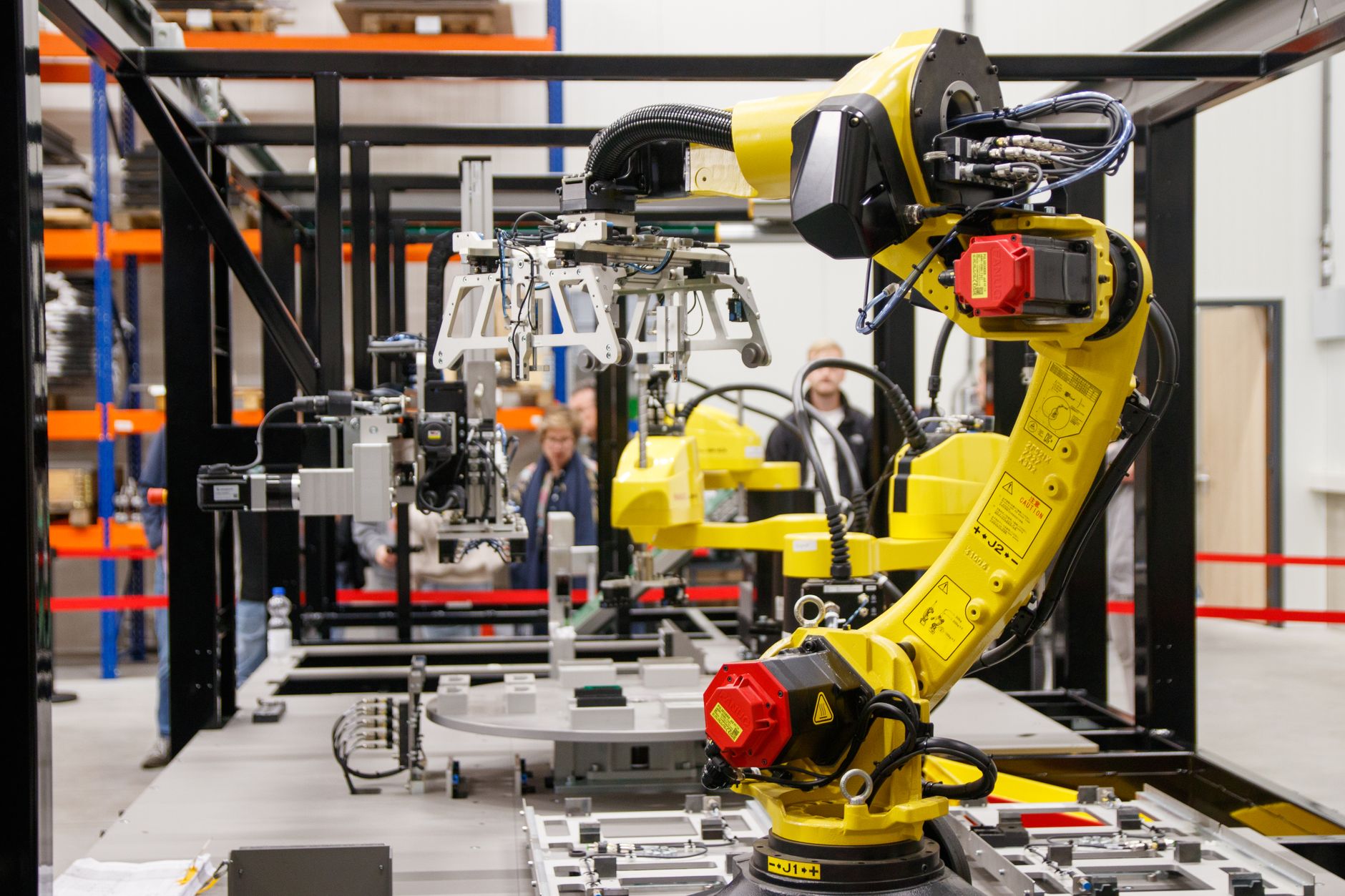
Atlas reconstructs a photographed real space and can generate RGB views and depth information for a robot moving along different routes, turning spatial capture into the start of a robot test loop.
According to woshipm, the system takes a camera position and movement trajectory in 3D space, then builds a scene from one or more images as depth maps. It can also produce point clouds or 3D Gaussian Splat. That makes its value less about producing a convincing virtual room than about creating a controllable setting for testing a proposed action before hardware attempts it.
The boundary matters. woshipm characterizes Atlas as reconstruction and spatial rendering moving toward simulation, not evidence of complete physical-world mastery. Early access was limited to some partners, and World Labs had not publicly released model weights or training data. It had also not publicly released pricing or a formal API for general developers. The practical question is therefore narrower: when can a reconstructed world predict an action well enough to improve the next real attempt?
Atlas can reconstruct a scene before it can predict a task
Atlas begins with scene state rather than a finished camera clip. It accepts a camera position and movement trajectory in 3D space, according to woshipm, and can reconstruct spaces from one or more images. It can output depth maps and point clouds. It also produces 3D Gaussian Splat. In a robot demonstration, woshipm says Atlas reconstructed an ordinary-camera view of a real environment, then produced possible RGB and depth views along alternative robot routes.
- September 2022Zhang Yi founded Future Far Away to develop household robots
- January 2026Future Far Away completed a 200 million yuan angel round
- March 2026Future Far Away completed a Boyu Capital-led financing round
- July 2026Future Far Away completed a Pre-A round with ByteDance as an investor
A convincing view does not establish that the underlying state predicts an action. That gap matters when a rendered route becomes a hardware decision.
ifanr reports that World Labs claims video generation up to 1 minute at 1440p from 1 to 6 ordinary photos and a specified camera trajectory. The same account says inferred unseen areas depend on model priors. Larger viewpoint changes and longer paths can produce geometric drift or altered object shapes. Textures can flicker too.
World Labs also presents Atlas as a Real-to-Sim system that can form a high-precision 3D physical space from two 24-frame videos. It claims RGB and depth views for an onboard robot camera, plus force feedback for an arm touching a rigid box or pulling a hinged cabinet door. But, as woshipm notes, early access was limited at release. Some partners received it. There was no public full paper or model weights. Training data were not public. Pricing was undisclosed, and no formal API was available. Those limits leave reconstruction and rendering claims short of public proof of complete physical simulation.
How four world-model approaches connect simulation to real-world work
| WorldMind | World Labs Atlas | Nuoyin Intelligent GLOW | Future Far Away Self-Evolving WAM | |
|---|---|---|---|---|
| Primary framing | A memory-enhanced world model and a brain-inspired world-action model | An omni world model for spatial intelligence | A generative embodied foundation-model system | A self-evolving world action model for household tasks |
| Target environment | Limited, agent-relevant "small worlds" | Real spaces reconstructed from images or video, including factories and rooms | Different spaces, lighting conditions, materials, and task combinations | Households |
| Real-world capture or data source | Plans data collection in closed real-world scenarios | Can reconstruct 3D spaces from one or more images; described as Real-to-Sim from two 24-frame videos | Expands limited real-world interaction experience into training distributions | Uses actual results and failure cases from household tasks as training data |
| What is simulated or predicted | Knowledge, memory, inference, and calibration | RGB images and depth information for a robot moving along different routes; force feedback for selected manipulation | Data generation through real-world feedback in a continuous iteration chain | Predictions and actual results from household tasks |
| Action and control layer | A brain-inspired world-action model | Accepts camera position and movement trajectory in 3D space | KnowinBrain and KnowinAgent handle task understanding, planning, and failure recovery; KnowinAct converts policies into executable actions | AVLA breaks complex tasks into hundreds of shorter expert models, including grasping and fine manipulation |
| Hardware deployment | Plans deployment in one or two closed real-world scenarios | Robot demonstrations described; general deployment not covered | KNOWIN-X1, a consumer-grade household robot based on GLOW | Robots have entered about 500 households in Shanghai |
| Feedback-loop status | Plans a loop of data collection, model training, deployment, and data feedback | Not covered | Claims five modules form a continuous iteration chain from data generation to real-world feedback | Uses predictions, actual results, and failure cases as training data |
| Reported evaluation or operational evidence | Ranked first on the WorldArena1.0 open-source leaderboard; top three across multiple WorldArena2.0 tracks | Claims a 25.3 AbsRel x10⁻³ sparse-view reconstruction score; early access only to some partners | Ranked first globally in both tracks of the CVPR 2026 EgoCross Challenge and first overall in Embodied Arena | Claims robot operation improved from one day to one to two months before an on-site maintenance visit |
| Pricing or availability | Not disclosed in sources | Early Access to some partners; pricing and a formal API for general developers had not been publicly released | KNOWIN-X1 is expected to launch formally in 2027 with a price in the tens of thousands of yuan | Robot cost reduced to 20,000 to 30,000 yuan; household trials rent for 3,000 yuan |
Small worlds give a robot a testable boundary
A robot test loop needs a boundary. It needs scale later. Ren Yunfan argues in the outlet that world models should start with limited, agent-relevant "small worlds," rather than attempt to understand everything. For a team, that means defining a closed real-world scenario and the task the agent must handle inside it. WorldMind plans to work with industry partners on one or two such scenarios, linking data collection to training and deployment. Feedback would follow.
The boundary makes failure interpretable.
WorldMind separates its model into knowledge and memory. It also separates inference from calibration. Its memory-enhanced model ranked first on WorldArena1.0's open-source leaderboard and stayed in the top three on multiple WorldArena2.0 tracks, according to the outlet. Those results matter as evidence of model capability, but they do not establish reliable transfer for every physical task. A task-specific environment gives calibration a practical target: the conditions under which an action is expected to work.
Earlier world-model systems also show why a manageable state matters. The system described by woshipm compressed game frames into 32-dimensional latent vectors, then used a recurrent network to predict later vectors. DreamerV3 used fixed hyperparameters across more than 150 tasks. Broad task coverage is useful, yet it does not remove the need to specify which situation a robot must model accurately enough to act.
General physical-AI models expand the available inputs. Nvidia's Cosmos 3 supports text, images, video, ambient sound and actions, while the 4 billion-parameter Cosmos 3 Edge targets local robotic world simulation. The practitioner's question remains narrower: can this defined environment predict the particular action that matters?
The useful architecture separates planning from execution
A world model is best treated as an internal representation that predicts how an environment changes after an action, according to woshipm. That representation need not come from one model type. Latent-state systems can compress relevant conditions. Video-predictive systems can forecast visible consequences. Spatial systems can work directly with 3D space, sensor inputs, and robot actions. Each route can inform planning, but none automatically supplies dependable execution.
The architectural split is simple: maintain state and choose a goal-directed action, then hand the action to a specialist that can perform it.
woshipm describes World Labs' distinction among renderers, simulators, and planners. Renderers produce observations. Simulators preserve world state. Planners select actions around goals. For a robot task, that separation prevents a convincing generated view from being mistaken for a reliable control policy. A planner can use latent predictions to consider consequences. It can also use video or spatial predictions, while an execution model focuses on the physical details that make one action succeed.
Future Far Away's design illustrates the practical value of that division. Its AVLA model breaks complex work into hundreds of shorter expert models, including grasping and fine manipulation. Its Self-Evolving WAM uses predicted outcomes as training data. It also uses actual results and failure cases from household tasks. The action layer therefore does not remain fixed after planning; it is revised against what the hardware actually did.
That loop has operational stakes. Reports indicate robots in about 500 Shanghai households, while Zhang Yi claims maintenance-free operation moved from one day to one to two months. The relevant measure is not a broad claim of world understanding. It is whether planning and specialized execution keep improving the next physical attempt.
A sim-to-real threshold must be defined per action
The threshold is not a single score for a world model. It is a repeatable transfer test for a bounded action: navigate a known route or reach a cabinet handle. For visual navigation, compare RGB and depth views predicted for an onboard camera with what hardware sees along the route; World Labs makes that Atlas rendering claim, according to ifanr. The ifanr author argues that larger viewpoint changes and longer generation paths increase local geometric drift and texture flickering. Completion on the real route is the measure.
That tests views, not contact.
Force feedback needs a stricter gate. World Labs claims Atlas can simulate force feedback when a robotic arm touches a rigid box or pulls a hinged cabinet door, ifanr reports. Each contact task should be run on hardware after simulation, with success defined before testing. If force or friction determines the result, convincing images cannot substitute for a real trial. The same applies when deformation or recovery determines it.
Variation should remain tied to the action boundary. The outlet says KnowinDream expands limited interaction experience into training distributions covering different spaces and lighting conditions. It also covers materials and task combinations. An evaluator can vary those conditions around the same action, then check whether it transfers. The outlet describes KNOWIN-X1 with prone operation on floors and standing operation at cabinets. Its arms each have 7 degrees of freedom. Its maximum dual-arm payload is 6 kg. Transfer is demonstrated only for the action and hardware configuration exercised, within the stated variation range.
Choose a world-model workflow by its ability to close the real-world loop
- You need to explore many variations of a bounded physical task-different spaces, lighting, materials, and task combinations-but have limited real-world interaction data. Use a task-specific data-expansion workflow, not a claim of general understanding. Nuoyin Intelligent describes KnowinDream as expanding limited real-world experience into distributions covering those variations, within a five-module chain from data generation to real-world feedback.
- Your main requirement is reconstructing a site and testing camera or robot routes before deployment. Prioritize controllable spatial inputs and outputs: camera poses or trajectories in, and RGB, depth, point clouds, or 3D Gaussian Splat outputs. Atlas is presented as accepting camera trajectories and reconstructing spaces from images, but its availability was limited to selected Early Access partners and the sources do not establish general real-world predictive reliability.
- A robot must improve after failures in homes or another closed operating environment. Choose a system designed to capture predictions, actual results, and failure cases, then retrain and redeploy. Future Far Away's Self-Evolving WAM uses all three as household-task training data; WorldMind similarly plans a data-collection, training, deployment, and feedback loop in one or two closed real-world scenarios.
- You are evaluating a visually impressive generated scene or video as evidence that a model can guide hardware. Do not treat rendering quality as sufficient. World Labs' own taxonomy separates renderers, which generate observations, from simulators, which maintain world states, and planners, which select goal-directed actions. The source material also notes that larger viewpoint changes and longer generation paths can increase geometric drift, object-shape changes, and texture flickering in Atlas outputs.
Closed loops need records, safeguards, and an exit to reality
A closed loop needs a record of what the system predicted, what happened on hardware, and which correction changed the next attempt. Without that history, a failure can be absorbed into a growing training set without showing whether the simulator or planner was wrong. It can also show whether the policy failed in execution. Responsibility becomes harder to assign when a plausible prediction leads to an incorrect household action.
The record must also be editable and versioned.
A report describes WorldMind as seeking industry partners for a cycle that begins with collection. It then moves through training before deployment and feedback in one or two closed real-world scenarios. Nuoyin Intelligent's GLOW system is presented as five modules connected in continuous iteration, from generated data through real-world feedback. Its KnowinDream component broadens limited interaction data across spaces and lighting conditions. It also covers materials and task combinations, while other components cover planning and recovery. Other components execute actions.
That expansion creates an operational burden. Each synthetic variation needs a link back to the conditions it represents, and each real failure needs enough labeling to distinguish a bad prediction from a bad action. Safeguards matter most where correction is expensive: private household captures, repeat visits, and actions around residents. A report says that Nuoyin Intelligent launched KNOWIN-X1 as a household robot, while Future Far Away's robots entered about 500 Shanghai households. Future Far Away uses predictions, actual results, and household failure cases as training data.
Vendors also need an exit to reality: a defined point where the system stops inferring and seeks confirmation, human intervention, or a new capture. Public scrutiny is difficult when key materials remain unavailable. According to woshipm, World Labs had not publicly released a full paper, weights, or training data at release. It also had not released pricing or a formal API for general developers. A controllable world model therefore requires audit trails around its corrections, plus clear limits on what a simulated success is allowed to authorize.
Set up the loop around a bounded household task, then keep the evidence from every miss. Future Far Away's Self-Evolving WAM uses predicted outcomes, actual results, and failure cases from household work as training data, according to reporting.
The useful test is not a convincing demonstration. Ask which actions are decomposed into specialist models: Future Far Away's AVLA separates complex work into hundreds of shorter expert models, including grasping and fine manipulation. Then track how long hardware runs before intervention. Zhang Yi says its robots moved from one day between on-site maintenance visits to one to two months. About 500 Shanghai households provide a route for collecting execution data; that feedback path matters more than a simulated scene alone.
For readers outside China
- Availability: Public availability outside China is not disclosed in sources. Atlas was available in Early Access only to some partners, with no formal API for general developers at the time described. Future Far Away's robots had entered about 500 households in Shanghai. KNOWIN-X1 was expected to launch formally in 2027.
- Pricing: Atlas pricing had not been publicly released at the time described. Future Far Away reported a robot cost of 20,000 to 30,000 yuan and household trials at 3,000 yuan. KNOWIN-X1 was described as expected to cost tens of thousands of yuan; its final price was not disclosed in sources.
- Closest Western equivalents: Nvidia Cosmos 3: a general-purpose physical-AI model that natively supports text, images, video, ambient sound, and actions; Cosmos 3 Edge is a 4 billion-parameter model for local robotic world simulation.; DreamerV3: a world-model reinforcement-learning system reported as using fixed hyperparameters across more than 150 tasks.; OpenAI Sora: a video-generation system, relevant as a contrast case rather than proof of a controllable simulator; OpenAI reportedly shut it down around March 24, 2026.
- Data residency: The source material does not cover data residency, hosting locations, cross-border data transfer, retention, or enterprise privacy controls for Atlas, WorldMind, Nuoyin Intelligent, or Future Far Away.
Sources
- 36kr 硬氪专访丨公司退市、裁员10万人,前掌门教育CEO创业家庭机器人,获10亿融资 https://36kr.com/p/3952867368648073
- woshipm 世界模型元年:一半火焰,一半冷水 https://woshipm.com/ai/6461298.html
- woshipm 李飞飞发布Atlas:世界模型,到底是个啥? https://woshipm.com/ai/6459382.html
- 36kr 硬氪首发 | 99年同济副教授、前大疆骨干创业世界模型,成立不到一月融资数千万 https://36kr.com/p/3973553316081920
- 36kr 36氪首发 | 天使++轮融资5亿,前华为生成式大模型负责人把家务机器人折进40厘米 https://36kr.com/p/3933076448558212
- ifanr 刚刚,李飞飞掀桌!全球首个多模态世界模型发布,几张照片省掉几百个机位 https://ifanr.com/1678079
The evidence: 65 facts from 6 Chinese articles
Each line below was extracted from the article it sits under, in Chinese, before any of this was written. The writing is done from these and never from the source prose - that separation is structural, not a promise. How we work.
36kr硬氪首发 | 99年同济副教授、前大疆骨干创业世界模型,成立不到一月融资数千万
- WorldMind (寰宇心生) recently completed an angel financing round worth tens of millions of yuan.
- Yuansheng Capital invested in WorldMind's angel round.
- WorldMind will mainly use the financing for team building and expansion, infrastructure, and foundational-model training.
- Dianshi Capital served as WorldMind's exclusive financial adviser.
- WorldMind was established in September 2026.
- WorldMind founder and CEO Ren Yunfan was born in 1999.
- Ren Yunfan was a core algorithm pre-research staff member at DJI.
- Ren Yunfan received his PhD from the University of Hong Kong's MaRS Lab and later conducted postdoctoral research at the University of Zurich's RPG.
- Ren Yunfan was selected as a national-level young talent at age 26 and is a doctoral supervisor and tenured associate professor at Tongji University.
- WorldMind CTO Zhang Qi holds a PhD in artificial intelligence from the University of Technology Sydney.
- Zhang Qi is a national-level young talent and a young scientist on the Ministry of Science and Technology's major Brain Science and Brain-Inspired Intelligence project.
- WorldMind divides its world model into four parts: knowledge, memory, inference, and calibration.
- WorldMind's memory-enhanced world model ranked first on the open-source leaderboard of the WorldArena1.0 world-model benchmark and remained in the top three across multiple WorldArena2.0 evaluation tracks.
- WorldMind's brain-inspired world-action model ranked first globally in the simulation open-source leaderboard for world-action models.
36kr36氪首发 | 天使++轮融资5亿,前华为生成式大模型负责人把家务机器人折进40厘米
- Nuoyin Intelligent (诺因智能), a consumer-grade household embodied-intelligence company, recently completed an Angel++ financing round of 500 million yuan.
- The Angel++ round was led by Matrix Partners China, with participation from Redpoint Ventures, SenseTime Guoxiang Capital, Walden Technology, and the L2F Light Source Entrepreneur Fund.
- Light Source Capital served as the sole financial adviser for Nuoyin Intelligent's Angel++ financing round.
- Nuoyin Intelligent will primarily use the financing for GLOW generative embodied foundation-model research and iteration, team expansion, and engineering validation and mass-production preparation for KNOWIN-X1.
- Nuoyin Intelligent was founded in August 2025.
- Founder Li Yinchuan worked at Huawei's Noah's Ark Lab for five years and previously led its generative foundation-model direction.
- Partner Zhou Kaiwen was previously the head of Huawei's Agent direction and a Huawei Noah's Ark Lab Genius Youth recruit.
- As of July 2026, Nuoyin Intelligent had more than 190 employees, with more than two-thirds holding doctorates or higher degrees.
- Nuoyin Intelligent ranked first globally in both tracks of the CVPR 2026 EgoCross Challenge.
- Nuoyin Intelligent ranked first overall in the Embodied Arena evaluation.
- Nuoyin Intelligent launched KNOWIN-X1 as its first consumer-grade household robot based on the GLOW system.
- KNOWIN-X1 uses a fully foldable dual-arm configuration and has a folded height of less than 40 centimeters.
- When unfolded, KNOWIN-X1 has prone, kneeling, and standing working configurations for floor, tabletop, and cabinet operations, respectively.
- KNOWIN-X1 has 7 degrees of freedom per arm, a maximum dual-arm payload of 6 kg, and 23 degrees of freedom across its full body.
36kr硬氪专访丨公司退市、裁员10万人,前掌门教育CEO创业家庭机器人,获10亿融资
- Zhang Yi founded Zhangmen Education, which listed on the New York Stock Exchange in June 2021.
- Zhangmen Education's market capitalization exceeded $3 billion on its first trading day.
- At its peak, Zhangmen Education had 100,000 employees, 60,000 to 70,000 teachers, and served more than 1 million families.
- Zhangmen Education laid off 100,000 employees within three months after China's Double Reduction policy took effect.
- Zhangmen Education began delisting procedures within one year after the Double Reduction policy took effect.
- Zhang Yi was 31 years old when Zhangmen Education went public.
- Zhang Yi founded Future Far Away (未来不远) in September 2022 to develop household robots.
- Future Far Away iterated through 16 generations of robots over four years.
- Future Far Away developed its own large hollow motors, joints, and torque sensors to reduce robot costs.
- Future Far Away reduced its robot cost to 20,000 to 30,000 yuan and offers household trials at a rental price of 3,000 yuan.
- Future Far Away developed an AVLA model that breaks complex tasks into hundreds of shorter expert models, including models for grasping and fine manipulation.
- Future Far Away's Self-Evolving WAM, or self-evolving world action model, uses predictions, actual results, and failure cases from household tasks as training data.
- Future Far Away's robots have entered about 500 households in Shanghai, and bookings were once scheduled through the end of the year.
- Future Far Away completed three financing rounds totaling nearly 1 billion yuan in six months.
- Future Far Away completed a 200 million yuan angel round in January 2026.
- Future Far Away completed a financing round worth several hundred million yuan in March 2026 that was led by Boyu Capital.
- Future Far Away completed a Pre-A financing round in July 2026, with ByteDance as one of the investors.
ifanr刚刚,李飞飞掀桌!全球首个多模态世界模型发布,几张照片省掉几百个机位
- Atlas is available in Early Access to some partners and is planned to become the underlying model for Marble and other World Labs products.
woshipm世界模型元年:一半火焰,一半冷水
- In March 2026, AMI Labs, founded by Yann LeCun after he left Meta, completed a $1.03 billion seed round at a pre-money valuation of $3.5 billion.
- Nvidia, Samsung, Temasek and Bezos's family fund were investors in AMI Labs' seed round.
- OpenAI reportedly shut down Sora around March 24, 2026.
- OpenAI's $1 billion partnership with Disney for Sora ultimately did not materialize.
- In February 2024, OpenAI wrote in a technical report that scaling video-generation models was a promising path toward building general-purpose simulators of the physical world.
- In 1990, Richard Sutton proposed the Dyna architecture, which combines real experience with imagined experience in reinforcement learning.
- Sutton's experimental data showed that adding imagined training reduced a maze-solving agent's convergence requirement from 25 trials to 3 trials.
- The 2018 paper World Models by Jürgen Schmidhuber and David Ha was one of only 30 oral presentations at NeurIPS that year.
- The World Models system used a variational autoencoder to compress game frames into 32-dimensional latent vectors and a recurrent network to predict subsequent vectors.
- In the World Models system, 99.98% of nearly 5 million parameters were used to build the world model, while the controller had only 867 parameters.
- DreamerV3, published in Nature in 2025, used fixed hyperparameters across more than 150 tasks.
- Cosmos 3 natively supports five modalities: text, images, video, ambient sound and actions.
- At SIGGRAPH one month after the Cosmos 3 release, Nvidia introduced the 4 billion-parameter Cosmos 3 Edge for local robotic world simulation.
- In July 2026, Ant Lingbo Technology open-sourced LingBot-World 2.0, which emphasizes hour-scale continuous generation and agent-driven interaction.
woshipm李飞飞发布Atlas:世界模型,到底是个啥?
- World Labs, co-founded by Li Feifei, formally released its new-generation world model Atlas on September 1.
- David Ha and Jürgen Schmidhuber published the paper "World Models" in 2018.
- World Labs previously classified world-model systems into three levels: renderers, simulators, and planners.
- At the time of release, Atlas was available for early access only to some partners.
- At the time of release, World Labs had not publicly released a full paper, model weights, training data, pricing, or a formal API for general developers.