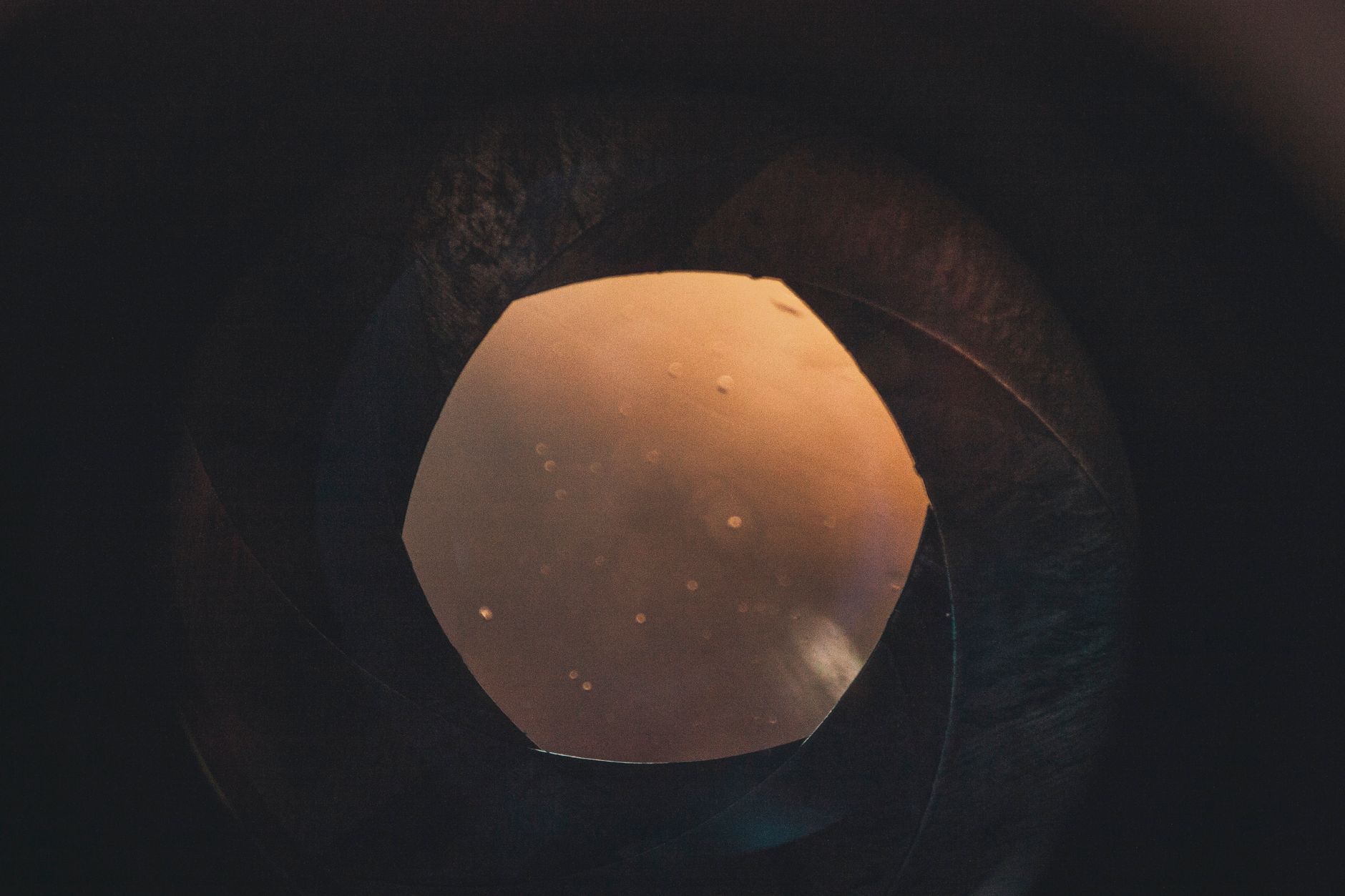
The iPhone 18 Pro anchors mobile photography to physical glass using a six-blade variable aperture on its 48-megapixel Fusion main camera. According to sspai, this 1x lens offers four selectable aperture stops: ƒ/1.48, ƒ/1.8, ƒ/2.8, and ƒ/4.0.
That optical transition reclaims raw physical behavior while muting computational safety nets. Coverage by sspai notes that the mechanism increases low-light light intake by 50%, producing genuine optical sunstars at ƒ/1.8 rather than synthetic software flares. Physical glass introduces unforgiving compromises. In sufficient light, the camera automatically stops down the aperture to f/4 when photographing books, as ifanr reported. Austin Mann recommends keeping the aperture in automatic mode for general photography, according to sspai, because seizing manual control demands treating the phone like an unforgiving prime lens.
Variable aperture mechanics favor stopping down to f/2.8
The iPhone 18 Pro main camera abandons purely computational blur for a physical mechanism: a 48-megapixel Fusion module featuring a six-blade variable aperture on the 1x lens. According to ifanr, these six laser-cut blades shift between f/1.48, f/1.8, f/2.8, and f/4. Widening the lens to ƒ/1.48 increases low-light light intake by 50%, as reported by sspai. The wide setting delivers true optical depth of field instead of algorithmic segmentation. However, opening the physical glass wide introduces peripheral softness across the frame.
Stopping down to ƒ/2.8 bypasses that wide-open softness. It produces crisp focal planes while retaining genuine background falloff, establishing a mechanical resolving sweet spot.
Austin Mann recommends keeping the iPhone 18 Pro aperture in automatic mode for general photography, as sspai notes. Under sufficient light, the camera automatically stops down the aperture to f/4 when photographing books, according to ifanr. Yet relying on automation surrenders creative control over optical behavior. Sspai reports that the sunstar effect captured at ƒ/1.8 is an authentic physical property of the variable aperture lens rather than an algorithmic simulation. Operating the hardware requires treating physical optics as an active creative constraint.
Other manufacturers face identical optical realities. Geekpark notes that the Huawei Mate 90 Pro Max main camera is equipped with a 6-blade variable aperture structure. To manage physical flares, the hardware utilizes infrared optical coating and generative AI to remove halos around strong light sources in night photos. Mechanical glass always brings physical penalties.
Manual shutter bypasses multi-frame fusion for single exposures
Setting manual shutter speed on the iPhone 18 Pro turns off the device's automated safety net. As reported by sspai, the native Camera app adds five exclusive Pro control options: lens aperture, shutter speed, white balance, histogram, and manual focus. Locking that shutter value alters the capture pipeline fundamentally. According to ifanr, selecting manual shutter produces a single-frame exposure rather than multi-frame computational synthesis. The camera drops the background bracketing routines that normally stack under- and over-exposed images into a balanced frame.
Highlights clip instantly. Without software stacking under-exposed frames, bright skies and light sources burn into flat white. The sensor records only what strikes the silicon during that single mechanical duration.
To keep single-frame captures within limits, shooters must read their light manually. ifanr notes that the viewfinder histogram supports three display modes. Users can check luminance, monitor an RGB overlay, or inspect an RGB split. sspai points out that users can independently separate the focus point from the exposure metering location, with manual focus backed by focus peaking. In Pro Control, choosing the telephoto option through the focus menu forces the physical 4x telephoto lens with manual focus, according to ifanr. Digital sensor crops are bypassed.
Overcoming single-frame dynamic range limits without computational stacking requires hardware alterations. As ifanr reports, the main camera on the Xiaomi 18 Pro Max deploys a Light Hunter 960L sensor equipped with LOFIC technology. That sensor delivers 16.2 stops of dynamic range. By routing overflow charge into a dedicated capacitor, the silicon preserves highlight details within a solitary exposure. Without specialized hardware capacitors, the iPhone 18 Pro operator must meter accurately or lose high-contrast scenes.
Photographic Styles 3 locks metadata permanently after editing
Photographic Styles 3 on the iPhone 18 Pro preserves capture settings inside HEIF files for subsequent editing. Photographers can modify styles, texture, skin smoothing, and film grain after exposure. Regarding texture, sspai reports options for Film alongside Soft Skin, plus Halation, with grain rendering coarser in shadows than in midtones or highlights. However, this flexibility breaks during post-processing. Testing by ifanr showed that unedited photos sent via AirDrop to an iPhone 17 Pro, iPhone 17e, or another iPhone 18 Pro retain their editability. If edited first in the native Photos app, the palette and texture controls lock permanently before transfer.
A single revision in Apple's Photos app seals the file. Once altered, the HEIF image behaves across recipient devices like a flattened capture, permanently stripping away any downstream control over the original photographic parameters.
Hardware boundaries reinforce this rigid pipeline. Older models updated to iOS 27 cannot shoot with the Texture option, though they access the color palette across an intensity range of 0 to 100. Independent software offers an alternative path. The Gloam camera app, sold for 58 yuan or $7.99 as a lifetime purchase, reads raw capture data to generate a final JPG while saving a digital negative. That negative allows users to switch presets or adjust tone and white balance after shooting. Still, ifanr notes Gloam lacks manual aperture adjustment on the iPhone 18 Pro and displays incorrect focal length parameters across the three lenses.

Display cutouts and modems reveal unannounced hardware compromises
Moving physical sensors behind glass reshaped the display hierarchy. According to ifanr, a narrower Dynamic Island now leaves enough horizontal space for three simultaneous Live Activities. Apple accomplished that narrowing by moving the Face ID infrared camera under the upper-left status bar. As sspai observed, the panel halves its pixel density in that region while doubling the luminance of surviving pixels across a sparser W-shaped OLED layout. Yet altering panel transmission created unexpected physical snags. Japanese accessory maker NIMASO suspended sales of anti-glare and matte screen protectors after owners reported that the films broke Face ID recognition.
Screen repairs grew similarly expensive. In China, Apple set out-of-warranty screen replacements at 2,698 yuan for iPhone 18 Pro and 3,198 yuan for iPhone 18 Pro Max. Battery service jumped 79 yuan to 1,048 yuan.
Internal space constraints also explain the chassis heft. Reporting from sspai put the iPhone 18 Pro at 211 grams compared to 204 grams on iPhone 17 Pro, while iPhone 18 Pro Max climbed from 231 grams to 249 grams. A teardown reported by ifanr revealed that the US model carries Qualcomm's Snapdragon X80 modem. China-market units instead balance physical trays with carrier software. According to sspai, the mainland build keeps two physical nano-SIM slots and stores up to two eSIM profiles, letting users select two active lines from four stored options. Activating an eSIM forces the system to occupy the physical SIM 2 slot.
Choosing Between Physical Optical Controls and Computational Capture
- Shooting casual everyday scenes without risking manual exposure errors or focus misses Follow Austin Mann's recommendation to leave the iPhone 18 Pro variable aperture in automatic mode, allowing the system to cycle naturally across its physical stops (ƒ/1.48, ƒ/1.8, ƒ/2.8, and ƒ/4.0).
- Bypassing multi-frame computational HDR processing for an authentic single-frame exposure Engage manual shutter speed in the native camera app's Pro controls, which testing by The Verge confirms forces a single-frame capture rather than computational synthesis. Monitor exposure with the built-in histogram (luminance, RGB overlay, or RGB split) to prevent highlight clipping.
- Photographing flat close-up subjects such as books or documents where wide apertures cause edge softness Stop the variable aperture down to f/4 (which the iPhone 18 Pro also selects automatically in sufficient light when detecting books) to maximize edge-to-edge sharpness and depth of field.
- Framing distant subjects at 4x without triggering algorithmic digital zoom from the primary sensor In Pro Control, select the telephoto camera directly through the focus menu to force the hardware to engage the physical 4x telephoto lens with manual focus rather than cropping the 1x sensor.
- Shooting in low light or at high digital zoom where single-frame exposures produce excessive noise Bypass single-frame manual shooting and utilize multi-frame computational tools like Project Indigo, which captures, aligns, and merges multiple RAW frames for noise reduction in low light and applies multi-frame super-resolution at 8x zoom.
Split motherboards and larger vapor chambers absorb third-party heat
Third-party camera software strains mobile silicon by running desktop-grade pipeline tasks directly on raw sensor data. In low-light conditions, Project Indigo aligns and merges multiple frames of RAW data to reduce random noise, according to ifanr. At 8x digital zoom, the application runs multi-frame super-resolution to reconstruct fine image details. Evaluating these heavy loads over a 20-day period, ifanr captured over 3,000 photos across the iPhone 18 Pro series while testing more than a dozen camera apps. The resulting compute cycles create sustained thermal pressure.
Internal motherboard revisions reflect this operational reality. The 2nm A20 Pro places its memory chips beside the processor rather than stacked via Package-on-Package packaging, while flash memory and power management chips sit sandwiched inside a dual-layer motherboard.
To disperse that heat, the iPhone 18 Pro incorporates a vapor chamber cooling plate featuring three times the surface area of the cooling plate in the iPhone 17 Pro, according to sspai. Battery cells expand to supply these intensive bursts. The iPhone 18 Pro houses a 4,056 mAh battery compared to 3,988 mAh on the iPhone 17 Pro, while the iPhone 18 Pro Max uses a steel-cased 5,391 mAh cell that is 568 mAh larger than the previous generation.
Replenishing that stored energy brings its own heat limits. According to sspai, the iPhone 18 Pro negotiates voltages up to around 18V via the USB PD 3.2 SPR AVS protocol, hitting peak wired charging power of approximately 43W. Sustained rates taper quickly. Wired intake drops below 30W once the battery reaches 30% capacity, trading input speed for thermal stability.
Flagship Optical Hardware, Exposure Pipelines, and Computational Architectures
| Dimension | Apple iPhone 18 Pro / Pro Max | Xiaomi 18 Pro / Pro Max | Huawei Mate 90 Pro Max |
|---|---|---|---|
| Main Camera Sensor & Hardware | 48-megapixel Fusion main camera | 1/1.28-inch 200-megapixel Light Hunter 960 (18 Pro); Light Hunter 960L sensor with LOFIC technology (18 Pro Max) | Not covered in sources |
| Variable Aperture Mechanism | Six-blade variable aperture with 4 physical stops: ƒ/1.48, ƒ/1.8, ƒ/2.8, and ƒ/4.0 (increases low-light light intake by 50%; automatically stops down to f/4 for books in sufficient light) | Not covered in sources | 6-blade variable aperture structure (specific aperture stops not disclosed in sources) |
| Capture Pipeline & Computational Processing | Manual shutter produces single-frame exposure bypassing multi-frame computational synthesis | Light Hunter 960L on 18 Pro Max supports LOFIC technology delivering 16.2 stops of dynamic range; single-frame bypass not covered | XMAGE incorporates generative AI real-scene previews and group photo pose recommendations; exposure synthesis not covered |
| Optical Flare & Glare Handling | ƒ/1.8 produces a physical optical sunstar effect from the variable aperture blades rather than algorithmic simulation | Not covered in sources | Combines infrared optical coating with generative AI to remove halos around strong light sources in night photos |
| Telephoto Optics & Zoom Architecture | Physical 4x telephoto lens (manual focus in Pro Control forces optical lens use to bypass digital cropping) | 1/1.56-inch 200-megapixel Samsung HP5 periscope telephoto sensor (light intake increased by 280% vs. 17 Pro) | 200-megapixel telephoto camera with ~4x optical zoom; optional 5999 yuan Ruiying Z10 1-inch modular lens with 10x continuous optical zoom (24mm to 240mm) |
| Color Pipeline & Analog Texture Simulation | Photographic Styles 3 with Film, Soft Skin, and Halation texture/grain controls (grain renders coarser in shadows) | Not covered in sources | Third-generation Red Maple original color camera coupled with skin tone zonal calibration |
| Native Pro Manual Controls | Manual aperture, shutter speed, white balance, manual focus with focus peaking, independent focus/metering points, and histogram (luminance, RGB overlay, RGB split) | Not covered in sources | Not covered in sources |
| Starting Device Pricing | Retail device price not disclosed in sources (out-of-warranty screen replacement: 2,698 yuan for Pro / 3,198 yuan for Pro Max; battery replacement: 1,048 yuan) | 5,999 yuan (18 Pro, 12GB+256GB); Transparent Special Edition: 9,999 yuan (18 Pro, 16GB+1TB) / 10,999 yuan (18 Pro Max, 16GB+1TB) | 9499 yuan (12GB+512GB); Collector's Edition: 10999 yuan (16GB+512GB) |
Watch how mobile hardware adjusts as multi-frame computational safety nets disappear. On the Huawei Mate 90 Pro Max, an infrared optical coating operates alongside generative AI to remove halos around strong light sources in night photos. According to geekpark's Zhang Yongyi, imaging capability is the device's most important upgrade. That pipeline couples a third-generation Red Maple original color camera with skin tone zonal calibration to stabilize rendering. For motion, the phone delivers 20x 4K video recording at 60 frames per second combined with optical and electronic image stabilization.
Physical glass remains unforgiving. When manual shutter speeds strip away computational recovery, meter strictly for highlights and accept the mechanical boundaries of the sensor.
For readers outside China
- Availability: The iPhone 18 Pro series is globally distributed, though hardware variants exist: the mainland China edition retains dual physical nano-SIM slots and restricts eSIM use to occupying the SIM 2 slot. Third-party utility Project Indigo is available for free in App Stores outside mainland China (including the US and Hong Kong stores). The Gloam camera app is available for purchase ($7.99 or 58 yuan), though on the iPhone 18 Pro it displays incorrect focal length parameters and lacks manual aperture control. Hardware availability outside mainland China for the Xiaomi 18 Pro series and Huawei Mate 90 series (released October 1) is not disclosed in the sources.
- Pricing: Western retail pricing for the iPhone 18 Pro models is not disclosed in the sources, but official out-of-warranty repairs in China are priced at 2,698 yuan for the iPhone 18 Pro screen, 3,198 yuan for the iPhone 18 Pro Max screen, and 1,048 yuan for battery replacement. The Gloam camera app sells for a one-time purchase of $7.99 (58 yuan), while Project Indigo is free. Domestically in China, the Xiaomi 18 Pro starts at 5,999 yuan (12GB+256GB), the Xiaomi 18 Pro Transparent Special Edition is 9,999 yuan (16GB+1TB), and the Xiaomi 18 Pro Max Transparent Special Edition is 10,999 yuan (16GB+1TB). The Huawei Mate 90 Pro Max starts at 9499 yuan (12GB+512GB), its Collector's Edition starts at 10999 yuan (16GB+512GB), and its standalone Ruiying Z10 1-inch external optical zoom lens is priced at 5999 yuan.
- Closest Western equivalents: Halide (manual RAW capture, focus peaking, and technical exposure tooling comparable to Gloam and native Pro controls); Google Pixel Camera / HDR+ pipeline (multi-frame alignment and super-resolution algorithms comparable to Project Indigo); Sony Xperia PRO-I (physical mechanical variable aperture lens hardware)
- Data residency: The source material does not cover cloud storage infrastructure, telemetry handling, or data-residency compliance for Huawei's HarmonyOS 7 generative AI tools, Xiaomi's Super Xiao AI, or Apple's cross-device Photographic Styles transfer workflows.
Sources
- ifanr iPhone 18 Pro 系列开卖了,但苹果没告诉你的是...... https://ifanr.com/1681102
- geekpark 9499 元起售的华为 Mate 90 Pro Max,最值的还是相机 https://geekpark.net/news/372088
- sspai 带给摄影师更多自由:Austin Mann 评 iPhone 18 Pro 影像体验 https://sspai.com/post/115426
- ifanr 5999 起!无需多言|小米 18 Pro 系列发布会 https://ifanr.com/1682002
- sspai 方方面面都熟悉,方方面面都更好:iPhone 18 Pro 体验 https://sspai.com/post/115308
- ifanr 这三个摄影 App, 配得上你全新的 iPhone 18 Pro https://ifanr.com/1683596
The evidence: 81 facts from 6 Chinese articles
Each line below was extracted from the article it sits under, in Chinese, before any of this was written. The writing is done from these and never from the source prose - that separation is structural, not a promise. How we work.
geekpark9499 元起售的华为 Mate 90 Pro Max,最值的还是相机
- Huawei officially released the Mate 90 series on October 1.
- The Huawei Mate 90 Pro Max with 12GB of RAM and 512GB of storage starts at 9499 yuan.
- The Huawei Mate 90 Pro Max Collector's Edition with 16GB of RAM and 512GB of storage starts at 10999 yuan.
- Huawei released the Ruiying Z10 (睿影 Z10) modular camera, a standalone 1-inch external lens priced at 5999 yuan that provides 10x continuous optical zoom covering 24mm to 240mm.
- The Huawei Mate 90 Pro Max main camera is equipped with a 6-blade variable aperture structure.
- The Huawei Mate 90 Pro Max features a 200-megapixel telephoto camera with approximately 4x optical zoom.
- The Huawei Mate 90 Pro Max supports 20x 4K video recording at 60 frames per second combined with optical and electronic image stabilization.
- The Huawei Mate 90 Pro Max incorporates a third-generation Red Maple original color camera coupled with skin tone zonal calibration.
- The Huawei Mate 90 Pro Max utilizes infrared optical coating and generative AI to remove halos around strong light sources in night photos.
- Huawei added generative AI real-scene previews and group photo pose recommendations to its XMAGE smart photography feature.
- Huawei introduced a "Building Block Case" (积木壳) concept featuring four swappable components: a lens ring, a main frame, and two rear accessory areas.
- Huawei designed accessories for the Building Block Case that include fragrance modules, fill lights, makeup mirrors, lint rollers, and storage compartments.
- In HarmonyOS 7, the Celia navigation bar recommends next steps based on the current screen and provides service prompts when addresses are copied.
ifanr这三个摄影 App, 配得上你全新的 iPhone 18 Pro
- ifanr captured over 3,000 photos with the iPhone 18 Pro series and tested more than a dozen camera apps over a 20-day period.
- The Gloam camera app reads iPhone RAW data, applies color mapping, tone adjustments, and grain processing, and outputs a final JPG file.
- Gloam stores digital negative data, allowing users to switch camera presets or adjust tone and white balance after a photo has been taken.
- Gloam features a rangefinder-style viewfinder for the 1x main camera that shows content outside the framing lines.
- Gloam is sold as a lifetime purchase for 58 yuan or $7.99.
- On the iPhone 18 Pro, Gloam displays incorrect focal length parameters across the three lenses and lacks manual aperture adjustment.
- Project Indigo is a free app available on regional App Stores outside mainland China, including the US and Hong Kong stores.
- The third generation of Photographic Styles on the iPhone 18 Pro allows post-capture adjustments to styles, texture, skin smoothing, and film grain for HEIF photos.
- Older iPhone models updated to iOS 27 cannot shoot using the Photographic Styles 'Texture' option, though they can use the color palette with an intensity range of 0 to 100.
- The iPhone 18 Pro native camera app includes manual controls for white balance, shutter speed, aperture, and focus.
- In sufficient light, the iPhone 18 Pro camera automatically stops down the aperture to f/4 when photographing books.
- In the iPhone 18 Pro's Pro Control, selecting the telephoto camera through the focus menu forces the system to use the physical 4x telephoto lens with manual focus instead of digitally cropping the main sensor.
- The iPhone 18 Pro native camera histogram supports three display modes: luminance, RGB overlay, and RGB split.
ifanriPhone 18 Pro 系列开卖了,但苹果没告诉你的是……
- The iPhone 18 Pro has the same exterior dimensions and cutout placements as the iPhone 17 Pro, allowing iPhone 17 Pro cases to fit it seamlessly.
- In the iPhone 18 Pro, the memory chips for the A20 Pro are placed beside the SoC rather than stacked on top via Package-on-Package (PoP) packaging.
- The vapor chamber heat spreader in the iPhone 18 Pro series has three times the surface area of the prior generation's cooling solution.
- The Dynamic Island on the iPhone 18 Pro series is physically narrower than on preceding models, allowing the operating system to support up to three simultaneous Live Activities.
- The Face ID infrared camera on the iPhone 18 Pro series is relocated under the display in the upper-left status bar area beneath a sparser W-shaped OLED pixel layout.
- Japanese accessory brand NIMASO suspended sales of its anti-glare and matte screen protectors for the iPhone 18 series after users reported that the films interfered with Face ID recognition.
- The iPhone 18 Pro main camera incorporates a mechanical variable aperture with six laser-cut blades that switches between f/1.48, f/1.8, f/2.8, and f/4.
- In the iPhone 18 Pro series, the flash memory and power management chips are sandwiched between the layers of the dual-layer motherboard.
- Apple sets the out-of-warranty screen replacement fee at 2,698 yuan for the iPhone 18 Pro and 3,198 yuan for the iPhone 18 Pro Max in China.
- Official out-of-warranty battery replacement pricing for the iPhone 18 Pro and Pro Max reached 1,048 yuan in China, an increase of 79 yuan over the previous generation.
- Teardowns show that 256GB models of the iPhone 18 Pro series use TLC NAND flash, while tested 1TB models use Toshiba QLC NAND flash.
- A teardown by TechInsights revealed that the US model of the iPhone 18 Pro Max is equipped with Qualcomm's Snapdragon X80 modem.
- On China-market iPhone 18 Pro models, enabling an eSIM forces the system to occupy the physical SIM 2 slot.
- The iPhone 18 Pro Max uses a steel-cased battery with a rated capacity of 5,391 mAh, which is 568 mAh larger than the previous generation.
- iOS introduced a 'Prepare to Ship' feature that discharges the battery and caps charging at 80% for 14 days because the iPhone 18 Pro Max single-cell battery exceeds the 20 Wh regulatory limit for shipping dangerous goods.
ifanr5999 起!无需多言|小米 18 Pro 系列发布会
- Xiaomi unveiled the Xiaomi 18 Pro and Xiaomi 18 Pro Max at its launch event, omitting a standard Xiaomi 18 model.
- The starting price of the Xiaomi 18 Pro is 5,999 yuan for the 12GB+256GB model.
- The Xiaomi 18 Pro Transparent Special Edition is priced at 9,999 yuan, and the Xiaomi 18 Pro Max Transparent Special Edition is priced at 10,999 yuan, with both available exclusively in a 16GB+1TB configuration.
- The Transparent Special Edition of the Xiaomi 18 Pro series includes a transparent 100W fast charger.
- Both the Xiaomi 18 Pro and Xiaomi 18 Pro Max feature Super Pixel 2.0 hardware-level privacy screens with screen borders reduced to 0.99mm using LIPO packaging technology.
- The displays on the Xiaomi 18 Pro series utilize a new green luminescent material co-developed with Tsinghua University, reaching a local peak brightness of 4,000 nits and covering up to 86% of the BT.2020 color gamut.
- The Xiaomi 18 Pro features a 6.4-inch display with a body width of approximately 72mm.
- The Xiaomi 18 Pro features a 1/1.28-inch 200-megapixel Light Hunter 960 main camera sensor and a 1/1.56-inch 200-megapixel Samsung HP5 periscope telephoto sensor.
- The Xiaomi 18 Pro debuts Qualcomm's Snapdragon 8 Elite Gen 6 processor.
- The Xiaomi 18 Pro includes a 7,000 mAh battery with approximately 32% silicon content, supporting 100W Surge charging and 100W PPS fast charging.
- The Xiaomi 18 Pro Max has a 6.9-inch display and an increased middle-frame-to-back curvature of 1.9mm, up from 1.38mm on the Xiaomi 17 Pro Max.
- The Xiaomi 18 Pro Max is equipped with a Snapdragon 8 Elite Extreme Gen 6 processor operating at up to 5.0 GHz.
- The main camera of the Xiaomi 18 Pro Max uses a Light Hunter 960L sensor supporting LOFIC technology with 16.2 stops of dynamic range.
- The Xiaomi 18 Pro Max features an 8,500 mAh battery, a 0916C linear motor, and a three-speaker configuration designed to actively prevent sound leakage during phone calls.
- The rear secondary displays on the Xiaomi 18 Pro series use M11 material with 400 PPI and allow users to generate customized app cards through Super Xiao AI via vibe coding.
sspai带给摄影师更多自由:Austin Mann 评 iPhone 18 Pro 影像体验
- Austin Mann tested the iPhone 18 Pro camera at Dunton River Camp in southwestern Colorado over the course of one week.
- The iPhone 18 Pro features a variable aperture lens offering four selectable aperture stops on the 1x lens: ƒ/1.48, ƒ/1.8, ƒ/2.8, and ƒ/4.0.
- The iPhone 18 Pro includes Photographic Styles 3 with film texture and grain control, 4K time-lapse, and Focus Tracking.
- The native camera app on the iPhone 18 Pro includes manual focus with focus peaking.
- The iPhone 18 Pro allows users to independently control the focus point and the exposure metering location.
- Focus Tracking on the iPhone 18 Pro locks onto a target when double-tapped and maintains focus despite camera or subject movement.
- The iPhone 18 Pro's Photographic Styles feature includes texture options for Film, Soft Skin, and Halation.
- The Reference Image feature on the iPhone 18 Pro is enabled under Settings > Camera > Reference Image > Add Reference Mode.
- Reference Image appears as an independent mode next to Photo in the camera app and supports 1x and 2x, but does not support 0.5x, 4x, or 8x.
sspai方方面面都熟悉,方方面面都更好:iPhone 18 Pro 体验
- iPhone 18 Pro weighs 211 grams, an increase from 204 grams on iPhone 17 Pro, while iPhone 18 Pro Max weighs 249 grams, up from 231 grams on iPhone 17 Pro Max.
- iPhone 18 Pro has a battery capacity of 4,056 mAh compared to 3,988 mAh on iPhone 17 Pro, while iPhone 18 Pro Max has a battery capacity of 5,391 mAh compared to 4,823 mAh on iPhone 17 Pro Max.
- iPhone 18 Pro features an A20 Pro chip built on a 2nm process.
- iPhone 18 Pro is equipped with a vapor chamber cooling plate with three times the surface area of the cooling plate in iPhone 17 Pro.
- Apple replaced the Star Orange color option on iPhone 18 Pro with Burgundy Red and Glacier Blue, reintroduced Black, and changed the Ceramic Shield back panel on the Silver model to a silver-gray finish.
- Apple placed the infrared camera of the TrueDepth system beneath the top-left area of the iPhone 18 Pro display, halving the pixel density in that region while doubling the luminance of the remaining pixels.
- The Dynamic Island on iPhone 18 Pro can display up to three Live Activities at the same time.
- iPhone 18 Pro features a 48-megapixel Fusion main camera with a six-blade variable aperture switching between ƒ/1.48, ƒ/1.8, ƒ/2.8, and ƒ/4.
- iPhone 18 Pro adds five exclusive Pro control options to the Camera app: lens aperture, shutter speed, white balance, histogram, and manual focus.
- iPhone 18 Pro supports post-capture application of Cinematic mode and depth-of-field adjustment for standard videos recorded at up to 60 fps.
- iPhone 18 Pro supports time-lapse recording in 4K Dolby Vision HDR.
- iPhone 18 Pro supports the USB PD 3.2 SPR AVS charging protocol, negotiating voltages up to around 18V with peak wired charging power reaching approximately 43W.
- iPhone 18 Pro wired charging power drops below 30W once the battery reaches 30% capacity.
- The mainland China version of iPhone 18 Pro retains dual physical nano-SIM slots and can store up to two eSIM profiles, allowing two active numbers chosen from up to four stored numbers.
- China Unicom introduced a limited pilot test allowing selected users to apply for and activate an eSIM online via the China Unicom mobile app.
- Apple did not release a standard iPhone 18 model alongside iPhone 18 Pro.